
EU RoHS Update Restricts Leaded Solder and Fasteners

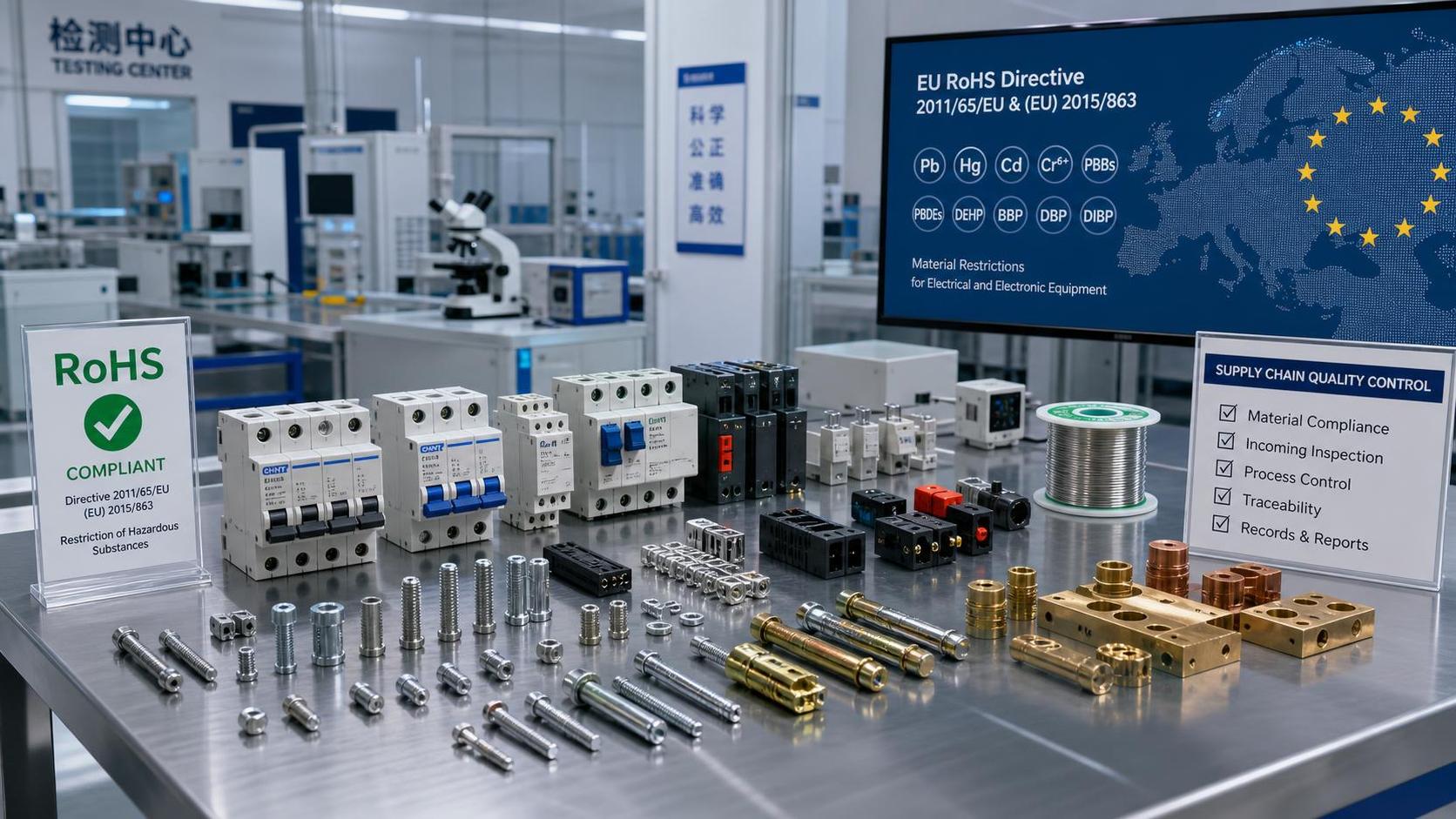
On July 19, 2026, the EU Official Journal published Regulation (EU) 2026/1385, introducing a third revision to Annex II of the RoHS Directive. The change will take effect on October 1, 2026, and restrict the use of leaded solder above 0.1% as well as lead-based alloy anchors and rivets in specified electrical and fastening products. For exporters, manufacturers, buyers, and compliance teams involved in circuit breakers, connectors, switches, bolts and screws, anchors, and rivets, the development deserves attention because it reaches beyond material selection and into product design, supplier qualification, certification pathways, and shipment readiness for the EU market.
What the amendment changes
The confirmed facts are limited but clear. Regulation (EU) 2026/1385 was published in the EU Official Journal on July 19, 2026. It represents the third revision to Annex II of the RoHS Directive. From October 1, 2026, leaded solder with Pb content above 0.1% will be prohibited in circuit breakers, connectors, switches, and electrical and fastening products including bolts and screws. The same revision also restricts lead-based alloy anchors and rivets, with leaded copper alloy C36000 given as an example in the event summary. The stated impact directly concerns the compliance design and supply chain certification path for Chinese exports to the EU in the affected product categories.
Where the pressure is likely to appear first
Design and manufacturing decisions move to the front of compliance work
From an industry perspective, manufacturers of the listed electrical and fastening products are likely to feel the change first because material composition is tied directly to product design, component selection, and production control. The practical effect is not only whether a finished product can be placed on the EU market, but also whether its soldering materials and metal parts remain aligned with the revised RoHS restriction after October 1, 2026. What deserves closer attention is the transition point between legacy material choices and revised product specifications.
Export and trade teams will need tighter document alignment
Exporters and trading companies may be affected because RoHS-related compliance is often carried through technical files, supplier declarations, material statements, and transaction-facing documentation. Analysis shows that the rule change may raise pressure on product-level confirmation before shipment, especially for categories explicitly named in the event summary. Where products are sold into the EU through distributors or project procurement channels, alignment between commercial documents and compliance documentation is likely to become more important.
Procurement and supplier management may face material substitution questions
Procurement teams and supply chain managers may need to review whether solders, copper alloy parts, anchors, rivets, bolts, screws, and related subcomponents still match the revised restriction. Observably, this is not only a purchasing issue but also a supplier qualification issue, because certification paths and product conformity records depend on what upstream suppliers can document and deliver. Any mismatch between purchasing specifications and compliance claims could affect order confirmation, production scheduling, or delivery planning.
Testing and certification support functions may see a change in focus
Certification-related firms and testing service providers may be drawn in where customers need updated evidence for affected product lines. It is more appropriate to understand this as a documentation and verification pressure point rather than a confirmed wave of immediate enforcement outcomes, because the input does not provide detailed execution arrangements. Even so, the named product scope suggests that conformity review, technical document updates, and supporting test evidence may become more prominent in customer requests.
What companies should examine now
Check whether affected product families are clearly mapped
Analysis shows that companies should first identify whether their EU-bound products fall within the categories named in the event summary, including circuit breakers, connectors, switches, bolts and screws, anchors, and rivets. This matters because the rule change is product- and material-specific, and internal uncertainty over product scope can delay downstream compliance decisions.
Review material declarations and technical files
What deserves closer attention is whether existing declarations, supplier statements, technical specifications, and related compliance files still support EU market access after the effective date. For products using leaded solder or lead-based alloy parts, firms may need to confirm whether current documentation is still usable or whether revised records will be required. The input does not provide a prescribed documentation format, so this should be treated as a compliance review priority rather than a fixed filing rule.
Watch the certification path and customer-facing requirements
For exporters and OEM suppliers, the event summary specifically points to changes in compliance design and supply chain certification pathways. Observably, this means companies should pay attention to how customers, importers, and channel partners begin to interpret the revision in qualification checklists, bid documents, product specifications, and acceptance requirements. Where contracts or tenders refer to RoHS compliance, wording changes may become an early sign of market implementation.
Plan for timing around orders and delivery commitments
Because the amendment was published on July 19, 2026 and takes effect on October 1, 2026, companies dealing in the listed products should closely track order timing, material readiness, and shipment planning tied to the EU market. Analysis shows that the key issue is not simply awareness of the rule, but whether internal design review, procurement confirmation, and compliance evidence can keep pace with the effective date. The input does not provide detailed transition practice, so delivery risk should be monitored carefully rather than assumed to be resolved by default.
How this development is best interpreted
In editorial observation, this is better understood as an implemented regulatory signal with direct operational consequences rather than a distant policy discussion. The publication in the EU Official Journal and the stated effective date give the change a concrete compliance timetable. At the same time, it should not yet be treated as a fully settled market outcome across all supply chains, because the input does not provide detailed enforcement guidance, certification interpretation, or market response. That is why ongoing attention to execution language, customer requirements, and document practice remains important.
Why the market will keep watching
From an industry perspective, the significance of this update lies in its effect on actual product composition and on the records used to support EU market access. The change is narrow enough to be actionable and broad enough to reach multiple points in the export chain, especially where electrical components and fastening hardware intersect with RoHS compliance obligations. It is more appropriate to understand this event as a rule change that has already moved into the implementation stage, while many practical interpretations in procurement, certification, and delivery still warrant close observation.
Basis of this article
This article is based on the user-provided news title, event date, and event summary. For developments of this type, relevant source categories commonly include official notices, regulator publications, customs or trade authority information, industry association updates, standards documents, and reporting by established trade media. No specific official source link was provided in the input, so the exact official link still needs to be verified on an ongoing basis. Further monitoring is also warranted for any later clarification on execution details, certification interpretation, tender document changes, industry feedback, and company-level implementation practice.
Related News