
How international electrical standards affect circuit breakers

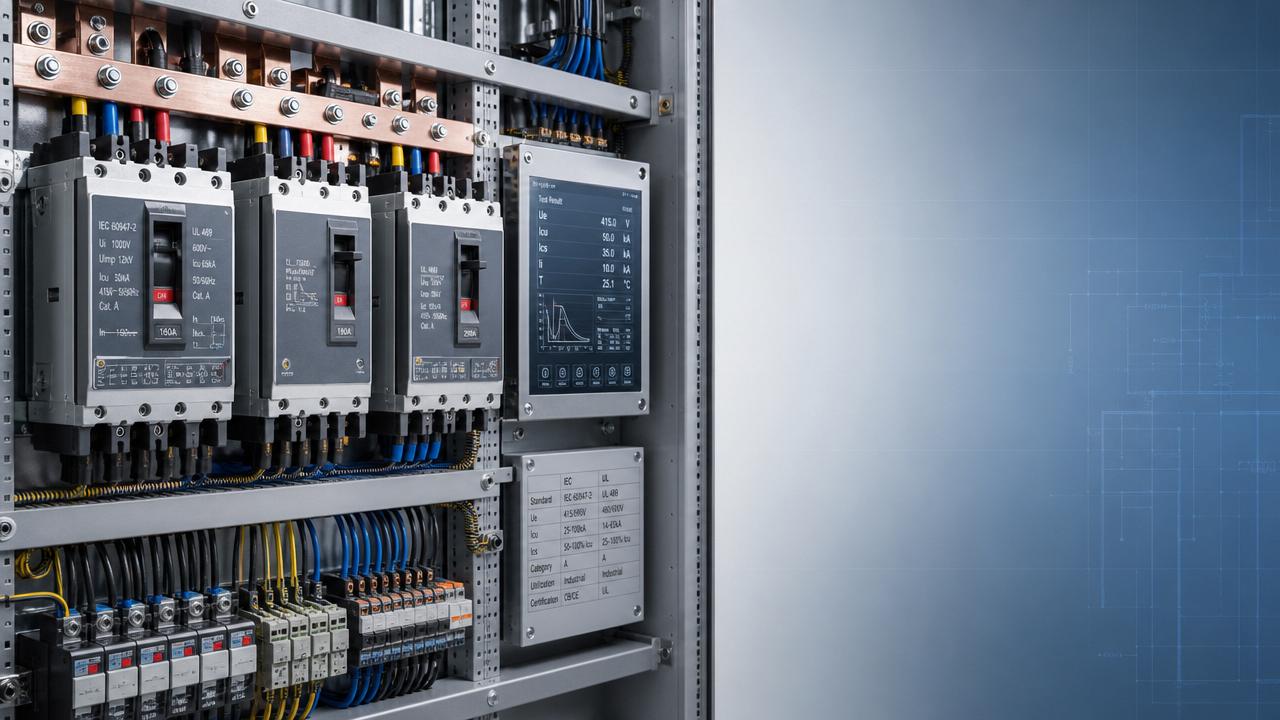
For project managers and engineering leads, understanding how international electrical standards shape circuit breaker selection is essential to reducing compliance risk, improving system reliability, and supporting cross-border project delivery. As global markets demand safer and more consistent electrical performance, international electrical standards directly influence product design, testing, certification, and procurement decisions across industrial applications.
Circuit breakers may look comparable across catalogs, yet their approval basis, interrupting ratings, trip curves, and installation conditions often differ by region. In practice, international electrical standards determine whether a device is accepted by inspectors, performs correctly in fault conditions, and remains serviceable throughout the equipment lifecycle.
Why a checklist matters when evaluating international electrical standards
A checklist prevents costly assumptions. It helps compare IEC, UL, and other framework requirements before a breaker is specified, exported, installed, or integrated into control panels and distribution assemblies.
This matters across the broader industrial chain, from machine tools and electrical hubs to molds, automation cells, and OEM equipment. One mismatch in standard interpretation can delay shipment, trigger redesign, or weaken system coordination under real fault conditions.
Core checklist: how international electrical standards affect circuit breakers
- Confirm the governing standard first, including IEC, UL, CSA, or local adoption rules, before comparing current rating, breaking capacity, or enclosure compatibility.
- Match application category carefully, because motor protection, feeder protection, branch circuits, and control panels may require different breaker constructions and test references.
- Verify rated voltage and frequency under the target standard, since identical part numbers may carry different approved values across regional certification schemes.
- Check interrupting capacity against prospective fault current, using the exact standard-defined test duty, not only a headline kA figure from marketing material.
- Review trip characteristics and coordination data, especially when selective tripping, motor starting, transformer inrush, or sensitive downstream electronics are involved.
- Inspect temperature derating assumptions, because international electrical standards may define performance at different ambient conditions and panel installation constraints.
- Examine certification marks and documentation, including test reports, declarations, and traceable labeling, to ensure legal market access and inspection acceptance.
- Assess conductor, terminal, and busbar compatibility, since standards often influence tightening torque, wire class acceptance, and short-circuit assembly performance.
- Check mechanical endurance and electrical endurance values, especially for high-cycle industrial equipment, automated lines, and frequently switched auxiliary loads.
- Validate integration with the complete assembly, because panel standards and switchgear standards can impose extra obligations beyond the breaker’s own approval.
Key standards families that influence selection
The most common divide is between IEC-based and UL-based systems. IEC standards often emphasize performance categories and coordination within assemblies. UL standards often focus on listed use cases, construction rules, and defined installation conditions.
For low-voltage circuit breakers, IEC 60898, IEC 60947, and related assembly standards appear frequently in industrial work. In North American projects, UL 489, UL 1077, and panel-related standards can shape what is acceptable in the field.
How international electrical standards change product design and testing
International electrical standards do not just affect paperwork. They influence contact design, arc extinction chambers, insulation clearances, thermal behavior, and the way accessories are tested with the base breaker.
A breaker designed for one market may need different terminals, different markings, or a revised enclosure test path for another. Even handle labeling, calibration limits, and accessory combinations can change under another compliance regime.
Breaking capacity is not a universal number
One frequent error is treating interrupting capacity as directly transferable across all standards. Test sequences, power factor assumptions, recovery voltage conditions, and pass criteria can differ.
That means two breakers with similar ratings on paper may not provide equivalent protection in the same installation. International electrical standards must be read with the intended network and assembly conditions in mind.
Application scenarios where standards have the biggest impact
Industrial control panels and automated production lines
In control panels, the breaker is only one part of the compliance path. International electrical standards also affect short-circuit current ratings, spacing, component combinations, and documented use within the final assembly.
For automated lines, nuisance tripping can stop production and damage work-in-process. Standard-driven trip classes and coordination studies become critical where servo systems, drives, solenoids, and pneumatic controls share the same infrastructure.
Export machinery and OEM equipment
Exported machines often cross from an IEC design philosophy into a UL inspection environment, or the reverse. International electrical standards then affect redesign scope, lead time, and approved replacement parts.
This is especially relevant for equipment built around precision tooling, molded components, heaters, and motor-driven subsystems. Early standards alignment avoids rework at factory acceptance or site commissioning.
Buildings, infrastructure, and mixed-source procurement
Large projects often source components globally. Without a standards filter, visually similar breakers may enter the same bill of materials with incompatible ratings, mounting requirements, or certification status.
International electrical standards provide the common language for technical review. They support consistent submittals, smoother approvals, and better maintenance planning after handover.
Commonly overlooked issues and risk reminders
Confusing supplementary protectors with branch circuit breakers creates a serious compliance gap. Similar appearance does not mean the same legal use, fault duty, or field acceptance.
Ignoring ambient temperature inside enclosures can distort real current-carrying performance. International electrical standards often assume conditions that differ from crowded industrial cabinets.
Assuming accessories are universally approved is risky. Shunt trips, auxiliary contacts, and rotary handles may require testing as a certified combination under the applicable standard.
Overlooking coordination with upstream and downstream devices can undermine selectivity. A standards-compliant breaker may still produce poor system behavior if the protection scheme is not studied as a whole.
Relying only on catalog summaries can hide regional restrictions. The actual certificate, installation instructions, and assembly notes usually define whether a breaker can be used in the intended market.
Practical execution steps for specification and procurement
- Build a standards matrix that links destination market, equipment type, voltage system, and required breaker approvals before issuing drawings or RFQs.
- Request certification files, coordination tables, and derating data together, rather than treating compliance documents as a late-stage administrative task.
- Review the complete assembly standard, not only the component standard, whenever breakers are installed inside control panels, switchboards, or machine enclosures.
- Standardize approved breaker families by application, so maintenance, spare parts, and replacement practices remain aligned across multi-country deployments.
- Track revision changes in international electrical standards, because periodic updates can affect test assumptions, marking rules, and accepted use conditions.
A simple review table for internal use
Conclusion and next action
International electrical standards shape circuit breakers far beyond labeling. They affect design intent, test performance, certification scope, assembly compliance, and long-term operational reliability.
The most effective next step is to review each breaker against a documented standards checklist before specification freeze. That single habit reduces redesign, protects project schedules, and supports more reliable industrial systems in global applications.
For organizations working across hardware, electrical, and precision manufacturing sectors, disciplined use of international electrical standards is not only a compliance task. It is a practical way to connect precision, lower risk, and improve delivery outcomes.
Related News