
Industrial standards that matter most in circuit protection

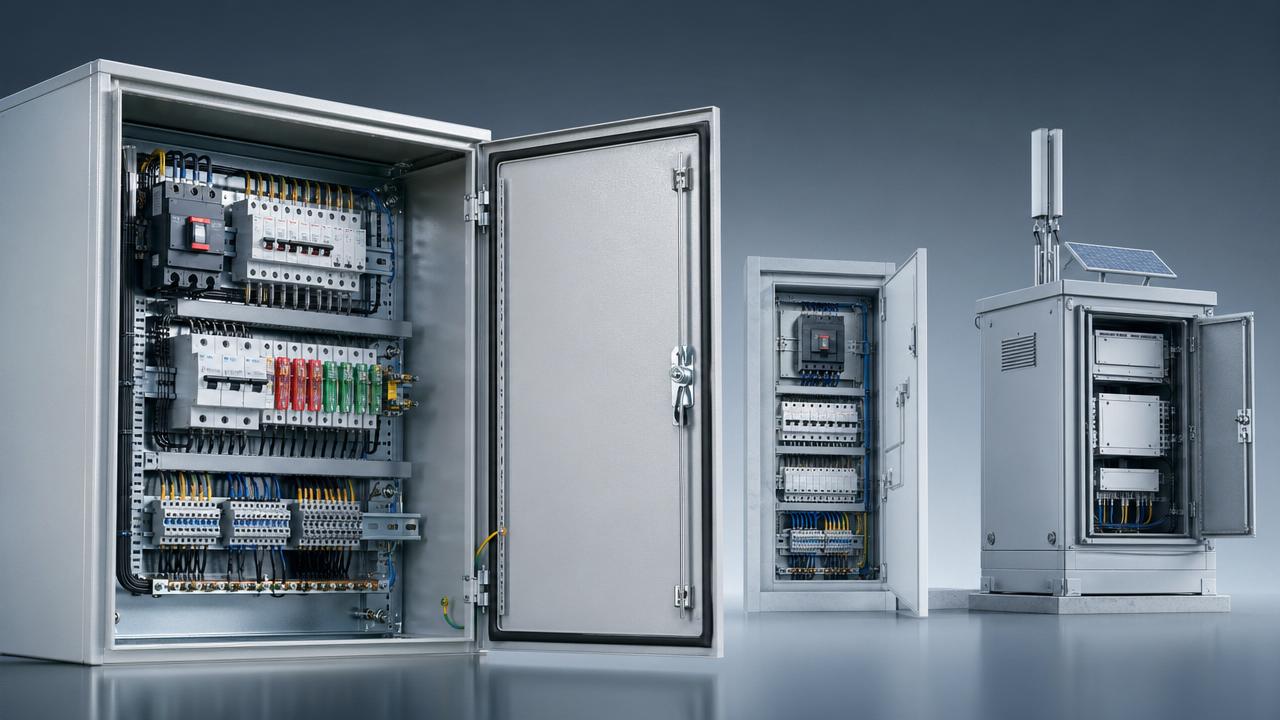
In circuit protection, choosing the right components is only part of the equation—understanding the industrial standards that govern safety, performance, and compliance matters just as much. For researchers and sourcing professionals, these standards provide a practical framework for evaluating reliability, market access, and long-term system integrity across diverse industrial applications.
Why industrial standards matter differently across circuit protection scenarios
For information researchers in the broader industrial supply chain, industrial standards are not simply technical references. They influence whether a fuse, circuit breaker, surge protective device, thermal protector, or overcurrent component can be used in a factory panel, a building distribution cabinet, a telecom enclosure, or export equipment shipped into multiple regions. In practice, the same protective function may face very different approval paths, voltage ranges, endurance expectations, and documentation requirements.
This is why industrial standards should be read through application context rather than as a generic checklist. A low-voltage panel for a processing line may focus on coordination, interrupting capacity, and maintenance accessibility. A consumer-adjacent appliance may place more weight on abnormal operation testing and enclosure interaction. A renewable energy cabinet may need stronger attention to surge exposure, outdoor durability, and system grounding behavior over a 10- to 20-year operating window.
For sourcing teams, this difference affects supplier screening and risk control. Components that appear similar on a datasheet may differ significantly in certification scope, test category, response characteristics, or installation conditions. A 250 V rated protective device is not automatically suitable for every 230 V or 240 V application, and a component tested for one mounting orientation or one pollution degree may require additional review in another environment.
What changes from one application to another
In real projects, four variables repeatedly change the interpretation of industrial standards: electrical stress, installation environment, end-market compliance, and serviceability. Electrical stress includes rated current, inrush, short-circuit level, transients, and switching frequency. Installation environment includes ambient temperature, humidity, contamination, vibration, and enclosure class. End-market compliance includes regional market entry rules and documentation expectations. Serviceability includes replacement cycle, downtime tolerance, and spare-part availability.
- Factory automation often prioritizes continuity, selective coordination, and rapid fault isolation within milliseconds to seconds.
- Commercial building systems usually focus on fire safety, panel consistency, and standardized maintenance procedures over 5- to 15-year lifecycles.
- Outdoor energy and telecom systems frequently require stronger surge resistance, enclosure compatibility, and wider operating temperature ranges such as -25°C to 60°C.
When researchers compare options across suppliers, industrial standards become a common language for translating technical claims into business decisions. They help determine whether a component is merely functional in a lab-like condition or genuinely suitable for a target application, target geography, and target maintenance model.
Three typical circuit protection scenarios and the standards priorities behind them
The most practical way to evaluate industrial standards is to separate the market into common use scenarios. Below is a comparison of three high-frequency industrial contexts where circuit protection decisions are often made differently, even when the electrical function seems similar on the surface.
This comparison shows why industrial standards should not be treated as a one-line catalog attribute. In many projects, two suppliers may both claim compliance, yet one product is approved only for a narrower use case, lower fault level, or a different installation category. Researchers should therefore look beyond the presence of a standard number and verify the test scope attached to it.
Scenario 1: Industrial control panels and automated equipment
In machine building and process automation, circuit protection usually serves two business goals at the same time: protecting equipment and reducing production interruption. Here, industrial standards are closely tied to low-voltage assemblies, motor branches, control circuits, and short-circuit protective coordination. A sourcing error can lead not only to component failure, but also to nuisance trips that stop a line producing hundreds or thousands of units per shift.
Researchers in this scenario should pay attention to current-limiting performance, breaking capacity, branch circuit suitability, and control panel integration. Typical review points include rated operational voltage, rated current range, conditional short-circuit current, and temperature derating. In control cabinets operating continuously for 16 to 24 hours per day, thermal behavior inside the enclosure can strongly affect actual protective performance.
Another practical issue is documentation consistency. OEMs exporting machinery often need standard references that align with destination-market requirements. If the same panel design is shipped into 2 or 3 major markets, sourcing teams benefit from components with broadly recognized industrial standards and clearer technical files, because this reduces redesign risk during compliance review.
Where mistakes happen in automation projects
- Assuming a standard AC protective device is automatically acceptable for DC control circuits or mixed-load systems.
- Using nominal current alone without checking inrush, repetitive cycling, and enclosure temperature rise.
- Ignoring coordination with contactors, power supplies, drives, and terminal blocks inside compact cabinets.
In this scenario, industrial standards matter most when they help teams predict fault behavior under real operating conditions rather than idealized bench conditions. The best sourcing outcome is usually a combination of compliance fit, maintainability, and stable field performance over service intervals that commonly range from 12 months to 36 months before major inspection.
Scenario 2: Building distribution and commercial infrastructure
Commercial buildings, hospitals, office parks, warehouses, and retail facilities create a different decision environment. Here, circuit protection is not only about equipment integrity but also about code alignment, occupant safety, maintenance clarity, and lifecycle consistency. Industrial standards in this setting often connect protective devices to broader installation practices, panelboard conventions, and surge protection strategies at service entrances and branch circuits.
Researchers evaluating this scenario should focus on standardized installation, fault interruption capability, and long replacement availability. A distribution product used in a building may remain in service for 8 to 20 years, so compatibility with future maintenance routines matters almost as much as initial technical compliance. If spare components become difficult to match after 3 to 5 years, the operational burden increases significantly.
Surge protection deserves particular attention in modern infrastructure. Facilities using networked controls, LED lighting, security systems, and variable-speed equipment are more sensitive to overvoltage events than older installations. In practical sourcing terms, this means industrial standards for surge protective devices, installation positions, and coordination between upstream and downstream protection should be reviewed together rather than in isolation.
Scenario 3: Telecom, solar, and outdoor electrical cabinets
Outdoor and semi-outdoor systems present a third standard landscape. Telecom shelters, PV combiner boxes, roadside control cabinets, and remote monitoring stations often combine high exposure to surges with limited maintenance access. In these environments, industrial standards are used to judge environmental resilience, DC suitability, terminal security, and safe replacement procedures in locations where service teams may only visit once every 6 to 12 months.
DC applications need especially careful review. Protective devices that perform well in AC systems may not interrupt DC faults in the same way, particularly at higher voltages or under sustained arc conditions. Researchers should therefore verify rated voltage, pole configuration, disconnection behavior, and applicable industrial standards specific to the intended DC architecture, not just rely on general-purpose catalog language.
Environmental conditions also change the reading of standards. A cabinet exposed to condensation, dust, salt-laden air, or summer enclosure temperatures above 50°C creates a different risk profile from an indoor switch room. Even when the protection component itself is compliant, the final application can still fail if installation spacing, enclosure ventilation, or grounding paths are not aligned with the tested conditions.
How to judge which industrial standards deserve the most attention in each case
Not every project requires the same level of review for every standard. A useful method for information researchers is to rank standards according to application impact. Start from the most failure-sensitive conditions: voltage type, fault level, environment, and target market. Then move to assembly integration, maintenance process, and documentation detail. This sequence saves time and helps avoid overemphasizing less decisive specifications.
In many sourcing workflows, the first screening cycle can be completed using 6 practical questions: What is the system voltage? AC or DC? What fault current or surge level is expected? Is the product indoor or outdoor? Which market will it enter first? What service interval is realistic? The answers usually narrow the standard priorities quickly and reveal whether a nominally equivalent product is actually suitable.
The table below helps translate industrial standards into scenario-based selection priorities. It is not a substitute for engineering review, but it provides a strong first-pass framework for procurement research and technical comparison.
The strongest insight here is that industrial standards become more valuable when they are connected to operating reality. Researchers should ask not only whether a product is compliant, but compliant for which voltage type, which installation category, which enclosure condition, and which market path. That level of detail often separates a good shortlist from a risky one.
A practical screening sequence for researchers and sourcing teams
- Define the real application scenario, including load type, duty cycle, and maintenance frequency.
- Verify whether the protective device is intended for AC, DC, or both under clearly stated conditions.
- Check the industrial standards cited and confirm the exact product scope, not only the family brochure.
- Review interrupting capacity, surge tolerance, and thermal derating against expected site conditions.
- Match technical documentation to the destination market and panel integration requirements.
- Evaluate lead time, replacement availability, and sample support before final supplier comparison.
This kind of 6-step process is especially useful in cross-border procurement, where the same part may be promoted into multiple use cases. It supports more accurate communication between procurement teams, design engineers, and compliance reviewers.
Common misjudgments when applying industrial standards to circuit protection
One frequent misjudgment is treating standard names as interchangeable quality labels. In reality, industrial standards define different test methods, use conditions, and product categories. A component can be suitable for one branch of application but not for another. This matters when teams compare suppliers based on a brief quotation sheet without checking the full data, installation notes, or declaration details.
Another common problem is ignoring system-level interaction. Circuit protection does not operate alone. It works with conductors, terminals, enclosures, power supplies, drives, and grounding arrangements. A surge protective device, for example, may perform very differently depending on conductor length and bonding layout. A breaker selected only by nominal current may underperform if the actual inrush profile or ambient temperature is outside expected conditions.
Researchers should also be cautious about overgeneralizing from one market to another. A component accepted in one region or industry segment may require different markings, different test references, or different application limitations elsewhere. When a project timeline is 8 to 16 weeks, discovering such issues late can delay assembly, re-documentation, or re-sourcing.
Signs that a standard review is too shallow
- The quotation mentions compliance but does not specify application category or rating condition.
- The product is compared only by current and voltage, with no reference to fault interruption or surge environment.
- There is no clarification on indoor versus outdoor use, panel spacing, or thermal derating.
- Documentation does not indicate how the part fits export, OEM, or replacement-market requirements.
How to reduce risk before supplier engagement
Before moving into detailed supplier discussions, prepare a short application brief with 5 to 10 key parameters. Include system type, rated voltage, expected fault or surge exposure, enclosure conditions, service interval, and destination market. This single step often reduces misunderstandings more effectively than requesting a large catalog set without context.
For companies working across hardware, electrical, and tooling supply chains, this discipline also improves internal alignment. Mechanical teams can assess enclosure and heat constraints, electrical teams can review protection behavior, and sourcing teams can compare lead time and documentation maturity using the same reference baseline.
Scenario-based guidance for better sourcing decisions
If your role is early-stage research, the goal is not to become the final certifying authority. The goal is to narrow options intelligently. For circuit protection, that means identifying which industrial standards matter most for your exact scenario and using them to filter out weak-fit products before technical validation consumes time. In many industrial programs, this early filtering can cut comparison workload by 30% to 50%.
For OEM-oriented projects, prioritize products with clearer technical documents, stable supply continuity, and application-specific rating transparency. For distributor or replacement-market projects, prioritize recognizable standards language, installation familiarity, and substitution risk control. For infrastructure or outdoor deployments, prioritize environmental fit, service interval practicality, and surge-related review rather than relying solely on nominal ratings.
This is where a platform like GHTN creates value for information researchers. In the industrial components landscape, useful insight comes from connecting standards language to actual use conditions, material behavior, installation logic, and trade requirements. That same method supports better judgment across electrical hubs, hardware components, precision tooling ecosystems, and cross-border industrial sourcing decisions.
Why choose us
GHTN is built for professionals who need more than broad market summaries. We focus on the underlying industrial parts and technical decision points that influence manufacturability, compliance, and procurement reliability. For circuit protection research, we can help you interpret industrial standards in the context of panel applications, building systems, outdoor cabinets, export routes, and multi-market sourcing comparisons.
If you are comparing components or preparing a sourcing brief, contact us for support on parameter confirmation, product selection logic, typical lead-time ranges, documentation review priorities, certification-related screening, sample support coordination, and quotation communication points. Clear scenario input leads to better shortlists, fewer compliance surprises, and a more efficient path from research to supplier engagement.
Whether your project involves factory control panels, commercial infrastructure, or remote electrical cabinets, the right industrial standards can turn a generic product search into a practical and lower-risk sourcing strategy. Share your application scenario, voltage type, environment, and target market, and we can help you identify which details deserve attention first.
Related News
- Electrical Engineering Design: How to Define Power, Protection, and Load RequirementsTime : Sep 12, 2026
- Electrical Equipment Catalog: How Buyers Compare Ratings, Specs, and Supplier OptionsTime : Sep 07, 2026
- Electrical Compliance Standards for Suppliers: What B2B Buyers Should VerifyTime : Sep 05, 2026