
International Electrical Standards Mistakes That Delay Approval

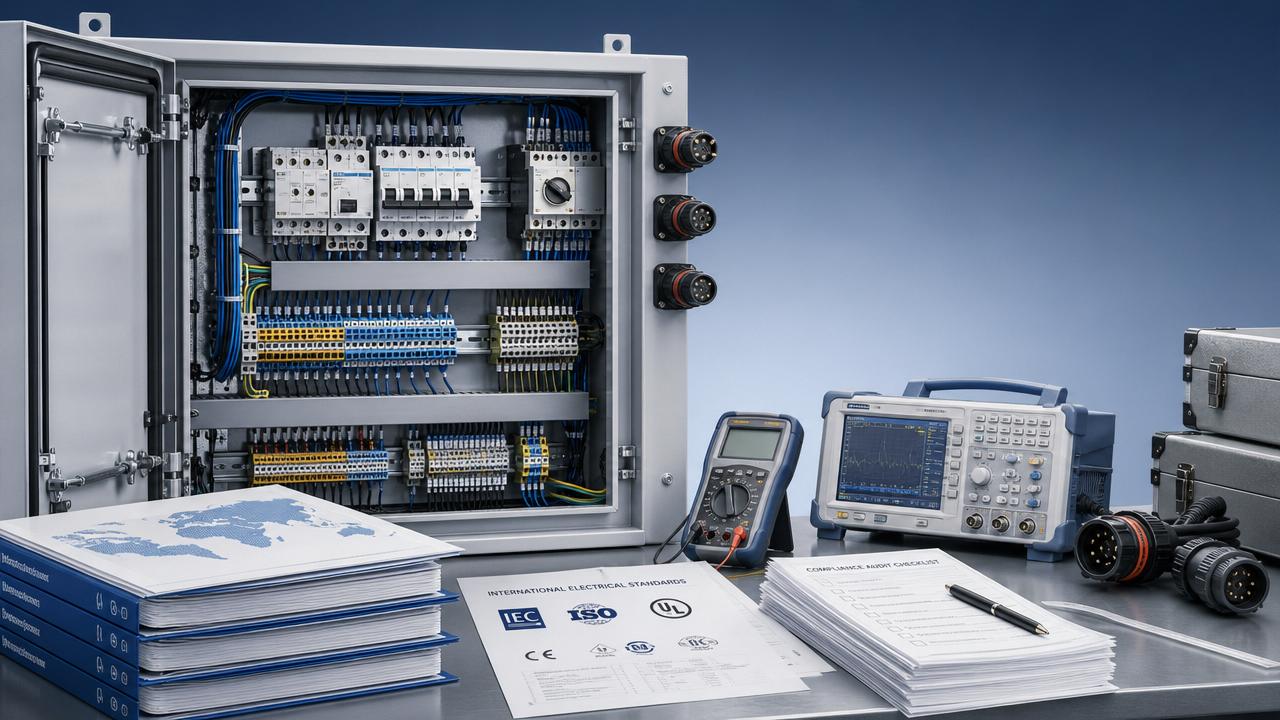
For project managers and engineering leads, overlooking international electrical standards can trigger costly redesigns, failed inspections, and delayed market entry. This article highlights the most common compliance mistakes that slow approval across global projects, helping you identify hidden risks early, align technical decisions with regulatory demands, and keep complex electrical programs moving forward with greater confidence.
In cross-border electrical projects, approval delays rarely come from one dramatic failure. More often, they result from 5 to 7 small decisions made too early, too late, or without the right regulatory context. For OEM programs, industrial tooling lines, control cabinets, power distribution assemblies, and integrated equipment exports, these mistakes can add 2 to 12 weeks to validation timelines.
For readers working in sourcing, engineering coordination, factory launch, or multi-country deployment, understanding international electrical standards is no longer a specialist concern. It is a project control issue, a commercial risk issue, and in many cases, a market entry issue.
Why Electrical Compliance Delays Start Earlier Than Most Teams Expect
Many teams assume compliance begins at testing. In practice, approval risk starts during concept selection, BOM planning, enclosure design, and supplier qualification. If the project scope includes 2 or more target markets, such as the EU, North America, and Southeast Asia, one design choice may satisfy one region while creating a gap in another.
This is especially common in industrial components and precision manufacturing environments, where electrical hubs, panel assemblies, control logic modules, connectors, cable systems, and molded parts must work as one system. GHTN tracks these approval bottlenecks because they often appear where mechanical and electrical decisions overlap.
The hidden cost of “almost compliant” designs
A design that is 90% aligned with international electrical standards may still fail inspection if the remaining 10% affects creepage distance, grounding continuity, component marking, short-circuit rating, or documentation completeness. Rework in these areas is rarely limited to paperwork. It often affects tooling, enclosure cutouts, wiring routes, and supplier lead times.
In practical terms, one non-compliant terminal block, one uncertified power supply, or one enclosure with insufficient ingress protection can force a redesign loop of 7 to 21 days. If replacement parts require overseas procurement, that loop may extend to 4 to 8 weeks.
Where project teams underestimate approval complexity
- Assuming CE marking alone covers all electrical acceptance requirements
- Using supplier declarations without checking scope, edition, or product variant
- Mixing components certified under different assumptions or installation conditions
- Ignoring local deviations in earthing, voltage ranges, or cable color coding
- Treating documentation as a final-stage task instead of a controlled project stream
These mistakes are common in fast-moving projects with 3 to 5 stakeholder groups: procurement, engineering, manufacturing, quality, and market access. Without one owner coordinating the compliance path, standards gaps remain invisible until testing or customer audit.
The Most Common International Electrical Standards Mistakes That Delay Approval
The approval issues below appear repeatedly across industrial electrical assemblies, automation systems, tooling equipment, and export-ready hardware platforms. Most are preventable when teams review standards alignment before prototype freeze.
Mistake 1: Designing for one market and retrofitting for another
A panel or device built first for one domestic code base often runs into trouble when exported. Voltage tolerance, plug configuration, disconnect requirements, overcurrent protection expectations, and labeling rules can differ enough to require physical redesign. A retrofit approach may work for low-risk accessories, but it often fails for integrated electrical systems.
Project managers should ask a simple early question: will this platform serve 1 market, 2 markets, or a global multi-region rollout? The answer affects component selection, enclosure space, cable routing reserve, and document structure from day 1.
Mistake 2: Relying on incomplete component certifications
A certified part is not automatically certified in every end-use condition. Many approvals are conditional. A relay may be approved only within a specified temperature band. A cable gland may require a certain enclosure wall thickness. A molded connector may be valid only for a limited current range such as 10A to 16A.
If engineers or buyers check only the logo on the part and not the certification file scope, the final assembly may fail. This is one of the most frequent international electrical standards mistakes in distributed sourcing projects.
What to verify before release
- Applicable standard edition and regional acceptance
- Rated voltage, current, temperature, and fault conditions
- Mounting orientation or enclosure dependency
- Required accessories, spacings, or protective devices
- Traceable test reports or declarations from the actual manufacturer
Mistake 3: Overlooking enclosure, ingress, and environmental ratings
Electrical approval does not stop at circuitry. In many industrial settings, enclosure ratings are tied to safety, service life, and inspection outcome. A system intended for washdown, dust exposure, outdoor use, or hot process lines may require IP54, IP65, or higher depending on the installation environment.
When teams specify a compliant internal electrical layout but pair it with an under-rated housing, approval can stall. This is common in hardware-integrated systems where molded housings, cable entries, gaskets, and mounting surfaces are designed by different suppliers.
The table below shows how frequent approval mistakes map to project impact and typical delay windows.
The pattern is clear: most delays are not caused by one catastrophic design flaw. They are caused by cross-functional disconnects. Approval timelines slip when electrical engineering, mechanical design, and sourcing move on different assumptions.
Mistake 4: Treating documentation as an afterthought
Even when hardware is technically acceptable, poor documentation can stop shipment approval or customer acceptance. Depending on the project, reviewers may expect wiring diagrams, component lists, protection coordination details, installation instructions, warning labels, declarations, and maintenance guidance.
If these files are assembled in the final 3 to 5 days before submission, version conflicts become likely. A revised fuse rating may not appear in the drawing set. A supplier substitution may not be reflected in declarations. These small mismatches often trigger formal review comments.
Mistake 5: Ignoring mechanical-electrical interfaces
In the industrial parts sector, electrical compliance frequently depends on mechanical precision. Hole positioning, gland spacing, heat dissipation clearances, busbar support geometry, molded insulation barriers, and panel thickness can all affect approval. A tolerance drift of even ±0.5 mm in a critical mounting area may alter spacing or compromise fit.
This is where platforms like GHTN add value. Compliance is not only about the electrical code. It is also about the manufacturability of the components that make compliance possible at scale.
How Project Managers Can Build a Faster Approval Path
A practical compliance strategy does not need to slow development. It needs to introduce checkpoints at the right stages. In most industrial programs, 4 control gates are enough to reduce approval surprises significantly: concept review, design freeze, prototype validation, and pre-submission audit.
Set standards scope before supplier nomination
Before nominating electrical or electro-mechanical suppliers, define the intended countries, voltage classes, environmental conditions, and applicable installation context. This step takes hours, but skipping it can cost weeks. It also helps buyers avoid selecting low-cost parts that later fail regional approval expectations.
For example, if a control assembly may serve indoor plants today but outdoor utility cabinets within 12 months, the initial enclosure and cable entry strategy should account for the higher risk condition. Retrofitting later is usually more expensive than reserving space early.
Use a structured compliance review checklist
The most reliable teams use repeatable review logic, not memory. A 15 to 25 point checklist covering ratings, spacings, labels, protective devices, environmental limits, and evidence files can catch many international electrical standards issues before external review begins.
The checklist framework below is useful for project managers coordinating engineering, quality, and procurement across multiple factories or supplier tiers.
This structure works because it ties compliance to stage-gate discipline. Instead of asking whether the product is compliant in general, it asks whether the evidence is complete at each project milestone.
Create one owner for technical file integrity
Approval packages fail when no one controls revisions across drawings, supplier certificates, user manuals, and label artwork. Assign one project owner or document controller responsible for final consistency. In medium-complexity programs with 30 to 80 line items, this role can prevent expensive submission rework.
That owner does not need to be the lead engineer. Often, the best fit is a project coordinator with enough technical literacy to spot mismatches and enough authority to stop release when evidence is incomplete.
A simple 4-step control method
- Lock the approved component list before pilot build
- Match every critical part to a traceable declaration or test file
- Review labels, diagrams, and ratings against the released BOM
- Run a pre-audit 5 to 10 days before formal submission
What Procurement and Engineering Leaders Should Ask Suppliers
Supplier conversations often stay too commercial. Price, MOQ, and lead time matter, but they are not enough when approval speed is a strategic target. For hardware, electrical, and mold-linked components, compliance readiness should be part of supplier evaluation from the first RFQ round.
Questions that reveal approval risk early
- Which international electrical standards are relevant to this component and intended end use?
- Does the available declaration cover the exact variant, material, and rating being quoted?
- What are the normal lead times for compliant replacements if a part is rejected?
- What installation limits affect approval, such as temperature, enclosure class, or conductor size?
- Can the supplier support revised markings, documentation, or regional labeling requirements within 7 to 10 days?
These questions are especially important when sourcing from multiple countries. The supply base may be strong in fabrication quality but weak in document control, regional standards interpretation, or revision traceability.
Why component ecosystems matter
In industrial programs, approval performance depends on the ecosystem, not just the individual part. A compliant terminal, enclosure, molded insert, and cable gland can still fail together if they were not validated as an installed combination. This is common in customized control units and hybrid electromechanical products.
That is why engineering leaders should prefer suppliers and information partners who understand underlying component interactions. GHTN’s focus on precision tools, electrical systems, and mold manufacturing reflects this reality: electrical approval is often won or lost at the component interface level.
Practical FAQ for Global Project Teams
Does a certified component guarantee the final machine or assembly will pass?
No. Component certification supports compliance, but the final system is judged on installation, protection, spacing, labeling, documentation, and use conditions. Assembly-level review is still required.
When should standards review start in a new project?
Ideally at concept stage, before supplier nomination and before the mechanical envelope is frozen. Starting 6 to 10 weeks earlier can eliminate many late redesign loops.
What is the most overlooked issue in multi-country approval?
Documentation consistency is one of the most overlooked issues. Teams often focus on product construction but underestimate how quickly a mismatched BOM, drawing revision, or label set can delay acceptance.
How can SMEs reduce compliance risk without building a large internal team?
They can use a staged approach: define target markets early, standardize a checklist, prequalify component evidence, and work with technical resource partners that understand both manufacturing constraints and international electrical standards.
Approval delays are rarely random. They usually come from avoidable gaps in scope definition, component evidence, documentation control, and interface design. For project managers and engineering leaders, the fastest path is not rushing to the test lab. It is building compliance logic into sourcing, design, and release decisions from the beginning.
If your team is navigating global launches across hardware, electrical assemblies, or precision manufacturing systems, GHTN provides decision-oriented insight into component selection, standards alignment, and cross-border industrial execution. Contact us today to discuss your project, get a tailored compliance support perspective, or explore more solutions for reducing approval risk in international programs.
Related News