
CPSC Alert Flags Fire Risk in Industrial Connectors

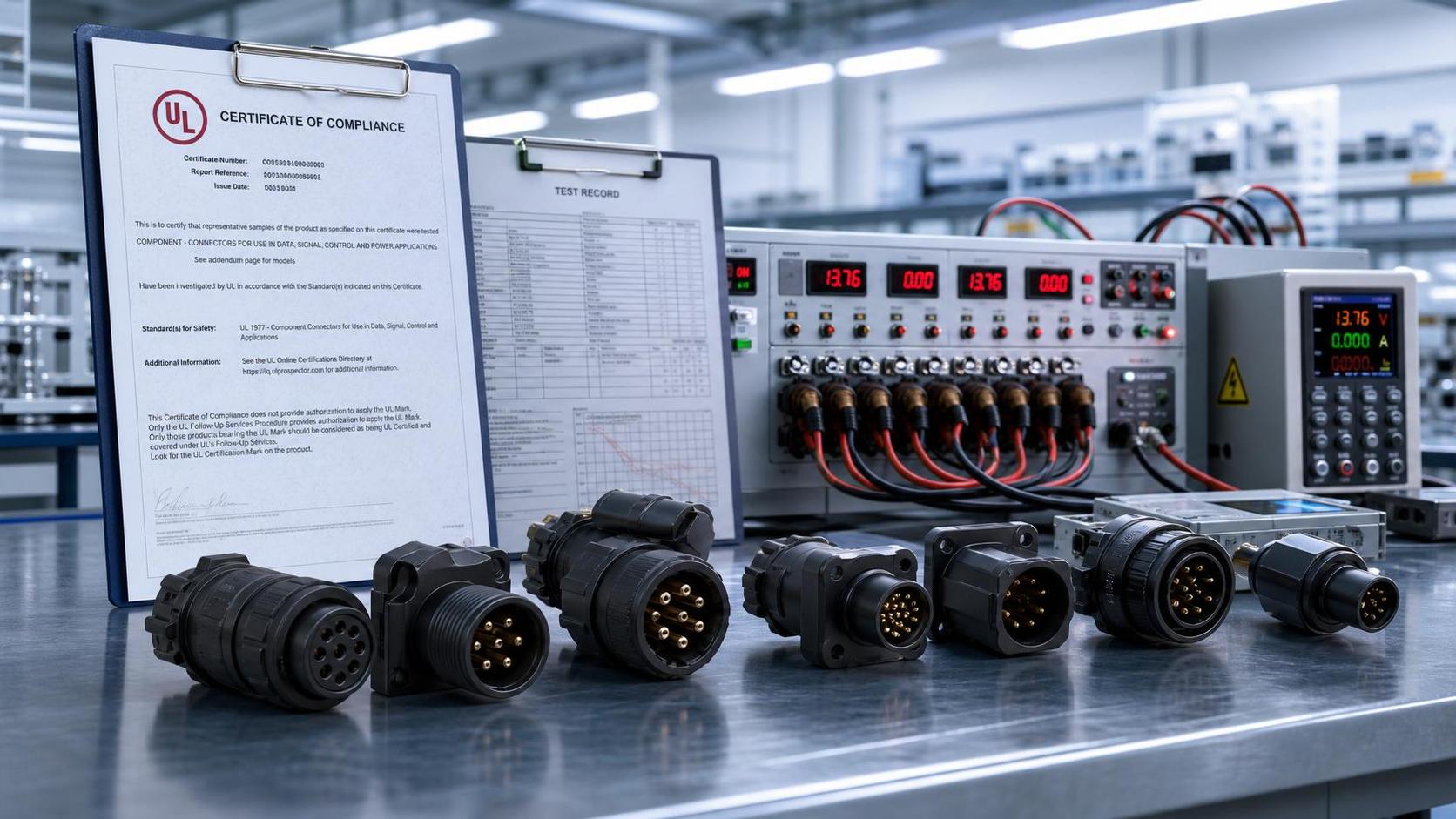
On July 1, 2026, the U.S. Consumer Product Safety Commission (CPSC) issued Safety Alert SA-2026-039 concerning several industrial connectors that had not completed overload and arc-resistance testing under UL 1077-2026 Edition 4, warning that they may enter thermal runaway under sustained load. For connector manufacturers, exporters, distributors, and industrial buyers, the immediate relevance is not only product safety exposure but also the speed at which listing access and documentation requirements are now affecting commercial continuity.
What the CPSC Alert Specifically Says
According to the information provided, the CPSC named multiple industrial connectors that had not passed the updated overload and arc-tolerance testing required by UL 1077-2026 Edition 4. The agency stated that these products may present a fire risk because they are more likely to experience thermal runaway during continuous loading conditions.
The alert was released on July 1, 2026, under reference number SA-2026-039. Although the notice is not described as a mandatory regulation, it has already led major distribution platforms, including Grainger and MSC, to begin temporary delisting reviews. Chinese connector exporters are required to provide updated UL certification documents within 72 hours in order to restore listings.
Where the Pressure Is Likely to Appear First
Export-facing manufacturers are dealing with proof-of-compliance risk
From an industry perspective, manufacturers that rely on export channels may be affected first because the issue is tied directly to whether products have completed testing under the latest UL 1077 edition. The most immediate business impact is likely to appear in certification documentation, listing status, and customer-facing compliance confirmation.
Distributors are being pushed into rapid screening
Distributors and marketplace operators may feel pressure in product review and assortment management because the alert has already triggered temporary delisting checks on major platforms. What deserves closer attention is that even a non-mandatory alert can still change platform behavior quickly when product safety and fire risk are involved.
Procurement teams may need to reassess approved products
For procurement-side participants, the issue may affect approved vendor lists, sourcing continuity, and delivery planning. If a listed connector is pulled for review, the concern is not limited to compliance paperwork; it may also influence order timing, supplier confirmation, and the ability to keep project schedules stable.
Supply chain service providers may face documentation bottlenecks
Analysis shows that service providers involved in export coordination, trade documentation, or account management may be affected through shortened response windows. The stated 72-hour requirement for updated UL certification raises the importance of document readiness, internal handoff speed, and clear communication between factories, exporters, and sales channels.
What Companies Should Watch Closely Now
Separate the alert itself from platform enforcement
Companies should distinguish between the formal status of the CPSC notice and the practical effect it is already having in distribution channels. The alert is described as non-mandatory, but the commercial consequence is already visible through temporary delisting review. That distinction matters for internal decision-making, customer communication, and response prioritization.
Check whether affected connector lines align with the updated UL test basis
What deserves closer attention is whether current industrial connector products have completed overload and arc-resistance testing under UL 1077-2026 Edition 4. For businesses selling into the U.S. market or through major industrial distributors, the immediate operational question is whether the available certification basis matches what platforms are now asking to see.
Prepare documentation for short-notice review windows
The 72-hour certificate submission requirement indicates that document retrieval and validation speed may now be as important as the certificate itself. Exporters and channel-facing teams should pay attention to where updated UL records are held, who can release them, and how quickly they can be delivered to distributors or customers when listing access is interrupted.
Manage customer and channel communication carefully
Observably, this kind of alert can create uncertainty even before any broader rule change is confirmed. Companies should therefore pay attention to how they explain product status, testing basis, and documentation readiness to buyers and channel partners, especially where shipments, listings, or replenishment plans depend on immediate clarification.
Why This Looks Like More Than a Brief Compliance Note
Analysis shows that this development should not be read only as an isolated warning about a few connector models. It also signals how quickly updated testing expectations can move from a standards issue into a channel-access issue. At this stage, it is more appropriate to understand the alert as an active market signal rather than as a fully settled regulatory outcome.
Observably, the most important point is the linkage between product safety language, platform review behavior, and short response deadlines for exporters. That combination suggests the industry should continue watching not just the wording of alerts, but also how distributors and buyers translate them into immediate operating requirements.
How to Read the Current Situation
At present, this is best understood as a near-term compliance and channel-risk event with possible wider implications if similar review actions spread across industrial distribution networks. The confirmed facts do not yet establish a broader regulatory shift, but they do show that updated UL certification status has become commercially consequential very quickly for affected industrial connector suppliers.
A balanced reading is that the alert matters now because it changes what market participants may need to prove, how fast they may need to prove it, and where business disruption may first appear. The longer-term significance still requires continued observation.
Basis of This Article and What Still Needs Verification
This article is based on the user-provided news title, event date, and event summary concerning the CPSC Safety Alert issued on July 1, 2026. In coverage of this type, relevant source categories typically include official agency notices, company statements, industry association updates, reporting by authoritative trade media, and standards organization documents.
No specific official source link was provided in the input, so the exact source document link remains to be continuously verified. Follow-up attention should focus on whether the CPSC issues additional clarification, whether distributor review standards expand or change, and whether documentation expectations for affected exporters become more detailed over time.