
EU Connector Rules Tighten Before Oct 2026

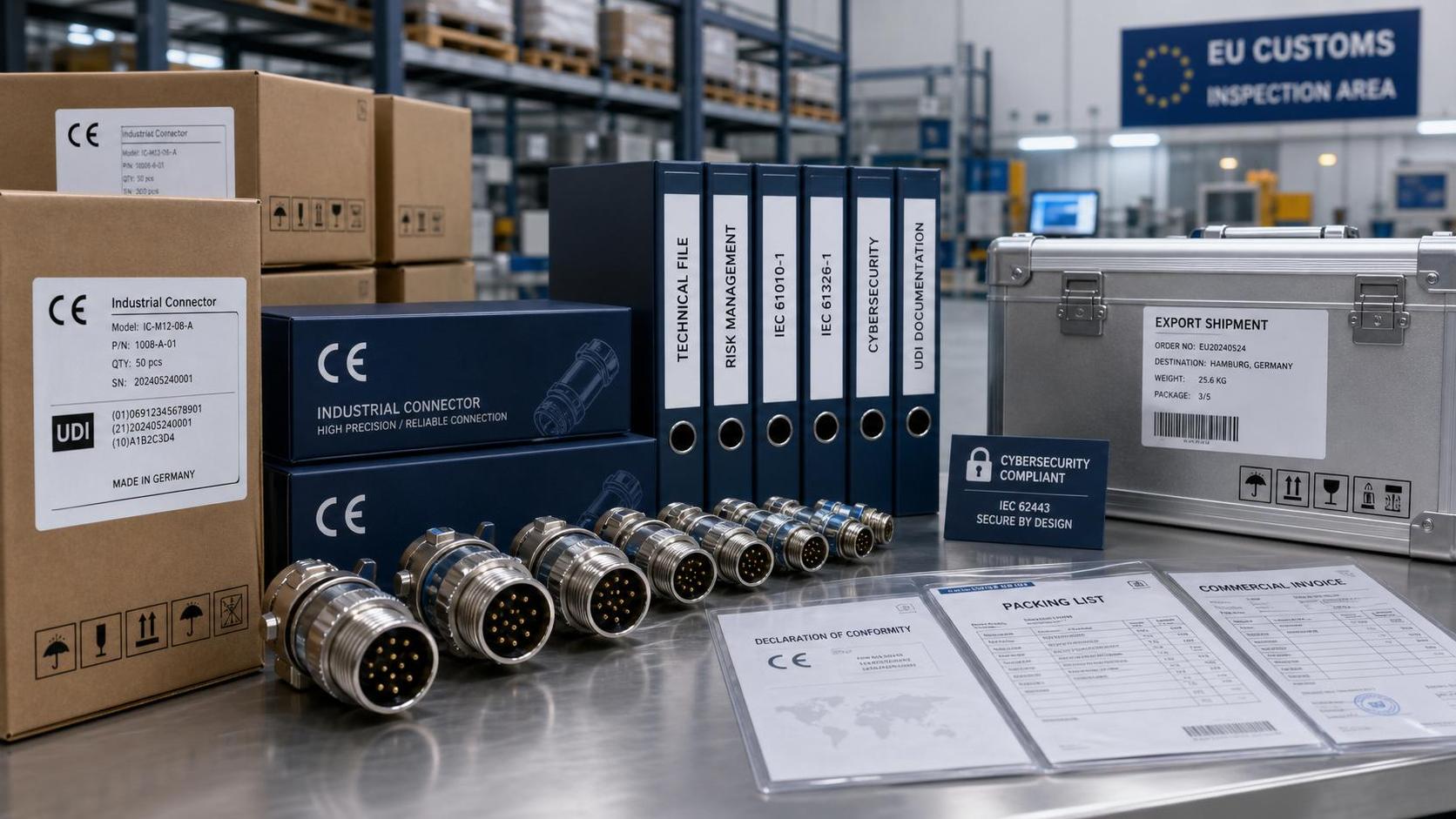
On July 2, 2026, the European Commission adopted Delegated Regulation (EU) 2026/1192, introducing new CE marking-related requirements for industrial connectors sold in the EU market after October 1, 2026. The core change is that these products will need both Unique Device Identification (UDI) and a cybersecurity conformity declaration, while non-compliant goods will not pass customs clearance. For connector manufacturers, exporters, EU distributors, and system integrators, this is worth close attention because the change links compliance documentation directly to market access and delivery execution.
What the new regulation changes
According to the information provided, Delegated Regulation (EU) 2026/1192 was adopted by the European Commission on July 2, 2026. It amends the Machinery Directive and applies to industrial connectors placed on the EU market after October 1, 2026.
The regulation requires two elements for these products: Unique Device Identification (UDI) and cybersecurity conformity declarations. The information also states that products failing to meet these requirements will be barred from customs clearance.
The stated scope of impact includes global suppliers exporting industrial connectors to EU distributors and system integrators.
Where the pressure may show first across the supply chain
Export-facing manufacturers may face a documentation bottleneck
From an industry perspective, manufacturers and direct exporters are likely to feel the change first because the new requirements are tied to products being placed on the EU market. The immediate impact may appear in product documentation, shipment readiness, and pre-export compliance checks. What deserves closer attention is whether existing connector product lines and shipment batches are supported by the required UDI and cybersecurity declarations before the October 2026 deadline.
EU distributors may need tighter intake controls
Analysis shows that EU distributors could be affected at the receiving and customs stage. Since non-compliant products may be blocked from customs clearance, distributors may need to pay closer attention to incoming product records, declaration completeness, and supplier communication. The practical issue is not only whether product demand exists, but whether the paperwork attached to those goods is sufficient for entry.
System integrators may need earlier supplier confirmation
Observably, system integrators could face indirect disruption if connector supply is delayed or interrupted by compliance gaps. Their focus may shift toward confirming whether sourced components intended for EU projects can be legally placed on the market after October 1, 2026. In business terms, the exposure is likely to sit in procurement timing, delivery certainty, and component substitution risk.
Supply chain service providers may see higher verification demands
For logistics, customs-related, and supply chain coordination roles, the change may increase the importance of document review before cross-border movement. Analysis shows that once customs clearance becomes a hard enforcement point, missing or incomplete compliance materials can become an operational issue rather than only a regulatory one.
What companies should monitor now
Separate confirmed requirements from internal assumptions
The confirmed facts are clear: UDI and cybersecurity conformity declarations will be required for industrial connectors placed on the EU market after October 1, 2026, and non-compliant goods will not clear customs. What deserves closer attention is avoiding internal over-interpretation beyond those stated points until more official wording or implementation detail is reviewed.
Identify which connector flows are exposed to the EU deadline
Companies with global shipments should examine which product lines, customer contracts, and delivery schedules involve industrial connectors entering the EU market after the stated date. Analysis shows this is especially relevant for businesses supplying EU distributors and system integrators, because the regulatory trigger is tied to market placement rather than only factory output.
Check whether current compliance files support customs-facing execution
Observably, this development is not only about technical compliance in principle. It also has a direct customs consequence. That means companies should pay attention to whether their existing files, declarations, and product identification practices are ready for practical use in shipment and clearance workflows.
Prepare for customer and supplier communication pressure
From an industry perspective, questions are likely to arise quickly between exporters, distributors, and integrators about product status, shipment eligibility, and supporting documents. Businesses should be ready to align internal compliance teams, sales teams, and supply partners around one consistent explanation of what is already required and what still needs verification.
Why this looks like more than a short-term compliance notice
Analysis shows this development is better understood as a concrete market-access signal rather than a routine administrative update. The reason is straightforward: the requirement is linked not only to CE marking-related compliance expectations, but also to customs clearance. That creates a direct connection between regulatory readiness and the ability to deliver goods into the EU.
At the same time, it is more appropriate to understand this as an active compliance transition rather than a fully settled operating reality for every affected company. The rule has been adopted, but many businesses will still need to determine how the stated requirements map onto their product portfolios, declarations, and shipping processes.
Observably, the industry should continue watching this topic because the commercial impact will depend not just on the legal text, but on how consistently the requirements are checked in practice across supply relationships and border procedures.
How to read this development at this stage
This update matters because it places industrial connector compliance into a narrower and more operational frame: no UDI, no cybersecurity conformity declaration, and potentially no customs clearance for affected products entering the EU market after October 1, 2026. For the industry, the immediate relevance is less about broad market speculation and more about document readiness, supply continuity, and timing discipline.
Current observation suggests this should be read as a confirmed regulatory change with direct business implications, while still requiring continued verification of how companies apply it in day-to-day trade and delivery processes.
Basis of this article and points for continued verification
This article is based on the user-provided news title, event date, and event summary concerning Delegated Regulation (EU) 2026/1192, adopted on July 2, 2026, and its stated requirements for UDI and cybersecurity conformity declarations for industrial connectors placed on the EU market after October 1, 2026.
For developments of this kind, commonly relevant source types may include official notices, regulatory announcements, company compliance statements, industry association updates, authoritative media coverage, and standard-related documents. No specific official source link was provided in the input, so the exact official text and any later interpretive materials still need continued verification.
What deserves closer attention going forward is whether additional official clarification emerges on implementation language, document expectations, and the practical handling of customs-facing compliance checks.