
Electrical components selection errors that cause field failures

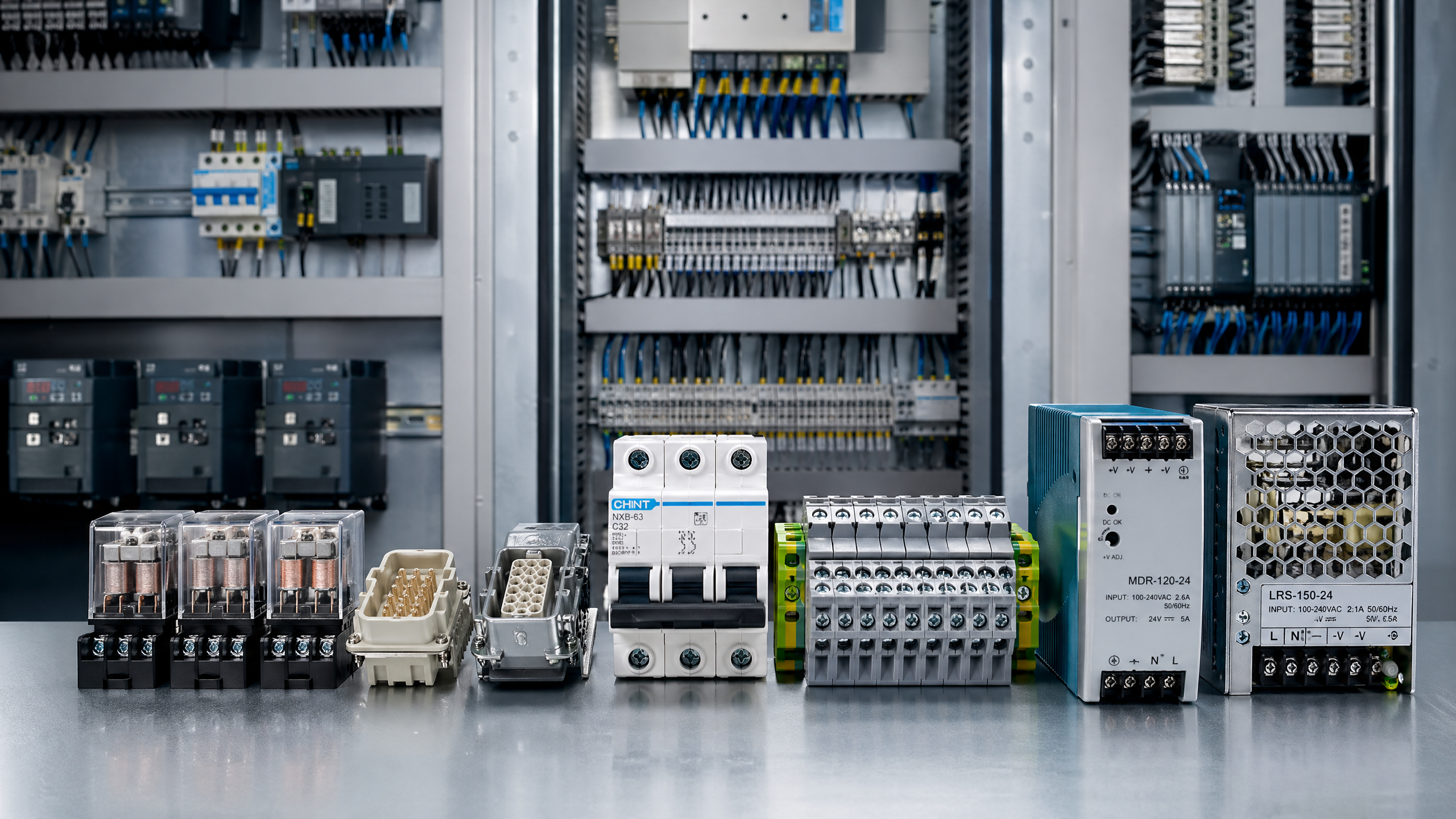
Electrical components often fail in the field not because of design intent, but because of selection mistakes made upstream. For teams working across industrial automation, precision engineering, injection molding, die casting, mold design, and mechanical tools, this technical analysis explains how mismatched ratings, environments, and compliance assumptions can undermine reliability, safety, and lifecycle cost.
Why do electrical components fail in the field even when the original design looks correct?
A large share of field failures begins with a simple assumption: if the schematic is correct, the component choice must also be correct. In practice, electrical components selection errors often hide in rating interpretation, environmental mismatch, and incomplete understanding of duty cycle. A relay that is acceptable at 25°C in a control cabinet may become unreliable at 50°C near a hydraulic unit. A connector chosen for nominal current may overheat when bundled in a dense enclosure. A power supply that passes bench testing may suffer brownout events when line fluctuation reaches a typical industrial range of ±10%.
This issue matters across industries because the weak link is rarely dramatic at the start. The first signs are often intermittent trips, unstable PLC inputs, nuisance fuse operation, contact pitting, insulation hardening, or accelerated corrosion after 6 to 18 months of service. For OEMs, distributors, maintenance teams, and procurement managers, these are not only technical defects. They become warranty cost, downtime exposure, missed output targets, and avoidable replacement inventory.
In mold shops, automated cells, die-casting stations, and machine tool systems, component loading can be highly cyclical. A sensor may switch tens of thousands of times per day. A solenoid coil may face repeated heat rise in 30-second to 5-minute intervals. A terminal block may sit in vibration, oil mist, and conductive dust at the same time. The design can still be “correct” on paper while the chosen electrical part is wrong for the real operating envelope.
What kinds of selection mistakes are most common?
The most common mistakes are not exotic. Teams often confuse nominal values with usable values, assume indoor conditions are mild, or treat certification marks as proof of universal suitability. Another frequent error is selecting by unit price alone without calculating total lifecycle cost over 3 to 7 years. A low-cost switch, terminal, fuse holder, or cable gland can trigger repeated service interventions that cost far more than the original saving.
- Using nameplate current instead of derated current under enclosure heat, grouping, or altitude.
- Ignoring inrush current, especially for motors, heaters, LED drivers, capacitive loads, and switched-mode power supplies.
- Choosing IP rating without checking chemical exposure, washdown frequency, UV exposure, or thermal cycling.
- Assuming the same component is suitable for both control circuits and power circuits.
- Overlooking vibration, shock, cable movement radius, or connector mating cycle limits.
When these factors stack up, even premium assemblies can underperform. That is why technical evaluation should move beyond catalog headline values and into application-specific stress conditions.
Which electrical component selection errors cause the highest failure risk in industrial use?
The highest-risk errors are usually linked to thermal stress, electrical transients, environmental attack, and mechanical instability. These appear across control panels, molding machines, robotic end effectors, spindle systems, heaters, pumps, and distributed I/O cabinets. Even where components meet basic voltage and current requirements, the wrong protection curve, insulation class, or contact material can shorten service life by 30% to 70% in demanding applications.
For example, field failures often come from selecting a contactor based on steady-state motor current while ignoring starting current that may be 5 to 8 times higher for a few seconds. Similarly, choosing a PCB relay for resistive duty when the actual load is inductive will accelerate contact erosion. In sensor circuits, many issues trace back to grounding, shielding, and surge exposure rather than sensor quality itself.
The table below summarizes frequent electrical components selection errors and the field symptoms they create. It is useful for engineering teams, buyers, quality managers, and project owners who need a quick diagnostic view before approving a BOM or supplier change.
The pattern is clear: most field issues are not isolated to one device. They spread through the system. A wrong fuse curve affects startup behavior, a poor connector choice raises resistance, and an unprotected coil creates transients that weaken nearby electronics. This is why component selection should be reviewed as a chain of interactions rather than a list of separate parts.
How serious is ambient temperature mismatch?
Temperature mismatch is one of the most underestimated electrical component selection errors. Cabinet temperatures commonly run 10°C to 20°C above room temperature, and localized hotspots near drives, transformers, heaters, or VFDs can be higher. Many components with apparently comfortable margins at 25°C lose real carrying capacity at 40°C, 50°C, or 60°C. This affects breakers, power supplies, relays, cables, connectors, and electronic modules alike.
What should teams verify?
- Published derating curves across actual enclosure temperature, not only ambient room temperature.
- Heat accumulation from neighboring devices spaced less than 20 to 50 mm apart.
- Ventilation assumptions versus real cabinet dust, filter maintenance intervals, and fan reliability.
- Whether insulation, seals, and plastics remain stable over repeated thermal cycling.
For quality and safety managers, a thermal review before release often prevents months of troubleshooting later. It is a small engineering step with outsized impact on field reliability.
How can buyers and engineers judge whether ratings really match the application?
The first rule is to separate nominal ratings from application ratings. Many electrical components are sold with values that are technically accurate but incomplete for a specific use case. Procurement teams may compare only voltage, current, and unit cost, while engineering needs to also verify load category, inrush profile, switching frequency, operating temperature, pollution degree, and installation method. In practical selection work, at least 6 to 10 parameters often matter for a single component family.
A useful judgment method is to start from the stress profile, not the catalog page. Ask what the component experiences in the first 3 seconds, first 30 minutes, and after 3 years. During startup, does it see surge, inrush, vibration, or unstable supply? During routine operation, is the duty continuous, intermittent, or pulsed? Over time, does it face contamination, oxidation, maintenance handling, or thousands of mating cycles? This sequence reveals hidden mismatch faster than a standard parts comparison sheet.
The following comparison table helps teams validate whether a component rating is merely acceptable in theory or appropriate in real industrial service. It is especially relevant for OEMs, system integrators, procurement specialists, and technical evaluators managing multi-market equipment.
This table shows why a lower initial price can still be a weaker decision. If a connector replacement takes 45 minutes of labor and a machine stop costs one production cycle, the “cheaper” option may become more expensive within a single year. For commercial evaluators and decision-makers, this is the point where technical due diligence directly supports margin protection.
Which standards and documentation should be checked early?
Teams should confirm the standards relevant to the destination market, installation method, and end equipment class as early as possible. In many projects, compliance assumptions are discovered too late, after layout, sourcing, or pre-production. General references may include IEC-based component standards, UL-related considerations for certain markets, and application-specific requirements for industrial control assemblies. The key is not to collect marks blindly, but to verify whether the component is recognized for the intended use condition.
Documentation should include derating information, terminal torque, conductor range, insulation data, environmental limits, and if relevant, short-circuit coordination or overvoltage category notes. Missing documents are a warning sign during supplier evaluation. They create risk for engineering release, quality audits, and after-sales support.
What mistakes happen when environment, duty cycle, and installation conditions are underestimated?
Many electrical components selection errors come from treating the environment as static. Real industrial settings are dynamic. A die-casting cell may experience radiant heat, shock, and airborne contamination. An injection molding machine may combine hydraulic oil vapor, cabinet heat, and repetitive motion. A tool grinding line may introduce conductive dust and coolant spray. A warehouse application may involve winter startup at 0°C and summer operation above 40°C. One generic component choice rarely covers all these conditions equally well.
Duty cycle is another frequent blind spot. A device running at 20% utilization in a lab may operate at 70% to 90% utilization in production. A relay that switches 500 times per day in testing may switch 10,000 times per day in a real cell. Connectors on maintenance-intensive equipment may hit their mating cycle limit long before the machine reaches midlife. These gaps explain why field reliability can differ sharply from prototype results.
Installation conditions also matter more than many teams expect. Cable bend radius, panel density, vertical versus horizontal mounting, torque consistency, conductor class, and shield termination all influence long-term behavior. In a compact cabinet, a 15% reduction in air circulation can meaningfully change component temperature rise. In mobile or vibrating assemblies, a connector retention feature may be the difference between stable operation and intermittent faults.
What are typical high-risk scenarios?
- High-cycle sensor and actuator circuits on automated lines where switching frequency exceeds initial assumptions.
- Heated mold systems and thermal control loops where cable insulation and terminal temperature class are marginal.
- Distributed I/O near wet or oily process zones where connector sealing degrades after repeated maintenance access.
- Machine retrofits where new drives or electronics increase transient stress on legacy protective devices.
- Global equipment shipments where one BOM is used across regions with different line quality and compliance expectations.
How can teams reduce this risk before release?
A practical method is to build an application conditions sheet during design review and sourcing approval. This sheet should capture at least temperature range, humidity profile, contaminant type, vibration level, power quality, maintenance frequency, and required service life target such as 3 years, 5 years, or 10 years. When this information is tied directly to component selection, errors become easier to catch before procurement locks the BOM.
Cross-functional review is equally important. Operators know where contamination accumulates, maintenance teams know which parts loosen or overheat, and buyers know where supplier substitutions are likely. Combining these perspectives often prevents the quiet selection mistakes that design teams alone may miss.
How should procurement, quality, and engineering work together to avoid repeat failures?
Avoiding repeat failures requires a structured handoff between technical requirements and purchasing decisions. In many organizations, the root problem is not poor intent but fragmented ownership. Engineering defines performance, procurement controls cost and lead time, and quality manages incoming consistency, yet no one owns the final application suitability check. That gap allows electrical components selection errors to persist through revisions, supplier switches, and volume ramps.
A useful framework is to classify components into risk tiers. Tier 1 parts such as protection devices, switching elements, power supplies, connectors in harsh zones, and safety-relevant interfaces should receive deeper review than generic low-risk items. For these components, the approval package should cover application rating, derating logic, alternate part criteria, and acceptance checks at incoming inspection. Even a 20-minute review per critical part can prevent months of downstream service impact.
Supplier change control is another critical point. A part with equivalent dimensions is not necessarily equivalent in contact plating, insulation system, sealing material, spring force, or endurance profile. Commercially, substitutions may look efficient during a 4-week supply disruption. Technically, they may introduce failure modes that only appear after installation. For project managers and distributors, this is where disciplined technical comparison protects delivery commitments.
What should a pre-purchase review checklist include?
Before releasing a purchase order or approving an alternate source, teams should answer a short but specific set of questions. This approach is especially effective for industrial OEMs, maintenance-intensive users, and global sourcing teams balancing price, lead time, and reliability.
- What is the real load profile, including startup, peak, and repetitive switching conditions?
- What environmental stresses will the part face over the full operating year?
- Has derating been checked for cabinet heat, grouping, altitude, or enclosure effects?
- What market or customer compliance requirements apply to this exact use case?
- Are torque, wiring, shielding, and installation constraints documented for production teams?
- What is the service expectation in cycles, years, or maintenance intervals?
- If an alternate part is proposed, which parameters must remain non-negotiable?
When this checklist becomes part of project workflow, field failures become more predictable and more preventable. It also helps buyers defend technically sound choices when the cheapest offer does not meet the real risk profile.
What should companies confirm first if they want better component selection and fewer field returns?
The first priority is to confirm the operating reality, not the nominal requirement. For electrical components selection, the right questions usually involve application details that are missing from the first inquiry: load type, ambient range, enclosure conditions, startup behavior, switching frequency, target service life, and destination market. Without these details, it is easy to buy a part that is technically compatible but commercially risky.
The second priority is to identify where failure carries the highest business cost. A non-critical indicator lamp and a power distribution connector do not deserve the same evaluation effort. Teams should focus first on components whose failure can stop production, create safety exposure, trigger quality loss, or generate difficult on-site service. This prioritization is valuable for manufacturers, distributors, and end users alike.
The third priority is to align engineering and sourcing around lifecycle value. A robust component choice may increase the BOM slightly while reducing replacements, claims, and unplanned maintenance over a 24- to 60-month period. That tradeoff is often favorable once downtime, labor, and service access are included.
Why choose us for technical selection support and industrial sourcing insight?
GHTN focuses on the granular core of industry: underlying components, precision manufacturing tools, and the technical logic that links selection decisions to field performance. Our perspective is built for OEMs, technical evaluators, procurement teams, quality managers, distributors, and business decision-makers who need more than a parts list. We connect component behavior, manufacturing conditions, and market-facing requirements so selection decisions are grounded in real operating context.
If you are reviewing electrical components for automation systems, mold-related equipment, machine tools, or broader industrial assemblies, we can help you clarify the parameters that matter before purchase or redesign. Typical consultation topics include parameter confirmation, product selection comparison, environmental suitability, compliance requirement review, delivery cycle planning, sample support, and quotation communication for multi-supplier evaluation.
Contact us if you want to reduce field failure risk caused by electrical components selection errors, especially when the challenge involves cross-market sourcing, substitute part evaluation, harsh-environment applications, or balancing cost against lifecycle reliability. Early technical alignment usually saves far more than late corrective action.
Related News