
Common mistakes in reading electrical compliance standards

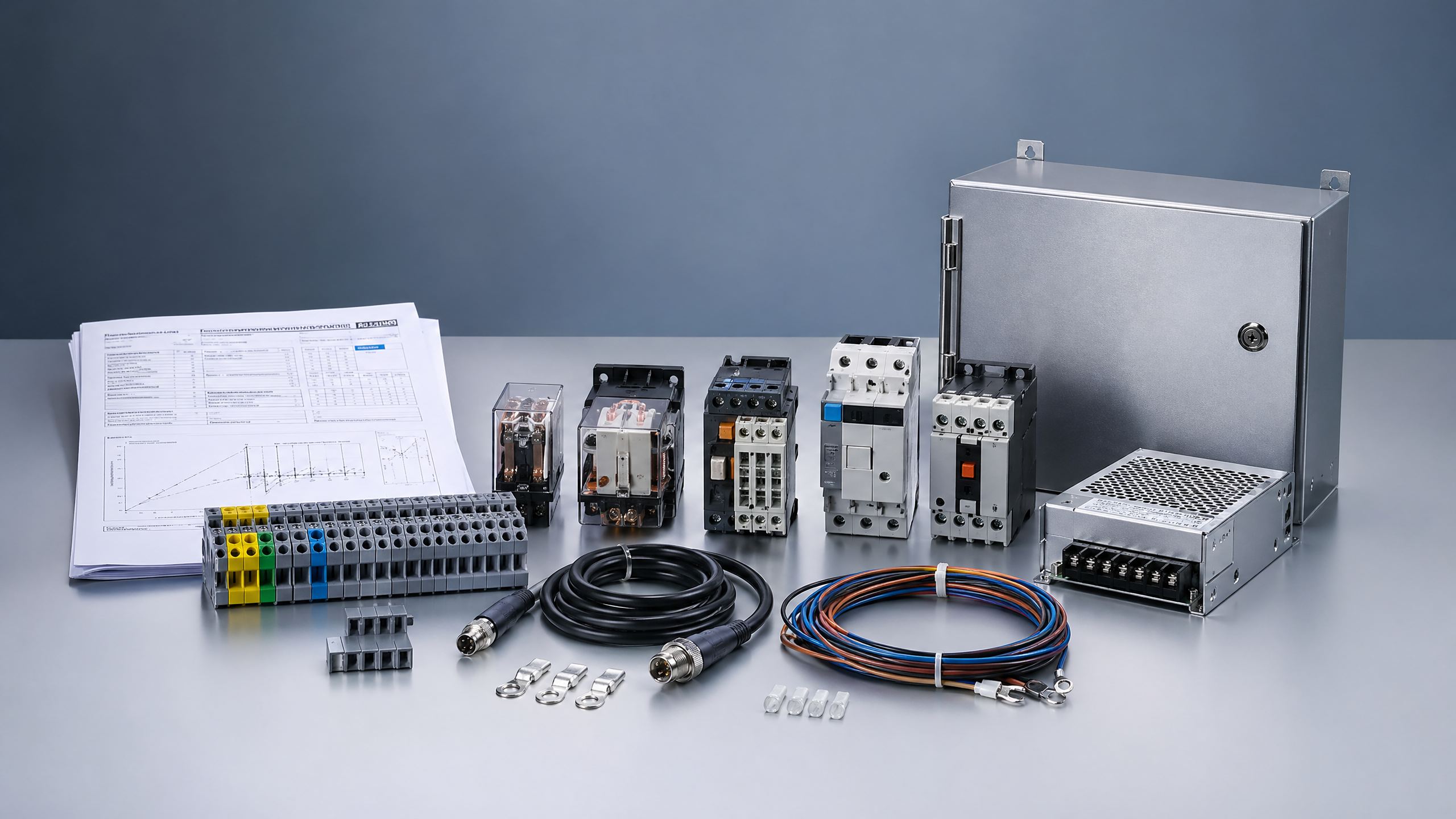
Misreading electrical compliance standards can lead to costly delays, safety risks, and weak market positioning in the hardware sector. For buyers, engineers, and quality teams, understanding standards through manufacturing logic and industrial standardization is essential—especially as greening components and industrial greening become critical in the high-end industrial market. This article highlights the most common reading mistakes and how to avoid them.
Why reading electrical compliance standards correctly matters
Electrical compliance standards are not just legal texts or certification checklists. In the broad hardware sector, they shape how products are designed, tested, sourced, labeled, installed, and maintained. A misread clause can change enclosure selection, insulation spacing, grounding method, wire temperature rating, or documentation scope. In practical terms, one wrong interpretation may add 2 to 8 weeks to a project cycle, trigger retesting, or block entry into a target market.
For technical evaluators and quality managers, standards are decision tools. For purchasers and project leaders, they are risk filters. For distributors and OEM-facing commercial teams, they define whether a component can move smoothly across supply chains. This is why industrial standardization is closely linked to operational efficiency. It is also why GHTN tracks electrical compliance standards as part of a larger industrial collaboration network connecting components, tools, and manufacturing systems.
A second reason this topic matters is market evolution. As high-end industrial market requirements become stricter, compliance is no longer assessed only by basic safety. Buyers increasingly examine material traceability, restricted substances, environmental declarations, and lifecycle consistency. In other words, greening components and industrial greening are now part of the reading framework. A standard may not directly say “green,” yet its requirements may influence material substitution, recyclability, or energy-related design choices.
What readers often assume incorrectly
Many professionals assume that a standard delivers a single, universal answer. In reality, most standards work inside a defined scope: product type, voltage range, environment, installation condition, user access level, or country-specific adoption path. A clause that applies to a factory control panel may not fully apply to a portable electrical tool. Likewise, a requirement intended for final equipment may not map directly to a subcomponent or mold-integrated assembly.
- Assuming a standard applies globally without checking regional adoption or deviations.
- Reading only test items while ignoring definitions, scope, exclusions, and normative references.
- Treating a component certificate as proof that the final assembly is automatically compliant.
- Confusing performance recommendations with mandatory compliance criteria.
These mistakes are common because electrical compliance standards sit at the intersection of manufacturing logic, engineering detail, and commercial timing. In complex projects, readers often focus on a visible requirement such as voltage or ingress protection, but miss linked conditions such as ambient temperature bands, conductor class, creepage distances, or installation orientation.
The most common reading mistakes in practice
The most frequent mistake is reading the requirement sentence without reading the definitions section. In electrical compliance standards, a single term such as “accessible,” “operator area,” “pollution degree,” or “continuous load” can determine the entire interpretation path. If teams skip these terms, they may specify the wrong hardware, overestimate safety margins, or underestimate testing obligations by 10% to 30% in documentation effort.
A second mistake is ignoring normative references. Standards rarely stand alone. They often refer to companion documents for materials, connectors, cables, protective devices, or laboratory methods. When a procurement team reads only the primary standard, it may source a part that looks compliant on a datasheet but fails under the referenced test method. This issue is especially common in electrical hubs, control accessories, and integrated hardware assemblies.
A third mistake is confusing component compliance with system compliance. A terminal block, relay, cable gland, or pneumatic-electrical interface may individually meet its own standard. That does not guarantee the complete machine, panel, or distribution assembly will pass. Heat buildup, spacing changes, enclosure interactions, and installation method can all alter compliance outcomes. In precision manufacturing environments, micron-level precision in mechanical fit still needs macro-level compliance validation in final operation.
Typical misreading patterns by function
Different teams tend to misread standards in different ways. Engineers may focus heavily on electrical diagrams but overlook marking and instructions. Purchasers may compare only certificate names without checking expiry, version year, or product family limits. Commercial teams may promise market access based on partial evidence. Safety managers may emphasize hazard prevention while underestimating recordkeeping and change-control requirements over a 12- to 24-month product lifecycle.
The table below summarizes common errors across roles in the hardware sector and related industrial supply chains.
The value of this table is not only in identifying errors but also in showing why electrical compliance standards should be read collaboratively. A compliance outcome often depends on how design, sourcing, and documentation decisions connect. That is exactly where an industrial collaboration network creates value: it reduces interpretation gaps before they become cost or safety problems.
The hidden issue of version control
Another frequent mistake is using an outdated edition of a standard. Transition periods can last 6, 12, or sometimes 36 months, depending on the market and product category. During this time, teams may unknowingly combine old requirements with new test assumptions. This creates a false sense of readiness. In the hardware sector, version mismatch is especially risky when products involve electrical accessories integrated into mechanical systems, because documentation updates often lag behind design updates.
Version control also affects industrial greening initiatives. Newer editions may include updated material references, test conditions, or documentation language linked to hazardous substances and environmental disclosure. If a company wants to position itself in the high-end industrial market, it cannot treat compliance as static. Reading discipline must evolve with standards, market expectations, and customer audit depth.
Why these mistakes happen in the hardware and manufacturing context
The hardware sector is broad. It includes fasteners, tooling, electrical accessories, mold-related assemblies, and automation-support components. Because the sector spans both discrete parts and integrated systems, readers often apply a “component mindset” to what is actually a “system requirement.” This disconnect becomes sharper when one supplier handles metal parts, another handles electrical subassemblies, and a third prepares export paperwork. Each may read only the section that seems relevant to its own task.
Manufacturing logic adds another layer. A part that is compliant on paper may become noncompliant after a process change, plating change, resin substitution, or tooling adjustment. In mold manufacturing and precision assembly, even small dimensional changes can affect sealing, spacing, or strain relief behavior. The standard may not mention the process parameter directly, yet the physical consequence matters. This is where micron-level precision and compliance interpretation meet in real production.
There is also pressure from lead times. Buyers and project managers often work with 4- to 10-week sourcing windows. When schedules tighten, teams may rely on supplier declarations without checking the exact compliance basis. That shortcut can work for low-risk applications, but it is dangerous for products entering regulated industrial channels. In many projects, early reading errors do not appear until late-stage validation, when correction cost is highest.
Industry background factors increasing interpretation risk
- Multi-country supply chains create mixed terminology, mixed editions, and mixed approval assumptions.
- Electrical and mechanical teams often use different evaluation priorities, leading to fragmented reviews.
- Industrial standardization is rising, but not all SMEs have in-house specialists for every market.
- Greening components adds material and declaration checks beyond traditional electrical safety reading.
For OEMs, distributors, and enterprise decision-makers, this means compliance reading should be treated as a business process, not just a technical step. Better interpretation protects margin, delivery reliability, and customer trust. It also supports greening industrial strategies by making sure environmental and safety requirements are reviewed together instead of in isolation.
How to read standards with better manufacturing logic
A stronger reading method starts with sequence. Instead of jumping directly to test clauses, begin with scope, definitions, exclusions, and normative references. Then identify the product boundary: component, subassembly, final equipment, or installation environment. This simple order can eliminate a large share of misinterpretation. In many industrial reviews, 20 to 40 minutes spent on scope analysis saves days of redesign later.
Next, translate standard language into manufacturing checkpoints. If a clause addresses temperature rise, define where heat may accumulate in the actual build. If it addresses accessibility, verify enclosure openings, tool access, and service procedures. If it addresses material restrictions, connect that requirement to BOM control, supplier declarations, and substitution approval. This approach turns compliance from abstract text into factory-level action.
A third step is to align electrical compliance standards with industrial greening goals. Teams should ask whether the selected material, finish, resin, or accessory supports both safety and environmental expectations. For example, a substitution that improves recyclability may require rechecking dielectric behavior, flammability category, or mechanical endurance. Greening industrial decision-making works best when environmental and compliance reviews happen in parallel instead of after design freeze.
A practical review framework
The following table outlines a practical reading framework suitable for engineers, sourcing teams, and project leaders working across the hardware sector.
This framework is useful because it links reading discipline to operational decisions. It supports industrial standardization while remaining flexible enough for mixed product portfolios, from electrical hubs and machine accessories to mold-related electrical parts and specialized hardware assemblies.
Questions teams should ask before approval
- Does the cited standard apply to the final product, the component, or both?
- Are there any regional deviations, transition dates, or edition changes within the next 6 to 18 months?
- Has every material or component substitution been checked against both safety and greening components requirements?
- Do labels, manuals, and technical files reflect the same compliance basis as the design drawing and BOM?
These questions are simple, but they force consistency. In many cases, compliance risk comes less from technical complexity than from disconnected assumptions between departments and suppliers.
Where careful reading creates business value
Correctly reading electrical compliance standards improves more than safety. It strengthens quotation accuracy, supplier selection, launch timing, and after-sales confidence. For procurement teams, the benefit is clearer sourcing criteria and fewer emergency replacements. For distributors, it supports more reliable product positioning across multiple markets. For enterprise decision-makers, it reduces the risk of compliance-related margin erosion during expansion into the high-end industrial market.
There is also a strategic value for companies pursuing industrial greening. As customers ask for greener materials, lower-risk substances, and more transparent supply chains, compliance interpretation becomes a bridge between environmental intent and technical feasibility. Greening industrial programs succeed when the engineering, sourcing, and documentation teams read standards with the same baseline assumptions.
For organizations in precision tooling, mold manufacturing, and OEM support, this discipline reinforces brand credibility. Customers in industrial markets often judge suppliers not only by product performance but by how clearly they explain applicability, limits, and documentation. A supplier that understands manufacturing logic can communicate compliance with more precision and fewer surprises.
Who gains the most from a better reading approach
- Information researchers who need a clear map of standards, editions, and usage boundaries.
- Operators and users who depend on correct installation, labeling, and maintenance instructions.
- Technical evaluation teams that must connect test requirements to design and process choices.
- Purchasers and business evaluators who balance cost, lead time, compliance scope, and supplier reliability.
- Quality, safety, and project management teams that own release timing and risk control.
Across all of these roles, the core principle is the same: do not read standards as isolated text. Read them as operating rules inside real industrial systems. That mindset is central to industrial standardization and increasingly important in an industrial collaboration network where mechanical, electrical, and environmental requirements overlap.
Practical next steps and why work with us
If your team is reviewing electrical compliance standards for hardware, tooling, electrical accessories, or mold-related assemblies, the best next step is to build a structured interpretation routine. Start with applicability, confirm version status, map references, and connect each requirement to the real manufacturing path. This is especially important when projects involve market expansion, component substitution, or greening components objectives.
GHTN supports this kind of work by connecting technological trend analysis with grounded manufacturing logic. Our perspective spans the hardware sector, electrical hubs, and precision manufacturing tools, which helps teams understand not only what a standard says, but how it affects design choices, supplier communication, and market entry planning. That cross-functional view is valuable when compliance, industrial greening, and commercialization must move together within a 1- to 3-quarter product roadmap.
Why choose us? Because we focus on the granular core of industry. We help readers and buyers interpret standards in relation to material selection, application boundaries, micron-level precision requirements, and real supply-chain conditions. If you need support with parameter confirmation, product selection, delivery-cycle discussion, custom solution review, certification requirement mapping, sample evaluation, or quotation communication, contact us. We can help you narrow uncertainty before it becomes cost, delay, or compliance risk.
Related News
- precision manufacturing tools
- mold manufacturing
- fasteners
- material selection
- industrial supply chain
- hardware sector
- electrical hubs
- industrial standardization
- technological trend analysis
- high-end industrial market
- industrial collaboration network
- electrical compliance
- greening industrial
- industrial collaboration
- greening components
- market entry
- electrical compliance standards
- manufacturing tools
- industrial greening
- micron-level precision
- manufacturing logic