
China Customs Expands Export Spot Checks on Fasteners

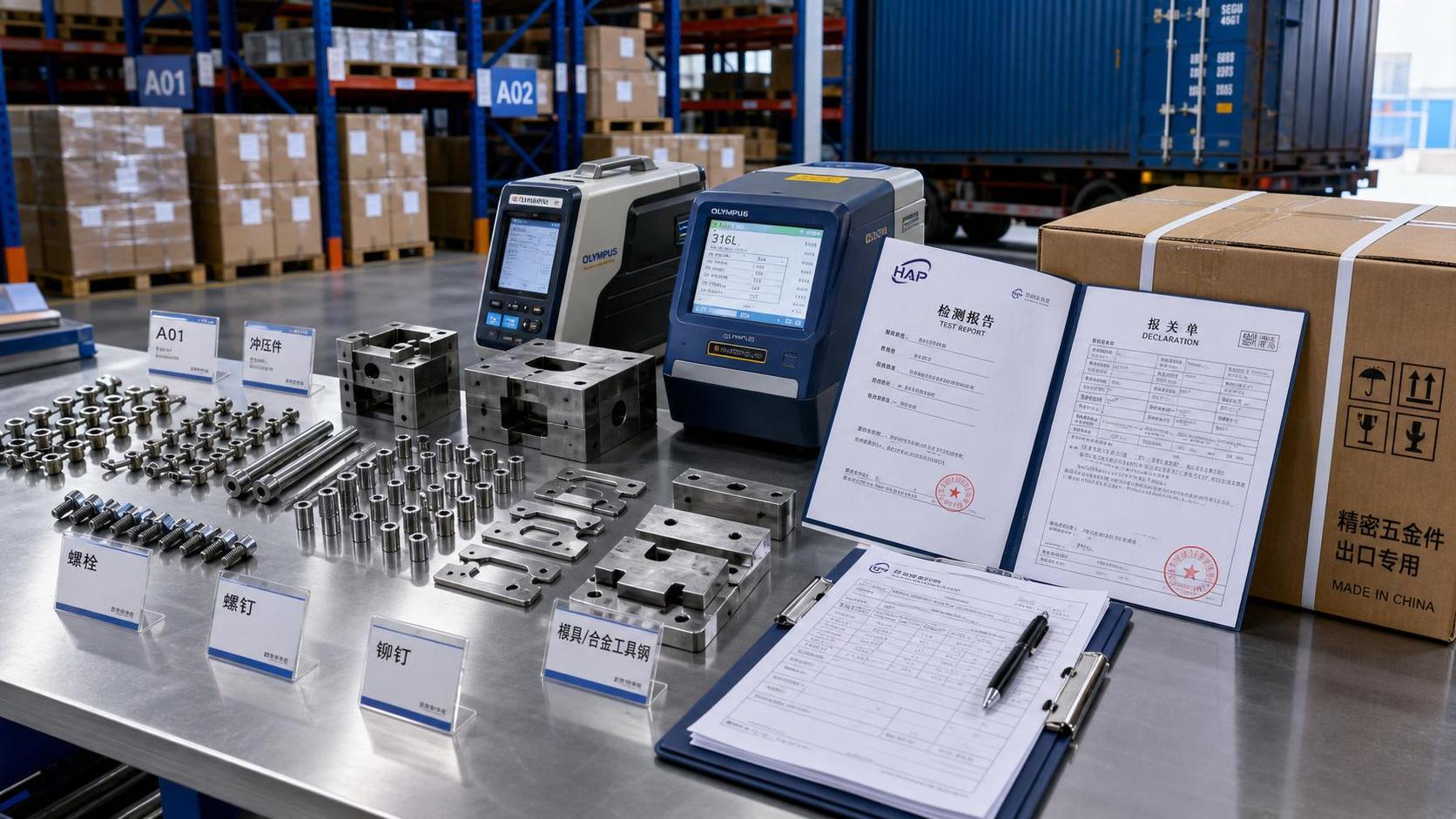
On June 1, 2026, General Administration of Customs Announcement No. 57 of 2026 takes effect, extending random export spot checks to products including bolts, screws, rivets, stamped parts, and alloy tool steel for molds that were previously outside statutory inspection. For exporters, manufacturers, traders, and supply chain service providers handling these categories, the change matters because customs checks now reach beyond shipment release formalities into product performance, composition, surface treatment compliance, and the authenticity of accompanying documents, with direct implications for clearance timing and delivery commitments.
What the June 1 measure changes
According to the provided event summary, the new arrangement brings bolts, screws, rivets, stamped forming parts, and alloy steel used for molds into the scope of random customs inspection from June 1, 2026. The stated inspection items include physical properties, chemical composition, compliance of surface treatment, and the authenticity of accompanying documentation. The summary also states that if an exporter is selected for inspection and found non-compliant, customs control can be extended nationwide to similar products, which may significantly lengthen customs clearance time and affect promised delivery schedules for overseas customers.
Where the pressure is likely to appear first
Export shipments face a tighter consistency test
From an industry perspective, exporters of the listed products are the most directly exposed because the rule change connects shipment release to both product quality consistency and document credibility. The practical impact is likely to be felt in pre-shipment review, declaration preparation, and delivery planning, especially where goods, test records, and shipping documents are managed by different teams or suppliers.
Manufacturing links need closer alignment with shipment documents
Manufacturers producing fasteners, stamped parts, and mold steel may be affected because the inspection scope explicitly covers physical performance, chemical composition, and surface treatment compliance. Analysis shows that production records, batch identification, internal testing results, and finishing specifications will matter not only for factory quality control but also for export readiness if customs spot checks compare goods against accompanying documentation.
Traders and supply chain coordinators carry added document risk
Trading companies and supply chain service providers may face greater exposure where they organize sourcing, documentation, and export execution without full control over production details. What deserves closer attention is whether product descriptions, specifications, and supporting papers remain consistent across procurement records, inspection materials, and customs filing, because the provided summary specifically includes document authenticity within the inspection scope.
Overseas buyers and procurement teams may revisit lead-time assumptions
For procurement teams and overseas customers, the immediate issue is not a confirmed market-wide delay but a higher risk that selected shipments may take longer to clear if problems are found. Observably, that makes delivery commitments, replenishment timing, and supplier qualification reviews more sensitive for the affected product groups.
Operational points companies should watch now
Check whether documents match the goods
Analysis shows that the most immediate task is to review whether shipment documents, technical descriptions, and any supporting quality materials accurately reflect the actual goods being exported. Because the provided information highlights document authenticity, mismatches between product reality and paperwork may become a practical compliance risk.
Review consistency in testing and technical records
For the listed categories, companies should pay close attention to whether internal or third-party test materials, material declarations, and surface treatment records can support the declared product status if a shipment is randomly selected. The input does not provide detailed enforcement procedures, so this is better understood as a precautionary focus rather than a confirmed mandatory document checklist.
Reassess delivery buffers for affected product lines
Since the summary states that failed spot checks can trigger nationwide control over similar products and extend customs clearance time, exporters and buyers may need to revisit delivery promises, shipment sequencing, and procurement timing for the covered goods. This is especially relevant where orders rely on narrow shipping windows or contract delivery dates.
Watch for follow-up wording and enforcement practice
What deserves closer attention is not only the announcement itself but also how enforcement language, product interpretation, and documentary expectations are applied in practice after June 1. The input does not provide that level of implementation detail, so companies should treat this stage as one requiring continued monitoring rather than assume a fully settled operating standard.
Why this looks like an execution signal
Observably, this development is more appropriate to understand as an implemented control change rather than a distant policy discussion, because the supplied information gives a clear effective date and identifies both the product groups and the inspection focus. At the same time, analysis shows that many business consequences will depend on how consistently customs applies product scope, document review, and follow-up controls in actual cases. For that reason, the market should read the change as a real compliance and delivery signal, while still reserving judgment on its full operational intensity until more execution feedback becomes visible.
How the market may best read this stage
In practical terms, this update points to a stricter connection between export goods, quality evidence, and customs documentation for selected metal components and mold steel products. It is not merely a procedural notice for customs teams; it may influence production coordination, supplier management, shipment scheduling, and customer commitment management. A balanced reading is that the rule change is already in force as an execution requirement, while the detailed impact on day-to-day trade flows still needs to be observed through subsequent practice and industry feedback.
Basis of this article and what still needs verification
This article is based on the user-provided news title, event date, and event summary. For developments of this type, commonly relevant source categories include official announcements, releases from regulatory authorities, customs or trade administration information, industry association updates, standard-setting documents, and reporting from authoritative media. A specific official source link was not provided in the input, so further verification remains necessary. What still needs ongoing observation includes detailed enforcement practice, interpretation of product scope, documentary review expectations, possible changes in procurement or bidding documents, industry feedback, and how companies adjust their export execution for the affected categories.
Related News