
Choosing Fasteners for Industrial Automation With Fewer Failures

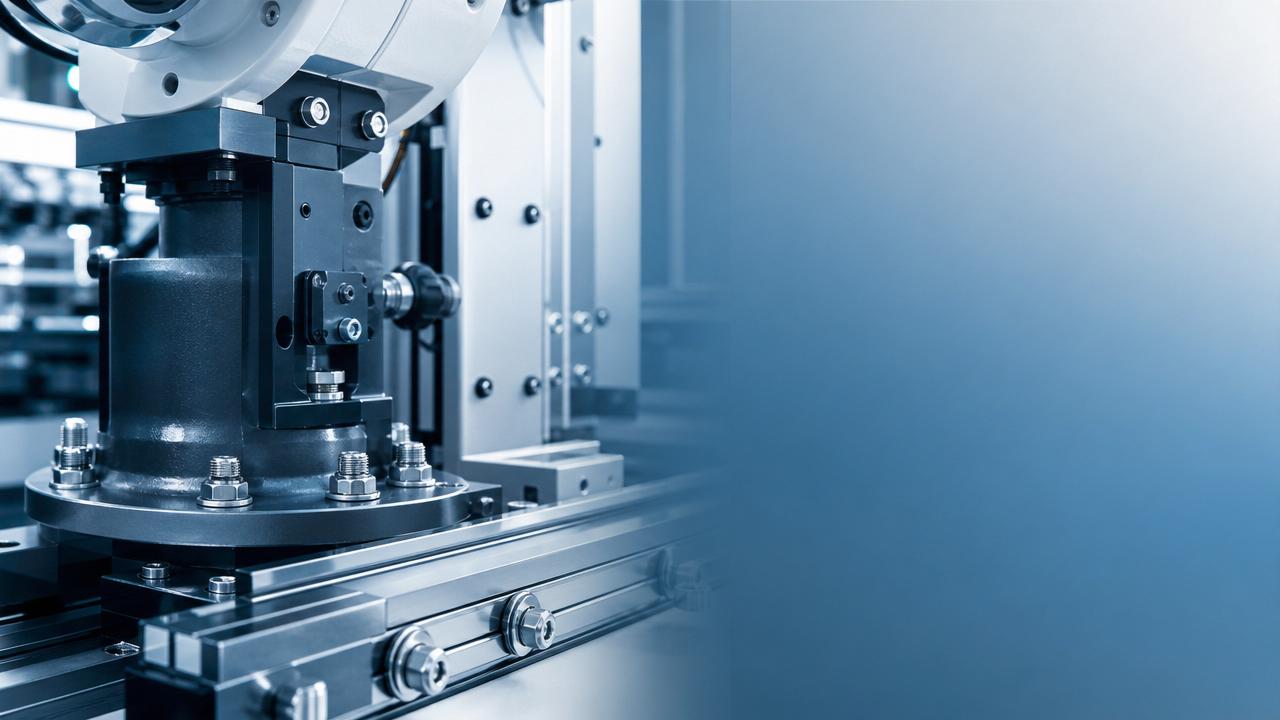
Choosing the right fasteners for industrial automation can significantly reduce unplanned downtime, vibration-related loosening, and repeat service calls. In today’s automated production environment, fastening decisions are no longer minor hardware choices. They directly affect machine stability, maintenance intervals, and the total cost of ownership across conveyors, robotic cells, control cabinets, pneumatic systems, and safety enclosures. As automation equipment runs faster, lighter, and more continuously, the demand for reliable fasteners for industrial automation is rising across the broader industrial ecosystem.
For the wider industrial market, this shift is especially important. Modern systems combine motion, thermal change, washdown exposure, electrical integration, and frequent service access in ways that traditional fastening assumptions do not always address. A bolt that performs well in static steel structures may fail early in a vibrating actuator mount. A standard nut may loosen in a repeat-cycle assembly. Better fastening strategy now means matching material, thread design, locking method, corrosion resistance, and installation practice to the actual duty cycle of the machine.
Why fastening decisions are becoming more critical in automated systems
A clear trend across industrial automation is the movement from heavy, slow, overbuilt equipment toward compact, modular, high-speed systems. This design evolution creates more dynamic loads and more interfaces between components. As a result, fasteners for industrial automation are increasingly exposed to micro-movement, cyclic stress, mixed materials, and uneven torque conditions.
Another visible signal is the growing emphasis on predictive maintenance and uptime metrics. Maintenance teams are tracking recurring failures more closely, and loose or corroded fasteners often appear as root causes behind sensor drift, guard misalignment, bracket fatigue, cable tray movement, and pneumatic leakage. In this environment, the choice of fasteners for industrial automation has become part of reliability engineering rather than a simple replacement task.
The main forces driving the shift toward better fasteners for industrial automation
Several converging factors explain why fastening requirements are changing across automated machinery and industrial support systems.
These factors show why generic hardware is often no longer enough. The market increasingly favors fasteners for industrial automation that can maintain clamp load under vibration, resist corrosion, simplify inspection, and support fast but consistent installation.
Where failures usually start and why standard hardware often underperforms
Most fastening failures in automation do not begin with a dramatic break. They start with small losses of preload, thread damage, misapplied torque, or material mismatch. Over time, these minor issues create secondary effects such as misalignment, noise, sensor inaccuracy, bracket cracking, or seal failure. In many cases, the visible problem is only the final symptom.
Common weak points include motor mounts, gearbox covers, guard panels, linear rail connections, cable support systems, pneumatic manifolds, and electrical enclosure doors. These locations often see repeated vibration, heat fluctuation, or regular opening and closing. That is why selecting application-specific fasteners for industrial automation can produce measurable reliability gains even when the hardware cost difference is small.
- Thread loosening caused by vibration and insufficient locking method
- Corrosion reducing strength or preventing future removal
- Overtightening that damages threads or distorts mating parts
- Undertightening that lowers clamp force and encourages movement
- Using one fastener type across very different mechanical conditions
- Ignoring thermal expansion differences in mixed-material assemblies
How the shift affects maintenance quality, machine uptime, and lifecycle cost
The impact of better fasteners for industrial automation extends beyond the joint itself. A more stable fastening system helps maintain alignment in moving assemblies, protects sensors from drift, preserves sealing surfaces, and reduces secondary wear on bearings, rails, and connected components. This means fewer emergency interventions and more predictable maintenance windows.
There is also an operational effect across industrial support functions. When fastening standards are improved, spare part complexity can be reduced, service procedures become easier to document, and inspection points become more consistent. In broader industry settings, especially where equipment mixes mechanical, electrical, and pneumatic modules, stronger fastening discipline improves system continuity and shortens troubleshooting time.
What to prioritize when evaluating fasteners for industrial automation
The best selection process starts with application conditions rather than catalog convenience. Not every location needs premium locking hardware, but every critical joint should be evaluated by function, movement, environment, and maintenance frequency.
- Vibration resistance: Consider prevailing torque nuts, mechanical locking features, serrated interfaces, or threadlocking compounds where cyclic motion is present.
- Material compatibility: Match carbon steel, stainless steel, alloy steel, or specialty materials to the surrounding components and environment.
- Corrosion performance: Evaluate plating, passivation, and washdown resistance, especially in humid or chemical-exposed areas.
- Joint accessibility: Choose designs that support reliable installation and later removal without damaging adjacent parts.
- Torque consistency: Use fastening solutions that allow repeatable preload across multiple service cycles.
- Standard compliance: Verify fit with relevant ISO, DIN, or application-specific equipment requirements.
This is where the market for fasteners for industrial automation is evolving most clearly: away from one-size-fits-all hardware and toward performance-matched fastening systems that align with actual machine behavior.
A practical decision path for fewer failures in automated equipment
A useful way to improve selection is to classify each fastening point by risk. High-risk points are joints whose movement, failure, or loosening can stop production, create safety issues, or damage nearby components. Medium-risk points affect efficiency or maintenance effort. Low-risk points are mainly cosmetic or non-critical covers.
This structured view helps reduce overengineering in low-impact areas while strengthening the places where better fasteners for industrial automation deliver the highest return.
What deserves close attention as fastening requirements keep evolving
Looking ahead, several developments are likely to shape fastening choices further. Equipment is becoming more sensor-dense, more modular, and more exposed to cross-functional design constraints involving electrical safety, lightweight structures, and sustainability goals. That means future-ready fasteners for industrial automation must support not only strength, but also maintainability, traceability, and environmental durability.
- Track recurring loosening locations and convert them into standardized upgrade points.
- Review whether corrosion-resistant options can reduce both failure risk and disassembly time.
- Align fastening specifications with real machine loads instead of legacy drawings alone.
- Use torque procedures and service instructions that reflect the selected hardware system.
- Consolidate part numbers where possible to improve spare control without sacrificing performance.
For industrial organizations seeking fewer failures, the next practical step is to audit the joints that fail most often, compare current hardware against real operating conditions, and upgrade critical positions first. The most effective strategy is rarely a full replacement program. It is a focused reliability approach that treats fasteners for industrial automation as essential components in machine performance, service efficiency, and long-term industrial resilience.
Related News