
Choosing Fasteners for Industrial Automation Without Overspec

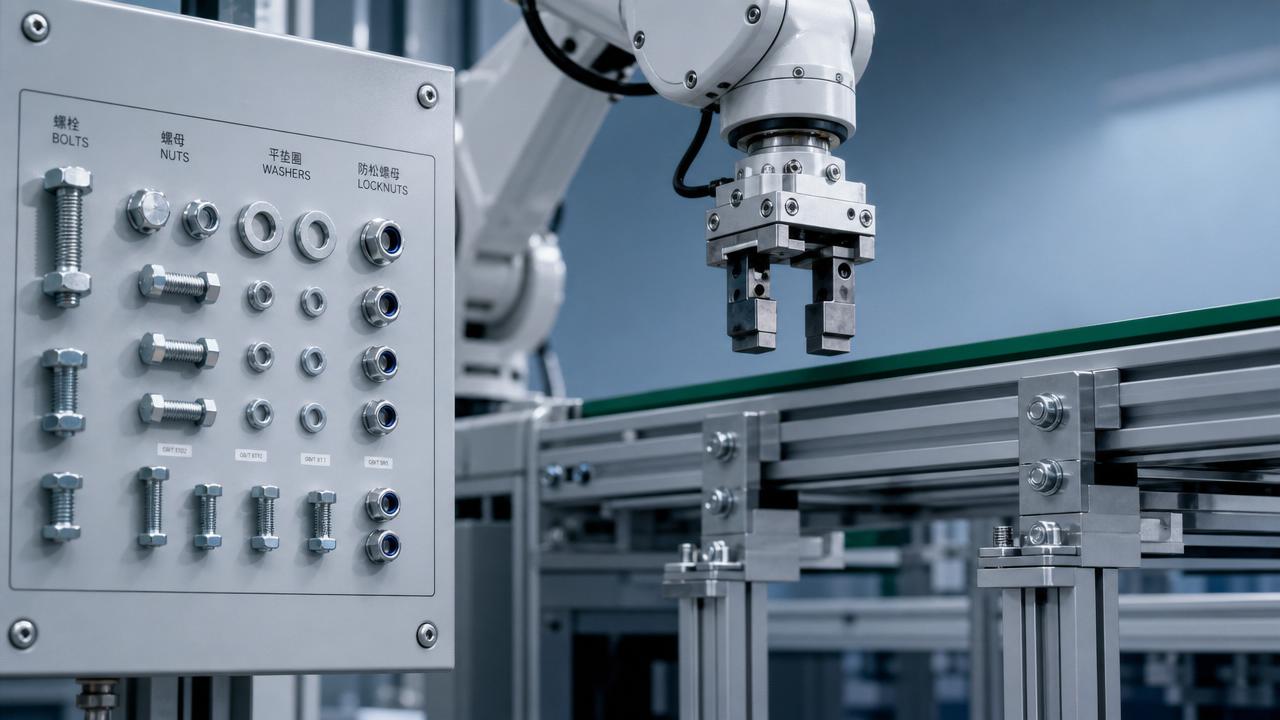
Choosing fasteners for industrial automation should balance performance, lifecycle cost, and procurement discipline—not default to the highest specification. For finance decision-makers, the right fastening strategy reduces overengineering, avoids hidden maintenance costs, and supports reliable uptime across automated systems. This guide explains how to evaluate fasteners for industrial automation with a practical, cost-aware lens that aligns technical requirements with budget control.
Why do fasteners for industrial automation get overspecified so often?
In many automated projects, bolts, screws, studs, washers, and inserts are treated as low-value line items. Yet they influence machine stability, enclosure integrity, vibration resistance, service time, and even safety compliance. Because failures are disruptive, teams often react by choosing the highest grade, the most corrosion-resistant alloy, or the most complex locking feature available.
That approach feels safe, but finance approvers usually discover the downside later: inflated unit costs, longer lead times, difficult substitutions, and unnecessary maintenance complexity. For fasteners for industrial automation, more specification is not always more value. The better question is whether the selected fastener matches the actual load case, environment, duty cycle, and replacement strategy.
In cross-functional purchasing, overspec often comes from three gaps between engineering and finance:
- A risk gap, where teams fear downtime more than they measure the real mechanical demand.
- A data gap, where torque, vibration, and exposure conditions are assumed rather than documented.
- A sourcing gap, where procurement approves premium materials because standard alternatives were never evaluated.
GHTN focuses on this exact industrial layer. By connecting mechanical performance, manufacturing context, and supply-side trade insight, it helps OEMs, distributors, and procurement teams compare fastening options with more precision and less guesswork.
What finance approvers should ask before signing off
- Is the fastener carrying structural load, maintaining alignment, sealing an enclosure, or only securing a cover?
- Does the assembly face static load, cyclic load, shock, or continuous vibration from motors, conveyors, or pneumatic motion?
- Is the environment dry indoor production, washdown, chemical exposure, outdoor installation, or high temperature?
- Can the part be standardized across machines to improve inventory efficiency and substitution flexibility?
How to match fastener type to automation application without overspending
Not all automation assemblies need the same fastening strategy. A servo mount, a cable tray bracket, a robot cell guard, and a control cabinet panel impose very different demands. Selecting fasteners for industrial automation starts with function, not with material prestige or maximum strength class.
The table below helps finance and sourcing teams compare common use cases and understand where premium specification is justified and where a more balanced option usually works.
A practical takeaway is simple: fasteners for industrial automation should reflect application class. Dynamic joints, vibration zones, and exposed environments deserve stricter evaluation. Non-structural panels and low-load covers rarely benefit from premium grades that increase purchase cost without reducing real risk.
Application-based selection checklist
- Identify whether the joint is structural, functional, or service-access only.
- Review expected vibration, shock, and maintenance frequency.
- Compare the cost of material upgrades against the cost of downtime from likely failure modes.
- Standardize sizes and head types wherever possible to lower inventory complexity.
Which technical parameters matter most in fasteners for industrial automation?
Finance teams do not need to become fastening engineers, but they do need visibility into the few parameters that drive cost and reliability. Too often, a specification sheet lists premium material, fine thread, and advanced coating without clarifying whether the application truly benefits.
For most automated equipment, the most relevant factors are joint load, vibration exposure, corrosion environment, assembly access, thread compatibility, and maintenance interval. These variables usually matter more than choosing the highest nominal strength available.
Core parameters to review
- Strength class or grade: Important for structural load and clamp force, but unnecessary over-upgrading raises cost and may require different installation control.
- Material family: Carbon steel, alloy steel, and stainless each bring different trade-offs in corrosion resistance, price, galling behavior, and availability.
- Surface treatment: Zinc plating, mechanical coating, black oxide, or passivation should be aligned with exposure conditions and compliance requirements.
- Locking method: Mechanical locking, prevailing torque nuts, washers, or threadlocker should reflect vibration level and service frequency.
- Tolerance and thread quality: Critical in repeated assembly, precision tooling interfaces, and modules requiring accurate alignment.
The next table gives a cost-aware view of parameter priorities for fasteners for industrial automation across typical decision scenarios.
This view is especially useful for budget control. A moderate specification paired with proper joint design and installation discipline often outperforms an expensive fastener chosen without application logic.
How should finance evaluate total cost instead of piece price alone?
The unit price of fasteners for industrial automation is only part of the financial picture. A lower-cost part can become expensive if it increases assembly time, service calls, or inventory fragmentation. A premium part can also destroy value if it adds no measurable reliability in the actual operating environment.
Finance approval works best when fastener decisions are treated as lifecycle decisions. That means looking at direct material cost, labor cost, maintenance frequency, inventory impact, supplier risk, and downtime exposure together.
Cost elements worth quantifying
- Acquisition cost: Unit price, minimum order quantity, freight sensitivity, and packaging format.
- Installation cost: Tooling compatibility, torque control, operator training, and assembly time per joint.
- Maintenance cost: Ease of disassembly, replacement frequency, risk of thread damage, and service labor.
- Inventory cost: Number of SKUs, storage discipline, substitution rules, and obsolescence exposure.
- Failure cost: Unplanned stoppage, safety incident exposure, product scrap, and emergency sourcing.
A simple approval model for procurement teams
- Group fasteners into critical, important, and general-service categories.
- Reserve premium grades and specialty locking designs for critical joints only.
- Push standardization in general-service categories to improve leverage and inventory turnover.
- Request documented justification when a non-standard fastener raises lead time or sourcing concentration.
This method is effective in mixed industrial environments because it keeps engineering freedom where failure risk is high, while protecting margins on the many low-risk joints that populate every automated line.
What standards and compliance points should not be ignored?
Even cost-focused buyers should not reduce fastener selection to price alone. Automated equipment often operates across regions, industries, and customer audit systems. Fasteners for industrial automation may need to align with dimensional standards, material declarations, coating restrictions, and product documentation expectations.
Common reference points include ISO and DIN dimensional practices, property class conventions for metric fasteners, and application-specific compliance requirements linked to electrical assemblies, machine safety structures, or restricted substances policies. The exact requirement depends on the machine type and destination market.
Compliance questions to include in sourcing review
- Are the dimensions and threads aligned with the plant’s existing standards system?
- Does the surface treatment fit customer or regional restrictions on hazardous substances?
- If the fastener supports guarding or load-bearing elements, is traceability required by the customer or internal quality process?
- Can the supplier provide consistent documentation for multi-site procurement and audit readiness?
This is an area where GHTN adds practical value. Because it tracks industrial components across mechanical, electrical, and mold-related sectors, it helps buyers connect fastening choices with downstream production realities and market-entry requirements rather than treating fasteners as isolated catalog items.
Common mistakes when buying fasteners for industrial automation
Mistake 1: Assuming stronger always means safer
A higher strength fastener may require better torque control, different mating materials, or revised joint design. If those conditions are absent, the premium specification does not automatically reduce risk. It may simply add cost and complexity.
Mistake 2: Ignoring maintenance behavior
Some locking features work well for permanent joints but slow down routine servicing. On access panels, covers, or modules opened frequently, serviceability can be more valuable than maximum retention force.
Mistake 3: Using too many SKUs across similar machines
SKU proliferation raises inventory carrying cost, purchasing workload, and emergency replacement risk. Standardization often creates more savings than unit-price negotiation alone.
Mistake 4: Treating corrosion as a yes-or-no issue
Corrosion exposure is not uniform. Indoor humidity, alkaline cleaning, splash zones, and outdoor exposure are very different. Fasteners for industrial automation should be matched to actual exposure severity, not generalized fear of rust.
FAQ: practical questions from buyers and finance approvers
How do I know whether a premium fastener is justified?
Ask whether the joint is safety-relevant, load-bearing, exposed to high vibration, or difficult to access after installation. If the answer is no, a standard grade with the right coating and locking method may be enough. The justification should be tied to failure mode, not habit.
Are stainless fasteners always better for industrial automation?
No. Stainless can be the right choice for wet or corrosive settings, but it often costs more and may introduce galling concerns in repeated assembly. For dry indoor lines, coated carbon steel can be more economical and fully adequate.
What should procurement request from engineering before approval?
At minimum, request application type, load or vibration description, environment, maintenance interval, preferred standards system, and acceptable substitution range. This short data set improves sourcing decisions far more than approving by part description alone.
How can we reduce cost without increasing downtime risk?
Segment joints by criticality, standardize non-critical hardware, and review whether coating or locking strategy can replace unnecessary material upgrades. Many savings come from reducing SKU variety and lead-time exposure rather than forcing the lowest-priced item.
Why work with GHTN when evaluating fastening strategy?
Fasteners for industrial automation sit at the intersection of mechanical reliability, manufacturing efficiency, and procurement discipline. GHTN approaches that intersection with a broader industrial lens. Its coverage spans mechanical tools, electrical systems, and mold manufacturing, which matters because fastener decisions are rarely isolated from assembly process, compliance logic, and maintenance practice.
For finance approvers and sourcing teams, that means more than product data. It means access to application-oriented insight on material selection, extreme-environment performance, standardization opportunities, and supplier-market context. This helps decision-makers reduce overengineering without underestimating operational risk.
What you can consult with us about
- Parameter confirmation for load, vibration, corrosion, and service frequency in automated assemblies
- Product selection support for structural joints, access panels, electrical enclosures, and precision tooling interfaces
- Lead-time and sourcing discussions for standardized versus non-standard fasteners
- Alternative solution review when current specifications appear oversized or too costly
- Documentation and compliance questions linked to destination market or customer requirements
- Sample support and quotation communication for comparative evaluation before volume commitment
If your team is reviewing fasteners for industrial automation and wants a more disciplined balance between reliability and cost, GHTN can help you compare options with the level of detail that procurement, engineering, and finance all need. Linking precision, tooling the future starts with getting the smallest components right.
Related News