
Fasteners for Industrial Automation Often Fail at Vibration Points

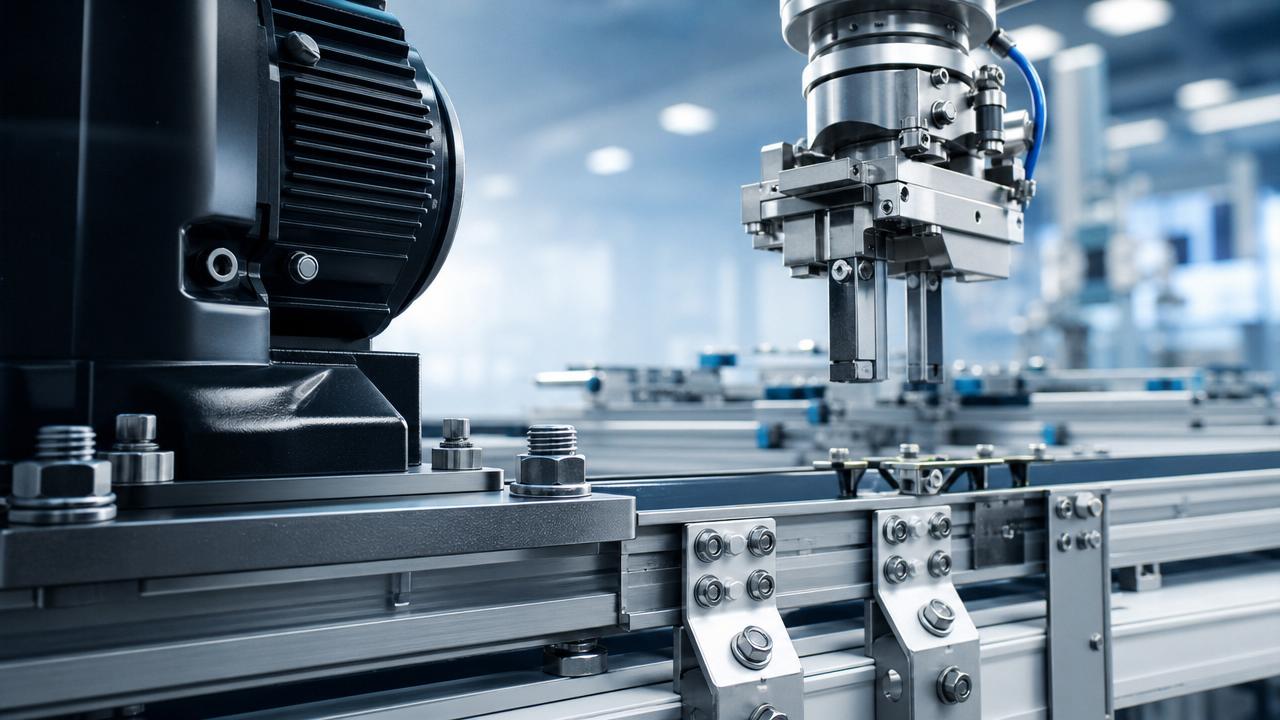
Fasteners for industrial automation often become the hidden weak point in high-vibration zones, where repeated movement, shock, and load changes can quickly lead to loosening or failure. For operators and users, understanding why these fastening issues occur is essential to reducing downtime, improving equipment stability, and maintaining safe, efficient production across demanding automated environments.
Understanding the role of fasteners in automated systems
In industrial automation, fasteners do far more than hold parts together. They maintain alignment in robotic frames, keep sensor mounts stable, secure drive housings, and preserve the rigidity of conveyor, pneumatic, and electrical assemblies. When these joints loosen, the result is not only a maintenance issue but also a process problem. A slightly shifted bracket can affect sensor accuracy, a loosened motor mount can increase vibration, and a failed bolt in a guarding panel can create a direct safety risk.
That is why fasteners for industrial automation deserve attention at the same level as controllers, actuators, and motion systems. In many plants, operators notice symptoms first: unusual noise, recurring misalignment, increased rejects, or repeat tightening on the same machine section. These signs often point to vibration-related joint degradation rather than isolated component wear.
For a platform such as GHTN, which focuses on the granular core of industry, this topic sits at the intersection of physical performance, production reliability, and practical decision-making. A robust automated line depends not only on advanced control logic but also on the integrity of the smallest mechanical connections.
Why vibration points attract failure
Vibration points are locations where repeated motion, impact, pulsation, or cyclic loading occur. Common examples include motor bases, gearbox mounts, feeder bowls, stamping transfer units, pneumatic valve islands, conveyor supports, and robotic end-of-arm tooling. In these areas, fasteners for industrial automation are exposed to forces that can gradually reduce clamp load.
A threaded joint stays secure because it maintains tension. Once vibration causes micro-movement between the clamped parts, that tension can drop. Over time, preload loss allows the joint to loosen further, accelerating wear and creating a cycle of instability. This process is often invisible until the machine begins to drift out of tolerance or a shutdown occurs.
Several factors increase the likelihood of failure:
- insufficient tightening torque or inconsistent assembly practices;
- wrong fastener grade for dynamic load conditions;
- mating surfaces that settle, deform, or creep under load;
- thermal cycling that changes joint stress;
- poor washer, locking, or thread engagement selection;
- corrosion, contamination, or lubricant misuse that changes friction behavior.
For users and operators, the key point is simple: vibration rarely causes sudden failure without warning. More often, it weakens a joint step by step until machine performance and safety are affected.
Why the industry pays close attention to this issue
Modern factories ask automated equipment to run faster, with tighter tolerances and less unplanned downtime. This raises the importance of every mechanical connection. In high-output environments, even a minor fastening problem can trigger line stops, false sensor readings, product damage, or frequent intervention by operators. The cost is not limited to replacement hardware; it includes labor, lost throughput, maintenance scheduling pressure, and quality instability.
Across the broader industrial landscape, the trend toward compact machine design also matters. Smaller equipment footprints often place motors, brackets, cable supports, and pneumatic modules closer together. This can increase local vibration transmission and make access for inspection more difficult. At the same time, mixed-material construction, such as steel joined to aluminum or polymer composite parts, can create additional challenges in preload retention.
GHTN’s industry perspective is especially relevant here. Precision manufacturing and component-level intelligence help users understand that fastener reliability is not just about choosing a bolt. It is about matching material, surface condition, locking method, and installation quality to real operating physics.
Common vibration-sensitive zones in industrial automation
Not every joint in a machine faces the same level of risk. Operators can improve maintenance efficiency by focusing on the zones where fasteners for industrial automation are most likely to loosen first.
What gives fasteners real application value in automation
The application value of reliable fasteners for industrial automation can be measured in three practical ways. First, they protect machine accuracy. Stable joints preserve alignment between moving and fixed components, which is essential in pick-and-place systems, inspection units, indexing stations, and assembly cells. Second, they improve uptime. A well-secured joint reduces repeated intervention, helping operators spend less time on reactive tightening and more time on controlled maintenance. Third, they support safe operations by keeping guards, supports, enclosures, and tooling in their intended positions.
This value becomes even clearer in environments where cycle counts are high and shutdown windows are short. In such settings, the best fastening strategy is rarely the cheapest hardware option. It is the option that maintains clamp force under actual service conditions and reduces total operational risk over time.
Typical types of fasteners and locking approaches
Operators do not always choose fasteners directly, but understanding the main categories helps when reporting issues or reviewing machine upgrades. Different fastening solutions perform differently under vibration, shock, heat, and maintenance frequency.
Practical warning signs operators should not ignore
Fastener problems usually reveal themselves through machine behavior before visible hardware failure appears. Operators should pay attention to repeated small changes that maintenance teams may otherwise treat as unrelated.
- A bracket or cover that needs frequent retightening.
- New vibration, rattling, or metallic noise near drives or guards.
- Sensors drifting out of position or giving intermittent signals.
- Conveyor tracking changes without obvious belt damage.
- Air leaks around mounted pneumatic components after long cycles.
- Visible fretting, polish marks, or dust around bolted joints.
These signs indicate that the joint may be moving microscopically under load. Acting early can prevent larger failures and support more predictable maintenance planning.
Practical recommendations for better fastening reliability
Improving the performance of fasteners for industrial automation does not always require major redesign. Many gains come from better matching and better discipline in installation and inspection.
- Use the correct fastener grade and material for load, environment, and corrosion exposure.
- Apply the specified tightening method, especially where torque-angle or controlled preload is required.
- Check thread engagement, surface flatness, and joint cleanliness before assembly.
- Choose locking features based on actual vibration severity, not habit alone.
- Review joints after commissioning, because initial settling can reduce preload.
- Include vibration-prone fasteners in preventive inspection routes rather than waiting for failure.
In advanced operations, teams also benefit from documenting repeat failure points by machine zone. This creates a useful feedback loop between operators, maintenance staff, OEMs, and component suppliers. Over time, patterns become visible: a certain mount may need a different washer system, a certain panel may need improved stiffness, or a recurring loosening point may indicate a deeper alignment problem.
How better component insight supports smarter decisions
This is where industrial intelligence matters. GHTN’s focus on component-level analysis helps users move beyond trial-and-error repairs. When operators understand why fasteners for industrial automation fail at vibration points, they can communicate more clearly with maintenance engineers and suppliers. Instead of saying a bolt “keeps coming loose,” they can identify the operating condition, joint location, movement pattern, and maintenance history behind the failure.
That level of observation supports better outcomes across the industrial value chain, from OEM design refinement to aftermarket service and replacement strategy. In precision manufacturing, reliability is often built through many small improvements, and fastening quality is one of the most practical places to start.
Conclusion
Fasteners for industrial automation are easy to overlook because they are small, familiar, and everywhere. Yet in vibration-heavy machine zones, they often determine whether equipment stays accurate, stable, and safe. For users and operators, the most effective response is not simply tightening hardware more often. It is understanding how preload, movement, material choice, and locking methods interact under real production conditions.
By focusing on high-risk zones, recognizing early warning signs, and applying more informed fastening practices, plants can reduce downtime and improve system reliability. For businesses seeking deeper insight into precision components, manufacturing logic, and industrial performance, GHTN continues to connect practical knowledge with the real needs of modern automated production.
Related News