
Fasteners that quietly weaken industrial automation systems

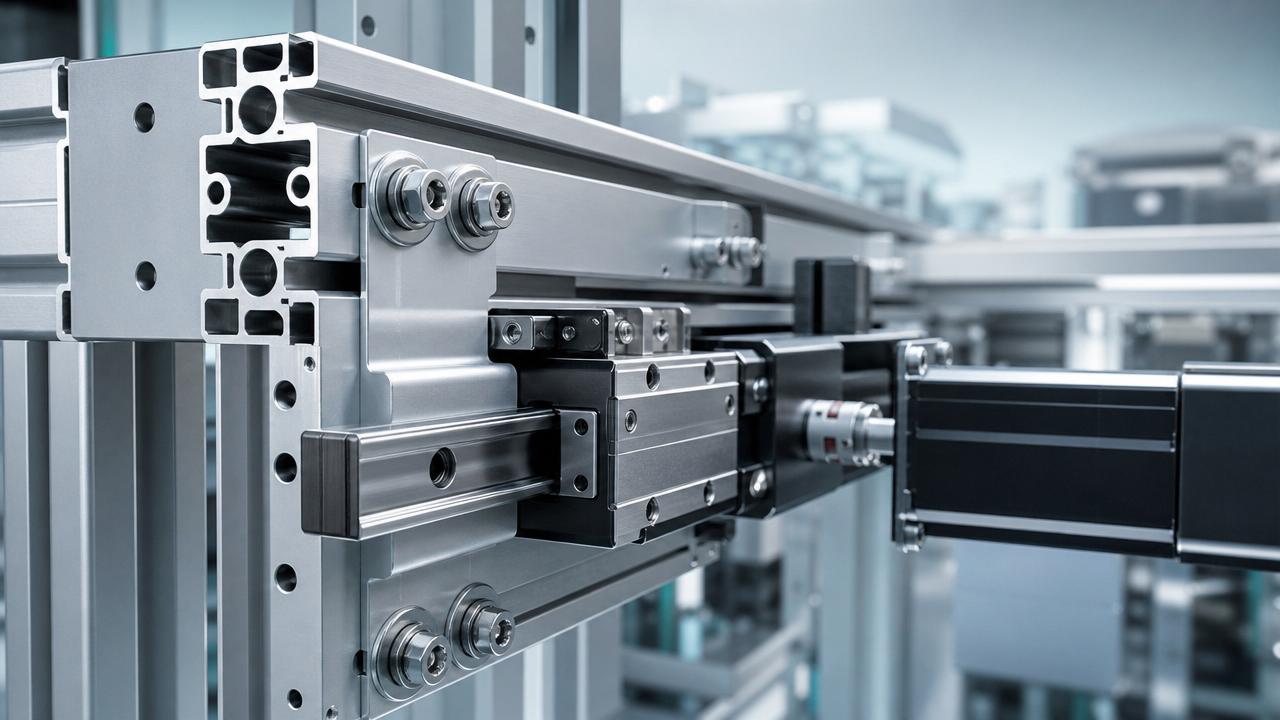
In industrial automation, failures rarely begin with headline components—they often start at the fastening points. Choosing the right fasteners for industrial automation is critical to maintaining alignment, vibration resistance, and long-term system reliability. For project managers and engineering leaders, understanding how seemingly minor fastening decisions can quietly weaken automated lines is essential to reducing downtime, controlling risk, and protecting performance.
Why fastening decisions are becoming a bigger automation risk
A clear shift is underway across automated production environments: systems are faster, lighter, more modular, and more exposed to mixed operating conditions than many legacy fastening practices were designed for. Servo-driven motion, collaborative robotics, compact frames, distributed control cabinets, and rapid line reconfiguration all place higher demands on connection stability. In this environment, the wrong fastener may not fail dramatically at first. It may loosen microscopically, transfer vibration, distort alignment, create electrical grounding inconsistency, or accelerate fatigue around joints. That is why fasteners for industrial automation are moving from an afterthought in many projects to a strategic reliability concern.
For project leaders, the issue is not only technical. Quiet fastening weakness now affects commissioning schedules, maintenance budgets, warranty exposure, spare-part planning, and cross-border sourcing decisions. In many facilities, unplanned stoppages are increasingly traced not to core motors or controllers, but to the interfaces that hold them in place. As automation lines become more integrated, each weak fastening point can multiply downstream effects across mechanical motion, sensor accuracy, cable routing, and safety guarding.
The market signals behind the change
Several industry signals explain why fastening risk is receiving more attention. First, machine builders are under pressure to shorten delivery cycles, which can compress design validation and encourage reuse of legacy bill-of-material assumptions. Second, end users increasingly expect automated lines to handle multiple product variants, creating more changeovers and more repeated stress at fastening interfaces. Third, sustainability and lightweight design are pushing broader use of aluminum profiles, mixed-material structures, and thinner enclosures, all of which alter clamping behavior and torque sensitivity.
At the same time, industrial buyers are demanding longer service intervals and higher overall equipment effectiveness. This makes small connection failures more visible economically. A loose washer, mismatched thread, or poorly chosen coating can now disrupt expensive automated cells where downtime costs far exceed the price of the hardware itself. In other words, the value of fasteners for industrial automation is no longer measured only by unit cost, but by lifecycle consequence.
Trend change overview
What is quietly weakening automated systems
The most important trend is that failure modes are becoming subtler. In older heavy industrial systems, fastening problems often appeared as visible breakage or obvious loosening. In modern automation, weakness may show up first as calibration drift, repeated sensor misreads, abnormal noise, enclosure vibration, intermittent grounding issues, or premature wear in linear components. These symptoms are often assigned to controls, software, or operator handling before the root cause is traced back to joint integrity.
Common hidden weaknesses include over-torquing into softer base materials, galvanic mismatch in humid or washdown environments, insufficient preload retention under cyclic motion, coating choices that alter friction assumptions, and inconsistent assembly practices across global sites. Fasteners for industrial automation must now perform across a wider mix of conditions: high-speed indexing, thermal fluctuation near drives, frequent maintenance access, and compact routing around pneumatics and electrical systems.
Another major issue is modularity. Automated lines are increasingly built in skids, cells, and subassemblies that are shipped, installed, adjusted, and expanded over time. Every handoff introduces risk: transport vibration, re-tightening without process control, replacement by near-match parts, or field modifications that ignore joint design intent. This is where quiet system weakening often begins.
The main drivers shaping fastener requirements
The rise in fastening sensitivity is not random. It is driven by a combination of technology upgrades, cost pressure, and operational expectations. For engineering managers, separating these drivers helps prioritize where review effort is most valuable.
Who feels the impact most across the project lifecycle
The impact of weak fastening choices is uneven. Some roles encounter the issue as design rework, while others see it as recurring downtime or sourcing conflict. For project management, this matters because fastening quality is not owned by one department alone. It sits between design intent, supplier capability, assembly discipline, and maintenance reality.
What project leaders should now pay closer attention to
The first signal worth watching is whether fastening specifications are still being treated as generic notes rather than application-defined requirements. A line that includes robot bases, linear rails, guarding, cable carriers, pneumatic manifolds, and electrical cabinets does not have one uniform fastening demand. Fasteners for industrial automation should be categorized by load pattern, access frequency, environmental exposure, and criticality to alignment or safety.
The second signal is substitution behavior. If teams regularly swap finishes, washers, locking elements, or thread engagement lengths to solve short-term supply gaps, hidden reliability drift may already be entering the system. What looks interchangeable in procurement software may not be functionally equivalent in operation. This is especially true where coatings affect torque-tension relationships or where corrosion resistance influences long-term clamp force retention.
The third signal is field feedback quality. Many organizations collect failure reports, but not at the level of fastening mode. If maintenance records only list “bracket loose” or “sensor shifted,” trend visibility remains poor. More useful reporting links the event to joint type, material pairing, vibration source, torque method, and replacement history. That level of detail turns fastener issues from anecdotal complaints into decision-ready data.
How the next phase of automation will raise the bar further
Looking ahead, the pressure on fastening performance is likely to increase rather than ease. Smart factories are moving toward denser equipment layouts, more data hardware at the edge, and more flexible manufacturing cells. These trends mean more interfaces, more maintenance touchpoints, and more opportunities for minor joint degradation to affect system behavior. As predictive maintenance expands, fastening points may also become more measurable, exposing weaknesses that previously stayed hidden until shutdown.
There is also a broader supply-chain implication. Buyers are becoming more cautious about relying solely on nominal standards without reviewing actual manufacturing consistency, coating process quality, and traceability practices. For international sourcing networks such as GHTN’s ecosystem, this creates a stronger role for technical comparison, materials insight, and supplier education. In complex automation projects, premium component decisions are increasingly justified by reduced disruption risk, not just by engineering preference.
Practical judgment framework for fasteners for industrial automation
For engineering leaders, the right response is not to over-specify every screw or bolt. It is to classify where fastening failure has system-level consequence and where standardization remains sufficient. A useful judgment framework starts with five questions: Does the joint influence motion accuracy? Is it exposed to vibration or thermal cycling? Will it be opened repeatedly? Is the base material sensitive to compression or thread wear? Could failure create safety, compliance, or downtime escalation? When the answer is yes to several of these, fasteners for industrial automation deserve deeper review.
Teams should also align design, purchasing, assembly, and maintenance around one controlled fastening logic. That includes approved alternatives, torque or tension guidance, surface treatment requirements, and replacement intervals where relevant. In practice, this approach often reduces total complexity because it prevents unstructured local fixes later in the project lifecycle.
Priority actions by maturity stage
FAQ for decision-makers
Are fasteners really a strategic issue in automation projects?
Yes. In highly integrated systems, small fastening weaknesses can trigger accuracy loss, downtime, maintenance repetition, and safety exposure. Their strategic importance comes from consequence, not component price.
When should fasteners for industrial automation receive special review?
Review is most important where joints affect motion, positioning, electrical integrity, guarding, or repeated access. High-speed machinery, modular cells, and mixed-material assemblies deserve particular attention.
What is the most common management mistake?
Treating fasteners as purely procurement items. Without cross-functional control, substitution and inconsistent assembly practices can quietly undermine system reliability.
A practical direction for the next review cycle
For organizations managing automation investments, the immediate question is not whether every fastener is optimal. It is whether critical fastening points are visible, governed, and matched to today’s operating reality. The larger trend is clear: as systems become faster and more modular, hidden connection weakness carries a larger business penalty. Fasteners for industrial automation are therefore becoming part of risk management, not just mechanical assembly.
If your team wants to judge how this trend affects current or upcoming projects, start by confirming four points: which joints are most critical to uptime, where substitutions are happening, whether installation methods are controlled, and what failure data is being captured from the field. Those answers will do more than improve hardware selection. They will reveal how resilient your automation system really is.
Related News