
Gulf Six Tighten Arabic Traceability Rules for Bolts

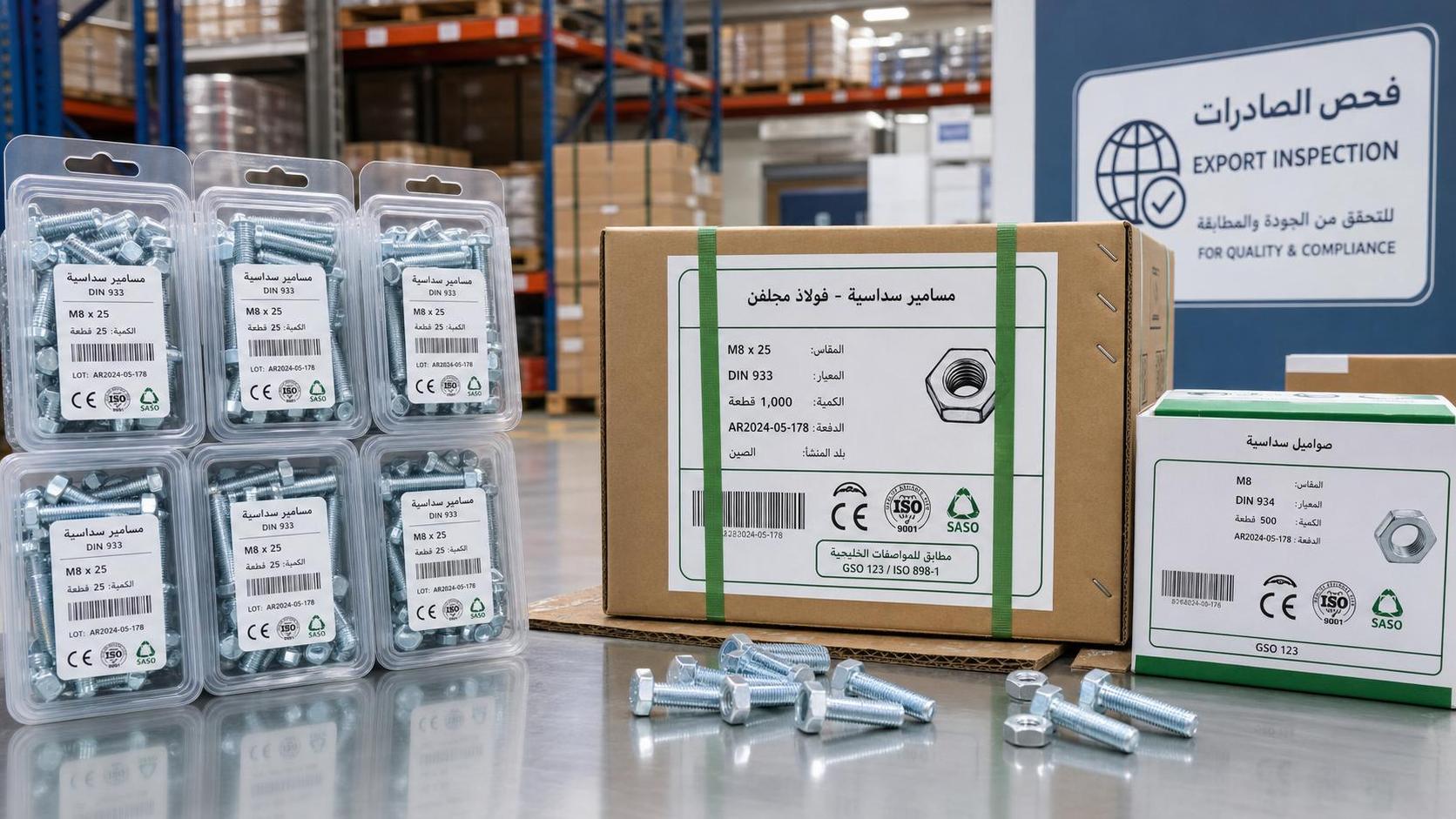
From December 1, 2026, imported bolts and screws entering six Gulf markets will face a stricter packaging compliance threshold: the smallest sales unit must carry a permanent Arabic traceability label. The requirement follows a revised GSO/GS 1278:2026 issued on June 27, 2026 by the Gulf Standardization Organization (GSO) together with six countries including Saudi Arabia, the UAE, and Qatar. For exporters, importers, packaging operators, and procurement teams handling fasteners, the development deserves attention because products without the required label will be refused entry.
What the revised rule confirms
According to the information provided, the revised GSO/GS 1278:2026 was issued on June 27, 2026 by GSO in coordination with six countries including Saudi Arabia, the United Arab Emirates, and Qatar.
The rule applies to imported bolts and screws. Starting on December 1, 2026, the minimum sales unit must carry a permanent traceability label in Arabic.
The required label content includes a batch number, manufacturer code, applied standard, and the GSO certification mark. Products that do not carry the label will be denied entry.
Where the pressure is likely to appear first
Export and import execution may be affected at the packaging stage
From an industry perspective, companies directly involved in cross-border trade are likely to feel the impact first because the requirement is tied to the minimum sales unit rather than only to transport packaging or commercial paperwork. That means compliance may depend on how products are labeled before shipment, not only on what is declared during customs handling.
What deserves closer attention is whether current export packaging formats for bolts and screws can support a permanent Arabic label without disrupting existing packing routines, SKU management, or shipment timing.
Manufacturers and processors may need tighter batch-level control
Analysis shows that manufacturers and processing businesses may be affected through traceability management. The required information includes the batch number, manufacturer code, and applied standard, which links packaging compliance more closely to production records and product identification.
The practical impact is likely to fall on data consistency between production, labeling, and shipment preparation. Businesses supplying multiple markets may need to pay closer attention to whether Gulf-bound goods are separated clearly at the unit level.
Distributors and downstream buyers may face acceptance and delivery risk
For channel distributors, stockists, and industrial buyers, the main issue is continuity of delivery. If non-compliant goods are refused entry, the immediate effect may appear in order fulfillment, inventory arrival, and customer communication.
Observably, buyers sourcing imported fasteners for resale or project use should pay attention not only to product specifications, but also to whether the delivered sales unit can meet the Arabic permanent labeling requirement before cargo reaches the destination market.
What companies should watch now
Distinguish product compliance from packaging compliance
Analysis shows that the announcement is not only about the fastener itself, but also about how compliance is presented on the smallest sales unit. Companies should therefore avoid treating this only as a documentation issue. The operational question is whether packaging and labeling workflows can actually produce the required Arabic permanent traceability information in time.
Check whether required label fields are available and consistent
Businesses involved in manufacturing, sourcing, or private labeling should review whether batch numbers, manufacturer codes, applied standards, and the GSO certification mark can be matched consistently across product records, packaging materials, and shipment documentation. The closer these elements are tied together, the lower the risk of mismatch at the point of import.
Pay attention to market-specific preparation for Gulf-bound shipments
What deserves closer attention is that the rule is framed around import access. For companies shipping to multiple regions, Gulf-bound orders may require dedicated preparation rather than being handled as a standard export batch. Procurement teams and sales teams should be aligned early with suppliers and customers on labeling expectations and shipment timing.
Keep watching for any further official clarifications
Observably, the current information establishes the effective date, the required label elements, and the consequence of non-compliance. Companies should continue monitoring whether additional official wording, implementation notes, or related guidance appear, especially where operational details could affect packaging execution and acceptance checks.
Why this reads as more than a routine label update
Analysis shows that this development is best understood as a market-access control measure built around traceability visibility. The requirement is narrow in product scope based on the information provided, but strict in enforcement because unlabeled products will be refused entry.
It is more appropriate to understand this as an immediate compliance change with longer-term signaling value. In the short term, the effect is practical and operational: packaging, shipment preparation, and import acceptance. In a broader industry sense, it also signals closer attention to unit-level traceability presentation in regulated cross-border trade.
How the industry should read the announcement
At this stage, the announcement should be read neither as a routine administrative notice nor as a basis for broad market conclusions beyond the provided facts. The confirmed point is clear: from December 1, 2026, imported bolts and screws without the required permanent Arabic traceability label on the minimum sales unit will not be allowed in.
From an industry perspective, the most reasonable reading is that this is a concrete short-term compliance requirement that may also serve as a longer-term signal on traceability expectations in Gulf import regulation. The immediate task for affected businesses is execution discipline rather than speculation.
Basis of this article
This article is based on the user-provided news title, event date, and event summary concerning the revised GSO/GS 1278:2026 requirement for imported bolts and screws in six Gulf markets.
For developments of this type, commonly relevant source categories may include official notices, standard organization documents, government or customs announcements, industry association updates, company compliance notices, and reporting by authoritative trade media.
A specific official source link was not provided in the input. For that reason, any subsequent implementation details, interpretive guidance, or market-by-market clarification still need ongoing verification. Follow-up attention should remain on any further official wording related to enforcement practice, labeling interpretation, and shipment-level compliance checks.
Related News