
Japan Opens Steel Probe, Raising Fastener Input Pressure

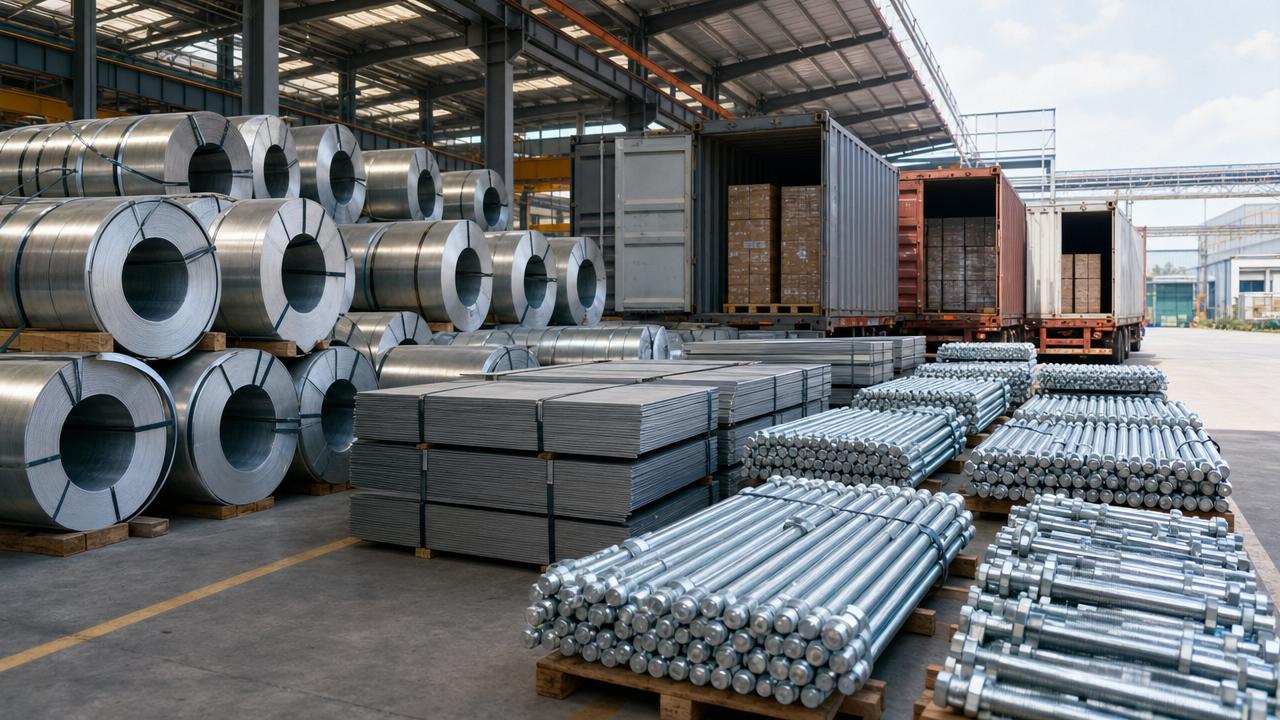
On June 1, 2026, Japan’s Ministry of Finance launched an anti-dumping investigation covering hot-rolled and cold-rolled iron or non-alloy steel strip and plate originating in mainland China. For the bolts and screws sector, the development deserves attention because these steel products are core input materials for high-strength fasteners, anchoring products, and structural fastening systems, which means procurement costs, export quote stability, and delivery timing to Japan- and Korea-related customers may all come under pressure.
What Has Been Confirmed So Far
The confirmed information is limited but commercially significant. The investigation was initiated by Japan’s Ministry of Finance on June 1, 2026, and applies to hot-rolled and cold-rolled iron or non-alloy steel strip and plate from mainland China.
The products involved cover more than 20 tariff headings, including 7208, 7209, 7225, and 7226. These categories matter to the fastener supply chain because they are key base materials used in the production of high-strength bolts, anchoring components, and structural fastening systems.
Based on the information provided, the direct areas of impact identified at this stage are raw material procurement costs for Chinese bolts and screws manufacturers, the stability of export pricing, and delivery cycles for supply to supporting enterprises linked to the Japanese and South Korean markets.
Where the Pressure May Appear First
Upstream purchasing is the first point of exposure
From an industry perspective, manufacturers that rely on these steel inputs may feel the impact first in procurement planning. The reason is straightforward: when the investigated material categories are core feedstock, any trade action around them can immediately affect how buyers evaluate cost, timing, and supply continuity. What deserves closer attention is whether procurement teams begin adjusting quote validity periods, replenishment schedules, or supplier communication around the covered steel grades.
Export-facing fastener producers face pricing uncertainty
For bolts and screws manufacturers serving overseas customers, the main issue is not only material cost but also quote stability. Analysis shows that when upstream inputs become subject to investigation, exporters may find it harder to keep pricing commitments unchanged over a normal sales cycle. The business impact may therefore appear in quotation management, contract discussions, and order confirmation timing, especially where customers expect stable pricing for supporting supply programs.
Delivery coordination with Japan- and Korea-linked customers may tighten
The provided information also points to pressure on delivery cycles to supporting enterprises in Japan and South Korea. Observably, this places attention on supply chain coordination rather than only on tariff classification. Companies involved in production scheduling, shipping commitments, and customer servicing may need to watch for any mismatch between raw material availability, production rhythm, and promised delivery windows.
What Companies Should Watch in Practice
Track official wording and scope carefully
The immediate practical priority is to follow how the investigation is described in official language, especially around the covered product categories already identified in the provided information. Companies should distinguish between the existence of an investigation and any later operational implications, rather than assuming all business effects are already fixed.
Review exposure by material category and customer market
Businesses using hot-rolled or cold-rolled iron or non-alloy steel strip and plate should map which products, orders, or customer programs are most exposed to the covered inputs. This is particularly relevant for fastener makers supplying high-strength bolts, anchoring products, or structural fastening systems tied to Japan- or Korea-facing business.
Recheck documents, lead times, and contract communication
What deserves closer attention is execution detail: supplier documents, product classification records, order lead times, and communication with customers on quote validity and shipment expectations. Even without adding assumptions beyond the confirmed facts, these are the areas most directly connected to the risks already identified in the provided summary.
Separate policy signals from immediate operational change
Analysis shows that an investigation is a policy signal, while procurement disruption or delivery delay is an operational outcome that still needs to be monitored in real business flows. Companies should therefore avoid overreacting on incomplete information, but they should also avoid treating the development as irrelevant to current planning.
Why the Market Still Needs to Keep Watching
This development is better understood, at least for now, as an active trade-policy signal rather than a final market outcome. The confirmed facts already indicate potential pressure on raw material costs, export pricing consistency, and delivery timing for the bolts and screws supply chain, but they do not yet establish every downstream consequence.
From an industry perspective, the reason continued monitoring matters is that the products under investigation are not peripheral materials. They sit near the base of the manufacturing chain for high-strength fasteners and related systems. That makes this a development with implications across sourcing, quoting, and fulfillment, even before broader conclusions can be drawn.
How to Read This Development at the Current Stage
At this stage, the most balanced reading is that the June 1 investigation introduces a clear area of commercial risk for the fastener supply chain, especially for Chinese bolts and screws producers with exposure to the covered steel inputs and to Japan- or Korea-related supporting business.
It is more appropriate to understand this as a development that can affect cost management and delivery coordination in the short term, while still requiring further observation before any broader long-term conclusion is made. The key point for the industry is not to overstate the outcome, but to recognize that the upstream material layer has entered a period of higher uncertainty.
Basis of This Article and Ongoing Verification
This article is based on the user-provided news title, event date, and event summary. The confirmed factual basis includes the June 1, 2026 launch of Japan’s anti-dumping investigation into hot-rolled and cold-rolled iron or non-alloy steel strip and plate from mainland China, the tariff headings cited in the provided summary, and the stated relevance of these materials to bolts, screws, anchoring products, and structural fastening systems.
For this type of industry update, commonly relevant source categories would include official government notices, company disclosures, industry association updates, authoritative media reporting, and standards-related documents. No specific official source link was provided in the input, so the exact source documentation still requires ongoing verification. What remains worth tracking next is any further official clarification on scope, wording, and practical implications for procurement, pricing, and delivery arrangements.
Related News