
New Maritime Law Reshapes Fastener Export Risk

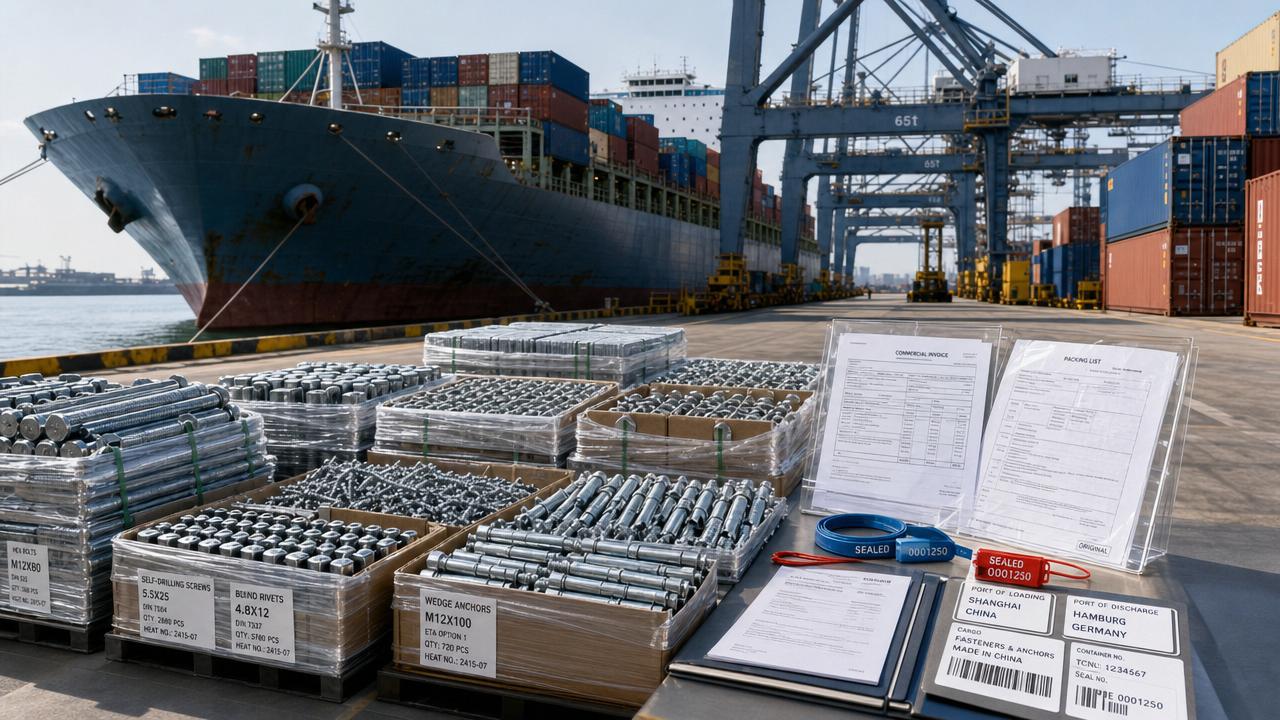
Effective May 1, 2026, the revised Maritime Law will introduce a notable change under Article 93: responsibility for cargo left unclaimed at the port of discharge will shift from the consignee to the shipper as the first responsible party. This development deserves close attention from exporters of Bolts & Screws, Anchors, Rivets and other small-batch, high-frequency industrial fasteners, because delivery risk, port detention costs, return shipment exposure and letter of credit discrepancy risk may need to be reassessed in export transactions.
Event Overview
The confirmed information is that the revised Maritime Law will take effect on May 1, 2026. Under Article 93, the liability arrangement for cargo that remains unclaimed at the port of discharge will change from a consignee-liability model to a shipper-first-responsibility model.
The disclosed information indicates that this adjustment directly affects export shipments of industrial fasteners such as Bolts & Screws, Anchors and Rivets, especially where orders are small in batch size, frequent in shipment and fast in turnover. If an overseas buyer refuses to take delivery or if customs clearance is delayed, Chinese exporters may face port detention charges, return shipment costs and letter of credit discrepancy risks.
The information also points to a potential need to renegotiate delivery responsibility under FOB terms. This does not mean every FOB transaction will change immediately, but it does mean the allocation of responsibility after cargo arrival at the discharge port may become a more important contractual issue.
Which Segments May Be Affected
Direct Exporters of Bolts & Screws, Anchors and Rivets
Direct exporters are the most immediate group affected because the revised responsibility framework places the shipper in the first-responsibility position when cargo is not claimed at the discharge port. For small-batch and multi-shipment fastener exports, this may increase sensitivity to buyer refusal, slow document handling or delayed customs clearance.
From an industry perspective, the impact is likely to be reflected in delivery risk review, contract wording, buyer communication and cost allocation. Exporters may need to pay closer attention to who bears port detention charges, how return shipment costs are handled and what happens when documents do not match letter of credit requirements.
Export Agents and Trading Companies Using FOB Terms
Trading companies and export agents involved in FOB transactions may face a more complex responsibility boundary. Under FOB arrangements, exporters often pay close attention to delivery at the loading port, but the revised rule highlights the risk that problems at the discharge port may still return to the shipper.
Analysis shows that this may push trading companies to review buyer-side obligations more carefully, especially in relation to timely cargo pickup, customs clearance cooperation and document confirmation. The main impact is not limited to freight cost; it also involves responsibility evidence, communication records and the ability to respond when cargo remains at the destination port.
Manufacturers Handling High-Turnover Export Orders
Manufacturers of industrial fasteners that ship frequent export orders may also be affected, even when they do not manage all logistics steps directly. If they are named as the shipper or are contractually tied to export delivery obligations, unclaimed cargo at the discharge port may create financial and operational pressure.
Observably, the key impact for manufacturers lies in order fulfillment discipline. Product readiness, document accuracy, shipment timing and buyer confirmation may become more closely linked to downstream legal and cost exposure. For fastener manufacturers, this is particularly relevant when shipments involve repeated small orders rather than a single large delivery.
Documentation, Finance and Letter of Credit Teams
The event summary specifically mentions letter of credit discrepancy risk. This means companies that handle export documents, invoices, bills of lading and credit documentation should treat the revised rule as a compliance and risk-control issue, not only as a shipping issue.
What is more worth noting at present is that a buyer’s refusal to accept goods or a delay in customs clearance may interact with documentation problems. If documents create discrepancies under a letter of credit, the exporter may face payment uncertainty while also being exposed to destination-port charges or return shipment costs.
Freight Forwarders and Supply Chain Service Providers
Freight forwarders, customs coordination providers and other supply chain service companies may not be the primary legal focus of the rule, but their operational role becomes more important. When cargo is not collected at the discharge port, timely notice, cost confirmation and documentary evidence may affect how exporters manage responsibility.
From an industry perspective, service providers may need to support exporters with clearer process communication around destination-port status, detention fee notices and return shipment options. The practical impact is likely to appear in service coordination rather than in product manufacturing itself.
Key Issues to Watch and Practical Responses
Review Shipper Responsibility in Export Contracts
Companies exporting Bolts & Screws, Anchors, Rivets and similar fasteners should review how the shipper is identified in contracts and shipping documents. The key practical question is whether the company could become the first responsible party when cargo is left unclaimed at the discharge port.
It is more appropriate to understand this as a trigger for contract review rather than as a simple logistics update. Exporters should check whether buyer obligations for customs clearance, cargo pickup and cost reimbursement are clearly stated, especially in FOB transactions.
Strengthen Buyer Confirmation Before Shipment
Before shipment, exporters should obtain clearer confirmation from overseas buyers on delivery readiness, import documentation, customs clearance arrangements and pickup timing. This is particularly relevant for small-batch and multi-batch fastener orders, where frequent shipments may multiply the number of risk points.
Analysis shows that the most practical response is to reduce uncertainty before goods leave the loading port. Written confirmation, updated contact details and clear destination-port handling instructions may help exporters respond if cargo is delayed or refused.
Pay Closer Attention to Letter of Credit Documents
For transactions involving letters of credit, exporters should pay close attention to document consistency. The event summary identifies letter of credit discrepancy risk as one of the possible consequences when overseas buyers refuse delivery or customs clearance is delayed.
From an industry perspective, documentation teams should align shipment details, cargo descriptions, dates and delivery terms before documents are submitted. The goal is not to expand paperwork unnecessarily, but to avoid a situation in which payment risk and unclaimed-cargo liability occur at the same time.
Prepare Cost and Return Shipment Contingency Plans
Exporters should consider how port detention charges and return shipment costs would be handled if cargo is not collected. This is especially important for high-turnover industrial fastener exports, where the value and frequency of shipments may make repeated destination-port issues costly.
Observably, current preparation should focus on practical scenarios: buyer refusal, customs clearance delay, document discrepancy and return shipment. Companies may need to define internal response responsibilities and keep communication records with buyers, forwarders and relevant service providers.
Editorial View / Industry Observation
Analysis shows that the revised Article 93 should be viewed as a risk-allocation signal for export delivery rather than a change affecting only legal departments. For exporters of Bolts & Screws, Anchors and Rivets, the main issue is not the product category itself, but the operating model: small batches, repeated shipments and fast turnover can make discharge-port uncertainty more frequent and more difficult to manage.
It is more appropriate to understand this development as a change that may reshape how delivery responsibility is negotiated, especially under FOB terms. The rule has a clear effective date, but its business impact will depend on how exporters, buyers and service providers adjust contract wording, document handling and destination-port communication.
What is more worth noting at present is that the issue combines legal responsibility, logistics cost and payment risk. For this reason, fastener exporters should not treat it as a single compliance point. Continued attention is needed because the practical handling of unclaimed cargo at discharge ports may directly affect export margins and transaction certainty.
Conclusion
The revised Maritime Law taking effect on May 1, 2026, gives the industrial fastener export sector a clear reason to reassess delivery responsibility. For Bolts & Screws, Anchors, Rivets and similar export products, the shift to shipper-first responsibility for unclaimed cargo at the discharge port may affect contract negotiation, FOB responsibility boundaries, port-cost exposure and letter of credit risk.
From an industry perspective, the change should be interpreted rationally and operationally. It is not merely a legal headline, nor should it be treated as a completed business outcome for every transaction. At this stage, companies are better advised to understand it as a concrete risk signal that requires contract review, buyer confirmation, document discipline and contingency planning.
Information Sources
- Main source: Provided event information on the revised Maritime Law, Article 93, effective May 1, 2026.
- Main source: Provided event summary concerning shipper-first responsibility for unclaimed cargo at the port of discharge and its relevance to Bolts & Screws, Anchors, Rivets and related industrial fastener exports.
- Items for continued observation: subsequent official explanations, practical application in export transactions, and how FOB delivery responsibility is renegotiated in relevant fastener export contracts.
Related News