
Why fasteners for industrial automation fail too early

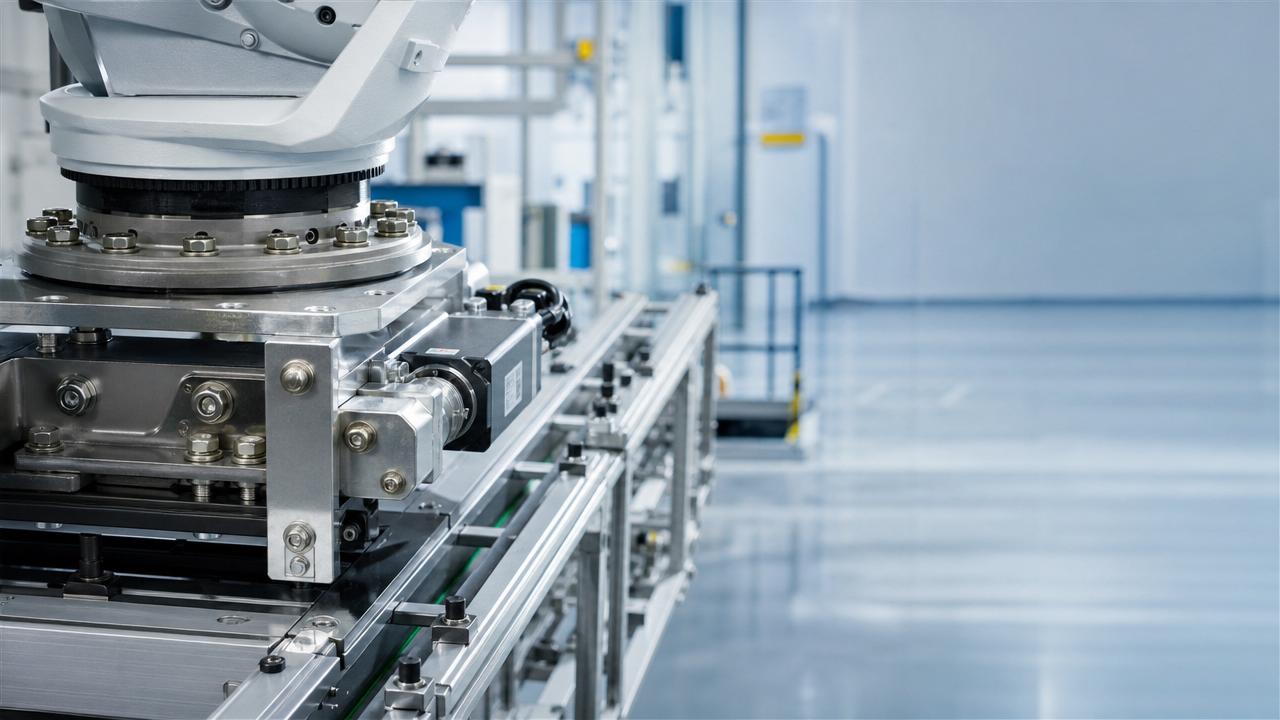
Fasteners for industrial automation often fail earlier than expected not because of one obvious defect, but due to a chain of overlooked factors in design, material choice, vibration exposure, torque control, and maintenance practice. For quality control and safety managers, understanding these hidden failure mechanisms is essential to preventing downtime, reducing risk, and improving system reliability across demanding production environments.
Why do fasteners for industrial automation fail before their expected service life?
In automated production lines, a failed fastener rarely acts alone. It often signals a mismatch between joint design, operating load, installation discipline, and environmental exposure. For QC and safety teams, the cost is not limited to replacement hardware. It can mean line stoppage, guarding instability, sensor drift, misalignment of moving assemblies, and preventable safety incidents.
Fasteners for industrial automation work inside dynamic systems rather than static structures. Servo motion, pneumatic shock, repetitive start-stop cycles, washdown cleaning, thermal fluctuation, and compact equipment layouts create a demanding setting. A bolt that performs well in general fabrication may underperform in robotic cells, conveyor frames, electrical enclosures, or tooling fixtures if preload retention is not properly engineered.
This is why early failure should be approached as a system problem. GHTN focuses on the granular core of industrial parts, linking material behavior, precision manufacturing logic, and field application conditions. That perspective helps decision-makers move beyond replacing a loose bolt and instead correct the root cause behind recurring joint failures.
- Loss of preload from vibration and joint settlement is one of the most common hidden reasons for loosening.
- Improper material or coating selection can trigger corrosion, hydrogen-related risks, galling, or thread damage.
- Inconsistent torque application across maintenance shifts creates uneven clamp force and unstable long-term performance.
- Design teams sometimes specify bolt grade but overlook joint stiffness, mating surface condition, and locking method.
What failure mechanisms should quality and safety managers watch first?
The most effective investigations begin with failure mode classification. When fasteners for industrial automation fail too early, the visible symptom may be loosening, fracture, stripped threads, corrosion staining, or sudden loss of alignment. Each symptom points to a different control plan.
Loosening under vibration and cyclic motion
Vibration loosening is especially common in conveyors, motor brackets, linear guides, guarding, and robot peripheral structures. If transverse movement occurs across the clamped parts, preload can decay rapidly. Once clamp force drops, micro-movement accelerates wear and the joint degrades faster.
Fatigue fracture from fluctuating load
Fatigue cracks often start at thread roots, under-head fillets, or damaged surface zones. In automation equipment, small but repeated stress cycles matter more than occasional peak load. Misalignment, bending stress, and inadequate preload often create the conditions for premature fatigue.
Corrosion and chemical attack
Food processing, battery assembly, electronics cleaning, and humid facilities expose joints to moisture, detergents, coolants, or dissimilar metals. Corrosion reduces cross-section, disrupts thread engagement, and changes friction behavior during retightening. Stainless fasteners may resist rust better, but not every stainless grade performs well in every chloride-rich environment.
Thread damage, galling, and over-tightening
When installation tools are poorly calibrated or lubrication assumptions are inconsistent, torque values become misleading. Two joints tightened to the same torque can end up with very different clamp force. In stainless combinations, galling can seize threads before proper preload is reached. In softer mating materials, stripped threads may appear during maintenance rather than initial assembly.
The table below helps distinguish common early failure patterns in fasteners for industrial automation and the likely causes that QC and safety teams should investigate first.
For many plants, early failure stems from two or three causes acting together. A joint may loosen because of vibration, then corrode because moisture enters the gap, and finally crack because the reduced preload shifts load to the bolt shank. Treating only the final symptom leads to repeated maintenance events.
Which design and installation mistakes create hidden risk in automation equipment?
A common mistake is to select fasteners for industrial automation by nominal strength alone. Higher grade does not automatically solve a poor joint. If clamped parts are thin, soft, coated, or uneven, preload may relax after first tightening. If the joint is exposed to side loading, a stronger bolt may still loosen if the design allows slip.
Another hidden issue is uncontrolled friction. Torque is only an indirect method for achieving preload. Surface finish, plating, lubrication, reused hardware, and thread cleanliness all affect the torque-tension relationship. Without process discipline, the same torque setting can produce under-clamped or over-stressed joints on the same line.
- Using spring washers in severe vibration service where a more robust locking approach is needed.
- Specifying stainless for corrosion resistance but ignoring galling risk during repeated maintenance.
- Reusing prevailing torque locknuts beyond their effective life in maintenance-intensive stations.
- Applying threadlocker without controlling cleanliness, cure time, and service temperature range.
- Allowing painted or powder-coated contact surfaces to compress after assembly, reducing clamp force.
QC personnel should therefore audit not only part numbers, but also work instructions, tool settings, operator training, and the condition of mating components. Safety managers should verify whether failed joints affect guarding, emergency stop mounts, cable routing supports, or pneumatic fixture integrity, because the consequence profile differs across applications.
How should you select fasteners for industrial automation by application scenario?
Selection should start from application conditions, not catalog convenience. A joint on a control cabinet, a sensor bracket, and a high-cycle pick-and-place fixture may use similar dimensions but require different material, locking, and maintenance strategies.
The table below compares key selection priorities for typical automation scenarios. It can help cross-functional teams align purchasing with reliability and safety expectations.
A scenario-based approach reduces false economies. Choosing cheaper hardware without considering cycle load, cleaning chemistry, or inspection accessibility often results in higher total cost through downtime, scrap, and emergency intervention.
A practical selection checklist
- Define whether the joint is static, dynamic, safety-related, or maintenance-critical.
- Map the environment: temperature range, humidity, washdown exposure, conductive dust, or chemicals.
- Confirm mating materials, available thread engagement, and whether contact surfaces may settle after tightening.
- Match the locking strategy to vibration severity and service requirements, not just installer preference.
- Standardize torque method, lubrication condition, and inspection frequency across shifts and sites.
What procurement and quality controls prevent repeat failures?
Procurement teams often receive broad specifications such as size, grade, and finish. That is not enough for high-reliability automation assemblies. Quality and safety managers should push for a more complete definition that includes installation condition, reuse rules, inspection method, and traceability expectations where appropriate.
For fasteners for industrial automation, incoming inspection should not focus only on dimensions. Surface condition, thread quality, coating consistency, lot segregation, and packaging damage matter because they influence assembly behavior and long-term field performance.
The following table can be used as a procurement evaluation framework when comparing suppliers or internal approval criteria.
This framework is especially valuable when sourcing across regions or balancing cost pressure with reliability targets. GHTN’s strength lies in connecting technical trend analysis with supply-side trade insight, allowing buyers to evaluate not only a part itself but also its manufacturing logic, application fit, and supply stability.
Which standards and compliance points matter most?
Not every automation project requires the same compliance depth, but safety-related assemblies should be reviewed with care. General fastener standards help define dimensions and mechanical properties, while sector-specific requirements may influence material restrictions, corrosion resistance, cleanliness, or documentation expectations.
- Use recognized dimensional and property standards where applicable so replacement and inspection remain consistent across sites.
- Check whether coatings or materials affect electrical grounding, conductivity, or enclosure integrity in electrical systems.
- Review whether cleaning agents, humidity, or outdoor exposure require a more robust corrosion strategy.
- For safety guards and operator-access zones, document torque procedures and replacement intervals as part of maintenance control.
Compliance is not just a paperwork issue. It affects inspection frequency, spare parts control, and incident investigation readiness. When fasteners for industrial automation are used in guarding, tooling retention, or motion-control structures, undocumented substitutions can create avoidable audit and safety exposure.
Common misconceptions that lead to early fastener failure
“If it is tighter, it is safer”
Over-tightening can push a bolt beyond its useful preload window, damage threads, crush softer joint materials, or reduce fatigue life. A controlled torque or torque-angle method is safer than an installer’s subjective feel.
“Stainless solves every corrosion problem”
Stainless may improve corrosion resistance, but it can introduce galling risk and may still suffer in certain chemical or chloride-rich conditions. Material choice should reflect the actual environment and maintenance pattern.
“One locking method fits every machine”
Lock washers, prevailing torque nuts, adhesives, wedge-locking systems, and mechanical retainers each have different strengths and limitations. The right choice depends on vibration mode, service access, and whether the joint must be reopened regularly.
FAQ: practical questions about fasteners for industrial automation
How do I know whether loosening is caused by poor torque control or bad joint design?
Start by checking torque tool calibration, lubrication condition, and operator consistency. If those are stable but loosening repeats in high-vibration areas, review joint geometry, contact surface slip, and locking method. Repeated loosening in the same machine location usually points to design or application mismatch rather than random installer error.
Are higher-strength bolts always better for automation equipment?
No. Higher strength may increase preload capacity, but it does not automatically improve performance if the joint is poorly supported, exposed to bending, or assembled inconsistently. In some cases, the surrounding material or thread interface becomes the limiting factor, not the bolt grade.
What should be included in a maintenance inspection plan?
Include critical joint identification, torque verification strategy, visual indicators of movement or corrosion, reuse rules for locknuts or coated hardware, and escalation criteria when preload loss is found. Safety-related joints should have clearer traceability and more formal inspection intervals.
When should I consider changing the fastener system instead of replacing the same part?
If the same failure recurs after proper installation, the issue is likely systemic. Consider a redesign when there is persistent vibration, repeated washdown, frequent service opening, or evidence of surface settlement. A change in locking method, coating, joint geometry, or access for controlled tightening may deliver better results than changing suppliers alone.
Why work with GHTN when evaluating fasteners for industrial automation?
GHTN approaches industrial components as the hidden structure behind manufacturing reliability. That matters for quality and safety managers who need more than a generic parts list. By connecting mechanical performance, electrical system context, mold and tooling knowledge, and global trade insight, GHTN helps teams evaluate fasteners for industrial automation at the level where failures actually begin.
Our value is practical and decision-oriented. We help buyers and technical teams compare material options, review application risks, clarify procurement checkpoints, and understand how installation practice influences long-term reliability. This is especially useful when product lines operate across different regions, suppliers, compliance expectations, and maintenance cultures.
- Parameter confirmation for size, grade, material, finish, and expected operating environment.
- Selection support for vibration-prone joints, washdown areas, electrical enclosures, and safety-related assemblies.
- Discussion of delivery timelines, sourcing routes, and supply consistency for global OEM and distributor needs.
- Guidance on certification expectations, documentation needs, sample evaluation, and quotation communication.
- Support for customized solutions when standard fasteners do not match the real service conditions of the joint.
If your team is seeing repeated loosening, unexplained breakage, corrosion-related maintenance, or sourcing uncertainty, contact GHTN with the joint application, service environment, target standards, and delivery requirement. That allows a more precise discussion on product selection, inspection criteria, sample support, and cost-conscious alternatives that reduce risk without overspecifying the hardware.
Related News
- Greening components or lower cost materials: which wins long termTime : Apr 29, 2026
- China-UAE Open Direct Sea Route, Cutting Export Lead Times for Industrial Fasteners and Pneumatic Parts by 7-10 DaysTime : Aug 16, 2026
- What Defines Precision Fastener Technology in High-Tolerance Industrial Assembly?Time : Aug 11, 2026