
When micron-level precision stops adding real value

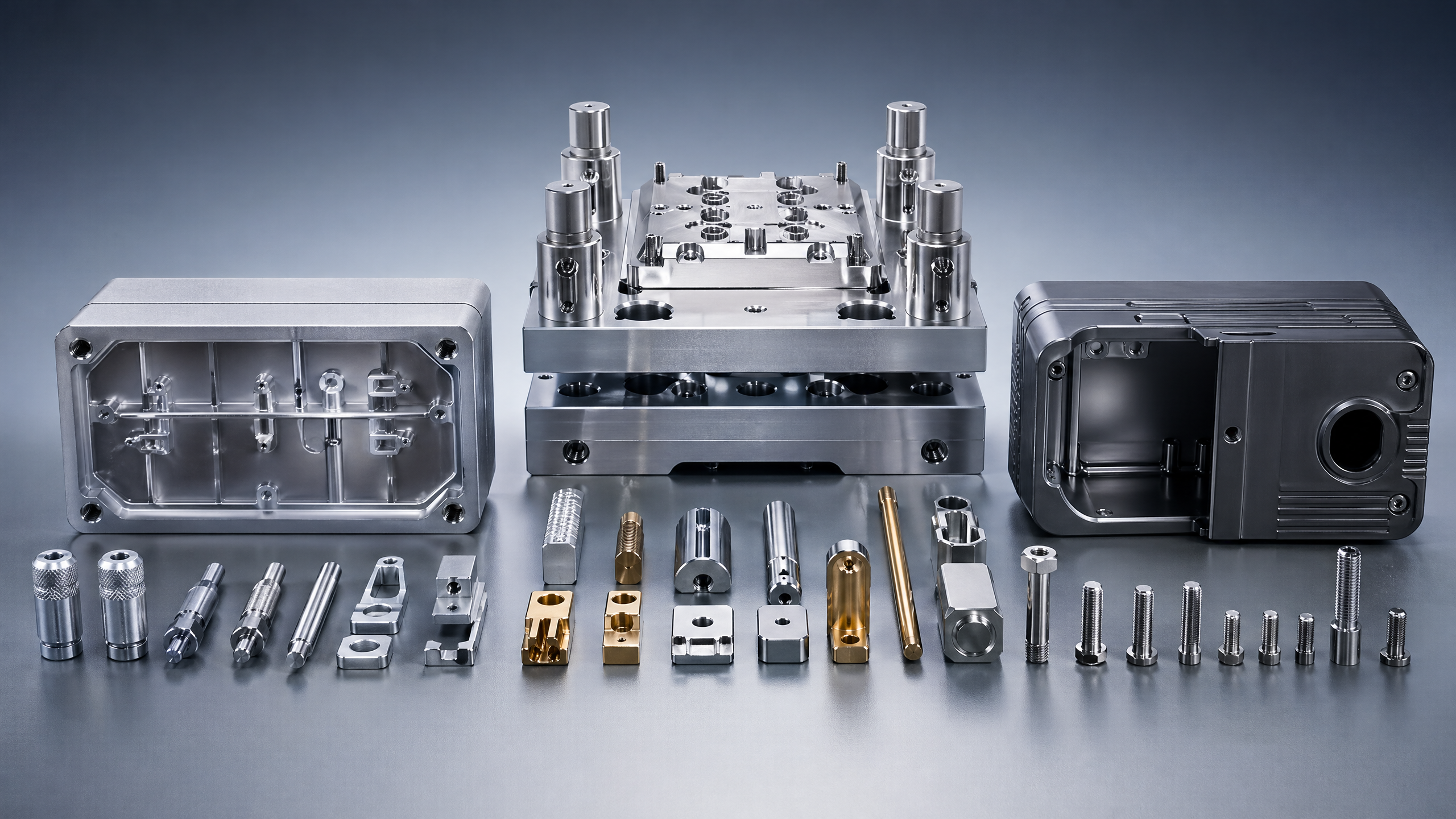
In the high-end industrial market, micron-level precision is not always the ultimate driver of value. For buyers, engineers, and decision-makers across the hardware sector, true advantage often comes from balancing manufacturing logic, industrial standardization, electrical compliance standards, and greening components. This article explores when extreme precision supports performance—and when smarter, greener industrial choices create stronger returns.
Understanding the Real Meaning of Micron-Level Precision
Micron-level precision refers to dimensional control measured in micrometers, often within ranges such as ±1 μm to ±20 μm depending on the process, material, and functional requirement. In precision molds, cutting tools, electrical housings, and fastening systems, this level of control can directly affect fit, repeatability, sealing performance, wear behavior, and assembly consistency. However, precision in itself is not the final goal. In industrial practice, the value of precision depends on whether it improves the total function of a part, a tool, or a production line.
For many stakeholders in the hardware sector, the problem is not whether tighter tolerances are technically possible, but whether they create measurable business value. A mold cavity refined from ±10 μm to ±3 μm may improve a premium optical part, yet the same refinement may add limited value in a structural bracket, standard fastener, or electrical enclosure where installation tolerance, material variation, and line speed matter more. This is where manufacturing logic becomes essential: every tolerance should be linked to performance, service life, compliance, and cost.
In practical terms, the pursuit of micron-level precision often introduces trade-offs. Lead times may stretch from 2–3 weeks to 5–8 weeks, inspection protocols become more intensive, scrap risk can rise during process tuning, and supplier qualification becomes narrower. In sectors that increasingly prioritize industrial greening, companies also need to ask whether extra machining passes, tighter environmental controls, and increased metrology effort are justified by downstream gains in product quality or energy efficiency.
Where precision creates value
There are clear cases where extreme precision is valuable and necessary. These include mold inserts for thin-wall parts, high-cycle die-casting interfaces, electrical connector tooling, pneumatic valve seats, and cutting edges used in repeatable fine operations. In these situations, tolerance variation can affect leakage rates, flash control, contact reliability, burr formation, or cycle stability over tens of thousands to millions of repetitions.
Typical value triggers
- A component interfaces with another part at high speed, high frequency, or under automated assembly conditions.
- Electrical compliance standards require controlled spacing, insulation geometry, or dimensional repeatability.
- Tool wear, thermal expansion, or pressure loading can quickly convert small dimensional errors into quality losses.
- A defect cost is high, such as in export tooling, multi-cavity molds, or validated production systems.
The key point is that useful precision is contextual precision. It should be specified from function backward, not from capability forward. That distinction helps technical evaluators and purchasing teams avoid overengineering while still protecting the integrity of critical industrial components.
Why the Industry Is Rethinking “More Precision Is Always Better”
Across the global hardware, electrical, and mold fields, the market is moving toward more disciplined value assessment. OEMs, distributors, and project leaders are facing tighter delivery windows, higher documentation requirements, more frequent design changes, and stronger pressure for industrial standardization. In that environment, micron-level precision remains important, but only as one variable among several: material behavior, process capability, inspection method, compliance readiness, and lifecycle economics.
This shift is especially visible in the high-end industrial market, where procurement teams no longer evaluate only unit price or nominal tolerance. They increasingly look at 5 to 7 decision dimensions at the same time: consistency, delivery risk, maintenance burden, energy use, recyclability, spare-part compatibility, and documentation support. As a result, greening industrial strategies are no longer separate from engineering strategy. Greening components can influence supplier choice just as much as surface finish or cavity accuracy.
The trend also reflects the reality of manufacturing systems. A part machined to ±2 μm does not automatically create a better result if the mating component varies by ±30 μm, if the assembly fixture drifts after 6 months, or if thermal conditions on the production floor fluctuate by several degrees. This is why advanced buyers and quality managers increasingly assess the full tolerance chain rather than one premium specification in isolation.
Industry pressures behind the change
Several structural factors are driving this broader perspective. First, product platforms are becoming more modular, which increases the value of interchangeability and industrial collaboration network efficiency. Second, cross-border supply chains require better alignment with electrical compliance standards and documentation expectations. Third, sustainability targets are pushing manufacturers toward industrial greening measures that reduce waste, energy intensity, and unnecessary process complexity.
The following overview shows how precision interacts with wider industrial concerns rather than standing alone as a universal performance metric.
This table illustrates a practical reality: in modern manufacturing, value emerges from system balance. Companies that align precision with standardization, compliance, and greening components often achieve more durable returns than those that simply specify the smallest number available.
Where Extreme Precision Pays Off—and Where It Does Not
A balanced view requires separating critical precision from decorative precision. In industrial decision-making, this means identifying whether dimensional refinement affects safety, sealing, electrical performance, tool life, or process capability. If the answer is yes, investment in micron-level precision may be justified. If the answer is no, the same budget may generate higher returns through better materials, coatings, modular design, inventory planning, or cleaner compliance documentation.
For example, mold components used in optical, thin-wall, or high-cavity systems often benefit from tighter tolerance control because tiny deviations can amplify across cycle counts of 100,000 to 1,000,000 shots. By contrast, many brackets, housings, support plates, and non-critical fastening elements perform well within broader ranges such as ±20 μm to ±100 μm depending on the function. In these cases, industrial standardization and maintainability often matter more than pushing precision beyond actual use requirements.
Electrical systems add another layer. Some dimensions are tied to electrical compliance standards, including creepage paths, alignment features, and enclosure integrity. Yet even there, not every external feature needs a premium machining route. Smart engineering isolates critical dimensions and applies normal process control to the rest. That selective approach protects function without inflating cost across the full bill of materials.
Application-based classification
The following matrix helps teams classify where high precision tends to be essential, useful, or excessive in typical industrial settings.
The lesson is not to reject precision, but to allocate it intelligently. When engineering and sourcing teams make this distinction early—often during concept review, process planning, or RFQ evaluation—they reduce both over-specification and under-performance. That improves outcomes for operators, quality personnel, and project managers alike.
How Greening Components and Standardization Create Stronger Returns
As industrial greening becomes a real operational target rather than a branding phrase, many companies are re-evaluating what “premium” means. In numerous industrial applications, the more valuable upgrade is not a tighter tolerance but a greener component design, a more durable tool path, a lower-waste mold strategy, or a standard part that reduces replacement frequency. Greening industrial performance is often achieved through system efficiency, not isolated dimensional refinement.
Consider a production line that runs 16 to 20 hours per day. If a standardized tool holder, a recyclable material option, or a lower-friction pneumatic component reduces stoppages and maintenance interventions by even a small margin each week, the annual value can exceed the return from micron-level improvements on non-critical dimensions. This is especially true when spare part access, training simplicity, and cross-site compatibility are part of the cost structure.
For distributors and procurement teams, greening components also improves commercial resilience. Parts aligned with industrial standardization are easier to stock, compare, and replace. Components selected with compliance and environmental considerations in mind may reduce redesign cycles when entering different regions. In an industrial collaboration network, that kind of predictability supports both market entry and long-term account development.
Practical value areas beyond ultra-tight tolerances
Where return is often stronger
- Material selection matched to heat, corrosion, vibration, or fatigue exposure over service cycles of 12–36 months.
- Process simplification that reduces scrap, secondary machining, or unnecessary inspection steps.
- Design for maintenance, including standard interfaces and easier replacement in field conditions.
- Compliance-oriented design that supports electrical compliance standards and export readiness without late-stage changes.
- Supplier alignment within an industrial collaboration network to improve continuity, technical support, and multi-market consistency.
This broader approach does not reduce engineering rigor. It increases it. By integrating manufacturing logic with greening components and industrial standardization, companies can often achieve lower total cost of ownership, faster ramp-up, and better practical reliability in the high-end industrial market.
A Practical Evaluation Framework for Engineers, Buyers, and Decision-Makers
A useful evaluation framework starts with function, then moves through process capability, compliance, lifecycle economics, and supply continuity. This sequence helps avoid a common problem: treating all tolerances as equally valuable. For technical evaluators, the first question should be whether the dimension affects performance directly, indirectly, or only cosmetically. For procurement teams, the second question is how that requirement influences lead time, supplier range, and inspection burden.
In many industrial projects, a 4-step review is enough to clarify whether micron-level precision is justified. Teams can define critical-to-function dimensions, compare them to process capability, check links to electrical compliance standards, and estimate cost impact over a 6–24 month operating horizon. This approach works well for mold components, electrical parts, fastening systems, and mechanical tools because it forces the specification to be evidence-based rather than aspirational.
For quality and safety personnel, a disciplined review also reduces hidden risk. Overly strict tolerances may drive process instability if measurement systems, environmental controls, or supplier methods are not matched to the target. On the other hand, insufficient control on critical dimensions can create leakage, misalignment, abnormal wear, or compliance issues. The right answer is usually selective precision combined with controlled standardization.
A simple decision checklist
- Does the tolerance directly affect sealing, fit, electrical safety, motion stability, or tool life?
- Can the selected manufacturing route hold the tolerance repeatedly over the expected batch size?
- Will the tighter tolerance reduce defect cost or only increase machining and inspection cost?
- Is the requirement compatible with industrial standardization and field replacement needs?
- Could greening components or better material choices generate a stronger lifecycle return?
Common decision outcomes
When all five answers point to critical function and stable capability, premium precision is often justified. When only one or two conditions apply, a mixed strategy is usually better: hold tight tolerances on key zones and standard tolerances elsewhere. This tiered approach often improves sourcing flexibility by 20% to 40% in practical terms because more qualified suppliers can participate without compromising functional quality.
For organizations working across multiple product families, this framework also supports internal alignment. Engineering, purchasing, quality, and commercial teams can discuss requirements using the same logic instead of competing assumptions. That reduces redesign cycles, shortens quotation clarification, and improves communication with distributors, agents, and end users.
Linking Precision to Smarter Industrial Decisions
The most effective industrial decisions are rarely based on one metric alone. Micron-level precision matters when function, compliance, repeatability, or defect cost truly depend on it. But beyond those cases, stronger value often comes from manufacturing logic that integrates standardization, realistic tolerancing, material performance, and industrial greening. In other words, the best specification is not the tightest one; it is the one that delivers measurable operational advantage.
For the hardware sector and connected industrial fields, this perspective is increasingly important. Global projects require better documentation, faster decision cycles, and more reliable collaboration between OEMs, distributors, tooling suppliers, and engineering teams. An industrial collaboration network built on practical knowledge can help companies identify where precision adds value, where greening components improves competitiveness, and where industrial standardization supports scale.
At GHTN, we focus on the granular core of manufacturing: underlying industrial components, mechanical tools, electrical systems, and mold processes that shape real production outcomes. We help stakeholders interpret trade-offs across precision, compliance, durability, and market readiness without losing sight of practical commercial performance.
Why choose us
If you are evaluating whether a tighter tolerance is necessary, planning entry into the high-end industrial market, or comparing greener alternatives in tooling and components, we can support your next step with focused industrial insight. You can contact us to discuss parameter confirmation, product selection logic, delivery cycle expectations, custom solution direction, electrical compliance standards, sample support, and quotation communication for hardware, electrical, and mold-related projects.
Whether you are a researcher, operator, technical reviewer, buyer, distributor, or business decision-maker, our goal is to connect precision with usable market intelligence. Reach out to explore fit-for-purpose specifications, greening industrial opportunities, and sourcing strategies that strengthen both technical outcomes and long-term competitiveness.
Related News
- industrial components
- mechanical tools
- fasteners
- electrical systems
- material selection
- hardware sector
- die-casting
- industrial standardization
- precision mold
- high-end industrial market
- industrial collaboration network
- electrical compliance
- greening industrial
- industrial collaboration
- greening components
- market entry
- precision molds
- electrical compliance standards
- cutting tools
- industrial greening
- micron-level precision
- manufacturing logic