

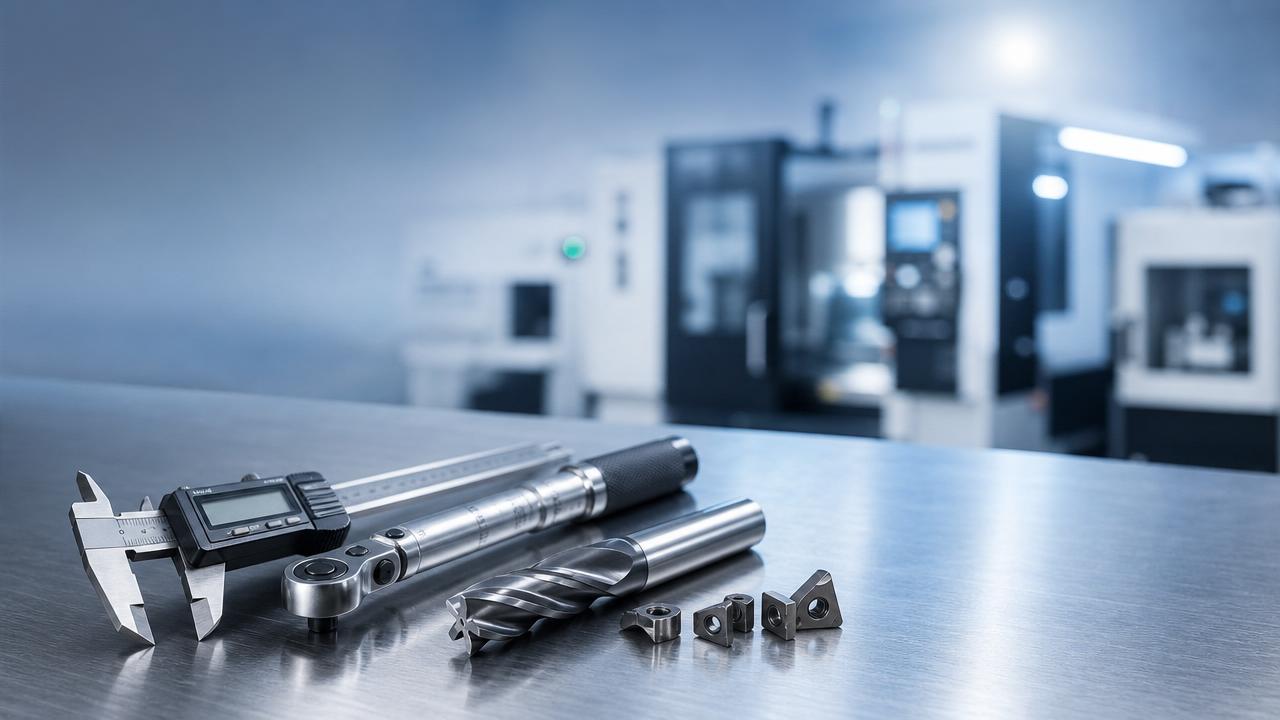
Upgrading Mechanical Engineering Tools: A Practical Shop-Floor Decision Guide
For operators on the shop floor, upgrading mechanical engineering tools is not just about owning newer equipment—it is about reducing downtime, improving safety, and achieving more consistent results under real working conditions.
As materials, tolerances, and production schedules become more demanding, outdated tools can quietly limit efficiency and raise operating costs.
This article explores whether now is the right time to upgrade, what performance gains matter most, and how users can judge tool value from practical daily operation rather than marketing claims alone.
The Short Answer: Upgrade When the Tool Is Costing You Control
For most operators, the right time to upgrade mechanical engineering tools is when older equipment starts reducing control, repeatability, or safety.
A tool does not need to fail completely before it becomes expensive. Small delays, rework, vibration, and inconsistent output quietly increase daily costs.
If your current tools still deliver accurate results, remain safe, and fit the workload, immediate replacement may not be necessary.
However, if operators compensate through extra force, slower passes, repeated measurement, or frequent adjustments, the tool is already limiting productivity.
The best upgrade decision starts from real work conditions, not catalog specifications. Operators should judge tools by results during actual use.
What Operators Usually Mean by “Worth Upgrading”
When users search this question, they are rarely asking whether new tools look better. They want to know if performance justifies cost.
Operators care about whether the new tool reduces effort, shortens setup, improves accuracy, and holds up under repeated shifts.
They also want to avoid buying equipment that sounds advanced but does not improve the specific task they perform every day.
In practical terms, an upgrade is worthwhile when it solves a measurable problem. That problem may involve speed, precision, ergonomics, or durability.
The most useful comparison is not old versus new. It is current process cost versus improved process cost over time.
Signs Your Current Tools Are Holding Production Back
The clearest warning sign is repeated inconsistency. If two skilled operators get different results using the same tool, investigate tool condition.
Excessive vibration, drifting torque, poor cutting finish, and unstable clamping often indicate that the tool no longer supports required tolerances.
Another sign is rising setup time. Operators may spend extra minutes aligning, testing, tightening, or correcting before production can begin.
Frequent consumable changes can also reveal hidden inefficiency. A worn or poorly matched tool may shorten insert, bit, or accessory life.
Pay attention to operator fatigue. If a task requires more grip force, awkward posture, or repeated correction, upgrade value becomes stronger.
Performance Gains That Matter Most on the Shop Floor
The most valuable upgrade is usually not the most complex one. It is the one that improves the task operators repeat most often.
For cutting tools, key gains include better material removal, cleaner finish, lower heat buildup, and longer edge life under stable conditions.
For measuring tools, operators should prioritize repeatability, readable displays, calibration stability, and resistance to dust, oil, or vibration.
For fastening tools, controlled torque, reduced reaction force, and better feedback help prevent assembly errors and reduce joint failure risk.
For hand tools, ergonomic balance and material quality matter more than appearance. Reduced strain can improve output across a long shift.
How New Materials and Tolerances Change the Decision
Many older mechanical engineering tools were designed for less demanding materials, wider tolerances, or slower production schedules.
Modern alloys, composites, hardened steels, and coated components can expose weaknesses in older tool geometry, rigidity, and wear resistance.
When tolerances become tighter, a tool that was acceptable five years ago may now create too much variation.
Operators may notice more burrs, chatter marks, overheating, or dimensional drift when old tools meet newer material requirements.
In these situations, upgrading is not about luxury. It is about matching tool capability to the workpiece and quality standard.
Safety Improvements Are Often Undervalued
Safety is one of the strongest reasons to upgrade, yet it is often considered only after an incident or near miss.
Old tools may have worn guards, unreliable switches, poor insulation, damaged handles, or unstable locking mechanisms.
Even when these problems seem minor, they increase risk during repetitive tasks, high loads, or urgent production conditions.
Modern tools may provide better overload protection, anti-kickback design, improved grip surfaces, and clearer status indicators.
For operators, safer tools reduce hesitation and physical stress. That benefit directly supports more confident and consistent work.
Do Digital and Smart Features Really Help?
Digital features are useful only when they improve decisions, reduce mistakes, or make work easier to verify.
A torque tool with data logging can help trace assembly quality, especially where joint integrity matters for safety or warranty.
A measuring device with quick digital output can reduce transcription errors and speed up inspection during repetitive checks.
However, smart features can become a burden if they add complicated menus, fragile components, or unnecessary training requirements.
Before paying extra, operators should ask whether the feature solves an existing pain point or only looks impressive in demonstrations.
Calculate Value Using Daily Use, Not Purchase Price Alone
A cheap tool can be expensive if it slows production, damages parts, or requires constant replacement.
A premium tool can be affordable if it saves minutes every cycle, reduces scrap, and lasts through heavy workloads.
Operators can estimate value by tracking downtime, rework, consumable usage, setup time, and tool maintenance frequency.
If a tool saves ten minutes per shift, the annual labor and capacity gain may exceed the purchase price quickly.
The best upgrade case includes both direct savings and avoided losses, including rejected parts, injuries, urgent repairs, and missed delivery windows.
A Practical Checklist Before You Upgrade
Start by identifying the specific problem. Avoid vague reasons such as “old tool” unless age is causing measurable performance loss.
Record where the current tool fails: accuracy, speed, comfort, safety, durability, compatibility, or maintenance demand.
Next, compare upgrade options against the actual material, workload, tolerance, environment, and operator skill level.
Check whether the new tool fits existing fixtures, accessories, power supply, maintenance routines, and calibration systems.
Finally, test the tool if possible. A short trial under real operating conditions is more reliable than any brochure claim.
When Repair or Maintenance Is Better Than Replacement
Not every performance issue requires a new purchase. Some tools only need calibration, lubrication, replacement parts, or better storage.
If the tool body is sound and the main problem is wear, maintenance may restore acceptable performance.
Repair is often sensible for high-quality tools with available parts, documented service procedures, and predictable remaining life.
However, repeated repairs become a warning sign. If maintenance interrupts production frequently, replacement deserves serious consideration.
The decision should compare repair cost, expected reliability, downtime risk, and whether the tool still meets current production needs.
When Upgrading Immediately Makes Sense
Immediate upgrading makes sense when tool failure could cause injury, major scrap, machine damage, or customer rejection.
It also makes sense when the current tool cannot meet required tolerance even after calibration and proper operation.
High-volume repetitive work is another strong case. Small improvements in cycle time can create large gains over thousands of operations.
Operators working with harder materials, tighter specifications, or automated lines may also benefit from higher rigidity and process stability.
If the old tool forces skilled workers to slow down unnecessarily, it is reducing the value of their experience.
When Waiting May Be the Smarter Choice
Waiting can be reasonable when production volume is low, tolerance requirements are simple, and the current tool remains safe.
It may also be better to delay if a new product design or process change is expected soon.
Buying before requirements are clear can result in a tool that becomes mismatched within months.
Operators should also be cautious when an upgrade requires major retraining but delivers only minor practical gains.
In these cases, improving maintenance habits, consumable selection, or setup procedure may create enough improvement for now.
How Operators Can Influence Better Purchasing Decisions
Operators are often closest to the problem, so their feedback should shape any upgrade decision.
Useful feedback is specific. Instead of saying a tool feels bad, describe vibration, slippage, heat, weight, or adjustment difficulty.
Document repeated issues with photos, measurements, cycle times, rejected parts, and maintenance records whenever possible.
This evidence helps supervisors and purchasing teams compare options based on operating reality, not only supplier promises.
When operators participate in trials, companies are more likely to choose tools that improve both productivity and daily usability.
What to Look for in a Reliable Supplier or Tool Source
A good supplier should understand applications, not just product codes. They should ask about materials, tolerances, environment, and workload.
Reliable sources provide technical data, replacement part availability, calibration guidance, and clear limits for safe operation.
For global buyers and distributors, consistency across batches matters. Tool quality should remain stable beyond the first sample.
Support also matters after purchase. Operators need access to manuals, service information, and practical troubleshooting help.
Networks such as GHTN emphasize application-level insight, helping users connect mechanical engineering tools with real manufacturing requirements.
Common Upgrade Mistakes to Avoid
One common mistake is buying the most powerful option without considering control, balance, or suitability for the task.
Another mistake is focusing only on speed. A faster tool that increases scrap or fatigue may reduce overall productivity.
Operators should also avoid assuming that digital features automatically mean higher accuracy or better durability.
Compatibility is frequently overlooked. A new tool may require different accessories, fixtures, software, power supply, or maintenance skills.
The best upgrade is not the newest product. It is the tool that removes a real constraint from the process.
A Simple Decision Framework for Daily Operations
First, define the main limitation: safety, accuracy, speed, fatigue, downtime, tool life, or process compatibility.
Second, measure the current impact using real numbers whenever possible, even if the data is simple.
Third, compare upgrade options by how directly they address that limitation under actual working conditions.
Fourth, consider total ownership cost, including consumables, calibration, training, spare parts, and repair downtime.
Finally, choose the option that improves reliability and repeatability, not only the one with the strongest advertised specification.
Conclusion: Upgrade for Measurable Control, Not for Novelty
Mechanical engineering tools are worth upgrading now when existing tools reduce control, safety, consistency, or production efficiency.
For operators, the strongest evidence comes from daily work: extra adjustments, repeated defects, fatigue, vibration, and unstable results.
Upgrading should not be driven by novelty alone. It should be based on measurable improvement in the process.
If a new tool saves time, protects workers, improves quality, and supports current materials, the investment is usually justified.
If the current tool remains safe, accurate, and suitable, better maintenance or targeted repair may be the smarter short-term decision.
The most practical answer is simple: upgrade when the tool helps operators work more safely, consistently, and confidently every day.