
Manufacturing Tools Selection: Hand, Power, and Cutting Tool Differences

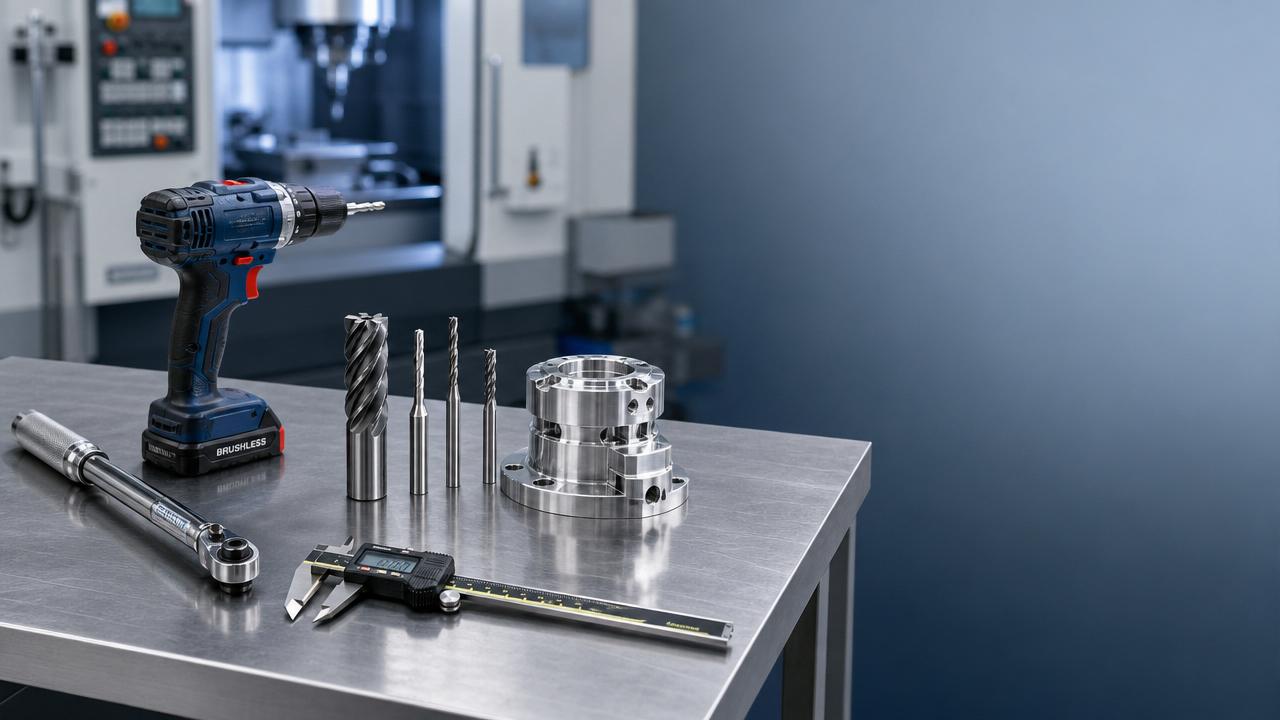
Choosing the right manufacturing tools is a critical sourcing decision affecting efficiency, quality, maintenance cost, and supplier performance.
Hand tools, power tools, and cutting tools serve different production roles, so selection must connect function, material, tolerance, and lifecycle value.
Manufacturing Tools Selection: Why a Checklist Matters
A checklist prevents tool selection from becoming a price-only decision.
In industrial operations, manufacturing tools influence repeatability, operator safety, machine uptime, and downstream inspection results.
The correct framework compares capability before cost, then validates cost through durability, service support, and process stability.
This approach is especially important when sourcing across mixed production environments, repair stations, assembly lines, and machining cells.
Hand, Power, and Cutting Tool Differences
The three categories of manufacturing tools differ by energy source, precision behavior, maintenance burden, and process risk.
Hand tools usually offer flexibility and low operating complexity.
Power tools improve throughput but require stronger control over vibration, torque, charging, pneumatic supply, or electrical compliance.
Cutting tools directly define surface finish, dimensional accuracy, tool life, and machining cost per part.
Core Manufacturing Tools Selection Checklist
Use the following checklist before comparing quotations, catalogs, or supplier claims.
- Define the task precisely, including material, operation type, tolerance range, batch size, access space, and expected daily usage.
- Match tool category to process demand, avoiding power tools where controlled manual feel or calibrated torque is safer.
- Verify material compatibility, especially when cutting stainless steel, hardened alloys, composites, plastics, or coated fasteners.
- Check dimensional accuracy requirements, including runout, torque repeatability, jaw fit, blade straightness, and cutting edge stability.
- Evaluate durability through hardness, heat treatment, coating quality, motor protection, bearing design, and fatigue resistance.
- Compare ergonomics by weight, grip shape, vibration exposure, balance, trigger design, and working posture during long shifts.
- Review safety features, including guards, overload protection, insulated handles, anti-kickback functions, and dust control options.
- Confirm maintenance needs, such as lubrication, sharpening, calibration, battery replacement, spare brushes, collets, and service intervals.
- Assess supplier documentation, including test reports, material certificates, exploded diagrams, compliance marks, and traceability records.
- Calculate total cost of ownership, not only unit price, by including downtime, consumables, failures, training, and replacement frequency.
Checklist for Hand Tools
Hand manufacturing tools are often used closest to the product.
Small deviations in fit, torque, or surface contact can damage parts or create hidden assembly defects.
- Inspect alloy grade and heat treatment, since poor hardness creates rounding, bending, cracking, or premature jaw deformation.
- Select torque tools with calibration support, readable scales, stable mechanisms, and certificates suitable for audit trails.
- Test grip comfort under oily, gloved, cold, or repetitive-use conditions before approving large-volume deployment.
- Standardize common sizes to reduce workstation clutter, wrong-tool use, and uncontrolled substitutions across maintenance areas.
Checklist for Power Tools
Power manufacturing tools improve speed, but poor specification can increase rework and safety exposure.
Duty cycle, input stability, and fastening control should be reviewed before focusing on rated power alone.
- Confirm rated duty cycle against actual use, especially for grinding, drilling, sanding, or high-frequency assembly operations.
- Compare corded, cordless, and pneumatic options by energy infrastructure, mobility, maintenance skill, and spare part availability.
- Require torque control where fastener integrity matters, rather than accepting impact force as a substitute for accuracy.
- Evaluate vibration, noise, heat generation, and dust extraction because these factors influence productivity and compliance exposure.
Checklist for Cutting Tools
Cutting manufacturing tools convert machine capability into measurable part quality.
Selection should consider workpiece material, machine rigidity, coolant strategy, and chip evacuation.
- Specify tool geometry for the operation, including rake angle, helix, flute count, edge prep, and chip breaker design.
- Choose substrate and coating based on heat load, abrasion, adhesion risk, interrupted cutting, and target surface finish.
- Validate feeds and speeds with test cuts, then record tool life, burr formation, wear pattern, and dimensional drift.
- Check holder compatibility, runout, clamping force, coolant access, and insert repeatability before approving production use.
Application Scenarios for Better Tool Decisions
Assembly Lines and Fastening Work
Assembly work requires manufacturing tools that balance speed with controlled force.
For threaded joints, torque repeatability matters more than peak output.
Manual torque wrenches suit low-volume tasks, while electric screwdrivers support repetitive fastening with data tracking.
Maintenance, Repair, and Field Service
Maintenance tasks require portable and rugged manufacturing tools.
Access limitations, corrosion, weather, and mixed fastener conditions often matter more than perfect cycle time.
Insulated tools, compact impact drivers, extractors, and calibrated diagnostic tools reduce service risk.
Machining, Mold, and Precision Components
Precision machining depends on cutting tools with stable geometry and predictable wear.
Mold cavities, die-casting parts, and fine features require sharp edges, balanced holders, and controlled thermal behavior.
In these applications, cheaper tooling can raise scrap costs faster than it lowers purchasing cost.
Electrical and Industrial Installation
Electrical work needs manufacturing tools designed for insulation, clean stripping, precise crimping, and reliable identification.
Compliance marks, dielectric testing, and crimp profile consistency should be verified before site deployment.
Common Risks Often Missed During Sourcing
Ignoring process fit: A powerful tool can still be wrong if it damages threads, overheats material, or exceeds access limits.
Underestimating consumables: Abrasives, blades, inserts, batteries, brushes, and calibration services can exceed the initial purchase cost.
Accepting vague specifications: Phrases like “industrial grade” mean little without hardness values, torque tolerance, coating type, or motor rating.
Missing operator feedback: Tool rejection often starts with poor balance, heat, slipping handles, vibration, or awkward trigger placement.
Overlooking standardization: Too many tool variants increase spare parts, training time, storage errors, and inconsistent working methods.
Skipping trial validation: Catalog data cannot fully predict tool performance under real materials, fixtures, coolant, and cycle conditions.
Practical Execution Steps
A structured approval process improves consistency when comparing manufacturing tools from multiple suppliers.
- Create a tool requirement sheet covering application, material, tolerance, working environment, safety needs, and expected service life.
- Request comparable technical documents, including drawings, certifications, test results, spare part lists, and maintenance instructions.
- Run controlled trials using actual workpieces, normal shift conditions, standard operators, and documented inspection checkpoints.
- Measure performance through cycle time, defect rate, tool wear, comfort feedback, downtime, and replacement frequency.
- Approve tools with clear storage, calibration, inspection, and replacement rules to maintain performance after purchase.
For cutting tools, keep a wear log tied to material grade, machine, coolant, and program parameters.
For power tools, track repairs by model, failure mode, and usage intensity.
For hand tools, schedule inspection for deformation, corrosion, calibration drift, and grip damage.
Supplier Evaluation Criteria
Supplier strength matters because manufacturing tools remain part of the production system after delivery.
Reliable support reduces disruption when parts, certificates, repairs, or replacement batches are needed.
- Check technical response speed for application questions, failure analysis, coating selection, torque issues, or maintenance planning.
- Confirm batch consistency through inspection reports, sample comparisons, quality records, and traceable production controls.
- Review after-sales capability, including repair centers, spare parts, calibration partners, warranty terms, and training materials.
- Evaluate export readiness through packaging, labeling, compliance documents, customs experience, and multilingual technical files.
Summary and Action Guide
Effective manufacturing tools selection starts with process clarity, not catalog browsing.
Hand tools support control and flexibility, power tools drive productivity, and cutting tools determine material removal quality.
The best decision weighs application fit, precision, safety, durability, documentation, and total cost of ownership.
Before final approval, build a shortlist, run practical trials, document results, and standardize the winning specifications.
A disciplined sourcing checklist turns manufacturing tools into measurable assets for quality, uptime, and long-term industrial competitiveness.
Related News