
Mechanical Engineering Tools That Create Hidden Downtime

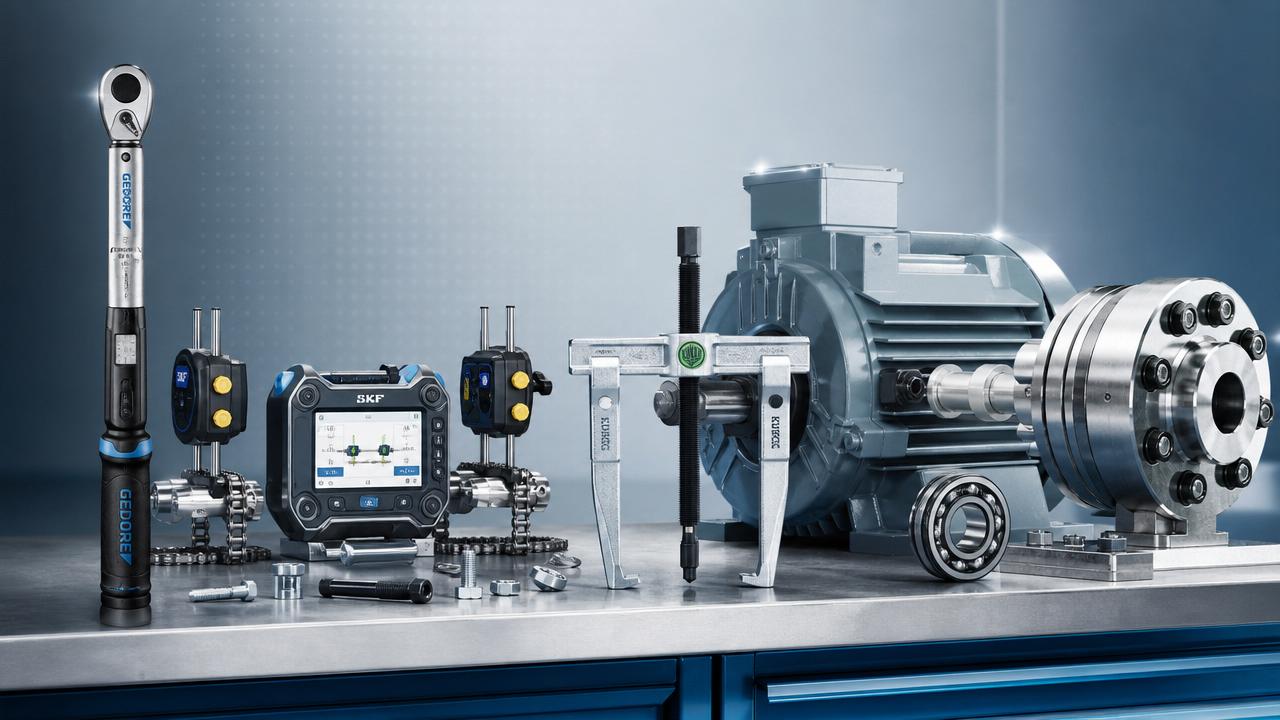
Mechanical engineering tools are designed to boost efficiency, yet for after-sales maintenance teams, the wrong setup, poor calibration, or overlooked wear can create hidden downtime that quietly disrupts operations. This article explores where these losses begin, how they affect service performance, and what practical steps technicians can take to reduce delays, improve reliability, and keep industrial systems running with greater precision.
Why do mechanical engineering tools create hidden downtime in after-sales service?
For after-sales maintenance personnel, downtime is not always caused by major component failure. In many industrial environments, the real loss starts with everyday mechanical engineering tools that seem usable but no longer perform within acceptable tolerance. A torque wrench that drifts out of calibration, a puller that no longer aligns correctly, or a pneumatic tool with unstable output can slow diagnosis, damage adjacent parts, and extend service windows.
This issue matters across the broader industrial chain because maintenance teams often work under compressed schedules, mixed equipment fleets, and inconsistent spare-parts availability. In the comprehensive industry landscape, hidden downtime can affect mechanical assemblies, electrical interfaces, mold systems, fastening performance, and automation support functions at the same time. A small tooling mismatch in one maintenance task can ripple into production loss, warranty disputes, and repeat service calls.
At a practical level, hidden downtime appears in three forms: delayed intervention, repeated intervention, and low-confidence intervention. Delayed intervention happens when technicians need extra time to verify whether the tool or the machine is at fault. Repeated intervention occurs when the first repair does not hold. Low-confidence intervention means the technician proceeds without full trust in measurement accuracy or tool integrity, increasing the likelihood of conservative but time-consuming checks.
- A worn cutting tool may force a technician to remove a seized fastener in stages instead of one controlled operation.
- An unverified alignment tool can produce false readings, leading to unnecessary replacement of shafts, bearings, or couplings.
- A low-grade measuring device may pass initial inspection but fail under thermal shift, creating errors that only appear after restart.
For teams that support OEM assets, field-installed systems, or distributor-backed industrial equipment, the cost of these failures is rarely limited to labor hours. It also includes travel duplication, unplanned inventory use, customer dissatisfaction, and pressure on service-level commitments.
Which mechanical engineering tools most often trigger hidden downtime?
Not all mechanical engineering tools carry the same risk. After-sales maintenance teams usually face the highest downtime exposure with tools tied to fastening accuracy, alignment, cutting, extraction, and condition verification. These are not always the most expensive tools in the kit, but they are often the most operationally sensitive.
High-risk tool categories in field maintenance
The following comparison highlights where hidden downtime commonly starts and what service teams should monitor before dispatch and before use on site.
The pattern is clear: hidden downtime usually comes from a gap between expected tool behavior and real field condition. For after-sales teams, this means tool readiness should be treated as part of system readiness, not as a separate workshop matter.
Why small tool defects become major service delays
Mechanical engineering tools work at the interface between technician judgment and machine integrity. When that interface is weak, service errors multiply quickly. A single failed extraction operation can force additional disassembly steps. An inaccurate gauge can send the technician toward the wrong root cause. In automated lines, even a short verification delay can hold up pneumatic logic checks, electrical reconnection, and process restart approval.
- Tool wear is often cumulative, so decline may not be obvious during quick visual checks.
- Mixed-brand tool inventories can create uneven performance and inconsistent user expectations.
- Field conditions such as dust, humidity, vibration, or limited clearance amplify minor tooling flaws.
How should maintenance teams evaluate mechanical engineering tools before a job?
A useful evaluation model should go beyond purchase price. After-sales teams need a field-oriented screening method that checks readiness, reliability, compatibility, and support burden. In many service departments, the wrong tool is not obviously wrong until the job stalls. That is why pre-dispatch evaluation is more valuable than post-failure explanation.
A practical pre-dispatch checklist
- Confirm the asset condition and service objective. Is the job focused on removal, measurement, reassembly, or root-cause validation?
- Match tool range to task tolerance. A broadly capable tool may still be unsuitable for a high-precision maintenance step.
- Verify calibration status where applicable, especially for torque, dimensional, pressure-related, or alignment tools.
- Review the wear state of consumables and contact surfaces. Replace borderline items before dispatch, not after site arrival.
- Check whether the tool suits the environment, including temperature, access constraints, contamination exposure, and available power or air supply.
To make selection more consistent, after-sales teams can classify mechanical engineering tools by service criticality rather than by storage category alone. This approach helps prioritize calibration budgets and replacement cycles based on downtime risk.
This kind of matrix is especially useful when the maintenance department supports multiple factories, regions, or machine families. It creates a shared decision language between service teams, procurement, and technical managers.
Where do procurement mistakes increase hidden downtime the most?
Procurement errors often begin with a narrow focus on unit price, catalog availability, or headline specifications. For after-sales maintenance personnel, the real concern is not whether a tool can perform once under ideal conditions, but whether it can perform repeatedly across varied service calls with predictable outcomes.
Common sourcing mistakes
- Buying general-purpose tools for high-precision interventions where tolerance control is essential.
- Ignoring consumable availability, which creates downtime later even if the main tool body remains serviceable.
- Standardizing too aggressively across unlike applications, leading to compromises in fit, access, or torque range.
- Overlooking documentation quality, making it harder for distributed teams to maintain consistent operating methods.
In the comprehensive industrial sector, maintenance tools may need to support hardware systems, electrical enclosure work, mold-related servicing, and assembly-line mechanics within a single service network. That diversity makes category knowledge essential. GHTN’s value in this context lies in connecting material behavior, tooling logic, and market-side sourcing insight, so teams can make more grounded decisions from selection through replacement planning.
Cost versus downtime: what should teams really compare?
The more useful comparison is not cheap tool versus expensive tool. It is visible purchase cost versus total service interruption cost. A lower initial price may look attractive, but if the tool shortens calibration stability, increases wear-related replacements, or causes one additional site visit per quarter, it quickly becomes the costlier option.
This comparison helps maintenance managers explain tooling budgets in operational terms. Hidden downtime is easier to control when tool procurement is linked to service outcomes, not only warehouse cost targets.
What standards, documentation, and control points should technicians watch?
After-sales maintenance teams do not need every tool to meet the same standard level, but they do need consistency where service risk is high. Mechanical engineering tools that influence fastening integrity, dimensional accuracy, alignment quality, and safety-critical removal should be supported by documented inspection and handling rules.
Useful compliance and control references
- Calibration traceability for measuring and torque-related tools helps maintain confidence in recorded service values.
- Documented inspection intervals support safer use of pullers, jacks, lifting accessories, and other load-bearing service devices.
- Material compatibility guidance is important when tools contact coated fasteners, stainless assemblies, aluminum housings, or molded surfaces.
- Environmental suitability should be checked for tools used near heat, corrosive media, fine dust, or electrically sensitive areas.
For distributed industrial support networks, the bigger challenge is often not the lack of standards but inconsistent application. A tool record that includes service date, wear observations, calibration status, and approved use range can sharply reduce avoidable field uncertainty.
How can after-sales teams reduce hidden downtime step by step?
Reducing hidden downtime does not require replacing every mechanical engineering tool at once. It requires a layered control method that starts with critical jobs and high-frequency failure points. Maintenance leaders can improve results by tightening the link between tool condition, service planning, and post-job review.
A workable implementation process
- Map the maintenance tasks that most often lead to callbacks, extended shutdowns, or disputed repair quality.
- Identify which mechanical engineering tools are involved in those tasks and whether they require accuracy control, consumable control, or load verification.
- Separate field-critical tools from workshop backup tools and assign different inspection and replacement intervals.
- Create a simple pass or hold system before dispatch so technicians do not carry uncertain tools into time-sensitive jobs.
- Review completed service cases to determine whether tool condition contributed to delays, not only whether the machine fault was resolved.
This method is especially effective in industries where precision fasteners, pneumatic components, electrical interfaces, and mold-related assemblies intersect. GHTN’s cross-sector perspective helps teams see how a tooling decision in one maintenance domain can influence reliability in another.
FAQ: practical questions about mechanical engineering tools and downtime
How often should maintenance teams review critical mechanical engineering tools?
Review frequency should follow service criticality, usage intensity, and environmental exposure rather than a single fixed rule. Torque tools, precision measuring tools, and alignment devices usually need scheduled verification. Pullers, cutting tools, and hand-operated force tools may need more frequent visual and functional checks if used in harsh conditions or urgent field jobs.
Which mechanical engineering tools are most sensitive to operator variation?
Torque tools, alignment tools, and precision measuring tools are especially sensitive because setup method directly affects outcome. Even a good tool can create hidden downtime if technicians use different reference points, force application styles, or interpretation methods. Standard work instructions and short refresher training often reduce this risk faster than buying more inventory.
Is it better to standardize one tool platform across all service teams?
Standardization helps training, stocking, and documentation, but over-standardization can create fit problems across unlike machine types. The better model is partial standardization: unify where tasks and tolerances are similar, and maintain specialized kits where access, material, or precision demands are different.
What is the biggest misconception about hidden downtime?
Many teams assume downtime begins when a machine stops. In reality, hidden downtime often begins earlier, during diagnosis hesitation, tool substitution, repeated verification, or incomplete first-time repair. Mechanical engineering tools are a frequent root cause because their decline is gradual and easy to normalize.
Why choose us for tool insight, selection support, and industrial sourcing guidance?
GHTN supports industrial decision-makers by connecting the details of tool performance with broader manufacturing realities. Our focus is not limited to a single product line. We work across mechanical tools, electrical support components, fastener behavior, and mold-related precision processes, giving after-sales maintenance teams a more complete view of failure risk, compatibility, and sourcing logic.
If your team is reviewing mechanical engineering tools that may be causing hidden downtime, you can consult us on practical issues such as parameter confirmation, application-based tool selection, material compatibility, replacement intervals, delivery lead time, sample support, certification-related questions, and quotation planning for multi-site service teams.
This is especially valuable when you need to compare alternative tooling routes, evaluate whether a lower-cost option will increase service risk, or align maintenance purchasing with real operating conditions. Linking Precision, Tooling the Future means helping maintenance teams make decisions that hold up not only in catalogs, but also on the factory floor.
Related News