
Mechanical engineering tools with the highest maintenance payoff

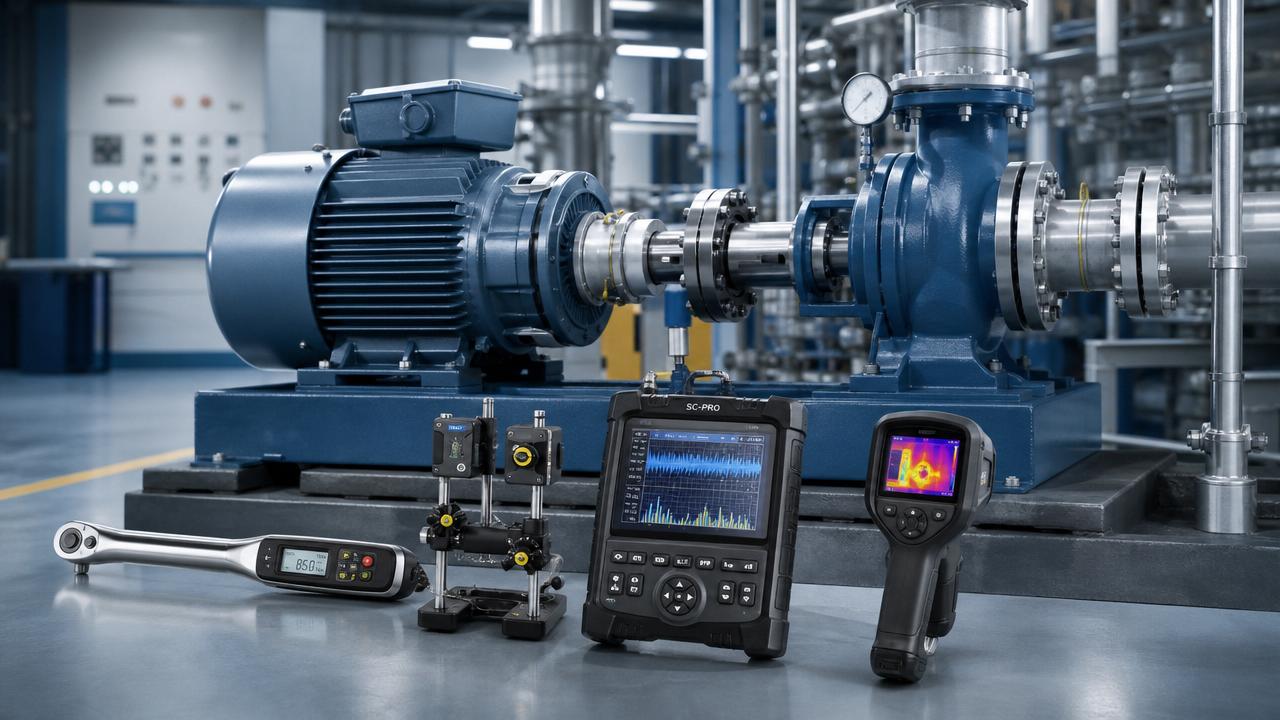
For aftermarket maintenance teams, selecting mechanical engineering tools with the best payoff is rarely about buying the most expensive kit.
It is about reducing downtime, preventing repeat failures, and making every service visit faster, safer, and more repeatable.
The highest-value mechanical engineering tools usually support precision, consistency, and fault prevention across mixed industrial environments.
That is why maintenance strategy increasingly starts with tools that improve asset life, not just repair speed.
Drawing on the industrial perspective of GHTN, this article explains which tool categories create the strongest maintenance return and how to evaluate them practically.
Why a structured approach matters for mechanical engineering tools
Maintenance budgets often get consumed by emergency replacement, travel time, and recurring defects caused by poor installation accuracy.
A structured review helps identify mechanical engineering tools that attack root causes instead of symptoms.
This is especially important across general industry, where rotating equipment, fasteners, couplings, pneumatic systems, and molded assemblies interact daily.
When tool decisions are checklist-driven, teams can compare maintenance payoff through measurable indicators.
- Does the tool shorten diagnosis time without sacrificing accuracy during recurring failure investigations?
- Can it reduce installation variation that causes premature wear, leakage, looseness, or misalignment?
- Will it improve technician safety in confined, hot, vibrating, or electrically sensitive maintenance zones?
- Does it support traceable records for torque, alignment, vibration, or dimensional verification?
- Can it be used across multiple asset classes, increasing utilization and lowering ownership cost?
The best mechanical engineering tools score well across several of these factors, not only on purchase price.
High-payoff mechanical engineering tools to prioritize
The following categories consistently deliver strong maintenance value across factories, utilities, processing lines, and field service operations.
-
Digital torque tools and torque analyzers
Accurate tightening prevents loose joints, bolt stretch errors, gasket damage, and repeat disassembly on critical assemblies. -
Laser shaft alignment systems
These mechanical engineering tools reduce bearing load, seal wear, coupling stress, and unnecessary energy loss in rotating assets. -
Vibration meters and portable analyzers
Early detection of imbalance, looseness, resonance, and bearing degradation stops failures before shutdown becomes unavoidable. -
Ultrasonic leak detectors
They quickly expose compressed air leaks, steam leakage, and valve passing issues that waste energy and distort performance. -
Precision calipers, micrometers, and bore gauges
Dimensional control avoids poor fits, rework, tolerance drift, and hidden wear in mechanical interfaces. -
Hydraulic pullers and induction heaters
Controlled removal and mounting reduce shaft damage, cut labor time, and improve bearing installation quality. -
Thermal imaging devices
These tools reveal friction hotspots, overloaded drives, insulation problems, and abnormal heat patterns during live inspection. -
Pressure and flow diagnostic kits
In pneumatic and hydraulic systems, they identify restriction, leakage, instability, and underperformance with speed.
What makes these tool categories worth the investment
Each of these mechanical engineering tools influences a failure mode that appears frequently in real maintenance records.
That includes loosened fasteners, poor alignment, undetected vibration, leakage, overheating, and incorrect component fit.
Because these issues drive both downtime and secondary damage, the payoff compounds over time.
How to evaluate maintenance payoff before buying
Not every tool labeled industrial-grade will generate the same value in service conditions.
Use this practical review before selecting mechanical engineering tools for maintenance work.
- Match the tool to top failure causes documented in work orders, downtime logs, and warranty returns.
- Check whether the measurement range, accuracy, and resolution fit actual equipment tolerances and service conditions.
- Confirm durability against oil, dust, vibration, temperature swings, and rough transport across industrial sites.
- Review calibration requirements, software compatibility, and data export functions for maintenance traceability.
- Estimate labor savings by comparing setup time, training time, and repeated troubleshooting cycles.
- Prioritize mechanical engineering tools that support standardized procedures across several equipment families.
This method turns tool selection into a reliability decision rather than a basic purchasing exercise.
Application notes across common industrial settings
Rotating equipment
Motors, pumps, fans, and gearboxes benefit most from alignment systems, vibration analyzers, and thermal imaging.
Check for coupling alignment drift, bearing heat rise, base looseness, and mounting distortion after maintenance work.
Fastener-critical assemblies
Flanges, structural frames, press tooling, and safety guards demand controlled tightening and verification.
Digital torque tools rank among the most practical mechanical engineering tools for preventing repeat joint failures.
Pneumatic and hydraulic systems
Pressure kits and ultrasonic detectors quickly reveal leaks, unstable regulators, blocked lines, and weak actuator response.
These issues often appear minor but drive hidden energy loss and inconsistent machine behavior.
Precision molds and tooling interfaces
In mold and die environments, dimensional tools and controlled heating devices protect fits, seating surfaces, and interchangeability.
Small dimensional errors can trigger flash, wear, sticking, or repeated correction during production restarts.
Commonly overlooked issues that reduce tool payoff
Buying precision without a procedure
Advanced mechanical engineering tools lose value when no standard work defines how and when to use them.
Ignoring calibration and verification
A torque wrench or analyzer with uncertain accuracy may create false confidence and expensive follow-up failures.
Choosing single-use tools only
Specialized equipment can help, but broad-application mechanical engineering tools usually deliver better utilization and faster payback.
Underestimating data capture
If results cannot be recorded, trend analysis becomes weak and preventive action stays reactive.
Focusing only on purchase cost
The real value of mechanical engineering tools comes from avoided outages, lower scrap, and reduced rework hours.
Practical steps to implement a stronger tool strategy
Start with the assets that generate the highest downtime cost or the most repetitive repair history.
Map common failure modes to the mechanical engineering tools most likely to prevent recurrence.
- Create a ranked list of failures caused by misalignment, poor torque control, leakage, heat, or dimensional drift.
- Assign one primary diagnostic or installation tool to each failure family and define expected savings.
- Train users on measurement method, acceptance limits, documentation rules, and care requirements.
- Review performance quarterly using mean time between failure, repeat call rate, and repair duration.
This approach makes mechanical engineering tools part of reliability improvement, energy control, and quality assurance at the same time.
FAQ on mechanical engineering tools and maintenance value
Which mechanical engineering tools usually deliver the fastest return?
Torque tools, alignment systems, and leak detection devices often return value quickly because they address frequent and costly root causes.
Are digital tools always better than manual ones?
Not always. The best choice depends on accuracy needs, traceability demands, environmental conditions, and training level.
How often should mechanical engineering tools be reviewed?
Review them at least annually, or sooner when failure patterns, asset mix, or compliance requirements change.
Final thoughts and next actions
The most effective mechanical engineering tools are the ones that remove repeatable failure causes from daily operations.
Across general industry, that usually means better torque control, better alignment, better diagnostics, and better dimensional confidence.
GHTN’s industrial perspective shows that reliable maintenance begins with precise fundamentals hidden inside every component connection and machine interface.
Begin with one short audit of existing failures, compare them against the tool categories above, and invest where measurable maintenance payoff is strongest.
Related News