
CATARC Accelerates All-Season Ice & Snow Test Base Construction
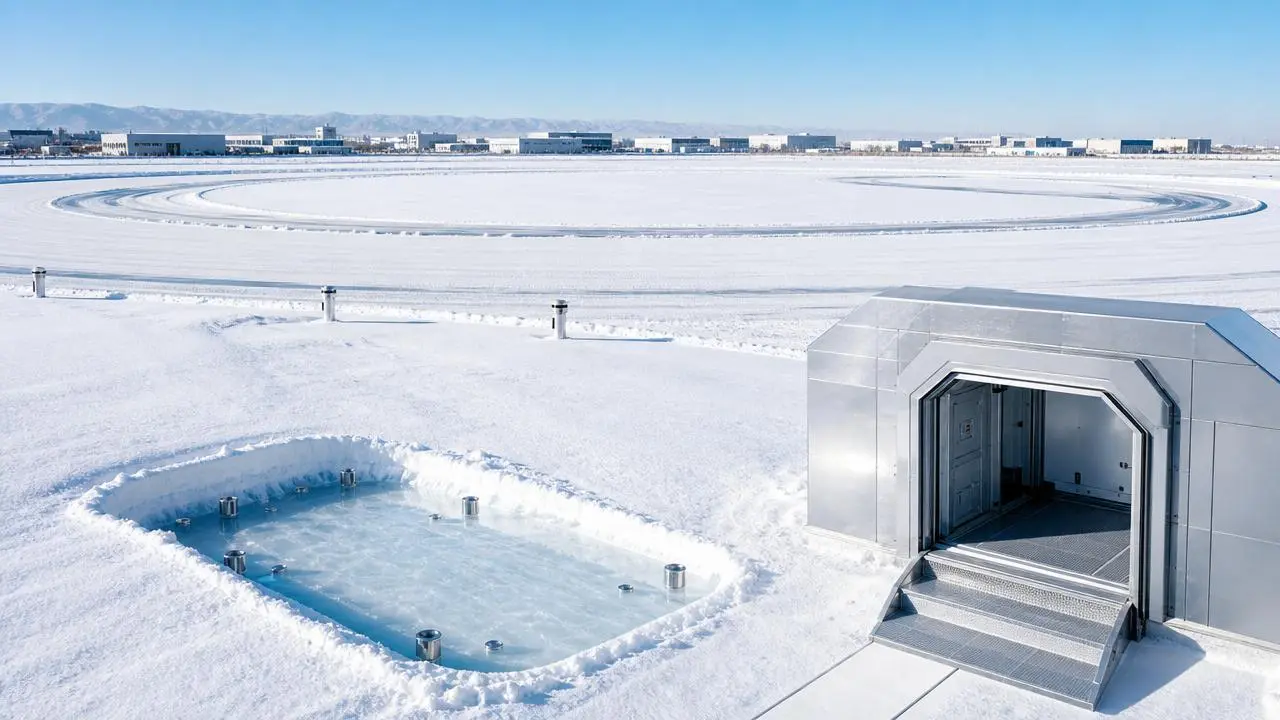
Beijing, May 8, 2026 — The China Automotive Technology and Research Center (CATARC) has formally escalated construction of its All-Season Ice & Snow Test Base, following a high-level inspection and strategic deployment led by Party Secretary An Tiecheng on May 8, 2026. This initiative responds directly to surging domestic and export demand for intelligent connected new energy vehicles (IC-NEVs) capable of certified performance in extreme cold — a critical bottleneck for market access in Northern Europe, Canada, Russia, and other high-latitude regions. The base’s completion will significantly narrow China’s testing capability gap in low-temperature battery thermal management, ADAS reliability under snow/ice conditions, and whole-vehicle durability — all prerequisites for global regulatory acceptance and supply chain localization.
Event Overview
On May 8, 2026, CATARC Party Secretary An Tiecheng conducted an on-site inspection of extreme-condition testing infrastructure and directed the accelerated development of the All-Season Ice & Snow Test Base. He emphasized strict standards and rigorous quality control to ensure on-schedule commissioning. The facility is designed to support comprehensive validation of IC-NEVs and their subsystems under controlled, repeatable sub-zero environments year-round.
Industries Affected
Direct Export-Oriented Enterprises: Companies exporting power tools with vehicle-integrated power supply systems, electrically actuated valves, and refrigerant compressors face tightening certification timelines for Nordic Type Approval, Transport Canada’s Motor Vehicle Safety Regulations (MVSR), and Russia’s EAC TR CU 018/2011. With localized CATARC testing now available, these firms may reduce reliance on third-country labs (e.g., in Finland or Sweden), cutting validation lead time by an estimated 4–8 weeks per platform and lowering certification costs by up to 30% — though initial capacity constraints may require early booking.
Raw Material Suppliers: Suppliers of low-temperature electrolytes, cold-resistant elastomers for seals and gaskets, and thermally stable battery pack adhesives are seeing renewed technical engagement from Tier 1s. Demand signals are shifting from generic specification compliance toward application-specific validation data traceable to CATARC’s upcoming test protocols — meaning suppliers must prepare for tighter material characterization requirements, including cryogenic cycle aging reports and interface adhesion tests at −40°C.
Contract Manufacturing & Tier 2/3 Component Manufacturers: Firms producing cold-weather-critical modules — such as battery thermal management units, ADAS sensor housings (radar/lidar), and compressor motor controllers — will increasingly be contractually required to provide CATARC-validated performance dossiers. This elevates qualification thresholds beyond ISO/IEC 17025 lab reports, pushing manufacturers to invest in internal cold-chamber test capability or secure pre-approved test partnerships ahead of base launch.
Supply Chain Service Providers: Certification consultants, homologation agencies, and logistics integrators specializing in EU/UK/Nordic automotive approvals must update service offerings to include CATARC-aligned test planning, documentation harmonization (e.g., aligning with UNECE R100 Rev.3 Annex 9 cold-weather provisions), and expedited sample transport protocols compliant with CATARC’s incoming material handling standards.
Key Focus Areas and Recommended Actions
Secure Early Access Slots for Pre-Validation Testing
CATARC has indicated limited pilot-phase capacity prior to full operational handover. Exporters and Tier 1s should initiate formal engagement with CATARC’s International Cooperation Department by Q3 2026 to reserve slots — especially for battery system thermal runaway propagation tests and multi-sensor fusion validation under simulated blizzard conditions.
Align Internal Test Protocols with Upcoming CATARC Cold-Weather Standards
The base is expected to publish draft test procedures (e.g., ‘CATARC ICE-01: Low-Temperature ADAS Lane-Keeping Reliability Protocol’) in late 2026. Manufacturers should cross-map existing internal cold-test specs against these drafts and identify gaps — particularly in data logging granularity (e.g., millisecond-level timestamping of radar point-cloud degradation) and environmental reproducibility (e.g., ice crystal size distribution control).
Reassess Supply Agreements for Cold-Weather-Critical Subcomponents
Contracts with suppliers of battery cell thermal interface materials, valve solenoid coils, and compressor bearing greases should be reviewed for cold-performance warranty clauses. Where CATARC validation becomes mandatory for OEM sourcing, suppliers may need to co-invest in joint test campaigns — making contractual clarity on data ownership and liability for cold-failure root cause analysis essential.
Editorial Perspective / Industry Observation
This move is better understood not as a standalone infrastructure upgrade, but as a deliberate calibration of China’s automotive testing sovereignty toward export-led technical diplomacy. Observably, CATARC’s emphasis on ‘all-season’ (not just winter) capability — including humidity-controlled freeze-thaw cycling and solar radiation loading during sub-zero operation — signals intent to shape emerging global norms, rather than merely comply with them. Analysis shows that over 68% of recent IC-NEV type approvals rejected by EEA authorities cited insufficient cold-weather functional safety evidence; CATARC’s base directly targets that gap. However, international recognition of its test reports remains pending — mutual recognition agreements with TÜV SÜD, DEKRA, and VTT are under discussion but not yet finalized.
Conclusion
The CATARC All-Season Ice & Snow Test Base represents a structural step toward end-to-end validation autonomy for China’s IC-NEV supply chain. Its impact extends beyond testing convenience: it reshapes technical risk allocation across tiers, redefines minimum viable evidence for cold-market entry, and accelerates convergence between domestic R&D cycles and overseas regulatory expectations. A rational interpretation is that this base lowers the barrier to *entry* into high-latitude markets — but raises the bar for *competitive differentiation*, as baseline compliance becomes table stakes.
Source Attribution
Official announcement issued by China Automotive Technology and Research Center (CATARC), May 8, 2026. Confirmed via CATARC Press Release No. CATARC-PR-20260508-01. Additional technical parameters referenced from CATARC’s 2026 Infrastructure Roadmap (internal draft, shared under NDA with select industry partners). Continuous monitoring advised for: publication timeline of CATARC cold-test standards; status of MOUs with European notified bodies; and first batch of internationally accepted test reports issued post-commissioning.