
CBP ACE F865 Check Tightens U.S. Tool Imports

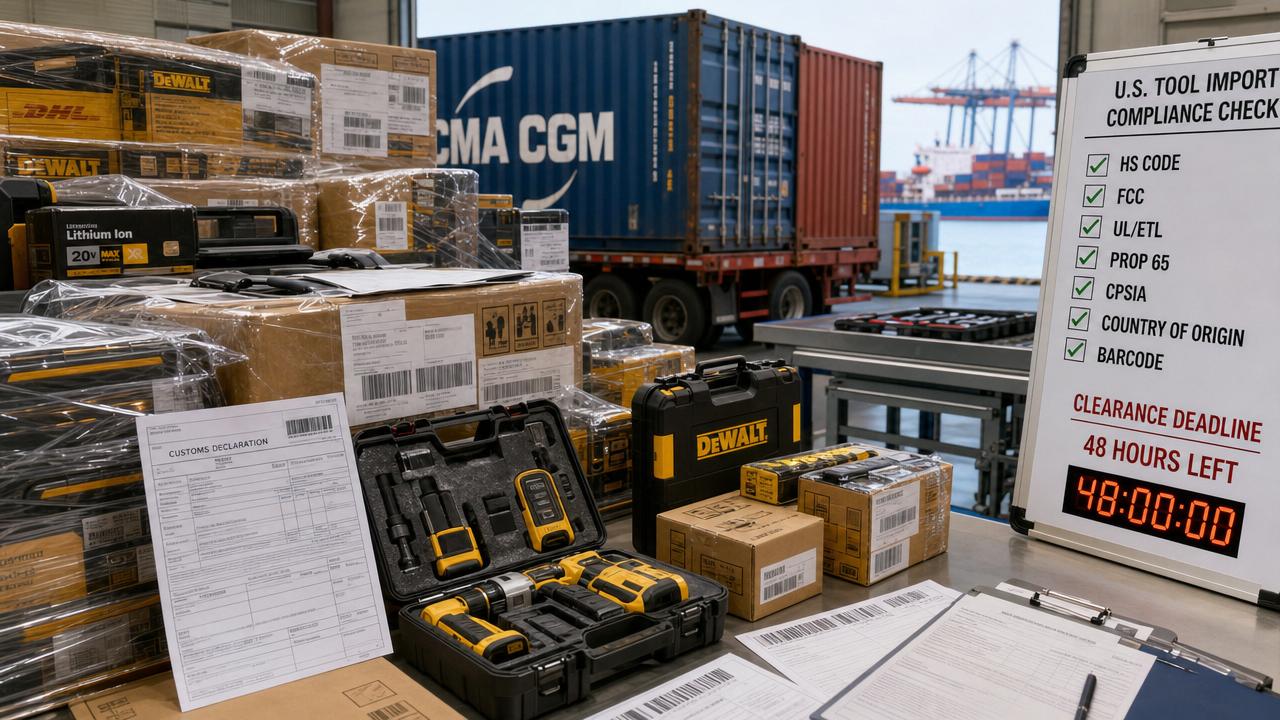
On June 2, 2026, U.S. Customs and Border Protection began enforcing the F865 error code in the ACE system, requiring real-time consistency across four elements in import filings: the HTS code, the importer’s EIN qualification, industry registration status, and operating license information. For hand tools and power tools, including lithium battery-related products, this is a development worth close industry attention because any mismatch can trigger an automatic rejection with no correction channel, raising immediate risks for customs clearance, delivery schedules, and contract performance.
What the new ACE validation now requires
According to the information provided, CBP activated the F865 error code in ACE from June 2, 2026. The check applies to the consistency of four data points: HTS classification, importer EIN qualification, industry filing status, and operating license credentials.
The information also indicates that hand tools and power tools, including lithium battery-related categories, are among the key products under closer scrutiny. Where the submitted information does not match, the declaration is rejected automatically, and no post-submission correction channel is available.
Where the pressure is likely to appear first
Exporters shipping directly to the U.S.
From an industry perspective, direct exporters are likely to feel the impact first because filing accuracy now becomes a shipment release issue rather than a back-end documentation issue. The main pressure point is the handoff between product classification, importer information, and licensing readiness before the filing is submitted.
Manufacturers of hand and power tools
Analysis shows that manufacturers, especially those supplying hand tools, electric tools, and lithium battery-related items, may face tighter coordination requirements with importers and customs-facing partners. What deserves closer attention is whether product classification and supporting compliance information are aligned before goods are dispatched.
Importers and buying entities
Importers and procurement-side entities may face the most direct filing exposure because EIN qualification, registration status, and license information are explicitly part of the validation logic. The operational impact is likely to center on entry acceptance, shipment timing, and the ability to keep delivery commitments intact.
Customs brokers and supply chain service providers
For brokers, forwarders, and other supply chain service providers, the issue is not only technical transmission through ACE but also upstream document accuracy. Observably, this raises the importance of pre-filing checks, data synchronization, and exception handling before cargo reaches the declaration stage.
What companies should watch now
Check whether product data and importer credentials match in practice
The immediate practical issue is not simply having documents on file, but whether the HTS code, EIN-related qualification, industry registration, and operating license information match in a way that ACE accepts. Companies involved in tool shipments to the U.S. need to pay close attention to this linkage before filing.
Prioritize tool categories under closer scrutiny
The information provided identifies hand tools, power tools, and lithium battery-related products as key categories. That makes these shipments a priority area for internal review, customer coordination, and document confirmation.
Prepare for rejection risk without a correction window
What deserves closer attention is the lack of a correction channel once a mismatch triggers rejection. In practical terms, businesses may need to review lead times, communication procedures, and delivery commitments with customers and service partners before shipment submission.
Continue tracking official clarifications and rule application
Analysis shows that the current signal is operationally significant, but companies should still monitor whether there are further official clarifications on how the rule is applied in daily filing practice. The distinction between a stated validation rule and its real-world enforcement details remains important.
Why this matters beyond a single filing error
As an editorial observation, this development is more appropriate to understand as an immediate compliance-control signal rather than a routine system update. The combination of mandatory consistency checks, automatic rejection, and no correction channel means the issue reaches beyond customs paperwork and moves into shipment planning and contract execution.
At the same time, it should not yet be overstated as a complete redefinition of the market. Based on the confirmed information available here, the more measured reading is that the industry now has a clear warning that data alignment in U.S.-bound tool trade is becoming less tolerant of inconsistency.
How the industry may need to frame this development
In summary, the June 2 activation of the ACE F865 check matters because it turns information consistency into a direct gate for customs acceptance in a sensitive product category. For companies shipping tools to the U.S., the near-term significance lies in clearance continuity and delivery reliability.
It is more appropriate to understand this as a concrete short-term operational change with possible longer-term compliance implications, while still leaving room for continued observation as official explanations and market practice develop.
Basis of this article and points for continued verification
This article is based on the user-provided news title, event date, and event summary. For developments of this type, source categories that are usually relevant include official notices, company statements, industry association updates, authoritative media reporting, and standard or compliance documents.
No specific official source link was provided in the input, so the exact official publication path still requires continued verification. Follow-up attention should focus on any further CBP wording, practical filing interpretations in ACE, and whether additional implementation details emerge for tool and lithium battery-related shipments.