
What industrial trends are reshaping power tool demand

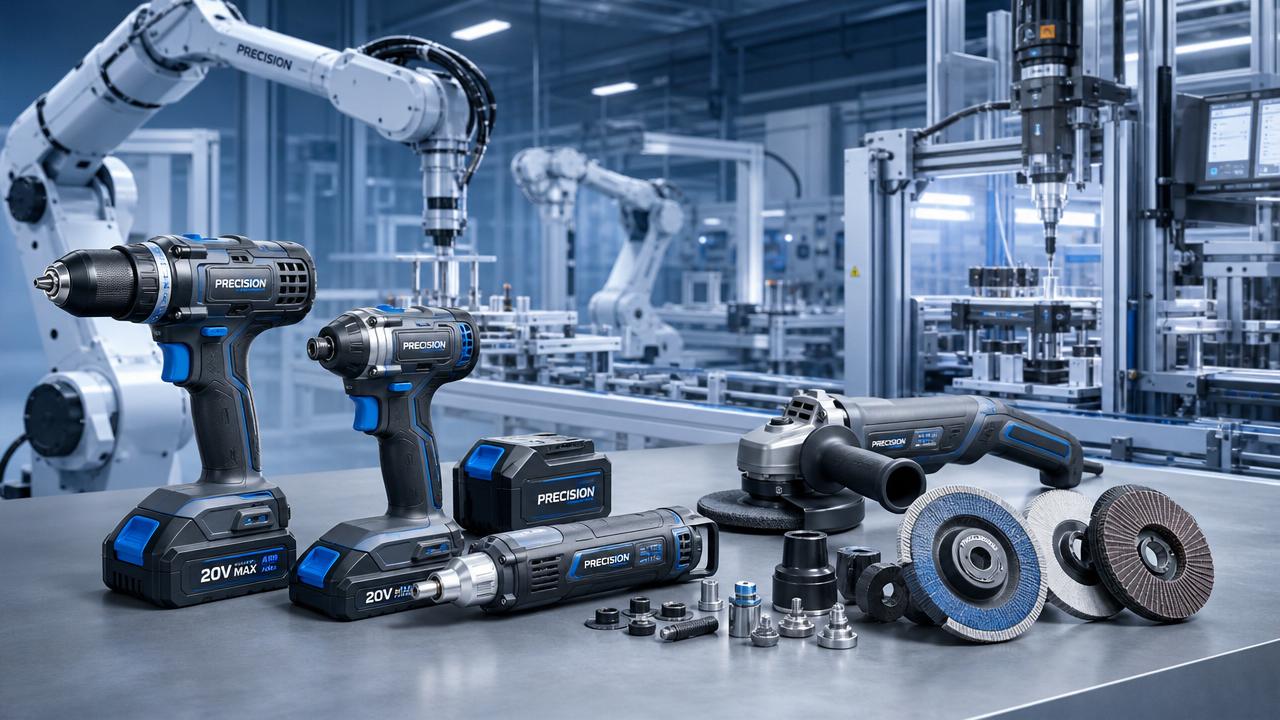
From automation upgrades and electrification to supply chain regionalization, industrial trends are reshaping power tool demand faster than many channel ecosystems expected.
Demand is no longer driven only by construction cycles or replacement purchases. It is increasingly linked to factory modernization, compliance shifts, energy goals, and localized production strategies.
This change matters across the broader industrial landscape. Power tools now sit inside more connected, data-aware, and precision-focused workflows than in previous market cycles.
For a platform like GHTN, these signals connect directly with component performance, tooling efficiency, and trade intelligence. Understanding the latest industrial trends helps sharpen portfolio planning and market positioning.
Power tool demand is shifting from volume growth to application-specific value
One of the clearest industrial trends is the move away from generic tool demand. Buyers increasingly prioritize task-specific performance, uptime reliability, and compatibility with modern production environments.
In automotive, electronics, metalworking, and industrial assembly, tool selection is becoming more technical. Torque consistency, battery platform stability, dust management, and ergonomic safety now influence demand more than headline price alone.
This shift reflects a wider industrial logic. As tolerances tighten and labor efficiency becomes critical, power tools must support repeatable output, not just basic operation.
As a result, high-performance drills, fastening systems, grinders, and cordless platforms are gaining stronger traction in sectors that value process control and reduced downtime.
Automation, electrification, and labor pressures are the strongest trend signals
Several market signals explain why current industrial trends are accelerating change in the power tool sector. These factors interact rather than operate in isolation.
Among these industrial trends, electrification deserves special attention. Cordless technology is no longer just a convenience feature. It now supports mobility, safety, and lower dependence on compressed air or fixed power access.
At the same time, automation does not eliminate handheld tools. It changes their role. Tools are expected to integrate into controlled workflows, digital traceability, and mixed human-machine environments.
Supply chain restructuring is creating new demand patterns by region
Another important layer of industrial trends is supply chain regionalization. Nearshoring, friend-shoring, and dual-sourcing strategies are moving industrial capacity into different geographies.
This restructuring changes where power tools are sold, serviced, and specified. Demand is appearing in emerging industrial parks, localized assembly operations, and contract manufacturing zones.
Regionalization also raises service expectations. Users want reliable spare parts, battery availability, tool repair support, and faster replenishment within their operating market.
That means channel success depends less on broad catalog size alone. It depends more on local support capability, stock discipline, and understanding application clusters within each region.
Why this matters for market entry
- New industrial zones often need complete tool ecosystems, not isolated SKUs.
- Localized assembly favors standardized platforms with easy training and servicing.
- Regional regulations may influence battery transport, safety labeling, and certification requirements.
- Shorter supply chains reward brands that can maintain uptime and technical support.
Connected tools and measurable performance are redefining premium demand
The next wave of industrial trends is digitalization at the tool level. In industrial settings, connected tools are becoming part of quality management and process verification.
This is especially visible in fastening, maintenance, and regulated assembly environments. Torque traceability, usage analytics, and maintenance alerts help reduce process drift and unplanned stoppages.
Premium demand now comes from measurable outcomes. Buyers increasingly ask whether a tool improves cycle time, lowers defects, protects operators, or extends battery life under real workloads.
These questions align with GHTN’s precision-oriented view of industry. The hidden value of a tool is often found in repeatability, component durability, and fit within the wider manufacturing system.
Features gaining importance under current industrial trends
- Battery intelligence and thermal management
- Torque control and fastening consistency
- Vibration reduction and operator comfort
- Dust extraction compatibility
- Digital diagnostics and service visibility
- Cross-platform accessory compatibility
The impact extends across tooling portfolios, service models, and channel strategy
The practical effect of these industrial trends goes beyond product demand. They also reshape how power tool portfolios should be structured and supported.
First, portfolio balance is changing. Entry-level products still matter, but growth is stronger in application-driven segments where reliability and compliance justify higher value.
Second, after-sales capability is becoming a sales driver. Faster repair cycles, battery replacement programs, and technical onboarding can influence repeat orders as much as product features.
Third, accessory ecosystems matter more. Blades, bits, abrasive systems, sockets, chargers, and storage solutions increasingly determine long-term account retention.
Fourth, specification selling is growing. Winning demand often depends on demonstrating workflow improvement rather than listing standalone tool specifications.
Business areas most affected
What deserves closer attention over the next planning cycle
To respond well to these industrial trends, several focus areas deserve immediate attention.
- Track which industries are shifting from pneumatic tools to cordless systems.
- Monitor battery platform standardization across core product families.
- Evaluate which applications require traceable torque or digital diagnostics.
- Review local compliance changes affecting electrical safety, dust, and noise exposure.
- Map accessory attachment rates, since repeat demand often sits in consumables.
- Identify regional service gaps that could weaken tool adoption despite product demand.
- Compare durability claims against real industrial duty cycles, not light-use assumptions.
These actions turn broad industrial trends into clearer commercial signals. They also reduce the risk of carrying products that fit legacy demand but miss current application needs.
A practical response starts with sharper segmentation and evidence-based decisions
The best response to current industrial trends is not chasing every innovation. It is building a structured view of where demand is genuinely upgrading.
- Segment demand by application, not only by product category.
- Prioritize tool systems that align with automation, electrification, and compliance shifts.
- Support sales with data on cycle time, safety, uptime, and total operating value.
- Strengthen regional service and spare part readiness before expanding SKU breadth.
- Use market intelligence to refine portfolio decisions quarterly, not annually.
Power tool demand is entering a more technical and performance-led era. The winners will be those who interpret industrial trends through application detail, operational reality, and regional market logic.
GHTN’s perspective remains clear: precision components, robust tooling systems, and informed industrial analysis belong together. The next step is to translate these trend signals into smarter portfolio choices and stronger market execution.