
CR12MoV Price Jump Extends China Die Delivery

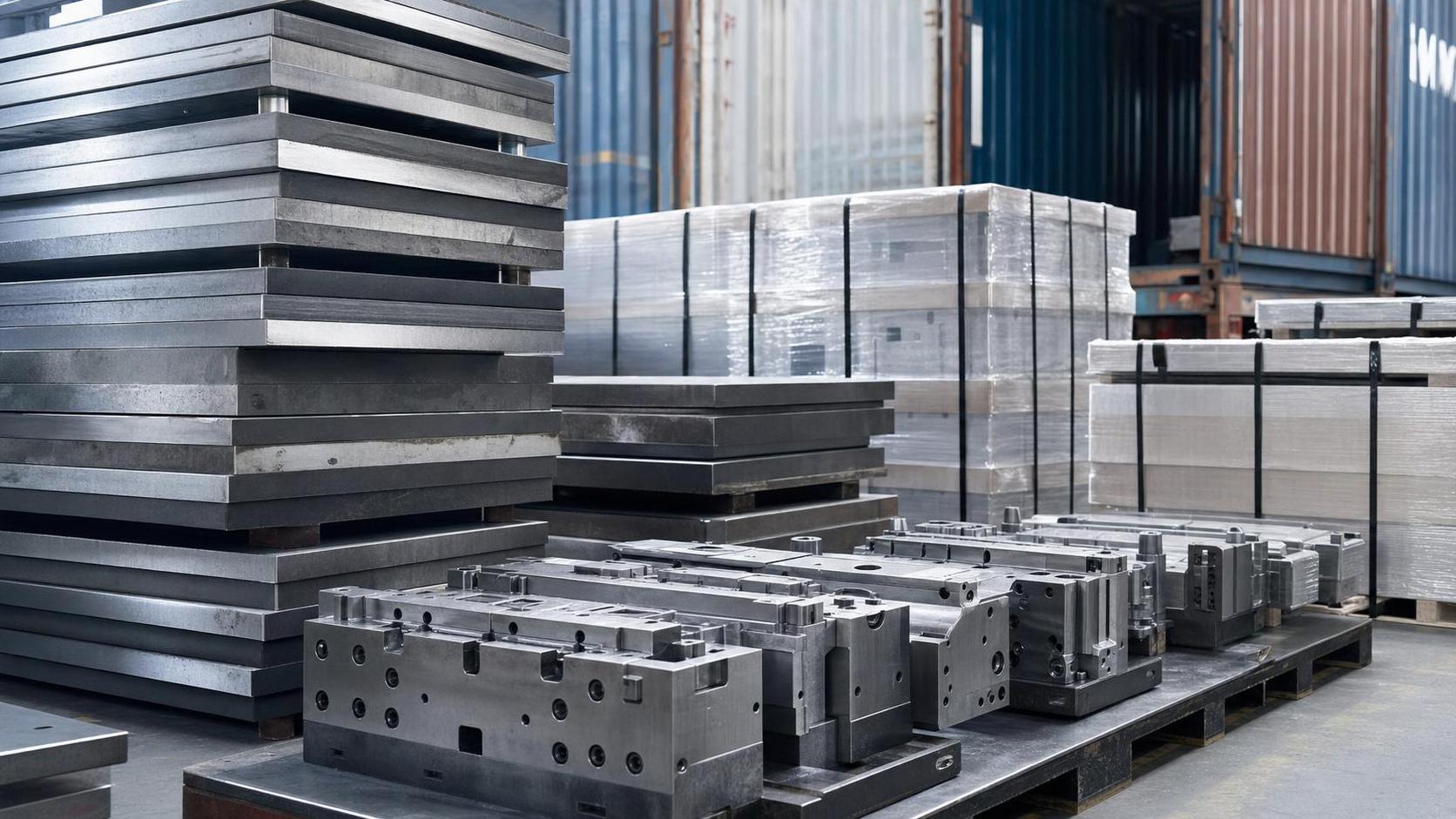
On July 12, 2026, the latest market move around CR12MoV tool steel pointed to more than a price event. A sharp one-day increase in the Asian offshore spot price, together with tighter upstream ferrochrome export quota conditions and limited ocean freight capacity, has already translated into longer lead times at mainstream Chinese die-casting mold producers. For mold makers, buyers, traders, and supply-chain teams, the issue worth watching is how trade and supply constraints are beginning to affect procurement timing, delivery commitments, and contract execution rather than remaining a raw-material signal alone.
What the confirmed market data shows
According to MetalBulletin data dated July 12, 2026, the Asian offshore price of CR12MoV tool steel reached $2,860 per ton. The move represented the largest single-day increase since 2025. The event summary states that upstream ferrochrome export quotas were tightened and ocean shipping space remained tight. Against that backdrop, mainstream Chinese die-casting mold factories generally extended delivery time from 12 weeks to 14 weeks, while some orders for high-end hot-work molds were scheduled as far out as Q1 2027.
Where the pressure is likely to appear first
Raw-material buyers and trading firms face timing and documentation sensitivity
From an industry perspective, companies buying CR12MoV or trading related mold steel products are likely to feel the impact first because price movement is occurring alongside quota-related upstream constraints. The immediate business effect is not only cost volatility, but also tighter requirements around purchase timing, shipment planning, and the consistency of trade documents with actual delivery windows. What deserves closer attention is whether existing quotations, validity periods, and shipping arrangements still match the new market pace.
Mold manufacturers are exposed at the order-commitment stage
For processing and manufacturing companies, the reported extension from 12 weeks to 14 weeks changes the practical basis for accepting new orders, confirming production slots, and negotiating customer delivery terms. Where some high-end hot-work mold orders are already being pushed to Q1 2027, manufacturers may need to review whether technical commitments, delivery clauses, and customer acceptance schedules still align with current supply conditions. This is especially relevant for businesses whose contracts depend on fixed lead-time promises.
Downstream buyers need to reassess project sequencing
Procurement teams purchasing die-casting molds may be affected through project scheduling, tender execution, and internal approval flows. Analysis shows that even a two-week extension can alter tooling launch sequences, trial schedules, and downstream production planning. Buyers should therefore pay attention to whether bid documents, purchase orders, and supplier confirmations reflect updated lead times and whether internal procurement assumptions remain realistic under current supply-chain conditions.
Logistics and supply-chain service providers should watch execution risk
For supply-chain service providers, the combination of shipping-space tightness and longer mold lead times increases the risk of mismatch between factory readiness and transport availability. Observably, the key exposure is in execution coordination: booking windows, handover timing, and shipment planning may become less predictable if upstream material supply and downstream production schedules move at different speeds.
What companies should review now
Check whether delivery terms still reflect the current market
Analysis shows that companies should review lead-time language in quotations, purchase orders, and customer contracts with particular care. The reported change from 12 to 14 weeks is already a practical execution issue, so firms should avoid relying on older delivery assumptions where orders are still under negotiation or awaiting confirmation.
Revisit procurement plans for critical mold steel inputs
What deserves closer attention is the procurement rhythm for CR12MoV and related upstream materials affected by ferrochrome quota tightening. The available facts do not establish how long current conditions will last, so this should not be treated as a settled long-term trend. Even so, companies with near-term sourcing needs may need to review supplier confirmations, order timing, and stock planning more frequently than under normal conditions.
Keep technical and tender documents aligned with actual execution conditions
Where bidding, customer approval, or technical sign-off depends on defined delivery schedules, businesses should check whether tender files, technical documents, and milestone commitments remain consistent with current factory lead times. The event summary does not provide new formal compliance rules or certification requirements, so the priority here is document alignment and execution discipline rather than assuming a newly published regulatory regime.
Monitor after-sales and traceability exposure on delayed projects
From an industry perspective, longer mold delivery can also affect downstream quality follow-up, acceptance timing, and service obligations once projects shift. Companies should therefore keep order records, technical change logs, and delivery communications clear enough to support later traceability if delayed schedules lead to contract questions or customer claims.
Why this reads as an execution signal, not just a price headline
Observably, this development is more important as an execution signal than as a standalone commodity-price story. The confirmed facts tie together three elements: tighter upstream quota conditions, constrained shipping capacity, and longer mold lead times. That combination suggests the market is already transmitting rule-related and trade-related pressure into manufacturing delivery. At the same time, it is more appropriate to understand this as an active market signal rather than a fully defined new rule framework, because the input does not provide formal policy text, enforcement detail, or official implementation guidance beyond the reported quota tightening and logistics constraints.
How the market should read the latest change
The immediate significance of this event lies in the visible connection between upstream trade constraints and downstream delivery performance. Analysis shows that companies should read it as a near-term operational warning for procurement, scheduling, and contract management, especially where CR12MoV supply, mold lead times, and shipment arrangements are tightly linked. It would be premature to treat the current move as a settled long-cycle outcome, but it is equally difficult to dismiss it as a temporary quotation fluctuation with no execution impact.
Basis of this article and points still requiring verification
This article is based on the user-provided news title, event date, and event summary. For events of this type, relevant source categories usually include official notices, releases from regulatory authorities, customs or trade-administration information, industry association updates, standard-setting documents, and reporting by authoritative trade media. No specific official source link was provided in the input, so the official basis and subsequent developments still require continued verification. What deserves continued attention is whether further policy detail emerges around quota execution, whether market practice changes in procurement and tender documents, and how industry participants ultimately implement revised delivery expectations in actual orders.
Related News