
Die-Casting Process Technical Analysis and Scrap Reduction

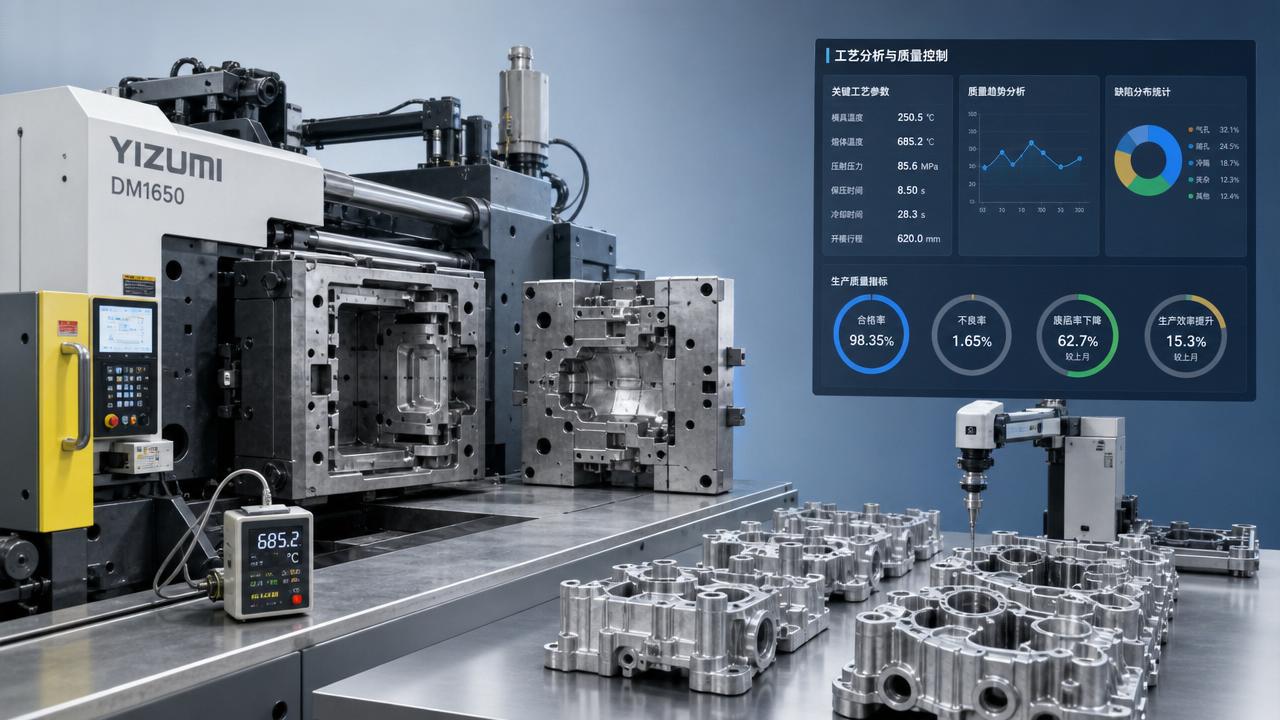
For quality control and safety managers, die-casting process technical analysis is essential to understanding why defects occur and how scrap rates can be reduced without compromising production efficiency. By examining process parameters, mold behavior, material flow, and operational risks, this article highlights practical ways to improve casting consistency, strengthen workplace safety, and support more reliable manufacturing outcomes.
Why scenario-based evaluation matters in die-casting process technical analysis
In practice, scrap reduction in die casting does not depend on one universal setting or one single inspection rule. The same defect pattern may come from very different causes depending on the application scenario, alloy family, product geometry, cycle time target, mold condition, and operator discipline. For quality control teams, this means that an effective die-casting process technical analysis must always be linked to a real production context. For safety managers, the same process review must also consider thermal exposure, lubricant behavior, molten metal handling, and machine guarding under the exact operating conditions on the floor.
This is especially important in mixed manufacturing environments where parts for automotive brackets, electrical housings, tool components, and general industrial hardware may run on similar machines but require different acceptance criteria. A cosmetic cover with high surface expectations needs a different control focus than a structural component where porosity, dimensional stability, and mechanical integrity are the main concerns. In both cases, scrap is costly, but the reason for rejection and the appropriate corrective action are not the same.
A scenario-based approach helps decision makers answer three practical questions: where defects are most likely to originate, which control point has the highest leverage, and what safety risk rises when production pressure increases. That is why die-casting process technical analysis should not stop at machine parameters; it should connect process data, inspection trends, maintenance records, and operator behavior to actual application demands.
Typical production scenarios where scrap reduction priorities differ
Different business scenarios create different defect risks. Quality and safety managers can reduce confusion by grouping die-casting operations into common production situations and assigning each one a primary risk profile.
Scenario 1: High-volume production lines focused on cycle speed
In high-output programs, even a small process instability can produce a large quantity of scrap in a short time. This is where die-casting process technical analysis must focus on repeatability rather than isolated defect images. Common issues include inconsistent fill, local turbulence, trapped gas, die lubricant accumulation, and thermal imbalance between cavities or shots.
For quality control personnel, the most useful indicators are first-pass yield by shift, defect trend by cavity, biscuit weight change, shot sleeve residue, and dimensional movement over time. A random inspection system alone is often too slow for this scenario. Process alarms and trend charts should be linked to measurable limits such as plunger speed, injection pressure, die temperature window, and spray duration.
For safety managers, high-volume environments create pressure for fast manual intervention when sticking, flash, or ejection problems occur. Scrap reduction efforts should never encourage operators to reach into guarded zones or bypass interlocks. The safer route is to reduce intervention frequency through better ejector maintenance, die surface condition control, and clearer escalation rules when repeated faults appear.
Scenario 2: Precision components with strict dimensional and sealing requirements
When die-cast parts serve electrical enclosures, pneumatic bodies, or tool-related assemblies, dimensional precision and leak resistance often outweigh simple visual appearance. In this scenario, die-casting process technical analysis should examine not only obvious rejects but also hidden process variation that later causes machining difficulty, assembly mismatch, or pressure-test failure.
The control focus should include mold clamping consistency, vent wear, insert positioning, alloy cleanliness, and cooling balance. A part may appear acceptable after trimming yet fail later because internal porosity sits near a machined sealing face. That is why the scrap reduction strategy must connect casting data with downstream failure data. If machining scrap or leak-test rejection rises, the root cause may still be in the casting stage.
A useful decision rule for this scenario is simple: if the part will be machined, sealed, threaded, or load tested, quality teams should monitor internal soundness and datum stability earlier, not only final dimensions. Safety teams should also confirm that inspection methods such as X-ray, pressure testing, or sectioning are performed under controlled procedures and with clear handling instructions.
Scenario 3: Surface-critical products where appearance drives rejection
Some castings used in consumer-facing housings, branded hardware, or premium industrial covers are rejected for reasons that do not affect basic function but strongly affect market acceptance. In these applications, die-casting process technical analysis must give more weight to mold surface condition, lubricant residue, vent staining, die soldering, and thermal marks.
The challenge is that appearance scrap is often judged subjectively if standards are unclear. Quality control should define visual acceptance zones, lighting conditions, and comparator samples. If teams classify defects inconsistently, scrap data becomes unreliable and corrective action becomes slow. Surface defects can also mask deeper issues such as unstable metal temperature or poor vent evacuation, so the review should go beyond polishing and rework.
From a safety perspective, operators may overuse release agents or manually touch hot surfaces during appearance-focused troubleshooting. Both practices increase risk. Better die-casting process technical analysis in this scenario means identifying the process source of visible defects instead of relying on repeated manual correction.
Scenario 4: Multi-product plants and frequent changeovers
In many general industrial operations, the biggest scrap spikes happen during startup after mold changes, alloy adjustments, or maintenance work. This scenario is common in facilities serving multiple OEMs or distributors with varied product mixes. Here, die-casting process technical analysis should center on transfer accuracy: whether the approved setup, thermal preparation, spray pattern, and inspection criteria are consistently reproduced.
Typical weak points include outdated parameter sheets, unverified vent condition, inconsistent preheating, missing first-off approval records, and confusion about revised tolerances. If startup scrap is treated as unavoidable, hidden losses accumulate rapidly. A disciplined launch checklist can reduce both waste and safety exposure by ensuring all guards, lockout routines, and setup confirmations are completed before production reaches full speed.
How process variables should be judged differently by scenario
The same variable can have different significance depending on the application. That is why die-casting process technical analysis should rank variables by scenario instead of reviewing them in a generic order.
Common misjudgments that increase scrap and safety exposure
One common mistake is treating all porosity as a melt problem. In reality, gas entrapment, gate design, vent blockage, and plunger behavior may be more relevant, especially for fast-filling geometries. Another mistake is focusing only on final inspection. By the time rejection appears at the end, a process drift may already have produced many nonconforming parts.
A third misjudgment is separating quality and safety too sharply. For example, die sticking is often discussed as a productivity issue, but repeated sticking also increases manual intervention, tool contact, and burn risk. Excessive release agent may temporarily improve release, yet it can worsen fumes, floor slip conditions, and surface defects. Good die-casting process technical analysis should therefore combine defect review with risk review.
Another overlooked issue is assuming that experienced operators can compensate for unstable systems. Skilled operators are valuable, but scrap reduction should come from controlled parameters, preventive maintenance, and clear work standards rather than constant manual correction.
Practical scenario-fit recommendations for quality and safety managers
If your operation is high-volume, prioritize live process monitoring, reaction plans for drift, and cavity-based defect mapping. If your products are precision or sealing related, strengthen links between casting data and downstream machining or leak-test results. If your market values visible finish, build objective visual standards and review thermal and lubricant control more closely. If your plant changes molds often, standardize startup approvals and recipe management before trying to push output.
Across all scenarios, an effective die-casting process technical analysis should include four basic actions: define the critical defect by business impact, identify the process window that most affects it, verify whether maintenance and operator practice support that window, and confirm that corrective actions do not create new safety hazards. This approach is highly relevant to the broader industrial component sector served by networks such as GHTN, where product reliability, tooling quality, and manufacturing discipline are deeply connected.
FAQ: scenario-based questions teams often ask
Which scenario usually has the highest hidden scrap cost?
Precision parts with downstream machining often have the highest hidden cost because casting variation may not be detected until value has already been added.
When should safety managers join die-casting process technical analysis reviews?
They should be involved whenever scrap trends trigger extra intervention, release agent changes, maintenance work, or cycle-speed adjustments, because these changes can alter exposure and guarding risk.
What is the fastest way to improve decision quality?
Classify defects by application scenario first, then review process data, maintenance history, and operator actions together instead of in separate reports.
Conclusion and next-step action
The most useful die-casting process technical analysis is not the one with the most data, but the one that best matches the production scenario. Scrap reduction works faster when teams know whether they are protecting cycle speed, sealing integrity, visible finish, or startup consistency. For quality control and safety managers, the next step is to map your top three defect categories against actual application scenarios, then check whether your current controls, maintenance routines, and safety practices fit those conditions. That scenario-based review will produce more reliable castings, lower scrap, and a safer manufacturing environment.
Related News