Die-casting machine price: what drives big quote differences

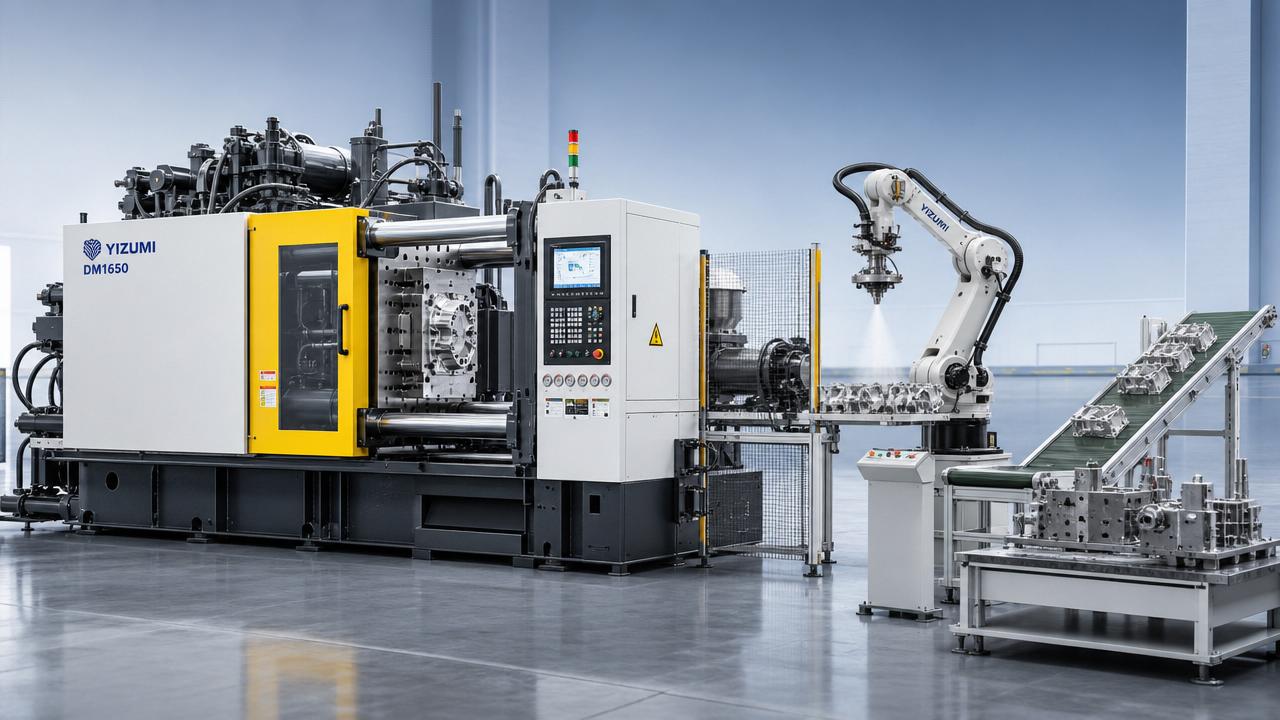
Why does the die-casting machine price vary so widely across suppliers, tonnage ranges, and automation levels? For business evaluators, the answer goes far beyond the initial quote. Machine configuration, mold compatibility, energy efficiency, production stability, and after-sales support all shape total value. This article breaks down the key cost drivers behind major price gaps, helping you compare offers more accurately and make investment decisions with greater confidence.
In practical sourcing, the same nominal clamping force can produce quotations that differ by 20% to 80%, and in some cases by more than 2 times. That gap is rarely explained by one factor alone. For procurement analysts, investment committees, OEM buyers, and plant planners, understanding the structure behind the die-casting machine price is more useful than chasing the lowest number on a quotation sheet.
From the perspective of GHTN, where industrial tooling decisions are linked to long-term manufacturing competitiveness, a die-casting machine should be evaluated as part of a production system rather than a standalone asset. Tooling interface, cycle time stability, thermal control, spare parts access, and operator training all affect the real return over 3 to 7 years of operation.
What the die-casting machine price actually includes
A quotation can look simple, but it often bundles or excludes key items that change the total project cost materially. Two suppliers may both offer a 350T or 800T machine, yet one quote may include the hydraulic power unit upgrade, auto ladler interface, die height adjustment package, and commissioning support, while another only covers the base machine. This is one of the most common reasons the die-casting machine price appears inconsistent across vendors.
Base machine versus full production package
In many projects, the base machine represents only 60% to 75% of the final installed investment. The remaining 25% to 40% may come from peripherals such as melting furnaces, sprayers, extractors, trim presses, conveyors, chillers, and safety guarding. If one supplier quotes only the machine body and another includes cell integration, the difference can look extreme even when the core machine specification is similar.
Common cost elements hidden behind the quote
- Clamping unit and injection system configuration
- Hydraulic, servo, or hybrid drive architecture
- Control system brand, HMI functions, and data logging modules
- Mold mounting standard, platen size, tie-bar clearance, and ejector options
- Automation interfaces for robots, sprayers, and dosing units
- Installation, trial production, and operator training for 3 to 10 days
For business evaluators, the right question is not only “What is the die-casting machine price?” but also “What is included, what is optional, and what will still need to be purchased after delivery?” That distinction helps avoid under-budgeting during approval reviews.
The table below shows how quote structures can differ even before brand, country of origin, or metallurgy requirements are considered.
The key takeaway is that a low headline number may simply reflect a narrower scope. Evaluators should normalize all offers into a like-for-like comparison before judging whether a die-casting machine price is truly competitive.
Core technical drivers behind major price differences
The largest quote gaps often come from engineering decisions that influence casting quality, machine life, and process control. When suppliers target different levels of precision and uptime, the die-casting machine price can diverge sharply even within the same tonnage class.
Tonnage, shot capacity, and structural design
Clamping force remains a primary price driver, but it is not enough to compare only tonnage. A 400T machine for small zinc components and a 400T machine prepared for more demanding aluminum castings may differ in platen rigidity, injection force, shot sleeve options, and thermal durability. As tonnage rises from 280T to 1600T, the frame, hydraulic load, and die-handling requirements increase significantly.
Larger machines also require more robust foundations, higher power input, and longer logistics lead times. In some factories, moving from a mid-range machine to a high-tonnage system may add 4 to 8 weeks to infrastructure preparation and raise ancillary costs well beyond the machine itself.
Drive system and energy efficiency
Servo-hydraulic systems, conventional hydraulics, and hybrid configurations produce different purchase prices and operating profiles. A more advanced drive package usually costs more at the beginning, but it may reduce power consumption by 15% to 35% under stable production conditions. For plants running 16 to 24 hours per day, that difference can materially affect total cost of ownership.
Energy efficiency should be assessed together with cycle consistency. If a lower-cost system saves on purchase price but introduces cycle fluctuations, flashing, or unstable shot performance, the cost of scrap and downtime may exceed the initial savings within 12 to 24 months.
Control system capability and process monitoring
Modern buyers increasingly compare human-machine interface functions, injection curve control, alarm diagnostics, and production traceability. Machines with better control architecture can support tighter process windows, especially where porosity, dimensional repeatability, or traceability matter. These functions raise the die-casting machine price, but they also reduce the cost of unstable output in high-volume programs.
Technical features that commonly justify a premium
- Real-time pressure and speed curve recording
- Recipe storage for 50 to 200 mold programs
- Remote troubleshooting and maintenance alerts
- Closed-loop control for repeatable injection performance
- Compatibility with MES or plant-level monitoring systems
These features matter most when the machine is expected to support multiple SKUs, frequent mold changes, or demanding customers in automotive, electronics, and industrial hardware applications.
Mold compatibility and production scenario fit
One of the most underestimated reasons for die-casting machine price variation is mold compatibility. A machine that technically fits a current tool may still be a poor match if tie-bar spacing, die thickness range, ejector stroke, or core pull functions are limited. A better-matched machine usually costs more because it reduces setup friction and broadens future production flexibility.
Why mismatch becomes expensive
If a machine cannot accommodate the plant’s typical mold dimensions without adapters, platen modification, or frequent setup adjustments, changeover times can increase from 30 minutes to 90 minutes or more. Across 4 to 6 changes per week, that translates into a significant loss of productive machine hours. For evaluators, this hidden productivity loss should be factored into the die-casting machine price assessment.
Material and part geometry also matter. Zinc die casting, magnesium applications, and aluminum structural parts do not impose the same thermal and injection demands. A lower quote may reflect a machine optimized for lighter-duty work rather than for complex, larger, or heat-intensive castings.
The matrix below can help procurement teams judge whether a quoted machine is aligned with real production conditions rather than just catalog specifications.
This comparison highlights why the cheapest acceptable machine is not always the most economical choice. When mold fit and process stability are weak, the effective die-casting machine price becomes much higher after production starts.
Supplier capability, lead time, and service support
Supplier differences are another major source of quote variation. Business evaluators should separate machine specification from supplier execution capability. A lower price may come with longer lead times, limited documentation, slower spare parts response, or weak commissioning support. These factors influence project risk directly.
Lead time and project timing
A standard machine may be available in 6 to 10 weeks, while a more customized cell can require 12 to 20 weeks depending on tonnage, electrical standard, and automation content. If the project has a hard SOP deadline, paying more for a supplier with better schedule reliability may protect launch timing and customer commitments.
After-sales responsiveness
Service response time should be evaluated in concrete terms. For example, can remote support be provided within 24 hours? Are key wear parts stocked regionally? Is an on-site visit realistic within 48 to 72 hours if a critical fault stops production? These details often explain why one die-casting machine price is higher than another.
Service checks before approval
- Confirm installation and acceptance protocol in writing
- Ask for the recommended preventive maintenance interval, such as every 1,000 to 2,000 operating hours
- Review the spare parts list for the first 12 months
- Verify electrical standard compatibility for the destination market
- Clarify whether training covers operators, maintenance staff, or both
In cross-border purchases, documentation quality matters as much as hardware quality. Incomplete manuals, unclear parts coding, or poor commissioning communication can easily delay ramp-up by 1 to 3 weeks.
How business evaluators should compare offers
A disciplined comparison model helps procurement teams avoid price-only decisions. The goal is to transform quote review from a single-number discussion into a weighted operational assessment. This is particularly useful when internal stakeholders include finance, production, tooling, and quality teams with different priorities.
Use a four-part evaluation framework
- Commercial scope: base machine, options, commissioning, warranties, exclusions
- Technical fit: tonnage, shot capacity, mold range, automation compatibility
- Operating economics: power use, maintenance cycle, spare parts profile, scrap risk
- Execution confidence: lead time, service response, training, documentation quality
Many companies assign weightings such as 30%, 30%, 20%, and 20% across these four categories. The exact ratio can vary, but the logic is sound: a quotation that is 12% lower may still lose overall if it creates higher downtime risk or cannot support future tooling needs.
Red flags in low quotations
When the die-casting machine price is far below the competitive range, evaluators should check for omitted accessories, lower-grade control components, narrower warranty terms, or limited process tuning support. Another common issue is that utility requirements, freight, taxes, or installation materials are excluded, making the quote look stronger than it really is.
Questions that improve quote clarity
- What is the exact acceptance standard for cycle stability and output quality?
- Which optional modules are necessary for the target alloy and part family?
- How many molds of similar size has this machine configuration been designed to run?
- What are the consumables and maintenance items expected in the first 6 and 12 months?
- Which interfaces are standard and which require additional licensing or hardware?
These questions push the comparison beyond catalog claims and reveal whether the supplier’s offer matches the plant’s actual production objectives.
A practical decision view: initial quote versus total value
The most useful conclusion for business evaluators is that die-casting machine price should be treated as an investment indicator, not as a standalone selection criterion. Initial savings are meaningful, but they should be balanced against uptime, part quality, changeover efficiency, energy use, and support reliability over the full operating horizon.
For example, a machine priced 15% higher may still deliver better economics if it reduces scrap by 2% to 4%, shortens mold change time by 20 to 30 minutes, and lowers energy consumption by 10% to 25%. In high-volume die-casting operations, those gains can outweigh the purchase premium faster than many approval teams expect.
At GHTN, the focus is always on connecting tooling decisions with broader manufacturing logic. A sound evaluation considers the machine, the mold, the process, and the supplier as one integrated system. That approach gives OEMs, distributors, and industrial buyers a more reliable basis for comparing quotations and managing long-term production risk.
If you are assessing a new die-casting line, replacing legacy equipment, or comparing cross-border sourcing options, a structured review can uncover the real drivers behind die-casting machine price differences. Contact us to discuss your application, get a more accurate comparison framework, and explore solutions aligned with your production targets.
Related News