Industrial innovation trends changing die casting in 2026

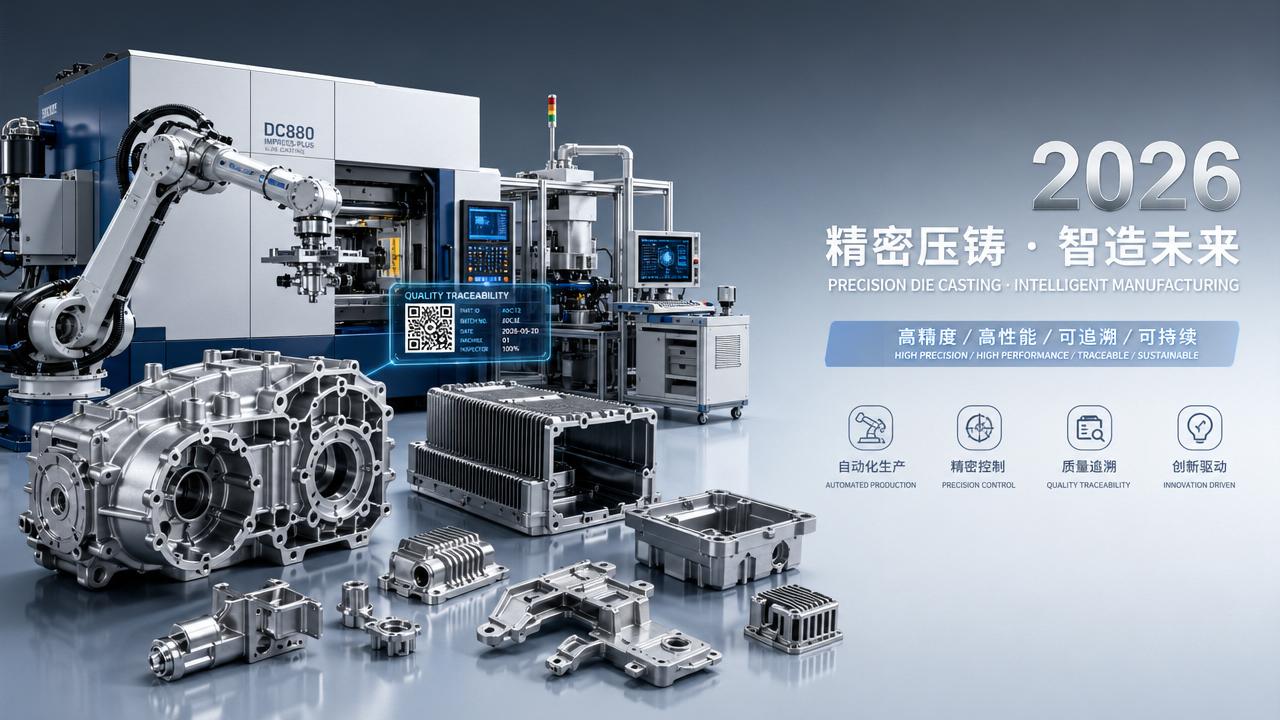
Industrial innovation is reshaping die casting faster than many manufacturers expected. As 2026 approaches, enterprise decision-makers must track the technologies, materials, automation strategies, and sustainability demands redefining cost, precision, and supply chain resilience. This article explores the key shifts changing die casting and what they mean for competitive advantage in modern industrial manufacturing.
Why scenario differences matter more in die casting decisions for 2026
For business leaders, industrial innovation in die casting is no longer a single technology story. It is a scenario-driven decision set. The same upgrade may create strong value in one operating context and weak returns in another. A high-volume automotive supplier, for example, often prioritizes cycle time reduction in the range of 5% to 15%, while a producer of electrical housings may care more about dimensional consistency, surface quality, and compliance traceability over production runs of 10,000 to 100,000 units.
That difference matters because die casting sits at the intersection of tooling, alloys, thermal control, machine stability, finishing, and downstream assembly. Decision-makers in procurement, operations, and product development must evaluate where industrial innovation can remove bottlenecks: scrap rates above 4%, tool wear that shortens die life below expected ranges, long qualification windows of 6 to 12 weeks, or supply risks linked to energy, materials, and cross-border lead times.
This is also where a platform like GHTN becomes valuable. In hardware, electrical, and mold ecosystems, the business question is not simply whether a new die casting trend is real. The question is whether it fits the production environment, tooling logic, material requirements, and market-entry timeline of a specific enterprise. Industrial innovation should therefore be judged through application scenarios, not trend headlines alone.
The main business pressures pushing change
Across global manufacturing, four practical pressures are accelerating die casting transformation. First, part complexity is increasing, especially for lightweight structures, integrated housings, and compact thermal management parts. Second, customers are expecting more process visibility, often asking for documented production parameters, alloy consistency records, and inspection checkpoints at multiple stages. Third, labor and energy costs remain volatile, making automation and process stability more attractive. Fourth, environmental expectations are influencing material recovery, melt efficiency, and waste reduction strategies.
- High-volume output scenarios focus on uptime, repeatability, and predictive maintenance.
- Precision component scenarios focus on tolerances, porosity control, and post-processing compatibility.
- Export-oriented scenarios focus on documentation, quality consistency, and lead-time reliability.
- Sustainability-sensitive scenarios focus on energy intensity, recycled content, and material yield.
These pressures explain why industrial innovation in die casting is changing from isolated machine upgrades to broader manufacturing system redesign. Companies that still assess suppliers only by piece price may miss hidden cost drivers such as rework, mold maintenance intervals, and secondary machining loads.
Three application scenarios where industrial innovation is changing the decision model
The most useful way to interpret 2026 die casting trends is to break them into real business scenarios. The technologies are often the same, but the value logic differs. Below is a practical comparison for three common scenarios that enterprise decision-makers frequently evaluate: structural parts, electrical and electronics enclosures, and industrial hardware or tooling-related components.
Each scenario places different pressure on mold design, alloy choice, machine configuration, and process monitoring. In one case, the priority may be larger shot capacity and vacuum-assisted filling. In another, it may be thermal stability, cosmetic surface standards, or thread feature reliability after secondary operations.
The table shows that industrial innovation should be screened by operational fit. A company making compact electrical boxes may not need the same capital plan as a business producing large integrated cast structures. However, both may benefit from better cavity pressure monitoring, more disciplined die thermal management, and data capture that cuts troubleshooting time from several shifts to a few hours.
Scenario 1: Large structural castings and lightweight system integration
This scenario is becoming more important where manufacturers want to consolidate multiple smaller parts into fewer cast structures. The driver is usually assembly simplification, lower fastening counts, and improved logistics efficiency. In these applications, industrial innovation centers on fill behavior, venting, and thermal control. Even a 1 to 2 second shift in cycle stability can influence annual output significantly when production lines operate over 20 hours per day.
Decision-makers should watch for three indicators: whether the die casting partner can simulate metal flow before tooling release, whether vacuum support is built into process planning, and whether maintenance intervals are tied to data rather than calendar-only routines. Large castings amplify error. Small defects in gating, cooling balance, or ejection strategy can turn into downstream warpage, machining loss, or structural inconsistency.
For this scenario, the best industrial innovation is often not one dramatic machine purchase but coordinated improvement across die design, process control, and inspection. That combination helps reduce hidden costs linked to mold correction cycles and delayed program launches.
Scenario 2: Electrical enclosures, connectors, and thermal management parts
In electrical and electronics-related applications, the casting must satisfy mechanical and thermal demands while supporting assembly precision. The critical issue is usually not volume alone. It is how well the part holds dimensions after trimming, machining, coating, or thread forming. Tolerance windows may vary by product, but repeatability across thousands of units matters more than a single excellent sample.
Industrial innovation in this scenario includes more accurate die temperature management, digital work instructions, and automated visual or dimensional checks. If the product enters export channels, documentation discipline becomes part of quality. Buyers may request alloy records, process checkpoints, or evidence that the supplier can maintain the same cavity performance over multiple production batches.
For enterprise teams serving electrical markets, a practical screening question is whether the die casting process reduces post-machining load or simply shifts defects to later stages. The right innovation path is the one that decreases total conversion cost, not just casting-line speed.
Scenario 3: Industrial hardware, fastener-adjacent parts, and tooling support components
This scenario is highly relevant to GHTN’s audience because many industrial systems rely on medium-size cast components that interact with tools, fixtures, fastening assemblies, pneumatic modules, or machine substructures. These parts often require a reliable balance between casting efficiency and secondary machining precision. Their value comes from functional stability, not visual appeal alone.
Here, industrial innovation is frequently about interoperability: castability, machinability, and downstream fit. If a supplier improves cast output but introduces hardness variation or unstable datum surfaces, later operations become expensive. A 3% scrap rate at machining can cancel out gains made at the die casting stage. That is why mold wear tracking, first-article discipline, and process traceability are becoming more important than simple output claims.
Businesses in this scenario should also ask how the supplier manages lot changes, insert wear, and dimensional drift over time. The strongest partners tend to connect mold maintenance, metrology feedback, and production planning rather than treating them as separate departments.
What to prioritize in each scenario: materials, automation, tooling, and quality control
By 2026, most die casting improvements with real commercial value will fall into four categories: material strategy, automation maturity, tooling intelligence, and quality assurance depth. The right priority mix depends on application scenario, annual volume, and customer approval requirements. A factory making 50,000 complex housings per year may benefit from different investments than one producing several million standardized components.
The comparison below can help enterprise decision-makers identify where industrial innovation delivers the highest near-term return. It is especially useful during supplier qualification, tooling transfer, or expansion into new regional markets.
A useful lesson from this comparison is that industrial innovation becomes valuable when it supports a business goal that can be measured. Examples include reducing die changeover time by 10% to 20%, extending tool maintenance intervals by several thousand shots, or lowering rework frequency during peak production months. Without a measurable use case, innovation spending may remain difficult to justify.
Material decisions are becoming more strategic
Alloy choice is increasingly tied to both performance and market expectations. Companies are being asked to think beyond basic castability and consider corrosion environment, thermal conductivity, machining response, and recycled material strategy. In some projects, the stronger business decision is to optimize alloy-process compatibility rather than chase the lowest raw material price.
Questions procurement and engineering should align on
- Will the part face heat, vibration, moisture, or aggressive industrial environments?
- How much post-machining or coating is planned after casting?
- Is the program sensitive to recycled content, yield loss, or energy usage per batch?
- Does the supplier have stable controls for melt quality over long runs?
These questions help determine whether industrial innovation should begin with material engineering, process windows, or tool redesign. In many cases, the answer is a combination rather than a single lever.
Common misjudgments when companies apply die casting trends to the wrong scenario
A frequent mistake is assuming that the newest die casting trend automatically creates value. Not every plant needs advanced sensor coverage on every cavity, and not every program benefits from maximum automation on day one. Industrial innovation works best when implementation follows production reality, part geometry, labor conditions, and customer expectations.
Another misjudgment is over-focusing on machine tonnage or unit price while underestimating die design and thermal control. For many projects, the mold system determines the outcome more than the headline specification of the casting cell. A lower-cost tooling package may result in repeated adjustments, longer ramp-up, and inconsistent surfaces across the first 3 to 6 months of production.
A third issue is treating quality as end-of-line inspection instead of in-process control. If porosity, flash, filling imbalance, or dimensional drift are discovered too late, scrap costs multiply. The smarter path is to integrate checkpoints across melt handling, injection parameters, die temperature, trimming, and final verification.
A practical warning list for decision-makers
- Do not compare suppliers only by quoted piece price without reviewing tool life assumptions and maintenance logic.
- Do not approve a process upgrade without clarifying how it affects machining, coating, or assembly steps.
- Do not assume automation solves instability if gating, venting, or die cooling remain poorly balanced.
- Do not overlook documentation needs if the product will move across regions or regulated customer systems.
These checks are especially relevant in cross-border sourcing, where communication gaps can add 2 to 4 weeks to engineering change cycles. Strong industrial innovation is not just about technology depth. It is also about how clearly a supplier translates process capability into predictable delivery.
How enterprise buyers and operations teams should prepare for 2026
The most effective preparation strategy is to align commercial, engineering, and supply chain teams around scenario-based evaluation. Instead of asking whether a supplier is innovative in general, ask whether its die casting system is suitable for your annual volume, quality threshold, tooling complexity, and market timeline. That question leads to better RFQs, more useful technical reviews, and faster supplier comparisons.
For many organizations, the next 12 to 24 months will require a mixed approach: improve current die casting output while preparing for new materials, tighter tolerances, and higher documentation expectations. Industrial innovation should be treated as a phased roadmap. Start with the bottleneck that most affects margin or delivery reliability, then expand toward deeper automation and analytics where returns are visible.
This is particularly important in the broader hardware, electrical, and mold ecosystem. A casting project rarely stands alone. It connects with fasteners, tooling precision, electrical enclosures, pneumatic systems, and final assembly conditions. The best decisions therefore come from understanding both the component and the industrial network around it.
A practical readiness checklist
- Define the application scenario clearly: structural, enclosure, hardware-support, or mixed-function part.
- Confirm the key control metric: cycle time, dimensional repeatability, porosity level, finishing quality, or tool life.
- Review whether tooling design, alloy strategy, and downstream machining are aligned from the start.
- Check expected lead times for mold development, sample approval, and volume ramp-up.
- Ask for traceability and inspection practices that fit your customer or export requirements.
Why work with GHTN
GHTN supports enterprise decision-makers who need more than broad market commentary. Our strength is connecting industrial innovation to the real logic of components, tooling, molds, electrical systems, and production trade-offs. We help buyers, OEM teams, and distributors interpret die casting trends through practical questions such as process fit, material selection, tooling implications, delivery windows, and global supply positioning.
If you are evaluating die casting options for 2026, contact us to discuss application scenarios, parameter confirmation, tooling and material selection, expected lead times, documentation needs, custom development paths, sample support, and quotation planning. Whether your priority is structural castings, electrical housings, or industrial hardware components, GHTN can help you turn industrial innovation into a clearer sourcing and manufacturing strategy.
Related News