
Manufacturing logic gaps that create rework on the line


Why does rework persist even on advanced production lines? The answer often lies in overlooked manufacturing logic—small gaps between process design, micron-level precision, and execution. For stakeholders across the hardware sector, understanding these breakdowns is essential to improving quality, supporting industrial standardization, and staying competitive in the high-end industrial market.
Why do logic gaps still create rework on modern lines?
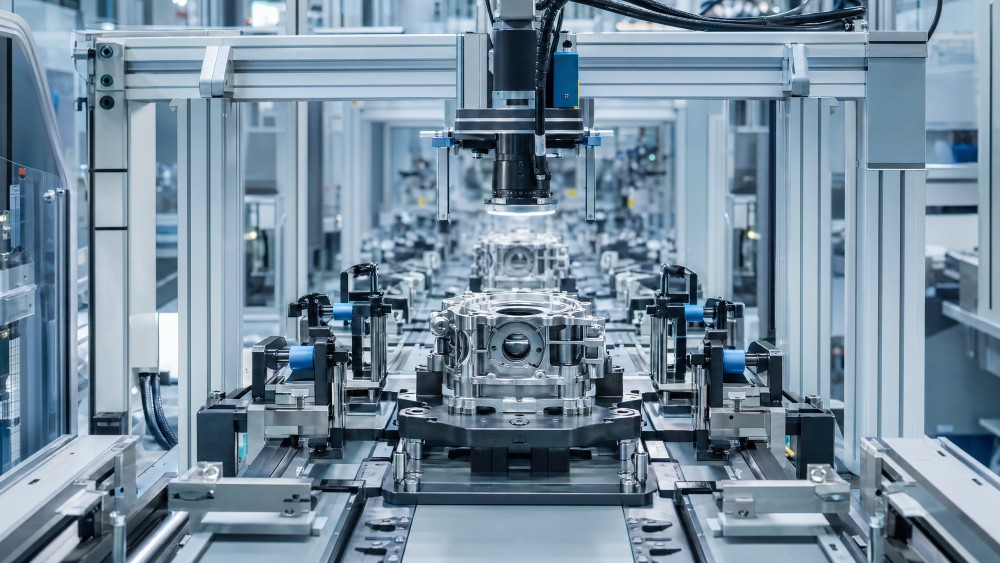
Rework is rarely caused by one dramatic failure. In most plants, it grows from 3 linked disconnects: the process is designed one way, the tooling behaves another way, and operators execute under a third set of assumptions. That is the core of manufacturing logic failure. Even when machines are new and automation levels are high, the line can still drift if fixture behavior, tolerance stack-up, inspection timing, and material response are not aligned.
This issue matters across the hardware sector because many assemblies depend on hidden industrial parts working within narrow windows. A fastener can meet drawing size but still fail under vibration. A mold cavity can hold shape but still trigger dimensional instability after thermal cycling. A pneumatic sequence can be correct in isolation but still create timing mismatch in a multi-station line running at 20–60 seconds per cycle.
For technical evaluators and quality teams, rework often signals that product logic and manufacturing logic are not fully synchronized. For procurement teams, it means the lowest unit price may be hiding higher total conversion cost. For project managers, it usually appears as delayed ramp-up, unstable first-pass yield, and recurring engineering change loops during the first 2–4 weeks of production.
GHTN approaches this issue from the granular level. By connecting tooling behavior, electrical compliance standards, mold iteration logic, and component performance, the platform helps OEMs, distributors, and industrial buyers see where rework begins before it spreads across supply, production, and after-sales risk.
The most common sources of hidden rework
- Tolerance assumptions are copied from design intent but not validated against actual machine capability, tool wear, or batch material variation.
- Inspection points are placed at end-of-line only, which means defects travel through 3–5 stations before detection.
- Component substitution decisions are made by price or lead time without checking mating logic, surface finish, hardness range, or compliance impact.
- Operator work instructions describe steps, but not the process window, trigger threshold, or escalation condition when drift begins.
When these gaps combine, rework becomes systemic rather than occasional. Plants then spend more time correcting repeated deviations than improving throughput, industrial greening, or product value.
Which logic gaps matter most from tooling to inspection?
In precision manufacturing, logic gaps usually appear at interfaces: between drawing and toolpath, tool and workholding, component and assembly sequence, machine signal and physical action, or quality criteria and release decision. These are not abstract issues. They affect scrap, cycle stability, and field reliability in measurable ways.
Micron-level precision is a useful example. A requirement such as ±10 μm may look acceptable on paper, but the process may still fail if clamping distortion, thermal expansion, or insert wear is not included in the control logic. In mold manufacturing and secondary machining, the difference between stable output and chronic rework can be a temperature drift of 2℃–5℃ or a tool wear interval that is extended beyond the safe window.
Electrical and control interfaces create a second category of risk. A line may have compliant panels and approved components, yet still suffer false stops, delayed actuation, or sequence overlap if signal timing, sensor placement, and pneumatic logic are poorly integrated. This is why electrical compliance standards should not be treated as documentation only. They must connect to execution logic on the floor.
The table below helps cross-functional teams identify where rework typically starts and how to evaluate the risk before it reaches serial production.
A useful lesson from this comparison is that rework control is not only about accuracy. It is about decision timing. If a process can detect drift 1 station earlier, it may prevent an entire batch from entering rework quarantine. That is a major gain for industrial standardization, especially in mixed-model production.
How different teams should read the same problem
For operators and line leaders
The priority is process window visibility. Operators need more than a nominal instruction. They need to know the acceptable pressure range, temperature range, torque band, or visual defect threshold that triggers a stop-call-check action within 1 cycle, not after an hour of output.
For quality and safety managers
The priority is containment logic. If nonconformance appears, teams should identify whether the issue is isolated, batch-related, or linked to systemic equipment drift. A 3-level reaction plan is often more effective than broad line shutdowns.
For buyers and business evaluators
The key question is not only “what is the part price?” but “what logic does the supplier control?” Suppliers serving the high-end industrial market should be able to discuss capability window, revision control, validation samples, and material-performance consistency in practical terms.
How should buyers and engineers evaluate rework risk before sourcing?
In sourcing decisions, rework is often misclassified as a production issue when it is actually a selection issue. A component may meet dimensional requirements, but if it does not fit the process logic of the line, it can still increase setup time, sorting labor, and warranty exposure. This is particularly relevant in the hardware sector, where parts are often standardized in form but not in process behavior.
Procurement teams should therefore assess 4 dimensions in parallel: product conformity, process compatibility, compliance relevance, and supply continuity. This approach supports greening components as well, because less rework means less wasted energy, fewer rejected materials, and lower transport loss from repeated shipments or emergency replacement.
A strong supplier conversation should cover sample validation, drawing interpretation, lead-time stability, and change notification. In many industrial programs, the difference between a stable launch and a delayed one is whether these points are confirmed 7–15 days before pilot build instead of after first issue escalation.
The next table is designed for purchasing, engineering, and project teams that need a practical screening tool before approval or supplier onboarding.
This framework is especially useful for distributors and agents that serve multiple OEM segments. It helps separate catalog compliance from operational suitability. In a market moving toward industrial greening and higher traceability, suppliers who can explain process logic clearly are often more scalable partners than those competing on unit price alone.
A 5-point pre-approval checklist
- Confirm the critical-to-function dimensions and the critical-to-process dimensions separately.
- Request sample verification under realistic line conditions, not only bench inspection.
- Check whether the supplier can support small-batch trial, medium-batch ramp-up, and stable large-batch continuity.
- Map compliance needs early for the destination market, especially where electrical compliance standards affect assemblies.
- Define change-control and communication rules before first volume order.
These steps reduce sourcing risk and support an industrial collaboration network where design teams, manufacturing teams, and supply partners are not working from separate assumptions.
What implementation practices reduce rework without slowing production?
The most effective response is not adding inspection everywhere. It is tightening logic at the points where variation enters the process. In practical terms, plants should build a 3-stage control structure: pre-process verification, in-process monitoring, and post-process confirmation. This keeps control close to cause while preserving takt performance.
Pre-process verification should focus on setup release. This includes fixture zeroing, tool condition, material lot confirmation, and parameter lock. In many machining and molding environments, a structured first-off release completed within 15–30 minutes prevents hours of downstream instability. It also supports micron-level precision by ensuring the process starts inside the intended window.
In-process monitoring should target the variables most likely to drift: temperature, pressure, feed, torque, wear count, or cycle time spread. The goal is not to collect maximum data but to identify the 3–6 signals that predict rework earliest. Plants moving into the high-end industrial market often win by shortening reaction time rather than expanding paperwork.
Post-process confirmation should not be limited to pass/fail results. It should feed back into tool maintenance, supplier communication, and process refinement. This is where industrial standardization becomes practical rather than theoretical.
A workable implementation flow for mixed industrial lines
- Step 1: Define 3 classes of characteristics—safety-critical, fit-critical, and process-critical—before line release.
- Step 2: Place at least 1 upstream verification point before value-adding operations multiply the defect cost.
- Step 3: Create operator reaction rules with thresholds, such as stop after 2 consecutive fails or after drift beyond a specified control band.
- Step 4: Review deviation patterns weekly during ramp-up and monthly after stabilization.
Why this also supports greening industrial operations
Reducing rework directly supports greening industrial production. Every avoided batch correction means less scrap metal, fewer rejected molded parts, lower compressed air waste, and less repeat transport between supplier and customer. For firms pursuing greening components and broader industrial greening objectives, process logic discipline is one of the most practical levers because it improves both cost and environmental performance without waiting for a full equipment replacement cycle.
This is also why GHTN emphasizes detailed component and tooling intelligence. Decisions about fasteners, molds, electrical hubs, and pneumatic interfaces are not isolated procurement tasks. They are connected drivers of stable output, compliance readiness, and lower lifecycle waste.
Common questions from engineers, buyers, and quality teams
How can we tell whether rework is a supplier issue or an internal logic issue?
Start with timing and distribution. If defects appear across multiple lots but only on one line or one setup condition, the problem is often internal manufacturing logic. If the issue follows one batch, one revision, or one material source, supplier contribution is more likely. In most cases, both sides should review 4 records together: incoming inspection, first-off release, process drift history, and final defect classification.
What tolerance level usually triggers rework risk?
There is no single threshold, because risk depends on process capability and assembly sensitivity. However, once features enter tight fit, sealing, motion, or electrical contact functions, even small deviations can matter. The key is to compare drawing tolerance with actual process window, measurement method, and thermal or wear effects over a full run, not only during startup.
How early should compliance review happen for industrial parts and tooling?
For export-oriented or regulated applications, compliance review should begin during specification and sourcing, not at shipment stage. This is especially important where electrical compliance standards influence component selection, enclosure design, cable routing, or safety interfaces. A review window of 2–6 weeks before production launch is often more manageable than late redesign after sample approval.
Is rework reduction mainly a large-enterprise issue?
No. SMEs can gain quickly because they often have shorter communication loops. A modest improvement such as standardizing 5 inspection points, setting clear tool-change intervals, or tightening sample approval logic can significantly reduce hidden cost. This is one reason industrial standardization and industrial collaboration network models are increasingly relevant for smaller manufacturers entering higher-spec segments.
Why work with a platform that connects precision, sourcing, and market insight?
When rework is rooted in manufacturing logic, isolated data is not enough. Teams need a clearer view of how industrial parts, tooling decisions, compliance requirements, and market expectations interact. GHTN is built for that purpose. It links detailed analysis from the hardware sector, electrical systems, and mold manufacturing so users can move from symptom to sourcing decision with more confidence.
For OEMs, the value is stronger decision support across materials, process fit, and supplier communication. For distributors and agents, it is better visibility into product positioning for the high-end industrial market. For engineers and project leaders, it is a practical reference point when balancing micron-level precision, delivery constraints, and industrial greening goals.
If you are reviewing a line with recurring rework, planning a sourcing transition, or evaluating greening components for future programs, the most productive next step is a focused technical discussion. Typical consultation topics include parameter confirmation, tooling and component selection, common delivery windows such as 2–8 weeks, sample support planning, compliance requirement mapping, and quotation communication for customized or multi-supplier programs.
Contact GHTN to discuss where your manufacturing logic may be losing value. A structured review of process assumptions, component behavior, and supplier-fit criteria can help reduce rework, improve industrial standardization, and support more resilient entry into demanding industrial markets.
Related News
- mold manufacturing
- fasteners
- electrical systems
- hardware sector
- industrial parts
- electrical hubs
- industrial standardization
- high-end industrial market
- industrial collaboration network
- electrical compliance
- greening industrial
- industrial collaboration
- greening components
- electrical compliance standards
- industrial greening
- micron-level precision
- manufacturing logic