
Compressor Parts Lead Times Reach 22 Weeks

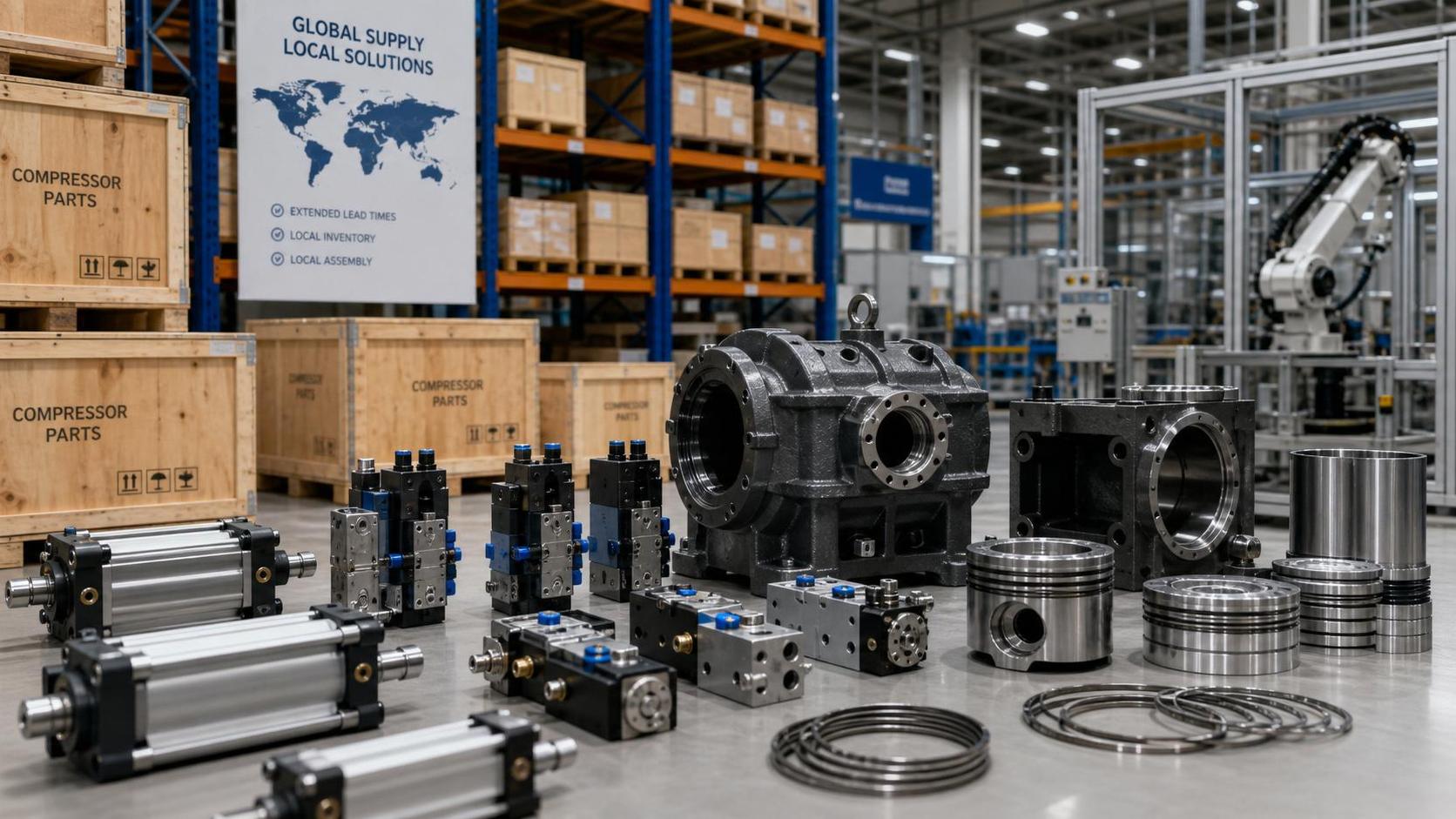
The timing of this development has not been clearly specified in the source material, but a July 2, 2026 update cited from SupplyChainIntel points to a notable extension in global lead times for key compressor-related components. For companies involved in pneumatic valves, air cylinders, compressor systems, distribution, and system integration, the issue is worth close attention because it affects not only purchasing cycles, but also delivery planning, customer commitments, and supplier selection across the industrial supply chain.
What Has Been Confirmed So Far
According to the information provided, the average global lead time for core components used in Air Cylinders, Valves, and Compressors has risen to 22 weeks, compared with 14 weeks during the same period in 2025. The reported drivers are a shift in production capacity for critical solenoid valve chips in Japan and tighter export quotas on precision piston rings from Germany.
The same information indicates that order schedules at leading pneumatic manufacturers in China have generally been extended to the first quarter of 2027. It also states that overseas distributors and system integrators are being advised to begin stock preparation plans for the second half of 2026 immediately and to give priority to Chinese suppliers with localized assembly capabilities in order to shorten response times.
Where the Pressure May Be Felt First
Component buyers face a longer planning window
From an industry perspective, buyers of pneumatic valves, air cylinders, and compressor-related assemblies may be affected first because longer lead times directly change procurement timing. The main impact is likely to appear in purchase scheduling, inventory positioning, and the ability to match customer demand with available supply. What deserves closer attention is whether purchasing teams are still working with lead-time assumptions based on last year's conditions.
Distributors and integrators may see delivery risk move downstream
For overseas distributors and system integrators, the issue is not only supply availability but also fulfillment reliability. If upstream component lead times continue to lengthen while manufacturer order books remain extended, downstream delivery commitments may become harder to manage. Observably, customer communication, project scheduling, and replacement planning are the business links most exposed to this type of delay.
Suppliers with localized assembly capacity may gain response advantages
Analysis shows that the recommendation to prioritize Chinese suppliers with localized assembly capability is important because response speed can become a differentiator when core parts are constrained. The potential impact is concentrated in order handling, assembly turnaround, and the ability to adjust configurations closer to the destination market. Companies evaluating suppliers should therefore watch not just list availability, but actual delivery responsiveness.
What Companies Should Watch Now
Recheck procurement assumptions for late 2026 demand
The provided information explicitly recommends that overseas distributors and system integrators start preparing inventory for the second half of 2026. In practical terms, companies should review whether their current ordering rhythm still fits a 22-week average lead time rather than the 14-week benchmark seen a year earlier.
Distinguish headline supply pressure from executable delivery capacity
Analysis shows that longer global lead times do not automatically translate into the same delivery outcome for every supplier. What deserves closer attention is the difference between nominal production availability and a supplier's real ability to assemble and respond locally. That distinction matters in quotation lead times, shipment planning, and customer promise dates.
Track order-book extension at major pneumatic manufacturers
The extension of production schedules at leading Chinese pneumatic manufacturers to 2027 Q1 suggests that capacity allocation may already be tightening beyond a short procurement cycle. Companies exposed to these suppliers should pay close attention to booking windows, confirmation timing, and whether capacity needs to be reserved earlier than usual.
Prepare clearer customer communication around lead time and substitution risk
Observably, longer lead times can create friction well before a shipment is delayed. The immediate business concern is often expectation management: when orders can be confirmed, how long fulfillment may take, and whether a preferred specification depends on constrained components. This is especially relevant for distributors, service providers, and integrators managing project-based deliveries.
How This Signal Should Be Read
Analysis shows that this development is more than a routine fluctuation in purchasing lead times, because the reported causes involve two separate supply-side constraints affecting critical component categories. At the same time, it is more appropriate to understand this as an active industry signal rather than a fully settled long-term outcome. The available information confirms longer lead times and extended order schedules, but the durability of those conditions still requires continued observation.
From an industry perspective, the key message is that procurement timing and supplier-response capability now deserve as much attention as unit pricing. The issue may prove to be partly cyclical, partly structural, but the current information is sufficient to justify earlier planning by exposed market participants.
Why This Matters Beyond a Single Lead-Time Update
This update matters because it links component availability, manufacturer scheduling, and channel-side planning into one supply-chain signal. It is more appropriate to understand the current situation as a warning that procurement and fulfillment assumptions in pneumatic and compressor-related businesses may need to be revised quickly. The information does not prove a permanent shift in market conditions, but it does indicate that waiting for normal lead times to return without adjusting plans could increase operational risk.
Source Note and What Still Needs Verification
This article is based on the user-provided news title, event timing, and event summary. The timing of the event itself was not clearly specified in the input, and no official source link was provided in the material, so continued verification remains necessary. For this type of industry update, relevant source categories typically include official announcements, company statements, industry association releases, authoritative media coverage, and standard-setting or trade-related documents.
Further observation should focus on whether the reported causes behind the delay continue to affect supply availability, whether manufacturer scheduling in China remains extended into 2027, and whether procurement guidance for overseas distributors and system integrators changes in subsequent updates.
Related News