
Mechanical Efficiency Losses Often Start With Small Design Choices

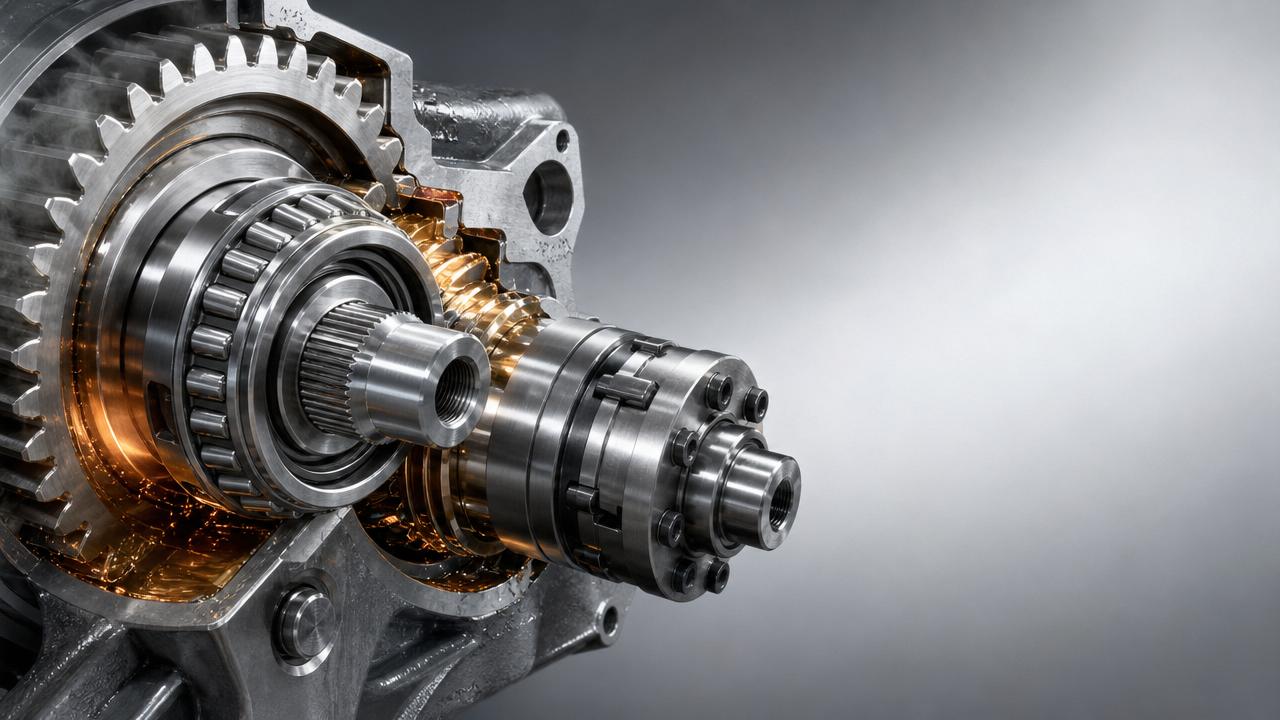
Mechanical efficiency rarely collapses because of one dramatic defect. In most industrial systems, performance loss begins with design decisions that appear minor during review but compound through friction, heat, deflection, misalignment, and wear. For technical evaluators, that makes mechanical efficiency less a single specification and more a design outcome that must be judged across the full operating life of a product.
When a mechanism underperforms in the field, the root cause is often traceable to early choices in tolerance allocation, material pairing, lubrication access, surface finish, or load path geometry. These choices may not trigger immediate failure, yet they steadily reduce transmitted power, increase maintenance demand, and narrow process stability. That is why efficiency evaluation should begin long before endurance testing or customer complaints.
This article examines how small design choices shape mechanical efficiency in practical terms. It focuses on what technical evaluators most need: where losses begin, how to identify risk during assessment, and which design details most strongly influence long-term reliability, operating cost, and manufacturing competitiveness.
What is the real search intent behind “mechanical efficiency” in this context?
Readers searching this topic are usually not looking for a textbook definition. They want to understand why apparently sound mechanical systems still lose output, run hotter than expected, or show premature wear despite meeting nominal design requirements. In other words, the search intent is diagnostic and evaluative rather than purely academic.
For technical assessment teams, the practical question is straightforward: which small design decisions are most likely to reduce mechanical efficiency over time, and how can those risks be identified before procurement, qualification, or scale production? This search often comes from product review, supplier comparison, design validation, or root-cause investigation.
That means the most useful discussion is not a broad survey of efficiency theory. What matters is a decision-oriented framework: where losses occur, how they accumulate, what evidence to request, and how to distinguish acceptable compromise from poor engineering discipline.
Why small design choices have an outsized effect on mechanical efficiency
Mechanical efficiency is the ratio between useful output and input energy, but in real equipment that ratio is shaped by a network of losses. Friction at interfaces, micro-slip between mating parts, seal drag, shaft deflection, airflow resistance, backlash, contact stress concentration, and thermal distortion all consume energy that never reaches useful work.
A small design choice matters because losses are rarely isolated. A slightly rougher surface finish can increase friction. Higher friction raises temperature. Elevated temperature changes lubricant viscosity. Lower viscosity weakens film strength. That accelerates wear, increases clearance variation, and eventually produces even greater efficiency loss. The initial design choice may have looked insignificant, yet the lifecycle effect is substantial.
This compounding behavior is especially relevant in tools, drive systems, automation modules, rotating assemblies, mold mechanisms, and precision industrial components. In these applications, repeated cycles magnify tiny inefficiencies into measurable power loss, dimensional drift, maintenance burden, and shorter service intervals.
Which design details should technical evaluators examine first?
Technical evaluators should begin with the interfaces where energy transfer actually occurs. That includes bearings, gears, slides, couplings, seals, guides, joints, and any contact surfaces responsible for transmitting force or motion. Mechanical efficiency is often decided at these interfaces, not at the assembly level where problems become visible.
The first review priority is tolerance strategy. Tight tolerances are not automatically better. If tolerances are unnecessarily narrow, they may increase production cost without improving efficiency. If they are too loose, however, the system can suffer from misalignment, uneven load sharing, vibration, and leakage of usable energy into heat or unwanted motion.
The second priority is material pairing. A mechanically efficient system depends on compatible hardness, thermal expansion behavior, surface energy, and wear characteristics. Poorly matched materials may gall, seize, deform, or require lubrication conditions that are difficult to maintain in real service. Efficiency losses often begin when material selection is made for initial cost rather than tribological behavior.
The third priority is lubrication path design. Many systems use acceptable lubricants but still perform poorly because the lubricant cannot consistently reach the highest-load contact zones. A weak lubrication path can make a good component behave like a bad one. Evaluators should examine not only lubricant type, but also access, retention, contamination resistance, replenishment interval, and failure tolerance.
The fourth priority is load distribution. If a mechanism creates local stress peaks rather than even force transfer, contact friction rises and component life falls. Edge loading in bearings, uneven tooth contact in gears, and off-axis loading in linear systems are classic examples. Small geometric deviations can sharply reduce mechanical efficiency even when the assembly still appears functional.
How tolerance decisions quietly create efficiency loss
Tolerance analysis is often treated as a fit or assembly issue, but it is equally an efficiency issue. Excessive clearance can allow vibration, impact, positional drift, and repeated correction in motion systems. Insufficient clearance can create preload beyond design intent, increasing drag torque, friction heat, and startup resistance.
Technical evaluators should ask whether the tolerance stack was developed around assembly convenience or actual operating behavior. A design may assemble easily on the bench yet perform poorly under thermal expansion, load reversal, speed variation, or contamination. Mechanical efficiency is affected by the operating tolerance state, not only the nominal drawing state.
It is also important to evaluate how tolerances interact with manufacturing variation across suppliers. A design that depends on perfect alignment or near-ideal concentricity may be efficient in prototypes but unstable in production. In such cases, apparent efficiency is not robust. It belongs to a narrow statistical window rather than the real manufacturing environment.
Why material pairing affects efficiency beyond wear resistance
Material selection is commonly discussed in terms of strength and durability, yet its effect on mechanical efficiency is broader. The friction coefficient between contacting materials, the ability to maintain a stable transfer film, and the response to temperature all shape how much input energy becomes useful output.
For example, a hard material pair may resist deformation but generate unfavorable friction if the surface finish or lubrication regime is wrong. A softer counterface may reduce noise and absorb micro-irregularities, yet deform under load and increase drag. Neither decision is universally correct. Efficiency depends on matching materials to real speed, pressure, temperature, and duty cycle.
Evaluators should also consider corrosion behavior and contamination sensitivity. If a material pair is vulnerable to surface oxidation, embedded particles, or moisture-induced degradation, friction may rise long before visible damage appears. In many industrial systems, declining mechanical efficiency is the first practical sign that the material system was poorly chosen.
Lubrication design is often more important than lubricant specification
Many teams overemphasize lubricant grade and underemphasize lubricant delivery. From an efficiency perspective, a premium grease or oil cannot compensate for poor channel geometry, inadequate retention, inaccessible service points, or contamination ingress. The design of the lubrication path often determines whether the intended friction regime is sustained.
In evaluation work, it helps to ask several direct questions. Does the mechanism receive lubricant where contact pressure is highest? Does orientation in service affect flow or pooling? Can maintenance personnel relubricate correctly without disassembly? What happens if service intervals are missed? A design with little tolerance for maintenance variation is an efficiency risk.
Another frequent issue is over-lubrication. Excess lubricant can create churning losses, temperature rise, seal stress, and contamination capture. Mechanical efficiency is not maximized by adding more lubricant, but by establishing the right film condition with stable delivery and clean retention throughout the operating cycle.
Load path design: the hidden driver of friction, heat, and durability
Load path design is one of the clearest indicators of engineering maturity. A system with a clean, direct, and balanced load path usually maintains better mechanical efficiency because forces are transmitted with fewer parasitic reactions. A poor load path introduces bending moments, side loads, local deformation, and secondary friction that consume energy continuously.
Consider a rotating assembly where shaft support spacing is too narrow. The resulting deflection may be small, but enough to alter bearing contact patterns and seal behavior. That increases drag and heat, which then accelerates lubricant breakdown. The efficiency loss did not begin at the bearing supplier; it began in the structural geometry of the design.
For technical evaluators, the key is to review whether the mechanism carries force in the simplest possible way. Whenever force must turn corners, cross offsets, or compensate for unstable support, efficiency loss is likely to follow. This is particularly critical in precision tooling, molds, actuated fixtures, pneumatic mechanisms, and compact drive modules.
Surface finish and microgeometry are not cosmetic details
Surface finish is sometimes reduced to a drawing requirement checked for compliance, but its real function is mechanical. Surface texture influences friction regime formation, lubricant retention, sealing behavior, running-in characteristics, and contact stress concentration. Two parts may share the same nominal geometry while delivering very different mechanical efficiency because of their micro-topography.
Similarly, microgeometry in gears, cams, sliding guides, and rolling elements can strongly affect load sharing. Minor crowning, lead correction, edge relief, or profile modification may improve efficiency by preventing local overload and reducing sliding losses. Without these refinements, a mechanism may operate but waste energy and wear unevenly.
From an evaluation standpoint, surface finish should be reviewed in relation to application, not only specification. The important question is whether the finish and microgeometry support the intended lubrication regime and contact mechanics. Compliance with a number alone does not guarantee efficient behavior.
How to evaluate mechanical efficiency before field failure reveals the problem
Technical evaluators need evidence that goes beyond brochure claims. The first useful input is loss mapping across operating conditions. Instead of asking for a single efficiency value, request performance data at different loads, speeds, temperatures, and duty cycles. Efficiency that appears strong at one nominal point may degrade sharply outside that window.
The second input is thermal behavior. Heat is often the clearest visible expression of hidden mechanical loss. If a compact mechanism runs noticeably hotter than competing designs under comparable duty, evaluators should examine friction sources, preload settings, alignment sensitivity, and lubricant stability.
The third input is wear pattern evidence from durability testing. Even before catastrophic failure, wear marks can show where load concentration, lubrication starvation, or misalignment is reducing mechanical efficiency. Uneven polishing, edge scoring, localized discoloration, and asymmetric material transfer are important clues.
The fourth input is design sensitivity analysis. Ask how the mechanism behaves under realistic variation: dimensional spread, installation error, contamination, intermittent overload, thermal cycling, and maintenance inconsistency. A design with good nominal efficiency but poor robustness may create higher lifetime cost than a slightly less efficient but more stable alternative.
What separates acceptable design compromise from preventable efficiency loss?
No industrial design is free of trade-offs. Sometimes a small efficiency penalty is justified by lower cost, easier assembly, compact packaging, or better serviceability. The evaluator’s task is not to demand perfection, but to distinguish deliberate compromise from avoidable weakness.
Acceptable compromise is usually documented, quantified, and bounded. The design team can explain why a given tolerance, material, or lubrication arrangement was selected, what efficiency penalty it causes, and why that penalty remains acceptable within the product’s intended use. Preventable loss, by contrast, often appears as assumption, omission, or overconfidence.
If the supplier cannot clearly explain contact mechanics, lubrication logic, or load distribution behavior, caution is warranted. Mechanical efficiency is too important to be treated as a byproduct. In mature engineering organizations, it is considered explicitly because it affects power consumption, thermal stability, service life, and customer-perceived quality.
Why this matters for manufacturing competitiveness
Mechanical efficiency is not only a machine-level metric. It shapes manufacturing economics. A more efficient mechanism typically wastes less energy, generates less heat, requires fewer interventions, and maintains performance longer between service events. In production environments, these advantages translate into uptime stability, lower replacement demand, and better process consistency.
For OEMs, distributors, and sourcing teams, this also affects market position. Products that preserve mechanical efficiency over time often achieve stronger lifecycle value even if their purchase price is not the lowest. They create fewer hidden costs in installation, maintenance, energy use, and output variability.
That is why small design choices deserve serious attention during evaluation. They influence not just engineering elegance, but the commercial credibility of the component or system. In globally competitive industries, efficiency loss caused by avoidable design detail is no longer a minor technical issue. It is a strategic weakness.
Conclusion: evaluate the small choices before they become large losses
Mechanical efficiency often begins to decline long before a system fails and long before users can clearly identify the cause. The earliest warning signs are usually embedded in design details: tolerance allocation, material compatibility, lubrication access, surface condition, and load path balance. These are not secondary considerations. They are where efficiency is won or lost.
For technical evaluators, the most effective approach is to assess mechanisms at the interface level, request evidence across real operating conditions, and test how robust the design remains under variation. A component that performs well only in ideal conditions is not truly efficient in industrial terms.
The central lesson is simple. Major mechanical losses often start with minor design choices. Evaluating those choices early leads to better reliability judgments, more credible supplier comparisons, and stronger long-term manufacturing performance. In modern industry, precision in the small decisions is what protects efficiency at scale.
Related News
- How to Use an Air Compressor Selection Chart to Size CFM, PSI, and Tank CapacityTime : Aug 06, 2026
- How to Choose Compressed Air Equipment for Automation Based on Load, Speed, and Duty CycleTime : Jul 23, 2026
- How to Improve Compressed Air System Efficiency: 7 Loss Points to Check FirstTime : Jul 13, 2026