
Red Sea Disruption Extends Compressor Lead Times

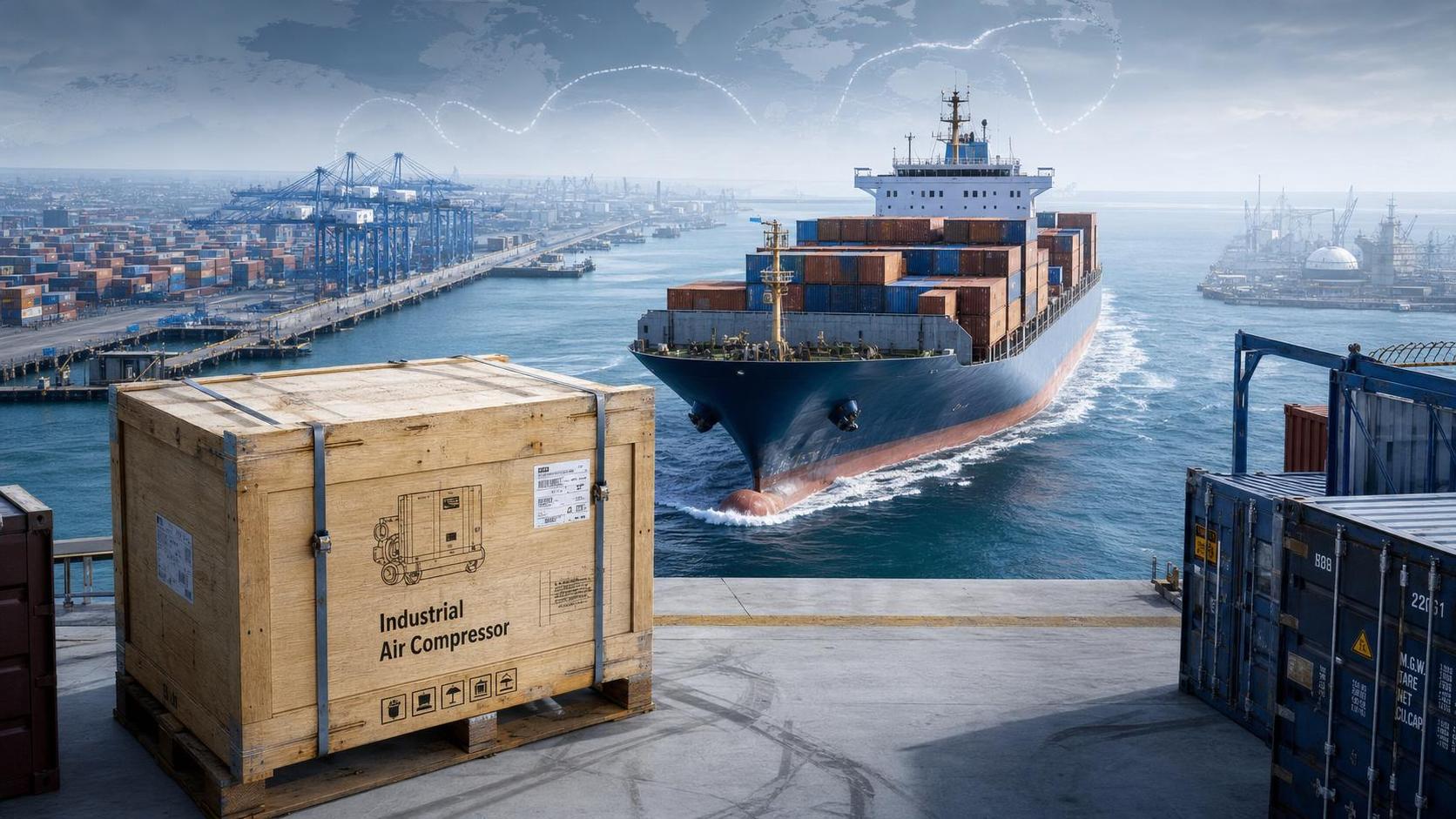
The timing of the underlying shipping disruption is not explicitly stated in the source material, but the latest market update points to a clear trade execution change for compressor exports on Asia-Europe routes: freight costs have risen sharply and transit schedules have lengthened because vessels are detouring around the Suez route amid continued attacks in the Red Sea. For compressor exporters, overseas buyers, distributors, and supply-chain service providers, this is worth close attention because it affects delivery commitments, procurement timing, inventory planning, and the practical handling of export documentation and customer schedules.
What the latest shipping data confirms
According to Drewry's latest report dated June 26, 2026, spot freight rates on major Asia-Europe routes rose 34% in a single week. The Shanghai-Rotterdam route reached $5,820 per FEU. At the same time, rerouting linked to the Suez Canal passage has added 12 to 15 days to voyage duration. Against that backdrop, the average delivery cycle for China-made air compressors exported to customers in Europe and the Middle East has been extended to 12 to 18 days. Multiple leading compressor manufacturers have already initiated contingency stocking plans through transit warehouses in Southeast Asia.
Where the pressure is showing across the trade chain
Export contracts are becoming harder to schedule precisely
From an industry perspective, compressor exporters are likely to feel the most immediate impact in shipment planning, promised delivery dates, and coordination with overseas customers. When freight rates and sailing times shift this quickly, contract execution becomes more exposed to timing risk. What deserves closer attention is whether existing delivery commitments, shipping windows, and document submission timelines still match actual transport conditions.
Procurement and buyer-side planning face a timing mismatch
For overseas buyers and procurement teams, the issue is not only higher logistics cost but also the reliability of inbound equipment schedules. Compressors are often tied to installation plans, maintenance arrangements, or project timelines. Analysis shows that longer transit periods can push procurement teams to review order timing, buffer stock assumptions, and supplier delivery promises more carefully, especially where purchase terms are linked to fixed handover dates or tender execution milestones.
Distributors and service partners may see downstream delivery strain
Channel operators, regional distributors, and after-sales service providers may also be affected because delayed arrivals can compress the time available for local allocation, commissioning preparation, and service scheduling. Observably, when upstream transport becomes less predictable, downstream partners need closer visibility on revised shipment status, product traceability records, and document readiness to avoid disputes over receipt, installation timing, or warranty-related handover points.
Logistics providers will need tighter document and routing control
Supply-chain service providers are likely to face greater pressure in route management, freight booking, and cargo handoff coordination. In this context, the operational issue is not a new formal regulation in itself, but a market rule change in how shipments must now be routed and timed. That makes booking confirmation, transit routing, delivery documentation, and customer notice procedures more important for export execution.
What companies should review now
Recheck delivery terms against actual transit conditions
Analysis shows that exporters should review whether current lead-time commitments remain realistic under longer voyage durations. This applies especially to quotations, sales contracts, production-release timing, and any documents that reference expected shipment or delivery dates. The key point is not that a new legal rule has been issued, but that trade performance is now being shaped by changed transport conditions that function like a new operating constraint.
Watch inventory and transit-warehouse arrangements carefully
The reported move by multiple leading manufacturers to prepare stock through Southeast Asian transit warehouses signals a practical adjustment in fulfillment strategy. It is more appropriate to understand this as an execution response rather than a confirmed industry-wide standard. Companies should therefore watch how such arrangements affect delivery planning, inventory ownership, shipment documentation, and customer communication before treating them as a settled model.
Keep technical and compliance files aligned with shipping changes
Where compressors are supplied into regulated procurement environments or formal customer approval processes, longer lead times can affect when technical files, inspection records, shipping papers, and supporting compliance documents need to be submitted. Observably, firms should pay closer attention to whether delayed routing creates mismatches between commercial documents and actual dispatch timing, particularly in projects where document sequence matters for acceptance or payment processing.
Track customer-side execution language and tender requirements
What deserves closer attention is whether buyers, distributors, or project owners begin adjusting delivery clauses, tender schedules, or supplier evaluation criteria in response to shipping volatility. The source material does not confirm such changes, so this should be treated as a point for continued monitoring rather than an established outcome. Still, export-oriented businesses would be prudent to watch for revised wording on delivery windows, logistics responsibility, and schedule risk allocation.
Why this matters beyond freight rates
Analysis shows that this development is not just a short-term freight story for the compressor sector. It highlights how a transport disruption can quickly become a trade-rule issue in practice, because shipment feasibility, lead-time credibility, and warehouse routing begin to shape how contracts are performed. It is more appropriate to understand this as a live execution signal rather than a fully settled new rule framework. The market has already reacted in logistics and stocking behavior, but the broader implications for procurement language, compliance handling, and customer-side acceptance still need observation.
How this update is best understood at this stage
From an industry perspective, the current significance of this development lies in execution pressure rather than a confirmed regulatory overhaul. The reported increase in freight rates, the longer detour-driven voyage time, and the extension of compressor delivery cycles point to a material change in export operating conditions. A measured reading is that businesses should treat this as an active trade and delivery constraint with immediate commercial relevance, while continuing to monitor whether it leads to more formal changes in buyer requirements, routing practices, or contract handling standards.
Basis of this article and what still needs verification
This article is generated on the basis of the user-provided news title, event timing, and event summary. The specific official source link was not provided in the input, so continued verification remains necessary. For developments of this kind, relevant source types typically include official notices, regulator releases, customs or trade authority information, industry association updates, standard-setting documents, and reporting by authoritative media or shipping market observers. What still requires ongoing observation includes any further execution guidance, buyer-side compliance expectations, tender document changes, industry feedback, and how companies are actually adjusting delivery and stocking arrangements in response.
Related News
- How to Use an Air Compressor Selection Chart to Size CFM, PSI, and Tank CapacityTime : Aug 06, 2026
- How to Choose Compressed Air Equipment for Automation Based on Load, Speed, and Duty CycleTime : Jul 23, 2026
- How to Improve Compressed Air System Efficiency: 7 Loss Points to Check FirstTime : Jul 13, 2026