
Industrial innovation is reshaping the valves market

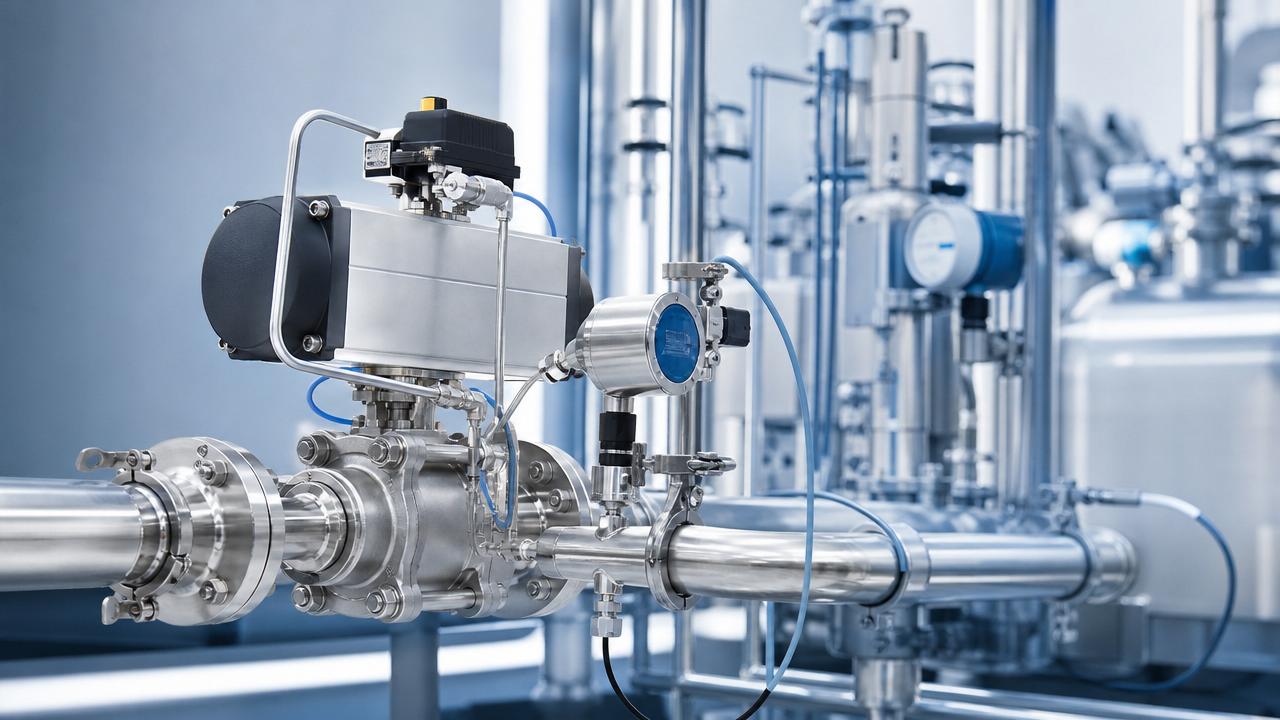
Industrial innovation is rapidly transforming the valves market, pushing manufacturers to rethink performance, material selection, and system integration. For technical evaluators, this shift means looking beyond basic specifications to assess reliability, automation compatibility, and lifecycle value. As global industries demand higher efficiency and stricter compliance, understanding how valve technologies evolve has become essential for smarter sourcing and long-term competitiveness.
In practice, the valves market is no longer defined only by pressure rating, end connection, or nominal size. Technical teams now review response time, sealing integrity after 100,000+ cycles, traceability of wetted materials, and compatibility with digitally monitored production lines. This shift matters across process manufacturing, energy systems, water treatment, industrial automation, and mold-related auxiliary equipment.
For readers in technical evaluation roles, industrial innovation creates both opportunity and complexity. New coatings, smart actuators, low-emission packing systems, and modular maintenance designs can reduce downtime by 10%–25% in suitable applications. At the same time, procurement risk rises when suppliers present innovation as a marketing label rather than a measurable engineering improvement.
From the perspective of GHTN, valves are part of the deeper industrial components ecosystem. Their real value appears when they are assessed alongside upstream material behavior, downstream automation logic, maintenance intervals, and regional compliance expectations. That systems view is increasingly important as OEMs and distributors seek durable, efficient, and globally deployable component strategies.
Why industrial innovation is changing valve evaluation criteria
Industrial innovation is influencing how valves are designed, produced, and selected. Traditional assessment often emphasized initial cost and basic pressure-temperature limits. Today, technical evaluators typically work with 4 broader filters: process fit, automation readiness, maintenance burden, and compliance durability over a 3–10 year operating horizon.
From static components to performance-critical assets
In many facilities, valves sit inside systems with tighter tolerances than before. A pneumatic line may require repeatable actuation in less than 1 second. A cooling circuit may need corrosion resistance across a 5°C–80°C fluid range. In an automated mold production cell, inconsistent valve behavior can affect cycle stability, compressed air efficiency, and even tool life.
That is why industrial innovation now focuses on measurable output. Buyers increasingly compare leakage class, torque stability, cavitation resistance, actuator cycle counts, and maintenance access. A valve that performs well on paper but requires disassembly every 6 months may be less valuable than a unit with a slightly higher purchase price and a 12–24 month service interval.
Material science is becoming a decision driver
Material selection has moved beyond stainless steel versus brass. Technical evaluators increasingly review seat compounds, stem sealing materials, anti-galling surface treatments, and internal coatings for abrasive or chemically aggressive media. In mixed-industry applications, temperature swings, chlorides, oils, steam, and fine particulates create failure modes that only appear after repeated cycling.
Industrial innovation in this area includes duplex and specialty stainless options for corrosion control, advanced elastomers for broader thermal windows, and wear-resistant coatings for throttling conditions. Even a 1% reduction in leakage or a 15% extension in seal life can materially improve uptime in high-frequency duty environments.
Common technical signals that innovation is real
- Cycle-life validation above 100,000 operations for automated service
- Documented seat, seal, and body material compatibility by media type
- Actuator interface standards that support easier retrofit and replacement
- Designs that shorten maintenance time from 3 hours to under 1 hour
- Clear performance data for leakage, torque, and operating temperature range
The table below shows how industrial innovation is changing the practical review checklist for valve sourcing teams in industrial environments.
The key takeaway is clear: industrial innovation is pushing valve selection toward system-level engineering judgment. Technical evaluators who still rely on a narrow specification match may miss hidden cost drivers in automation compatibility, service labor, and failure exposure.
Where innovation is most visible in today’s valves market
Not every new valve design represents meaningful progress. However, several areas consistently show practical value. These include smart actuation, emissions-oriented sealing, modular maintenance architecture, and advanced materials for harsher service windows. Each of these can influence sourcing decisions within 2–6 months of implementation planning.
Smart actuation and automation compatibility
In automated plants, valves increasingly function as connected assets rather than isolated devices. Position feedback, cycle counting, fault alarms, and remote diagnostics help maintenance teams move from reactive repair to scheduled intervention. For high-usage lines, this can reduce unplanned shutdown risk and improve spare parts forecasting accuracy by a meaningful margin.
Technical evaluators should verify communication compatibility, enclosure suitability, and actuator torque reserve. A common target is 20%–30% torque margin above expected operating demand, especially where media viscosity, debris, or thermal expansion can increase resistance over time.
Low-emission sealing and compliance-focused design
Stricter environmental and workplace standards are reshaping the valves market, especially in chemical handling, steam systems, gas distribution, and solvent-related processes. Innovation here often centers on packing systems, stem finishes, seat geometry, and body sealing methods that improve fugitive emission control and operational consistency.
Even where regulations are not yet mandatory, OEMs and export-focused suppliers increasingly prefer lower-emission valve platforms because documentation discipline improves project readiness. For buyers serving multiple countries, standardized documentation can shorten approval cycles by 1–3 weeks.
Modular serviceability and faster maintenance
A growing share of industrial innovation is less about headline technology and more about service access. Split-body arrangements, cartridge-type internals, top-entry maintenance options, and standardized actuator mounts can significantly reduce service time. In plants with dozens or hundreds of valves, the labor savings become operationally important.
For technical evaluators, this means asking a practical question: how many tools, how many technicians, and how many minutes are needed for routine service? A difference between 45 minutes and 180 minutes per valve can change the economics of a full maintenance program.
High-impact innovation areas by application
The following comparison helps identify where industrial innovation usually delivers the strongest return in industrial valve applications.
Across these use cases, the pattern is consistent: industrial innovation has the most value when it solves a process problem, not when it only adds complexity. Technical teams should connect every innovation claim to a measurable plant outcome such as leakage reduction, maintenance interval extension, or control stability improvement.
How technical evaluators should assess valves in an innovation-led market
A structured evaluation process reduces sourcing errors and supports better long-term performance. In most industrial projects, a 5-step approach is more effective than reviewing catalog data alone. This is especially true when the valve will be installed in a system tied to pneumatic logic, electrical control, fluid conditioning, or precision tooling support infrastructure.
Step 1: Define the actual operating envelope
Start with the real service profile, not only the design maximum. Record normal pressure, upset pressure, flow variation, media composition, ambient temperature, operating temperature, and actuation frequency. A valve cycling 5 times per day should not be judged the same way as one cycling 1,200 times per shift.
Step 2: Match innovation claims to failure modes
If the process suffers from premature seat wear, ask for data on wear resistance and particulate tolerance. If the problem is poor automation repeatability, check position feedback, actuator sizing, and control signal compatibility. Industrial innovation only matters when it addresses a known risk such as corrosion, leakage, sticking, or service delays.
Step 3: Review lifecycle support and spare strategy
A technically strong valve becomes a weak purchasing decision if spare kits require 8–12 weeks lead time or if maintenance parts vary across too many product families. Technical evaluators should review wear-part commonality, documentation clarity, field service access, and expected service intervals under normal duty.
Step 4: Validate integration details early
Integration failures often appear late and cost more to fix. Confirm flange or thread standards, actuator mounting, signal interface, enclosure requirements, and local utility compatibility. For multinational projects, also check whether one valve platform can cover multiple compliance expectations without redesign.
Step 5: Compare lifecycle value, not only quotation value
A 12% higher purchase price may be justified if maintenance hours drop by 30%, leakage falls, and spare part rationalization improves. This is where industrial innovation creates procurement leverage. It allows technical teams to defend sourcing decisions using operational logic rather than unit cost alone.
Practical checklist for technical evaluation
- Verify body, trim, seat, and seal materials against the actual media profile
- Check pressure-temperature limits under both normal and upset conditions
- Confirm cycle-life suitability for manual, semi-automatic, or automatic service
- Review documentation completeness for traceability and export readiness
- Assess spare lead time, service method, and maintenance skill requirements
- Calculate downtime exposure if one valve fails in a critical process node
For organizations sourcing across hardware, electrical, and tooling ecosystems, this method aligns well with GHTN’s broader industrial lens. Valve performance should be judged as part of the production architecture, especially where pneumatic logic, mold cooling control, process fluid routing, and electrical reliability intersect.
Common sourcing risks and how to reduce them
Even in a market shaped by industrial innovation, technical teams still face familiar sourcing traps. Most failures can be traced to incomplete application mapping, overreliance on generic catalogs, or poor coordination between engineering, procurement, and maintenance. The good news is that these risks can be reduced with disciplined review.
Risk 1: Buying by nominal specification only
Two valves with the same nominal size and pressure class may perform very differently under thermal cycling, particulate exposure, or high actuation frequency. Technical evaluators should always ask how the valve behaves after repeated use, not only how it performs at installation.
Risk 2: Ignoring maintenance economics
A low-priced valve may increase total ownership cost through frequent seal replacement, difficult actuator access, or limited spare availability. In high-utilization plants, just 2 extra service events per year across 50 valves can create a significant labor and downtime burden.
Risk 3: Treating automation add-ons as plug-and-play
Smart accessories add value only when they fit the existing control architecture. Positioners, limit switches, solenoids, and feedback modules should be checked for voltage, enclosure class, signal type, and communication compatibility. Otherwise, integration delays can erase the expected benefit.
Risk 4: Underestimating documentation quality
In global sourcing, incomplete material records, unclear test data, or inconsistent drawings can delay approvals and raise compliance questions. For technical evaluators, documentation should be part of the technical score, not a late procurement formality.
Industrial innovation is reshaping the valves market by moving value from simple component supply to measurable process performance. For technical evaluators, the winning approach is to examine valves through 4 connected lenses: application reality, material and design integrity, automation fit, and lifecycle economics. That is how sourcing decisions become more resilient, especially in industrial environments where hardware, electrical systems, and precision manufacturing processes converge.
GHTN supports this deeper evaluation mindset by linking precision component insight with practical market intelligence. If your team is comparing valve platforms, reviewing industrial innovation claims, or planning a more reliable sourcing strategy for OEM or distribution projects, now is the right time to refine your criteria. Contact us to discuss application details, request a tailored component evaluation framework, or explore more industrial solutions built for long-term competitiveness.
Related News