
Industrial solutions that reduce downtime in valve systems

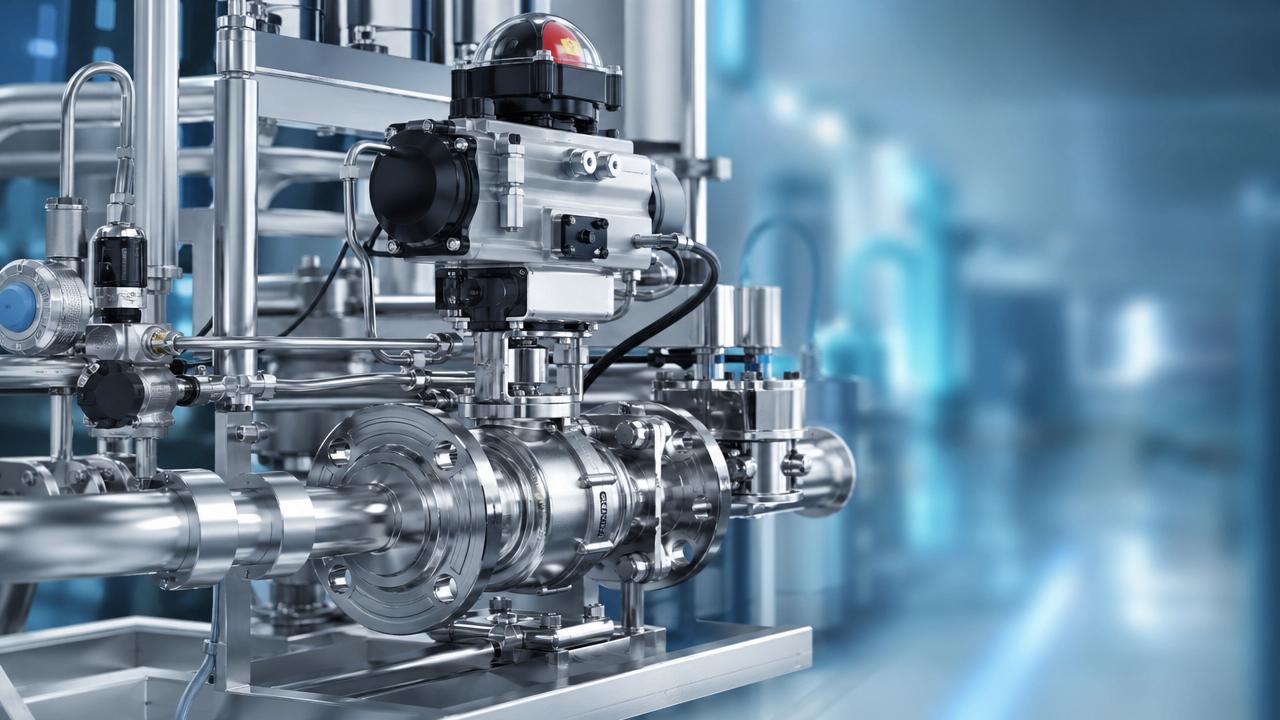
For after-sales maintenance teams, valve failures can turn small inefficiencies into costly production stops. This article explores industrial solutions that help reduce downtime in valve systems, from smarter component selection to faster diagnostics and preventive maintenance. Designed for real-world service conditions, these insights support more reliable performance, lower repair frequency, and stronger system continuity across demanding industrial environments.
Why valve downtime is becoming a bigger operational risk
In many industrial environments, valve systems are no longer isolated mechanical assets. They sit inside automated production lines, utility loops, dosing skids, compressed air networks, cooling circuits, and process control assemblies that operate with tighter uptime targets than they did 5 to 10 years ago. For after-sales maintenance personnel, this means that a single stuck actuator, worn seat, leaking seal, or unstable feedback signal can now affect several connected assets instead of one service point.
A clear trend across the comprehensive industrial sector is the shift from reactive repair to continuity-driven maintenance. Plants that once accepted a 4-hour unscheduled stop may now treat even a 30-minute interruption as a reportable loss event, especially where valves are tied to packaging, thermal control, pneumatic handling, or fluid transfer. This change is pushing industrial solutions toward faster diagnosis, modular replacement, higher compatibility, and better lifecycle visibility.
Another important signal is the growing mismatch between older valve infrastructure and newer production expectations. Legacy valves may still function, but their sealing materials, switching speed, corrosion resistance, and sensor readiness may not align with current duty cycles. In practical terms, maintenance teams are seeing more problems around intermittent faults, repeated leakage after short service intervals, and difficult root-cause analysis when electrical and mechanical symptoms overlap.
What is changing on the service side
For field service and plant support teams, the role is becoming more analytical. Instead of only replacing failed parts, technicians are expected to identify whether downtime was caused by media contamination, incorrect material pairing, pressure spikes, actuator wear, control logic issues, or installation stress. That is why industrial solutions today increasingly combine component engineering with maintenance planning and system-level troubleshooting.
The service window is also shrinking. In many facilities, planned maintenance may be limited to a monthly 2-hour stop, a quarterly half-day intervention, or one annual turnaround. Under these conditions, the most valuable industrial solutions are those that shorten inspection time, reduce dismantling steps, and allow common spare parts to cover multiple valve positions or media conditions.
This trend matters because valve downtime is rarely just a valve issue. It can influence pressure stability, energy efficiency, batch quality, safety interlocks, and compliance routines. For maintenance professionals, the practical question is no longer whether a valve can be repaired, but whether the chosen approach reduces repeat failures over the next 6 to 12 months.
The main drivers behind new industrial solutions for valve systems
Several forces are shaping the next generation of industrial solutions for valve uptime. First is the wider use of mixed-material systems. Maintenance teams now deal with stainless steel, brass, engineered polymers, elastomer blends, and coated internal components in the same plant. This improves application flexibility, but it also increases the importance of correct media compatibility, temperature range verification, and seal selection.
Second is the rise of automation density. A line that previously had 20 to 30 valve points may now have 80 or more when pneumatic routing, isolation loops, and cleaning sequences are added. As valve count increases, downtime risk multiplies unless plants standardize part families, feedback devices, and service procedures. This is one reason modular assemblies and standardized maintenance kits are gaining attention.
Third is the growing cost of delayed diagnosis. A technician may spend 45 minutes replacing a valve that appears to have failed, only to discover that the root problem is low pilot pressure, wiring fatigue, particulate contamination, or unstable upstream regulation. New industrial solutions are therefore moving toward condition visibility: position indication, cycle counting, pressure monitoring, leak detection, and easier fault isolation during service calls.
Trend signals maintenance teams should not ignore
The market is also showing a stronger preference for valves that are easier to service rather than only cheaper to purchase. In real maintenance economics, a component with a 10% higher upfront cost can still be the better option if it reduces repeat interventions, uses common spare kits, or can be replaced in 15 minutes instead of 50. This shift is particularly visible in high-cycle applications and remote utility areas.
Environmental and operating conditions are another driver. Many failures are not caused by dramatic misuse but by gradual stress from vibration, poor air quality, aggressive media, thermal cycling, or washdown exposure. Because of this, industrial solutions increasingly focus on environmental fit: enclosure protection, seal chemistry, anti-corrosion treatment, and stable performance across pressure bands such as 4 to 8 bar or temperature windows like -10°C to 120°C, depending on the application.
Finally, procurement behavior is changing. Service teams often need faster access to technical data, interchange guidance, and cross-functional selection advice. A supplier network that understands both hardware components and precision manufacturing logic can reduce decision delays, especially when the issue is not only replacement but also redesign for longer service life.
The table below summarizes the most visible trend shifts affecting valve maintenance and the industrial solutions now gaining traction.
These shifts show that reducing downtime now depends on a broader maintenance strategy. The most effective industrial solutions are not single products but coordinated decisions around compatibility, diagnostics, spare planning, and replacement speed.
How these changes affect after-sales maintenance teams on the ground
The strongest impact is on troubleshooting workflow. After-sales technicians are increasingly expected to distinguish between component failure and system failure within the first service visit. That means checking not only the valve body and actuator, but also supply pressure, electrical signal stability, contaminant load, installation alignment, and upstream/downstream process conditions. In high-demand environments, the first 20 minutes of diagnosis often determine whether the repair will hold.
Another major change is the need for maintenance-ready documentation. When plants operate multiple valve types across different OEM packages, service delays often come from incomplete part identification rather than from the repair itself. Maintenance teams benefit from industrial solutions that include clear bill-of-material references, replacement logic, seal material notes, torque guidance, and practical interchange options for standard service scenarios.
Training requirements are also rising. A technician working across pneumatic, hydraulic, water, steam, or chemical-adjacent systems may face different failure signatures even when the valve architecture looks similar. This is why teams are placing more value on supplier-side technical intelligence: guidance that links component design, process load, and maintenance behavior instead of treating every service event as a simple part swap.
Where downtime usually starts
In many plants, repeat downtime begins with a small mismatch that goes unnoticed during installation or previous repair. Common examples include selecting a seal that performs well at ambient temperature but hardens during thermal cycling, using an actuator without enough margin for fluctuating line pressure, or fitting a valve into a layout that transmits excessive vibration. These issues may not cause immediate failure, but they shorten the service interval from 12 months to 3 or 4 months.
The list below highlights the failure points that maintenance teams are watching more closely as industrial solutions become more uptime-focused.
- Seal degradation caused by incompatible media, temperature cycling, or dry running conditions.
- Actuator underperformance due to unstable air supply, low pilot pressure, or friction increase over time.
- Internal leakage that gradually reduces process stability before external symptoms become visible.
- Contamination from rust, particles, oil carryover, or scale buildup that interferes with valve movement.
- Feedback or wiring faults that appear mechanical at first but are actually control-side interruptions.
For after-sales maintenance teams, these patterns reinforce a practical lesson: downtime reduction is strongest when the service model combines inspection discipline, standardized replacement logic, and application-aware component upgrades.
Impact by maintenance responsibility
Not every role feels the change in the same way. The following table maps how valve downtime trends affect different maintenance responsibilities and which industrial solutions are most relevant.
This comparison makes one point clear: industrial solutions that reduce downtime must match the service role, not just the valve specification. A plant may own the right hardware, but without role-based support and documentation, repair speed still suffers.
What smarter industrial solutions look like in current valve maintenance practice
The strongest solutions emerging today are built around maintainability. Instead of waiting for failure and then searching for an equivalent component, maintenance teams are pre-classifying valve populations by media type, cycle frequency, criticality, and service access conditions. This allows them to define which valves need upgrade paths, which can remain on routine service, and which should move to monitored maintenance within the next 1 to 2 shutdown cycles.
Component selection is also becoming more condition-specific. For example, industrial solutions for corrosive or washdown environments often prioritize body material and seal compatibility, while high-cycle pneumatic systems may prioritize response consistency, low-friction internals, and contaminant tolerance. The same “valve replacement” decision can therefore lead to very different choices depending on actual service stress.
A third shift is the growing value of service kits and pre-engineered assemblies. When a plant can replace seals, pilots, connectors, or actuator interfaces without sourcing multiple unrelated items, mean time to repair usually improves. Even a reduction from 90 minutes to 40 minutes per event becomes important when a line has dozens of valve positions and several maintenance events per quarter.
Practical solution areas with the highest downtime impact
For after-sales teams evaluating industrial solutions, the following areas tend to deliver the most reliable downtime reduction.
- Application-based material selection, including body, trim, and seal compatibility with temperature, pressure, and media exposure.
- Service-friendly design choices such as modular actuators, accessible fasteners, clear position indication, and replaceable wear parts.
- Condition-oriented diagnostics, including pressure checks, leak tracing, cycle review, and inspection points before full disassembly.
- Spare strategy alignment, where critical valves have stocked replacement kits and non-critical valves use standardized interchange rules.
- Maintenance documentation that connects installation parameters, service intervals, and known failure modes for faster decision-making.
In many cases, the most effective improvement is not a complete redesign. It is a set of disciplined upgrades: better filtration, corrected actuator sizing, more suitable sealing material, improved feedback connection, or a documented replacement interval based on cycle count rather than waiting for breakdown.
Selection signals worth checking before the next failure
Before approving a replacement or upgrade, maintenance teams can use a short decision framework to judge whether proposed industrial solutions truly reduce downtime risk.
- Does the valve match the actual pressure band, such as 2 to 6 bar, 6 to 10 bar, or fluctuating service with spikes?
- Has seal material been checked against media chemistry, cleaning agents, and thermal cycling frequency?
- Can the component be serviced within the available shutdown window of 30 minutes, 2 hours, or one shift?
- Are spare parts shared with other installed valve types to reduce stock complexity?
- Is the supplier able to support parameter confirmation, interchange review, and delivery planning before the next maintenance cycle?
These checks help separate low-price replacements from true industrial solutions that lower repeat service demand and improve production continuity.
How to judge the next phase: from repair response to maintenance strategy
Looking ahead, the valve maintenance landscape is likely to keep moving toward traceable, application-specific service models. After-sales teams should expect stronger demand for documentation quality, faster root-cause confirmation, and more predictable spare availability. This does not mean every plant will invest in advanced monitoring immediately, but it does mean that maintenance decisions will increasingly be judged by how well they prevent recurrence over the next service interval.
A practical way to respond is to build a valve-criticality map. Start by separating assets into categories such as safety-relevant, production-critical, utility-support, and low-impact service points. Then review service history over the last 6 to 12 months, looking for repeated leakage, slow actuation, inconsistent switching, or emergency replacement events. This approach gives maintenance teams a clearer basis for choosing where industrial solutions should be applied first.
It is also useful to track a small set of service indicators. Examples include average repair time, repeat failure interval, number of unplanned valve interventions per quarter, and spare fill rate for critical assemblies. Even if the plant does not run a formal reliability program, these indicators create a more objective picture of whether current actions are actually reducing downtime.
Recommended next steps for maintenance teams
The following steps provide a realistic path from short-term repair improvement to a stronger uptime strategy.
- Review the top 10 to 20 valve-related downtime events from recent months and classify the root cause.
- Identify which failures came from wrong material fit, weak diagnostics, delayed parts access, or installation conditions.
- Standardize service kits for the most critical valve groups and define minimum stock levels.
- Set practical inspection intervals, such as monthly checks for high-cycle units and quarterly checks for moderate-load service.
- Work with a technical resource partner that can support selection logic, cross-industry component knowledge, and sourcing visibility.
For many organizations, this kind of structured review is where better industrial solutions start. The goal is not to overcomplicate maintenance, but to make each repair event more informed, more repeatable, and less likely to return as an unplanned stoppage.
Why work with a network that understands industrial components at depth
When valve downtime affects production continuity, maintenance teams need more than a generic catalog. They need support that connects component performance, manufacturing realities, replacement practicality, and supply-side coordination. That is where GHTN adds value. As a global resource portal for industrial components and precision manufacturing tools, GHTN focuses on the technical logic behind hardware, electrical systems, and mold-related production environments that influence long-term equipment reliability.
Our perspective is especially useful for after-sales maintenance professionals who must balance urgent repair needs with broader lifecycle decisions. We help translate industrial solutions into actionable evaluation points, including parameter confirmation, material and seal matching, serviceability considerations, replacement pathways, and market-side sourcing insights that support faster decisions under real operational pressure.
Because GHTN is built around underlying industrial components, our content and network support practical discussions that matter on the plant floor: whether a valve configuration is suited to the operating range, whether a spare strategy is too fragmented, whether delivery timing fits the next shutdown, and whether an upgrade path can reduce repeat failures without unnecessary redesign.
Contact us for targeted valve maintenance support
If your team is reviewing industrial solutions to reduce downtime in valve systems, contact us to discuss the details that directly affect service results. You can consult with us on parameter confirmation, product selection, compatible component options, typical delivery cycles, replacement strategy, customization direction, certification-related requirements, sample support, and quotation planning.
Whether you are dealing with repeated leakage, unstable actuation, difficult interchange decisions, or a broader valve standardization project, GHTN can help you assess the signals that matter and connect them with practical sourcing and technical judgment. Linking Precision, Tooling the Future.
Related News