
SAMR Launches 2026 Mandatory National Standard Upgrade
Lead
The State Administration for Market Regulation (SAMR) announced on December 26, 2025, a comprehensive acceleration of mandatory national standard development and revision for 2026 — covering over 1,800 standards, with priority given to battery recycling, special equipment safety, insulation materials, hazardous chemicals, and related industrial components. This initiative signals a tightening of technical compliance requirements across multiple high-risk and export-sensitive sectors, driven by evolving domestic safety governance priorities and increasing alignment with international regulatory expectations.
Event Overview
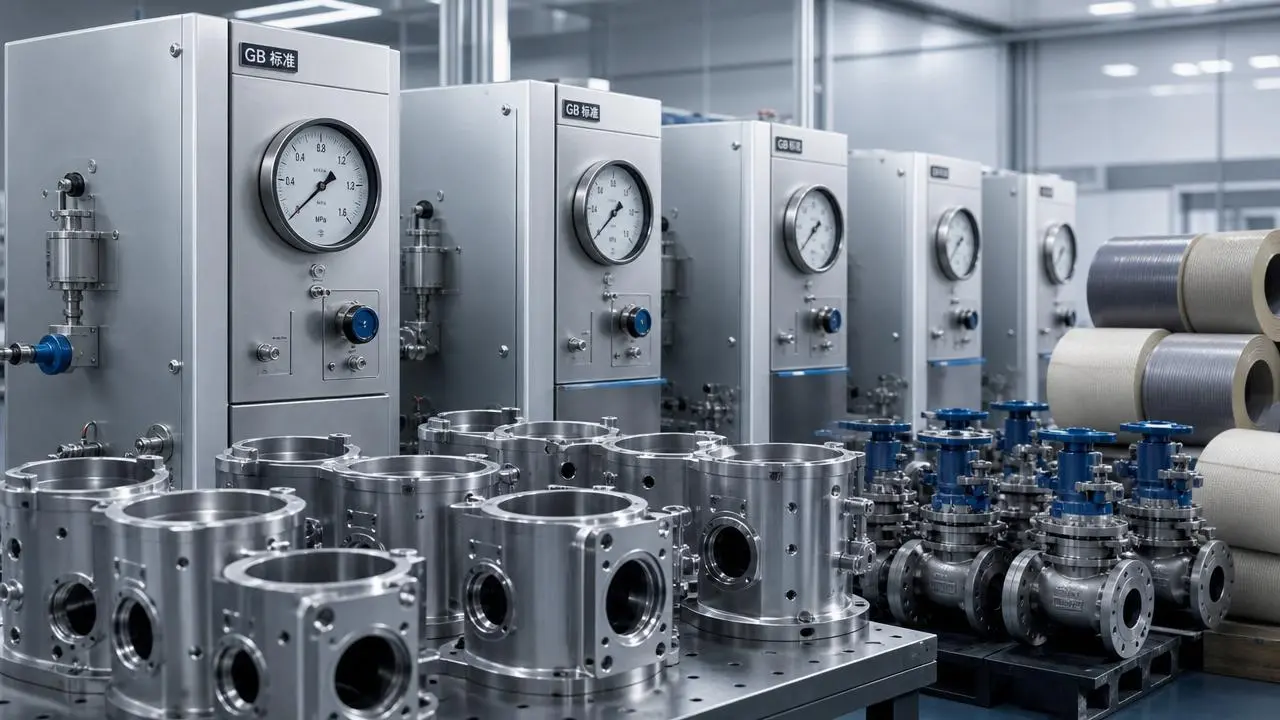
SAMR stated on December 26, 2025, that it will advance the completion of more than 1,800 national standard revisions and new developments in 2026. Key focus areas include thermal insulation materials, hazardous chemicals, special equipment, and lithium-ion battery recycling and reuse. The plan also includes converting selected recommended national standards (GB/T) into mandatory ones (GB). Specific updates target safety and performance criteria for stamped metal enclosures, die-cast pressure-bearing structural parts, and valve corrosion resistance classification — all of which directly affect conformity pathways and factory inspection costs for industrial components exported to the EU, Southeast Asia, and other regulated markets.
Industries Affected
Direct Exporters
Manufacturers exporting stamped enclosures, die-cast structural parts, or industrial valves face immediate implications: newly mandated testing protocols — such as impact resistance validation for stamped housings or accelerated corrosion cycling for valves — may trigger re-certification under updated GB standards before shipment. Since several revised standards reference harmonized test methods aligned with EN or ISO norms, exporters must now reconcile dual compliance (e.g., GB + CE marking), potentially extending time-to-market and increasing third-party lab fees.
Raw Material Procurement Firms
Suppliers of aluminum alloys for die casting or stainless steel grades for valve bodies must adjust material specifications to meet updated mechanical property thresholds (e.g., minimum tensile strength after aging, intergranular corrosion resistance limits). Observably, procurement contracts signed prior to 2026 may lack clauses addressing post-2026 standard-mandated traceability or batch-level certification — exposing buyers to non-conformance risk during incoming inspection if upstream material data sheets do not reflect forthcoming GB revisions.
Contract Manufacturing & OEM Facilities
Facilities producing components under OEM or tiered supply agreements must revise internal quality control plans, especially for dimensional stability checks on stamped parts and hydrostatic proof testing parameters for die-cast pressure vessels. Analysis shows that the proposed updates to GB standards on safety margins and failure-mode documentation will require recalibration of process capability indices (Cpk) and additional operator training — particularly where automated inspection systems rely on legacy tolerance bands no longer compliant with draft 2026 provisions.
Supply Chain Service Providers
Third-party testing labs, certification bodies, and logistics compliance consultants must scale capacity for GB-specific verification — especially in corrosion grading (e.g., salt-spray exposure duration tiers) and recyclability traceability for battery-related components. From an industry perspective, demand for bilingual (Chinese–English) test reports referencing both GB and regional equivalents (e.g., ASTM G44, IEC 62619) is expected to rise sharply; however, current accreditation scopes at many domestic labs do not yet cover the full scope of newly designated mandatory clauses.
Key Focus Areas and Recommended Actions
Track Draft Standard Publication Timelines
Monitor SAMR’s official Standardization Administration of China (SAC) portal for public comment drafts — especially those marked ‘mandatory conversion’ status. Priority should be given to standards with scheduled issuance before Q3 2026, as these typically enter enforcement within six months of final release.
Reassess Product Certification Portfolios
Map existing product certifications against the 1,800+ items listed in SAMR’s 2026 work plan. For products falling under ‘battery recycling’ or ‘special equipment’ categories, initiate gap analysis between current GB/T-based declarations and anticipated GB-level requirements — particularly regarding documentation of material origin, end-of-life handling instructions, and residual energy verification protocols.
Update Supplier Agreements and QA Protocols
Revise procurement terms to require suppliers’ adherence to forthcoming mandatory GBs — including provision of updated material certificates, lot-level test reports, and process validation records. Where applicable, integrate clause triggers for automatic re-audit upon publication of finalized standards.
Editorial Perspective / Industry Observation
This initiative is better understood not as a discrete regulatory wave, but as part of a broader institutional shift toward outcome-based standard enforcement — where technical specifications increasingly serve as proxies for lifecycle accountability, especially in sustainability-critical domains like battery circularity. Current more significant implications lie less in individual clause changes and more in the systemic elevation of standard hierarchy: converting GB/T to GB effectively removes flexibility in interpretation and narrows permissible deviation windows. That said, enforcement capacity — particularly at provincial market supervision bureaus — remains uneven; implementation pace may vary significantly across regions, creating temporary arbitrage opportunities for early adopters.
Conclusion
The 2026 mandatory standard upgrade reflects a calibrated effort to strengthen technical sovereignty while reinforcing compatibility with global regulatory frameworks. For industry stakeholders, the strategic value lies not only in compliance readiness but in leveraging updated standards to improve design robustness, enhance cross-border market access, and preempt future ESG-related disclosure demands — especially where recyclability, corrosion resilience, and structural integrity intersect.
Source Attribution
Official announcement issued by the State Administration for Market Regulation (SAMR), December 26, 2025. Published via the Standardization Administration of China (SAC) website (www.sac.gov.cn). Draft standards referenced are currently in the public consultation phase; final texts, effective dates, and transitional arrangements remain subject to official notice. Continued monitoring is advised for SAC’s quarterly standard revision bulletins and provincial-level implementation guidance.