
Southeast Asia Adds Up to 12% Surcharge on China Pneumatic Valves

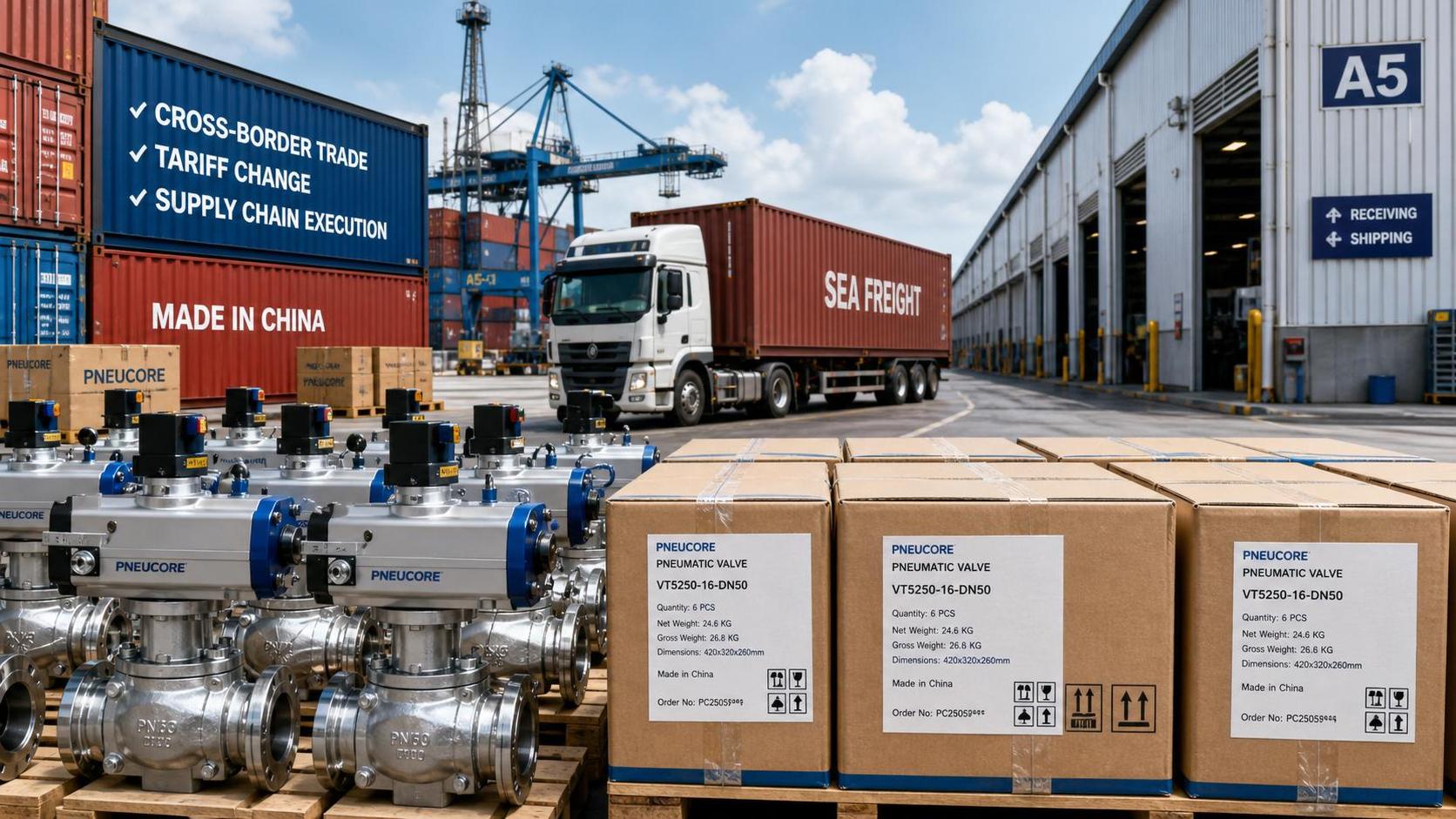
On July 11, 2026, Indonesia, Vietnam, and Thailand began imposing temporary import surcharges of 8% to 12% on pneumatic valves originating from China under HS code 8481.80. The measure will remain in place through December 31, 2026 and applies to orders with an FOB value above $5,000. For exporters, regional distributors, procurement teams, and supply chain operators linked to valve trade into Southeast Asia, this is a development worth close attention because it directly changes landed cost, transaction planning, and market access conditions within a defined review period.
What Has Been Confirmed So Far
The confirmed facts are limited but commercially significant. Indonesia, Vietnam, and Thailand have each introduced a temporary additional import charge on pneumatic valves of Chinese origin, classified under HS code 8481.80, effective July 11, 2026. The surcharge range is 8% to 12%. The stated reason is an extended review period for domestic industry protection. The measure is set to stay in force until December 31, 2026, applies to orders with FOB values above $5,000, and affects more than 200 Chinese exporting companies.
Where the Business Impact Is Likely to Appear First
Export transactions facing immediate cost pressure
From an industry perspective, direct trading companies are the first group likely to feel the impact because the surcharge changes the cost structure of covered shipments into the three markets. The most immediate pressure point is pricing, especially for orders already under negotiation or close to shipment that exceed the stated FOB threshold.
Manufacturing and delivery planning under tighter market conditions
For processing and manufacturing enterprises that rely on Southeast Asian demand, the issue is not only the surcharge itself but also how it affects order timing, shipment batching, and customer decision speed. What deserves closer attention is whether affected buyers delay purchases, split orders differently, or renegotiate commercial terms during the temporary measure period.
Distributors and import-side procurement teams may revisit purchasing arrangements
Channel operators, local distributors, and procurement teams in Indonesia, Vietnam, and Thailand may need to reassess sourcing plans for pneumatic valves covered by HS code 8481.80. Analysis shows that the practical impact is likely to center on landed cost comparison, order threshold management, and the feasibility of maintaining existing purchasing schedules through year-end.
Supply chain service providers will need closer document and schedule control
For logistics, customs, and related supply chain service providers, the key issue is execution accuracy. Since the measure applies to Chinese-origin products within a specific HS category and to orders above a defined FOB level, any mismatch in product classification, origin documentation, or shipment arrangement could create added friction in delivery and customer communication.
What Companies Should Watch During the Temporary Measure Period
Track any change in official wording or implementation details
Analysis shows that companies should not treat the headline rate alone as the full compliance picture. The stated basis for the surcharge is an extension of a domestic industry protection review period, so any later clarification, adjustment, or procedural notice could matter for actual transaction handling through December 31, 2026.
Review which orders fall within the stated threshold
The measure applies to FOB orders above $5,000, making order screening a practical priority. Exporters, traders, and procurement teams should pay close attention to which shipments, customer accounts, or delivery plans fall within that threshold and how those transactions are documented and scheduled.
Separate policy language from execution risk
Observably, the policy statement and day-to-day commercial execution are not the same thing. Businesses should pay attention to how the surcharge is reflected in quotations, contracts, customs handling, and customer expectations, rather than assuming that the published measure automatically resolves every operational detail.
Prepare customer communication and fulfillment contingencies
For affected companies, a practical focus should be placed on origin records, product classification consistency, supporting trade documents, and delivery timelines. Customer-facing teams should also be ready to explain how the temporary surcharge may affect pricing, shipment timing, or order arrangements in the three markets.
Why This Looks More Like a Signal Than a Final Outcome
This section is an editorial observation rather than a statement of fact. It is more appropriate to understand this development as a defined but still time-bound trade signal, not as a settled long-term market outcome. The measure has a clear start date, a stated review-related rationale, and an end date of December 31, 2026. That combination suggests the industry should pay attention both to current transaction effects and to whether the temporary measure remains limited to the review window or points to broader policy direction later on.
How the Industry May Best Read This Development Now
At this stage, the most balanced reading is that the surcharge is an immediate operational issue with broader signaling value. It already matters for affected orders, pricing decisions, and cross-border execution involving Chinese pneumatic valves in Indonesia, Vietnam, and Thailand. At the same time, the longer-term significance is not yet fully determined by the facts provided. Current industry attention is best placed on compliance, commercial adjustment, and continued monitoring rather than on assuming a permanent structural shift.
Basis of This Article and What Still Needs Verification
This article is based on the user-provided news title, event date, and event summary. For this type of development, common source categories typically include official government notices, company disclosures, industry association updates, authoritative media reporting, and trade or standards-related documents. No specific official source link was provided in the input, so the exact official documentation still needs ongoing verification. The main follow-up points to watch are whether any implementation details change, whether further clarification is issued during the review period, and whether the measure remains temporary through the stated end date.