
Where industrial innovation is changing valve maintenance

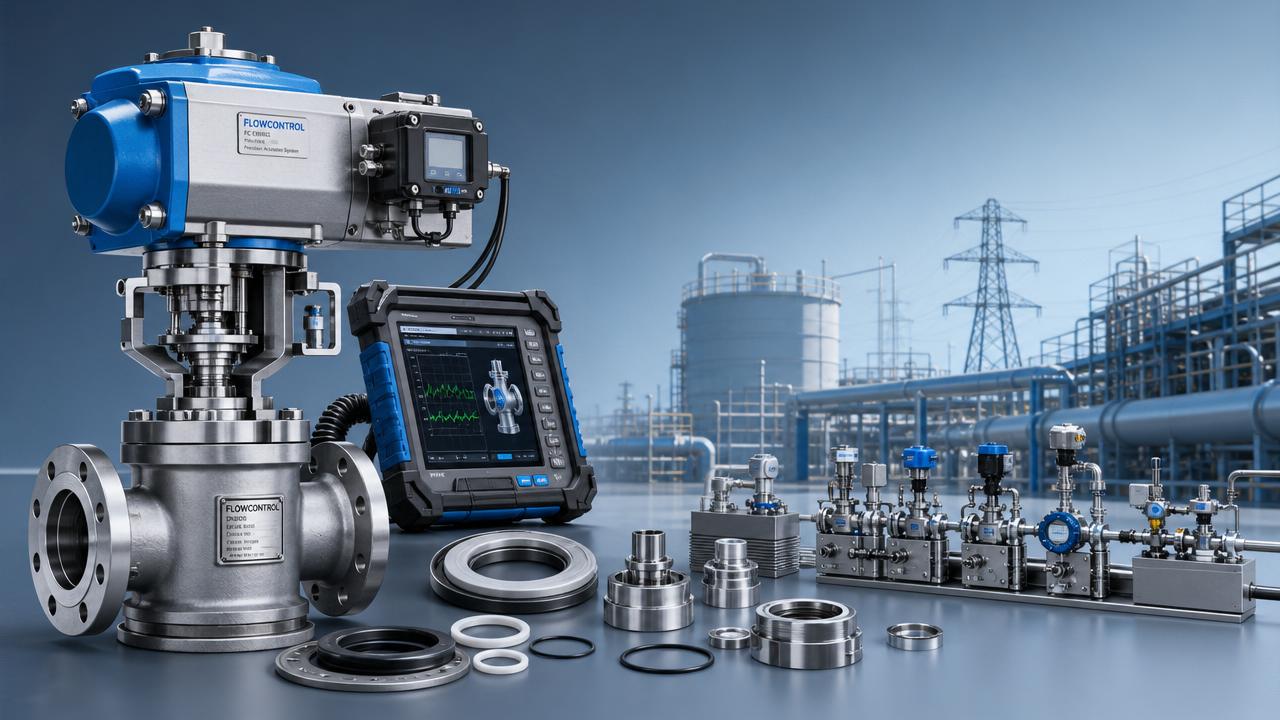
For aftermarket maintenance teams, industrial innovation is redefining valve care across complex production systems. Inspection, repair, and lifecycle planning now rely on better data, sharper tooling, and more precise replacement parts.
In refineries, power plants, water systems, chemical lines, and general manufacturing, valve reliability directly affects uptime, safety, and energy efficiency. That is why industrial innovation has moved from a strategic idea to a practical maintenance requirement.
This shift matters across the broader industrial ecosystem. It links field service with materials engineering, actuator control, sealing performance, and compliance discipline. Strong maintenance outcomes now depend on integrated thinking, not isolated repair work.
Supported by the industrial depth represented by GHTN, this article examines where industrial innovation is changing valve maintenance, what trends deserve attention, and how maintenance practices can become more reliable and cost-effective.
Valve maintenance in an industrial innovation context
Valve maintenance includes inspection, cleaning, calibration, seal replacement, trim repair, actuator service, and performance verification. In the past, much of this work was reactive and based on visible wear or unexpected failure.
Today, industrial innovation shifts maintenance toward condition awareness. Teams can detect leakage, friction changes, pressure instability, and abnormal actuation earlier, often before process performance drops below acceptable limits.
This matters because valves operate under heat, pressure, corrosive media, vibration, and cycling stress. Small defects in seats, stems, packing, or actuators can quickly become larger operational risks.
Industrial innovation also changes expectations. Maintenance is no longer judged only by repair speed. It is measured by repeatability, root-cause accuracy, documentation quality, and extension of service life.
What is driving the change
- Higher uptime targets across automated industrial lines
- Stricter environmental and fugitive emission controls
- Demand for traceable maintenance records
- Better access to precision tools and diagnostic devices
- Wider use of advanced materials and modular components
Current signals shaping valve service decisions
Several industry signals show where industrial innovation is having the strongest impact. These signals are practical, measurable, and relevant across the comprehensive industrial landscape.
These changes connect directly to GHTN’s view of industry. Performance at the component level shapes reliability at the system level. A valve repair succeeds only when materials, tolerances, tooling, and operating conditions are understood together.
Where industrial innovation is changing maintenance work
The most visible effect of industrial innovation appears in day-to-day maintenance execution. The following areas show the strongest operational transformation.
1. Inspection is becoming more data-led
Traditional inspection often depended on visual checks, manual feel, and scheduled intervals. Modern practice adds acoustic sensing, torque trending, thermal observations, and stroke-response analysis.
This makes industrial innovation valuable because maintenance teams can separate urgent defects from manageable wear. Time and labor are used more efficiently, especially during short shutdown windows.
2. Repair quality is improving through precision tooling
Valve maintenance depends heavily on surface finish, concentricity, thread integrity, and correct torque application. Precision tools reduce variability during lapping, seat restoration, packing installation, and actuator alignment.
Industrial innovation in tooling also supports repeatable documentation. Measured tolerances and calibrated equipment create more confidence in the final repair condition.
3. Materials selection is becoming more application-specific
Valves rarely fail for one reason alone. Erosion, corrosion, thermal cycling, and chemical attack often combine. Industrial innovation helps match seats, seals, coatings, and trim materials to real service conditions.
This reduces repeat failures caused by generic replacement parts. It also supports greener operation by lowering leakage, waste, and avoidable parts consumption.
4. Maintenance planning is shifting toward lifecycle control
Instead of treating every valve alike, maintenance programs now rank assets by criticality, failure history, media type, and process consequence. Industrial innovation makes this segmentation more accurate and more useful.
The result is better prioritization. Critical isolation valves, severe-service control valves, and safety-related units receive deeper attention than low-risk utility valves.
Business value across the wider industrial chain
Industrial innovation in valve maintenance creates value beyond the repair bench. It improves process continuity, protects connected equipment, and supports compliance across mechanical, electrical, and automation systems.
- Lower unplanned downtime through earlier fault detection
- Reduced energy loss from leaking or poorly tuned valves
- Longer asset life through better material matching
- Safer operation in high-pressure or hazardous services
- More reliable spare parts forecasting and inventory control
For a broad industrial platform like GHTN, this is especially relevant. Hardware components, electrical systems, and mold-driven manufacturing all depend on stable process control. Valves sit at a key intersection of those performance demands.
Typical valve maintenance scenarios influenced by industrial innovation
Industrial innovation does not affect every valve in the same way. The maintenance approach should reflect service conditions, failure mode, and operational consequence.
This scenario-based view keeps industrial innovation practical. It avoids overinvestment in low-impact tools while focusing effort where maintenance performance truly affects production stability.
Practical recommendations for stronger valve reliability
A successful maintenance program should translate industrial innovation into disciplined daily practice. The following steps are realistic and scalable across different industrial settings.
- Build a valve criticality map based on process consequence and failure history.
- Use portable diagnostic tools to confirm condition before major disassembly.
- Standardize measurement points for torque, stroke, leakage, and seat condition.
- Specify replacement materials by service media, temperature, and cycling profile.
- Maintain calibration discipline for torque tools and test equipment.
- Record repair data in a searchable digital format for trend comparison.
- Review repeated failures for root cause, not only part replacement.
Key cautions
- Do not assume newer components automatically fit older valve designs.
- Do not ignore actuator behavior when seat leakage appears inconsistent.
- Do not separate mechanical repair from electrical or pneumatic control checks.
- Do not rely only on maintenance intervals without field condition evidence.
Next steps for applying industrial innovation effectively
The most effective starting point is not a full technology overhaul. It is a targeted review of high-impact valves, common failure patterns, and available diagnostic gaps.
From there, industrial innovation can be introduced in layers. Begin with better records, precision tooling, and condition checks. Then expand toward smarter materials, actuator analytics, and deeper lifecycle planning.
GHTN’s perspective is clear: industrial strength begins with component-level precision. When valve maintenance adopts that mindset, reliability improves, service decisions become more defensible, and industrial systems gain lasting operational resilience.
For any facility seeking practical progress, the next action is simple: identify one valve population where industrial innovation can reduce repeat failures, document the results, and scale what works.
Related News