
Global value chain risks now affecting component sourcing

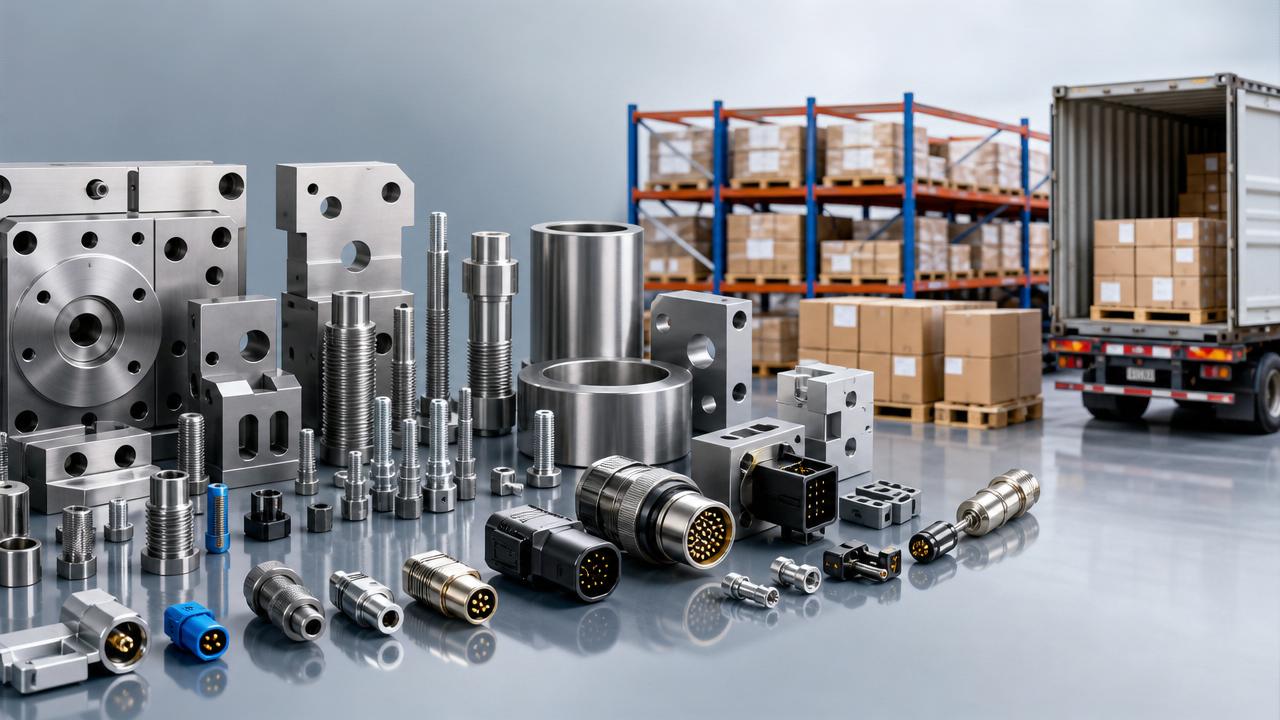
As global value chain disruptions move from headlines into procurement reality, component sourcing is becoming a critical test for business evaluators. From fasteners and electrical parts to precision tooling, risks now emerge across cost, compliance, lead time, and supplier resilience. This article examines how shifting trade conditions and manufacturing constraints are reshaping sourcing decisions, helping professionals identify vulnerabilities earlier and evaluate more reliable pathways in complex industrial supply networks.
Why a checklist approach now matters for global value chain decisions
For business evaluators, the main challenge is no longer identifying a low quoted price. The real task is determining whether a supplier can still perform when the global value chain becomes unstable. Component sourcing now involves interdependent risks: tariff shifts can alter landed cost, port congestion can stretch delivery, energy shortages can disrupt production, and new technical rules can block market entry. A checklist approach reduces blind spots by forcing a structured review of commercial, operational, and compliance factors before contracts are signed.
This is especially important in industrial categories such as fasteners, electrical connectors, pneumatic parts, molds, dies, and precision tooling. These products often look standardized on paper, yet performance in the field depends on tolerances, metallurgy, certifications, tooling repeatability, and process discipline. In a stressed global value chain, seemingly minor variations in these areas can create outsized cost and reliability problems for OEMs, distributors, and project buyers.
First-screen checklist: what to confirm before comparing suppliers
Before a detailed sourcing review begins, evaluators should first verify whether the supplier and the part category are exposed to immediate disruption signals. This first screen helps teams avoid wasting time on attractive but fragile sourcing options.
- Confirm the part’s strategic importance: Is it a bottleneck component, a safety-critical item, or a price-sensitive commodity with many substitutes?
- Check concentration risk: Does the current source depend on one factory, one region, or one raw material channel?
- Review lead-time stability: Has the supplier’s actual shipment performance matched the quoted cycle over the last two to four quarters?
- Verify compliance exposure: Are there market-specific electrical, material, environmental, or customs documentation requirements?
- Assess tooling dependency: For molds, dies, and customized precision parts, can production be transferred if a disruption occurs?
- Test cost realism: Does the quoted price rely on temporary freight assumptions, subsidies, or unsustainable payment terms?
- Evaluate communication responsiveness: During disruption, slow technical feedback often becomes a larger risk than unit price.
Core risk checklist for component sourcing in a stressed global value chain
1. Cost risk: look beyond the factory quote
A common error is evaluating only ex-works or FOB pricing. In today’s global value chain, landed cost can change quickly due to freight volatility, customs delays, insurance, packaging changes, rerouting, and exchange-rate movement. Business evaluators should request a cost breakdown that separates material, processing, tooling amortization, logistics, and compliance-related expenses. This reveals whether a low quote is structurally competitive or simply masking future increases.
For hardware and tooling sectors, raw material sensitivity is critical. Steel alloys, copper content, engineering plastics, and specialty coatings can all move unexpectedly. If a supplier cannot explain how material fluctuations are managed, the sourcing option may become unstable within one order cycle.
2. Lead-time risk: distinguish quoted capacity from dependable capacity
Lead time should be evaluated as a consistency metric, not a sales promise. Ask for actual order history, on-time shipment rates, average queue time, and the proportion of production reserved for major customers. In precision molds and custom tooling, also verify engineering approval time, sampling cycles, and rework probability. These steps often consume more time than machining itself.
A resilient supplier in the global value chain should also have a documented contingency plan for power interruptions, labor shortages, material substitution approval, and logistics rerouting. If none exists, nominal capacity may not be usable under stress.
3. Compliance risk: a growing source of hidden sourcing failure
Compliance failures increasingly disrupt sourcing even when product quality is acceptable. Electrical parts may face certification barriers, molded components may require material declarations, and industrial assemblies may be delayed due to origin-document inconsistencies. For evaluators, the key question is whether compliance capability is built into the supplier’s operating system, not handled as an afterthought.
Useful checks include document traceability, revision control, test-report validity, labeling readiness, and alignment with destination-market standards. In the global value chain, non-compliance often appears as a time loss first and a financial loss second, which makes it easy to underestimate during supplier selection.
4. Quality risk: focus on repeatability, not just first samples
One approved sample does not prove process control. For fasteners, precision tools, and industrial components, evaluators should ask how the supplier manages batch consistency, gauge calibration, incoming material verification, and corrective action closure. In mold manufacturing and toolmaking, process capability is inseparable from maintenance discipline, electrode accuracy, heat treatment control, and dimensional inspection routines.
In a disrupted global value chain, quality drift often occurs when suppliers switch sub-tier vendors or adjust process parameters to preserve margins. That is why sub-supplier visibility matters even when the direct supplier appears stable.
5. Supplier resilience risk: test adaptability under pressure
Resilience is the ability to absorb shocks without losing delivery and quality control. A practical evaluation includes financial health, management continuity, export experience, digital reporting capability, engineering depth, and the maturity of the sub-tier network. Suppliers that can share production status, inventory exposure, and exception reports quickly are often better partners in a volatile global value chain than those offering lower prices but weak visibility.
Quick evaluation table for business assessment teams
The following guide can help teams assign priority during sourcing reviews and compare suppliers on the factors most likely to change outcomes.
Scenario-based checks: what changes by component type
For standard hardware and fasteners
The main risk is assuming interchangeability. Even standard parts can vary in coating performance, hardness, dimensional tolerance, and corrosion resistance. In the global value chain, these differences become costly when alternative sources are activated quickly without validation. Check mechanical properties, plating consistency, lot traceability, and packaging integrity for export handling.
For electrical and control components
Compliance and application fit take priority. Inspect certification scope, insulation performance, connector compatibility, firmware or logic-control dependencies, and after-sales technical support. If the part interfaces with regulated systems, a sourcing shift can trigger retesting or approval delays, even when the physical form factor remains similar.
For molds, dies, and precision tooling
The biggest overlooked issue is transferability. Evaluators should confirm tool ownership terms, CAD data control, spare insert readiness, maintenance records, and whether another qualified shop can support emergency changes. In a disrupted global value chain, recovery speed often depends less on the original build price and more on how portable the tooling ecosystem is.
Common blind spots that distort sourcing evaluations
- Overweighting quote price while underweighting interruption cost, resampling cost, and line-down exposure.
- Treating certifications as static documents instead of verifying validity, market scope, and revision alignment.
- Ignoring sub-tier dependence on single material processors, coaters, or electronics sources.
- Assuming alternate factories can reproduce tolerances without equivalent tooling and process controls.
- Failing to define acceptable substitution rules before disruption occurs.
- Underestimating the value of fast engineering communication during design changes or quality incidents.
Execution plan: how to improve sourcing reliability in the global value chain
A practical response does not require rebuilding the entire supplier base at once. It requires better segmentation and earlier evidence gathering. Start by classifying components into three groups: critical and hard to replace, regulated and documentation-sensitive, and commercial items with multiple alternatives. Each group should have a different review depth and backup strategy.
Next, create a supplier evidence pack. This should include process capability data, compliance files, shipment records, major sub-tier mapping, and contingency contacts. For industrial sectors tracked by platforms such as GHTN, this type of structured intelligence is increasingly valuable because it connects sourcing decisions to real manufacturing capability rather than marketing claims.
Finally, update decision criteria. In the current global value chain, the winning source is often the one that balances acceptable cost with stronger continuity, technical transparency, and compliance readiness. Procurement, quality, engineering, and commercial evaluation should therefore use a shared scorecard instead of separate judgments that miss cross-functional risk.
What to prepare before the next supplier review
If your organization is preparing to reassess sourcing exposure, gather the information that most directly improves decision quality: current lead times versus promised lead times, full landed cost assumptions, destination-market compliance requirements, tooling ownership terms, approved substitute rules, and the supplier’s emergency production plan. These inputs make global value chain risk visible early, when action is still affordable.
For teams evaluating hardware, electrical, and mold-related supply options, the most productive next step is a focused discussion around parameters, production adaptability, documentation readiness, recovery time, and cooperation method. That conversation will reveal whether a supplier is simply available today or truly dependable in tomorrow’s global value chain.
Related News