
Greening Industrial Equipment: Which Upgrades Deliver the Best Payback?

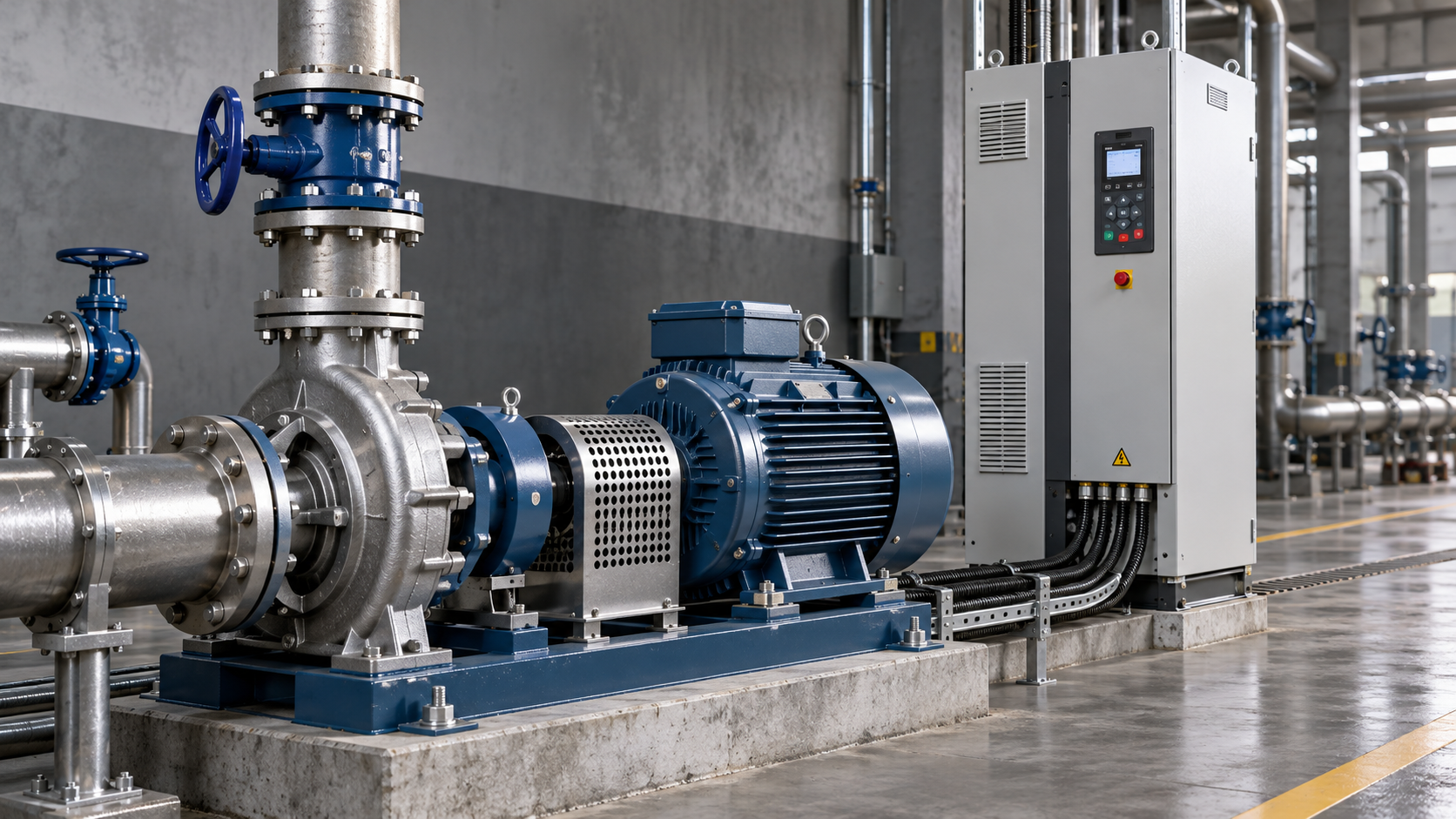
The strongest payback from greening industrial equipment often starts with eliminating avoidable operating losses: compressed-air leaks, unnecessary running hours, excessive pressure, and poorly controlled pumps or fans. Motor replacements, variable-speed drives, and heat recovery become more attractive when measured operating conditions support them. Purchasing efficient equipment before correcting the system around it can leave much of the expected saving unrealized.
A useful investment comparison connects installed cost with verified reductions in electricity, fuel, maintenance, and downtime. Operating hours matter, but so do load variation, production constraints, and remaining equipment life. A modest controls upgrade on continuously running equipment can justify investment sooner than replacing a lightly used machine with a higher-efficiency model.
Where the strongest opportunities emerge
There is no reliable universal payback period for an equipment category. The same upgrade can deliver very different returns across plants. The following comparison identifies the conditions that make each option worth evaluating and the main reason its economics weaken.
These opportunities interact. Repairing leaks changes compressor loading; reducing flow requirements changes pump selection. Establish the required service first, then size and control the equipment that supplies it.
Compressed air: savings depend on the compressor response
Leak repair is a practical starting point where the air network remains pressurized for long periods. Leaks at couplings, hoses, valve assemblies, and cylinder seals create demand without contributing to production. Air consumption during a confirmed production shutdown helps reveal avoidable demand, although essential purge flows and other legitimate continuous uses must be separated from leakage.
The financial calculation needs more than an estimated leak flow. Electricity savings depend on how compressor controls respond after demand falls. A machine that spends longer unloaded can still draw substantial power. Sequencing adjustments, revised pressure bands, or shutting down an unnecessary compressor may be needed to convert reduced demand into lower electricity consumption.
Pressure reduction requires measurements at the application, especially during peak demand. A high compressor discharge setting sometimes compensates for clogged filters, undersized piping, or restrictive fittings. Lowering the setting without correcting those restrictions can slow pneumatic cylinders or interrupt production. Repairing the pressure drop first creates room to reduce supply pressure while preserving required force and cycle time.
Persistent low pressure at one workstation does not automatically justify raising pressure throughout the plant. Local restrictions or short demand peaks deserve investigation. Storage near an intermittent load can help cover peaks, but it does not compensate for insufficient average supply capacity.
Variable-speed drives: buy against a load profile
A variable-speed drive has a compelling application when a centrifugal pump or fan runs at fixed speed while a valve or damper restricts output. Reducing speed changes the work performed by the equipment and avoids some losses associated with that restriction. The opportunity grows when reduced demand persists for a substantial share of operating hours.
Motor nameplate power alone cannot establish the saving. A useful assessment records electrical input, flow, pressure, operating time, and the process requirement across representative production conditions. For pumps, the system curve matters: substantial static head limits the extent to which speed can fall while maintaining useful flow. Minimum flow, cooling, lubrication, and resonance restrictions also constrain operation.
The familiar relationship between speed and power for centrifugal equipment is useful for screening, but applying it directly to every installation overstates precision. Actual savings depend on system resistance, equipment efficiency, and the permitted control range. Positive-displacement equipment requires a different assessment because torque and pressure behavior differ.
The installed quotation should cover the drive, enclosure, controls integration, commissioning, and any required electrical mitigation. Existing motors need assessment for insulation stress, bearing currents, and cooling at reduced speed. Harmonics and cable length can affect installation requirements. Bypass arrangements deserve consideration where continued operation during a drive fault has material production value.
A drive on equipment that runs close to full speed throughout production offers limited speed-related savings and adds its own losses. In that situation, correcting oversizing, selecting a better operating point, or improving scheduling deserves comparison before adding speed control.
Motor replacement: separate planned renewal from early retirement
Higher motor efficiency does not automatically justify removing a serviceable motor. Electricity savings arise from the difference in input power at the same useful shaft output. That difference must be evaluated at the actual load, rather than inferred solely from rated efficiency or motor size.
The economic comparison changes when replacement is already necessary. At failure or scheduled renewal, the relevant investment is often the incremental installed cost of the more efficient option compared with an acceptable standard replacement. For early retirement, the project must recover the full replacement cost, installation work, and production interruption, after accounting for any credible residual value.
Mechanical compatibility can outweigh a small purchase-price difference. Frame size, shaft dimensions, mounting, enclosure protection, duty rating, starting torque, and available electrical supply all affect the installed result. A motor with a slightly different operating speed can alter pump or fan output, changing energy use and potentially eroding the expected efficiency benefit.
Oversizing also deserves careful interpretation. A lightly loaded motor is not sufficient evidence that a smaller replacement will work: acceleration, transient loads, and process peaks still matter. Measured demand over a representative cycle provides a stronger basis than a single current reading.
Heat recovery needs a dependable destination
Recoverable heat becomes financially useful only when it displaces purchased energy. A compressor, furnace, or cooling circuit may release heat continuously, but the recoverable temperature must suit the receiving process. Low-temperature heat is better matched to preheating or suitable space-heating duties than to processes requiring much higher temperatures.
Annual energy quantities can conceal a timing mismatch. A source operating throughout the year paired with winter-only heating demand leaves much of the potential unused. Storage can bridge some mismatches, but adds cost, heat losses, space requirements, and maintenance. A nearby process-water demand with a matching schedule offers a clearer basis for valuation.
Estimate savings from delivered useful heat and the efficiency of the heating system it replaces. Subtract pumping or fan energy and account for heat-exchanger fouling, cleaning access, corrosion compatibility, and connecting pipework. Recovery arrangements must also preserve the source equipment’s required cooling and safe operating conditions.
Where heat recovery and heating-system replacement are both proposed, calculate their combined effect. Heat already displaced by recovery cannot also be credited as fuel saved by a more efficient boiler.
Build the payback calculation around installed performance
Simple payback equals net installed investment divided by annual net operating savings. Net installed investment includes engineering, equipment, installation, controls, commissioning, and production interruption, less confirmed incentives or recoverable value. Annual net savings deduct additional maintenance, consumables, software charges, and auxiliary energy from the avoided operating costs.
Use marginal energy costs that the project will actually avoid. An average electricity bill rate can misrepresent savings where fixed charges remain unchanged. Demand-charge reductions require evidence that the upgrade lowers the relevant billing peak; a lower annual consumption figure alone does not establish that benefit.
The financial model should distinguish three types of value:
- Measured operating savings: reduced electricity or fuel consumption supported by a baseline and a defined operating schedule.
- Maintenance changes: specific differences in service tasks, replacement parts, and labor, including new obligations introduced by the upgrade.
- Production-related value: improved availability, capacity, or quality supported by operating evidence. Keep uncertain benefits visible rather than embedding them in the energy-saving estimate.
Simple payback is useful for screening, but it ignores cash flows after recovery and the timing of future expenditure. Projects with different service lives, major overhaul requirements, or residual values need a discounted cash-flow comparison. An inexpensive retrofit with frequent replacement requirements can become less attractive over the same evaluation period.
Test the assumptions most likely to change the result: operating hours, energy prices, load profile, installation cost, and achievable savings. A project that only clears the investment threshold at maximum utilization is exposed to production changes. Presenting a realistic range makes that exposure visible without assigning false precision.
Make the quotation and acceptance test comparable
Comparable proposals need a common operating requirement. Define the required flow, pressure, temperature, cycle time, or shaft output; the expected duty profile; and the electrical and physical installation conditions. Otherwise, a cheaper quotation may reflect a different service level or exclude work essential to achieving the saving.
Request a clear boundary for the quoted energy performance. A compressor package figure, for example, may not include downstream treatment losses or the behavior of other machines in the network. A pump assessment should identify whether the claim covers the motor, drive, pump, and control arrangement together. Package efficiency and whole-system savings answer different questions.
Acceptance criteria should connect energy consumption to useful production. Lower power during reduced output does not prove improved efficiency. Compare equivalent operating conditions, or normalize results for relevant changes such as production volume, ambient temperature, and product mix. Retain absolute energy measurements as well, since an efficiency ratio can improve while total consumption rises.
Metering arrangements belong in the project scope before installation. Establish the baseline, measurement points, operating records, and responsibility for commissioning adjustments. For interacting projects, update the baseline after each completed change so the next proposal does not claim savings already captured.
The purchase sequence should follow those dependencies: remove avoidable demand, establish the revised duty, then commit to equipment capacity and controls. This reduces the chance of financing an efficient machine that remains oversized for the work it actually needs to perform.