
Industrial Components Selection Guide: Key Specs, Materials, and Fit for Heavy-Duty Use

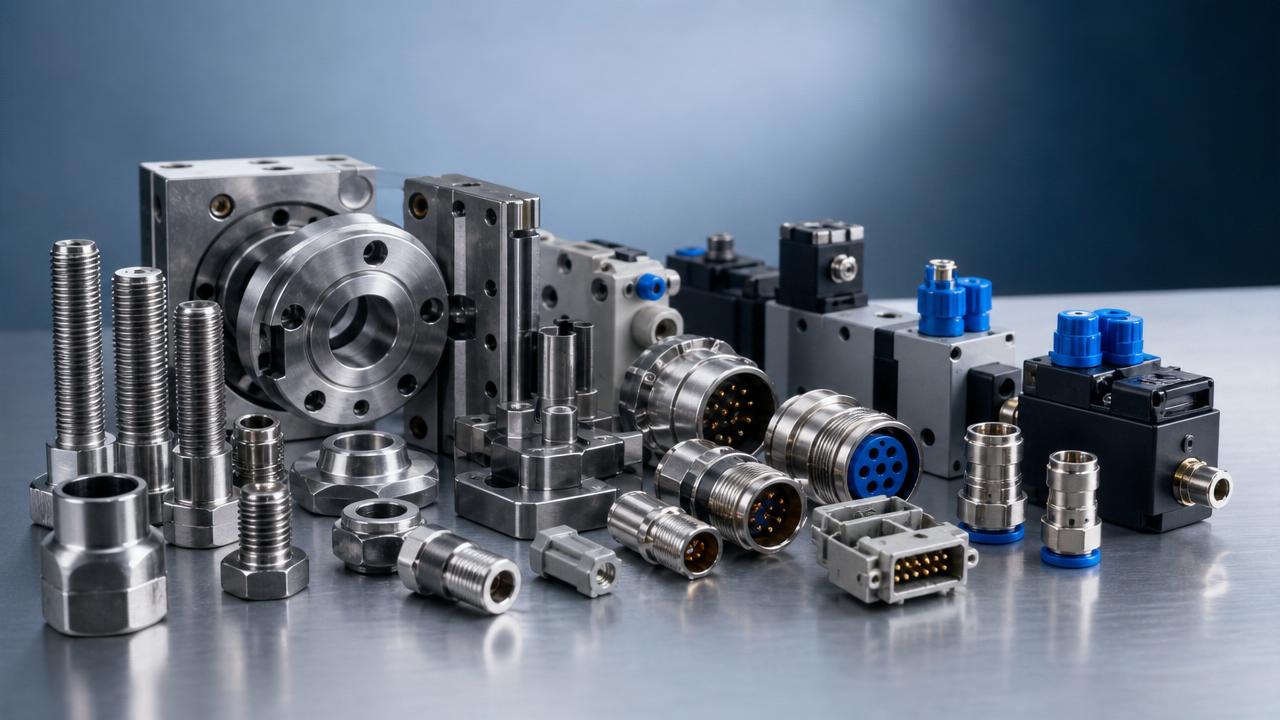
Heavy-duty operations rarely fail because a part looks wrong on paper. Problems usually begin when industrial components are selected without fully matching load, duty cycle, environment, and service expectations.
That is why component choice matters across tooling, electrical systems, fastening assemblies, molds, and pneumatic lines. In demanding settings, a small mismatch can shorten equipment life, increase stoppages, and raise total ownership cost.
A practical selection process focuses on measurable specifications, realistic material behavior, and application fit. It also helps compare suppliers and product categories with more confidence, especially in complex global sourcing environments.
Why industrial components deserve closer evaluation
The term covers a wide field. It includes fasteners, connectors, switches, circuit protection devices, air cylinders, valves, tooling parts, mold elements, and many supporting mechanical items.
These parts may seem ordinary compared with complete machines. Yet they often define system reliability. A single weak point can stop a production line, reduce safety margins, or create recurring maintenance work.
Current market conditions make selection more important. Supply chains are broader, material grades vary by source, and documentation quality is not always consistent across regions or product families.
For that reason, technical evaluation now goes beyond catalog comparison. It requires reading specs in context and checking whether a component can perform under real operating stress.
Start with operating demands, not catalog dimensions
Dimensions are only the starting point. The better question is how the part behaves during continuous use, shock loading, vibration, heat exposure, contamination, and maintenance cycles.
In electrical applications, current rating alone is incomplete. Temperature rise, insulation class, ingress protection, switching frequency, and connection stability all influence fit.
In fastening systems, nominal size is not enough. Clamp load, tensile strength, thread engagement, coating performance, and joint movement determine whether the assembly will hold.
For pneumatic products, bore size or port size tells only part of the story. Pressure range, seal wear, air quality tolerance, actuation speed, and cycle life are often more decisive.
Core specification areas to review
- Mechanical load, including static, dynamic, shock, and fatigue conditions.
- Operating temperature, peak exposure, and thermal cycling.
- Chemical contact, humidity, dust, washdown, and corrosion exposure.
- Duty cycle, service interval, and expected maintenance access.
- Tolerance, sealing, mounting limits, and compatibility with adjacent parts.
- Required standards, certifications, and traceability documentation.
Material choice shapes service life
Material selection is often where heavy-duty performance is won or lost. Two industrial components may share the same geometry but behave very differently in the field.
Carbon steel remains common because it balances cost and strength. It suits many structural and fastening uses, especially where coatings and controlled environments limit corrosion risk.
Stainless steel is preferred when moisture, chemicals, or sanitation matter. However, not every stainless grade performs equally under chloride exposure, galling risk, or high heat.
Aluminum offers weight reduction and good corrosion resistance. It is useful where mass matters, though wear resistance and load-bearing limits must be checked carefully.
Engineering plastics and elastomers are also important industrial components in seals, insulators, guides, and valve parts. Their performance depends heavily on temperature, media compatibility, and aging behavior.
Fit changes across product categories
Industrial components are not evaluated the same way in every category. The decision logic shifts depending on whether the part transfers force, controls energy, seals pressure, or shapes material.
Electrical and control hardware
Circuit breakers, switches, and connectors need more than nominal compatibility. Contact durability, insulation integrity, arc behavior, and enclosure protection are often decisive under heavy-duty conditions.
Fasteners and joining elements
Bolts, screws, anchors, and rivets should be chosen around joint design. Surface coating, preload retention, vibration resistance, and substrate compatibility matter as much as strength class.
Pneumatic systems
Air cylinders, valves, and compressors are strongly affected by contamination, moisture, lubrication practice, and cycle frequency. Seals, internal finishes, and response consistency deserve close review.
Molds and tooling
Injection molds, die casting molds, and stamping tools depend on steel grade, heat treatment, hardness, wear behavior, and repairability. Here, material performance directly affects output quality and tool life.
What the market is paying attention to
Several trends are reshaping how industrial components are compared. One is the move toward longer service intervals, which raises the value of proven fatigue performance and stable material quality.
Another is tighter compliance pressure. Buyers increasingly ask for clearer standards alignment, test records, and manufacturing consistency, especially for components used in exported equipment.
There is also more interest in component-level data. Technical teams want searchable information on product features, process capability, and application context rather than generic catalog claims.
This is where industry portals such as GHTN add value. By connecting tools, electrical products, molds, fasteners, and pneumatic categories, the platform helps make cross-category comparison more practical and informed.
A practical way to compare options
A sound review process usually starts with failure mode thinking. Instead of asking which part is cheapest, ask what failure would look like, how fast it would appear, and what it would interrupt.
Then compare industrial components against the actual operating window, not the ideal one. Peak load, start-stop cycles, contamination, and poor maintenance conditions should all be included.
- Map the component to the full system, including mating parts and service access.
- Check whether ratings are continuous, intermittent, or conditional.
- Review material grade details instead of relying on family names alone.
- Ask for test evidence tied to relevant loads or environments.
- Compare coating, sealing, and surface treatment performance realistically.
- Consider replacement lead time and batch-to-batch consistency.
This approach improves sourcing quality without turning selection into overengineering. It also creates a clearer basis for supplier discussion and internal approval.
Where better selection creates business value
The right industrial components reduce more than visible failures. They can lower unplanned downtime, stabilize production quality, and reduce hidden costs in rework, inspection, and spare inventory.
In exported equipment or distributed manufacturing networks, better component decisions also improve consistency. That matters when systems must perform similarly across different climates, operators, and maintenance routines.
For multi-category sourcing, the benefit is even broader. Shared evaluation logic across electrical parts, tooling items, fasteners, and pneumatic hardware helps standardize decisions and shorten future assessments.
Turning the guide into the next decision
The most useful next step is to build a short evaluation matrix around load, environment, material, life expectancy, standards, and supplier evidence. That turns product comparison into a repeatable method.
When reviewing industrial components for heavy-duty use, focus on the conditions that create failure, not only the features that look acceptable in a catalog. Better fit usually comes from sharper questions.
A broader view across categories can also help. Tracking market updates, product knowledge, and technical trends through resources such as GHTN makes it easier to compare options with stronger context and less guesswork.
In practice, durable selection starts with clarity: define the application, verify the real stresses, narrow material choices, and confirm the evidence behind performance claims before moving forward.
Related News