
Mechanical Engineering Applications Explained: Where Design Calculations Matter Most

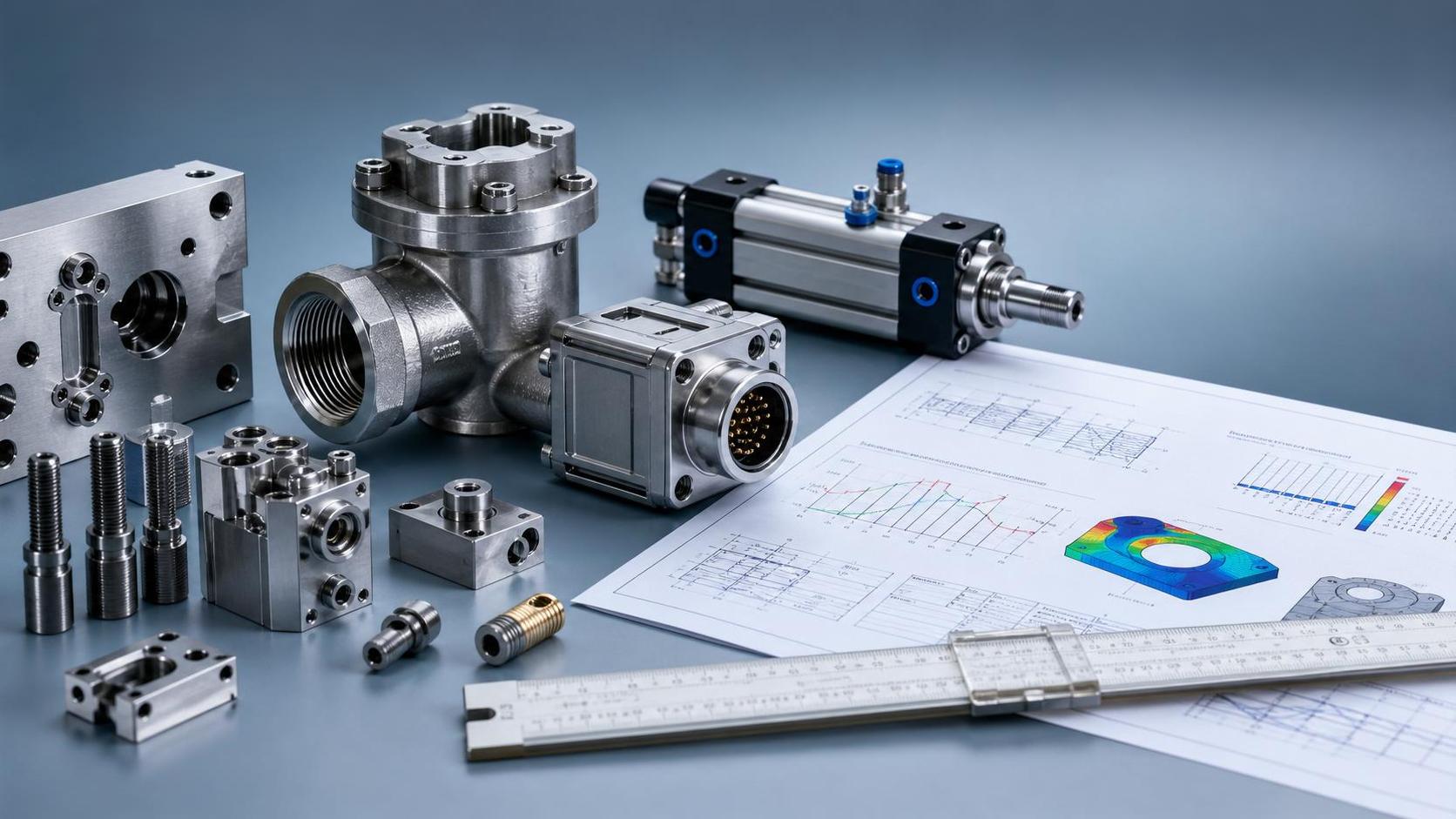
Why do mechanical engineering applications matter so much in industrial products?
Mechanical engineering applications sit behind many products that look simple on the surface.
A bolt, mold insert, valve body, connector housing, or compressor part all depend on design calculations.
Those calculations answer practical questions.
Will the part carry the load safely?
Will it deform under heat, vibration, or pressure?
Can it be manufactured within realistic tolerances and cost targets?
In real production, performance problems rarely come from one issue alone.
They usually come from weak assumptions made early in design.
That is why mechanical engineering applications matter most before tooling is cut and parts are sourced.
Across hardware, tooling, electrical assemblies, fasteners, and pneumatic systems, design calculations shape reliability and service life.
They also influence maintenance frequency, scrap rate, and supplier consistency.
For anyone comparing industrial components, understanding these basics makes technical claims easier to judge.
That is one reason industry platforms such as GHTN organize product knowledge around application, process, and performance context.
Where do design calculations matter most in everyday mechanical engineering applications?
The short answer is that they matter anywhere a part must survive real operating conditions.
Still, some areas show their importance more clearly than others.
- Fasteners and anchors need tensile, shear, preload, and fatigue checks.
- Injection molds and stamping tools depend on thermal balance, wear allowance, and stiffness.
- Pneumatic cylinders and valves require pressure, seal, flow, and cycle-life calculations.
- Cutting tools rely on force, heat, hardness, and chip evacuation considerations.
- Electrical enclosures and connector parts often need creep, fit, and heat dissipation analysis.
A common misunderstanding is that only large machinery needs engineering analysis.
In practice, small components often fail faster because their tolerances are tighter.
A minor thread change can alter clamp force.
A small cavity imbalance can distort molded parts.
A slightly undersized air passage can reduce actuator speed across an automation line.
Mechanical engineering applications are therefore not limited to textbook machines.
They appear throughout the hardware and tooling supply chain, especially where durability and repeatability matter.
Which calculations usually drive design decisions first?
When engineers evaluate a design, they usually start with the loads and the environment.
That starting point narrows the material, geometry, and process options quickly.
The table below summarizes where the first calculations often focus.
Notice that the calculation focus changes with the product function.
Even so, the logic stays consistent.
Mechanical engineering applications translate field conditions into measurable design limits.
That makes comparison more grounded than relying on generic durability claims.
How can you tell whether a component really needs deeper engineering review?
A useful rule is to look for consequence, variability, and operating stress.
If failure would stop production, create safety risk, or trigger rework, a deeper review is justified.
The same applies when the application sees frequent cycles, temperature swings, or aggressive media.
In actual sourcing decisions, these warning signs often appear early.
- The part has a tight tolerance but no clear tolerance stack explanation.
- Material grades are listed, but heat treatment or hardness ranges are missing.
- Load capacity is claimed without test conditions or safety factor guidance.
- Cycle-life numbers are provided, yet lubrication, pressure, or speed conditions are unclear.
- Tooling life estimates look attractive, but maintenance intervals are not defined.
This is where structured industry information becomes useful.
On a platform like GHTN, application-based content helps connect product categories to the real questions behind performance.
Instead of viewing a part only by catalog description, it becomes easier to check process limits and technical fit.
What mistakes are most common when people underestimate mechanical engineering applications?
One common mistake is treating material selection as the whole answer.
A stronger material does not automatically fix poor geometry, poor cooling, or poor assembly conditions.
Another mistake is ignoring tolerance interaction.
Individual dimensions may pass inspection, yet the assembled system still binds or leaks.
Thermal effects are also underestimated.
This happens often in molds, connectors, housings, and pneumatic units near heat sources.
Mechanical engineering applications matter here because temperature changes alter fit, pressure, wear, and service life.
There is also a cost-related misconception.
Some assume engineering review slows projects down.
More often, it prevents redesign loops, emergency replacement, and quality disputes later.
That makes the total project cycle more predictable, not less.
When comparing options, what should you check beyond price and basic specifications?
Price and nominal dimensions are only the starting point.
A better comparison looks at how the part performs inside its intended system.
For mechanical engineering applications, the most useful checks are usually these:
- Confirm the actual load case, not just the maximum catalog number.
- Review tolerances as an assembly condition, not as isolated dimensions.
- Match material data to operating temperature, media exposure, and cycle count.
- Check whether maintenance assumptions affect service life claims.
- Ask how manufacturing process variation is controlled from batch to batch.
These questions are especially important in cross-category decisions.
A tooling choice can affect downstream fastener fit.
A pneumatic valve selection can influence machine timing and component wear.
A connector housing design can change thermal behavior in a compact assembly.
This is why good industry research often combines technical content, process context, and market comparison rather than looking at one data sheet alone.
So what is the smartest next step if you are still learning these mechanical engineering applications?
Start by mapping the application before comparing products.
List the load, motion, temperature range, tolerance sensitivity, and expected service interval.
That simple step makes technical information far easier to interpret.
Then review whether the available data answers the real design questions.
If it does not, the gap usually points to the real risk.
Mechanical engineering applications are not just theoretical formulas.
They are the framework that explains why one component lasts, another fails early, and a third becomes expensive to maintain.
For practical research, it helps to compare components through application notes, manufacturing context, and technical trends together.
That approach is especially useful across industrial tools, molds, electrical components, fasteners, and pneumatic products, where design decisions are closely linked.
A clear next move is to build a short evaluation checklist for the specific product area, then compare options against real operating conditions.
That keeps the discussion focused on fit, risk, cost, and long-term performance instead of surface-level specifications alone.
Related News
- industrial components
- electrical components
- fasteners
- pneumatic components
- die casting
- material selection
- mechanical engineering
- cutting tools
- Industrial Tools
- Tooling
- Switches
- Molds
- Injection Molds
- Die Casting Molds
- Stamping Tools
- Bolts
- Screws
- Anchors
- Rivets
- Pneumatic Cylinders
- Valves
- heat treatment
- mechanical engineering applications