
Mechanical engineering bottlenecks that reduce output over time

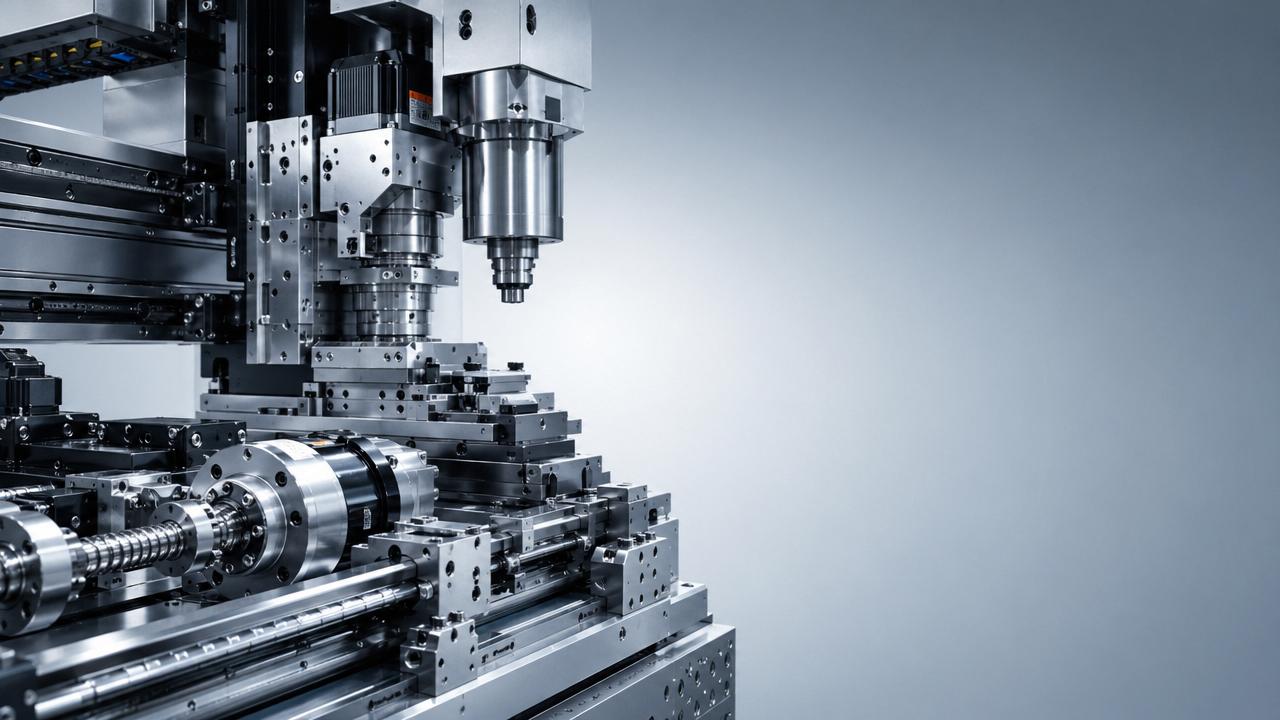
In today’s competitive industrial landscape, hidden mechanical engineering bottlenecks can quietly erode output, raise operating costs, and weaken long-term profitability. For business decision-makers, identifying these slow-building constraints is essential to protecting production efficiency and supply chain resilience. This article explores how persistent design, tooling, and process limitations develop over time—and what manufacturers can do to address them before they impact performance at scale.
For leaders responsible for plant performance, the central issue is not whether mechanical engineering bottlenecks exist, but how long they have been silently reducing output before appearing on a dashboard. In many factories, the most damaging constraints do not arrive as sudden failures. They emerge gradually through worn tooling, outdated machine design assumptions, repeated tolerance drift, weak maintainability, and production systems that can no longer support current throughput targets.
The business impact is cumulative. A small decline in cycle stability, a modest increase in setup time, or a recurring alignment problem may seem manageable in isolation. Over months or years, however, these mechanical engineering limitations can reduce effective capacity, increase scrap, consume maintenance budgets, and undermine delivery performance. For enterprise decision-makers, the priority is to recognize where technical friction is turning into financial loss.
Why output declines over time even when equipment is still running
One of the most common executive misunderstandings is equating uptime with productivity health. A machine may still operate daily, yet deliver less value with every passing quarter. Output falls over time when the original mechanical design margin is consumed by wear, higher product complexity, increased line speed demands, or process variation that was never engineered out.
Many production assets were designed for a specific operating window. As order mix changes, quality expectations tighten, or automation levels rise, those same assets may be forced beyond their ideal conditions. Bearings, guideways, pneumatic components, spindles, clamps, feed systems, and precision fixtures all begin to show hidden limits. The result is not always catastrophic breakdown. More often, it is slower throughput, more intervention, and reduced consistency.
This is where mechanical engineering becomes a strategic concern rather than a maintenance detail. When physical systems can no longer support process goals, output losses become structural. At that stage, adding labor, increasing overtime, or pressuring operators rarely solves the problem. The constraint is embedded in the equipment and process architecture itself.
Which mechanical engineering bottlenecks matter most to decision-makers
Executives and plant leaders typically care about a narrow set of outcomes: capacity, cost per unit, delivery reliability, asset life, and return on capital. The most important mechanical engineering bottlenecks are therefore the ones that directly affect these measures. Not every technical issue deserves urgent investment, but several categories consistently create long-term production drag.
Tooling wear and degradation are among the most common causes. Cutting tools, dies, molds, punches, fixtures, and forming surfaces degrade gradually. As wear increases, cycle time often rises, rework becomes more frequent, and dimensional consistency worsens. Because this deterioration is progressive, many organizations normalize it instead of quantifying its business cost.
Poor maintainability in equipment design is another major bottleneck. When lubrication points are hard to access, alignment takes too long, or replacement parts require excessive disassembly, maintenance labor increases and planned downtime becomes inefficient. Over time, difficult-to-maintain systems receive inconsistent care, accelerating performance decline.
Tolerance stack-up and mechanical misalignment also reduce output steadily. In high-volume production, a small deviation in fixture position, shaft alignment, or guide rail precision can create recurring stoppages and quality defects. These issues often trigger operator workarounds, which temporarily preserve output while masking the root cause.
Legacy machine architecture can become a hidden cap on productivity. Older equipment may still function, but its frame rigidity, drive system response, thermal stability, or control integration may no longer support modern production requirements. The machine is technically available, yet economically obsolete in key areas.
Underengineered changeover systems deserve more attention than they usually receive. As manufacturers move toward smaller batch sizes and higher product variation, mechanical setups that once seemed acceptable become serious constraints. Excessive manual adjustment, weak repeatability, and fixture complexity can erode total output more than a single dramatic machine failure.
How these bottlenecks turn into financial and operational risk
Mechanical engineering bottlenecks rarely stay confined to the shop floor. They create ripple effects across planning, procurement, customer service, and capital allocation. For decision-makers, the real question is not only what is technically wrong, but how those mechanical weaknesses alter enterprise performance.
First, hidden constraints distort capacity planning. If a line is assumed to run at nameplate performance but actually loses throughput through micro-stoppages, setup delays, or repeat quality checks, production schedules become unrealistic. This increases expediting costs, delivery risk, and dependence on buffer inventory.
Second, gradual output loss raises unit cost in ways that are often underreported. More machine time is consumed per good part. More labor is used to monitor unstable equipment. More spare parts are ordered reactively. More energy is wasted in inefficient cycles. These losses may be spread across multiple cost centers, making the root issue appear smaller than it is.
Third, chronic bottlenecks reduce strategic flexibility. A factory with mechanically constrained assets cannot respond well to demand surges, design changes, or tighter compliance requirements. What appears to be an engineering problem becomes a market problem, because the business loses speed, reliability, and customer confidence.
Finally, unresolved mechanical issues increase capital risk. Companies may approve new equipment purchases before fully understanding whether current output losses stem from avoidable engineering bottlenecks. In some cases, targeted redesign, better tooling strategy, or improved component selection can restore significant capacity at far lower cost than full replacement.
How to tell whether the problem is maintenance, process control, or mechanical design
This distinction matters because the wrong diagnosis leads to wasted budget. Many organizations treat all output decline as a maintenance problem, even when the real cause lies in equipment design or process mismatch. A useful decision framework begins with pattern recognition.
If performance improves temporarily after routine service but degrades again quickly, the issue may be structural rather than purely maintenance-related. If operators rely on constant manual adjustment to maintain acceptable quality, the system may lack sufficient mechanical repeatability. If output drops when product variation increases, changeover design or fixture strategy may be the limiting factor.
Another strong indicator is the gap between technical availability and productive output. A machine that records acceptable uptime but still misses throughput targets often suffers from hidden mechanical engineering constraints. These can include vibration, thermal drift, clamping inconsistency, tool deflection, poor chip evacuation, inadequate stiffness, or wear-prone motion systems.
Decision-makers should ask a small set of practical questions. Are breakdowns the main issue, or is the real loss coming from slow cycles and unstable quality? Is the line failing at peak load, or under normal conditions? Are the same symptoms repeating across shifts and operators? Do workarounds depend on individual skill? These questions help distinguish isolated maintenance gaps from systemic engineering limitations.
What a high-value bottleneck assessment should include
For business leaders, the goal is not an abstract engineering report. It is a decision-ready view of where output is being lost, what can be fixed, and what return improvement actions may deliver. A useful assessment should connect physical causes to measurable business outcomes.
Start with throughput loss mapping. Identify where actual cycle time, changeover time, quality yield, and stoppage frequency deviate from expected performance. Focus especially on recurring small losses, because they often signal mechanical friction that has become normalized.
Next, review critical wear points and tooling life behavior. Look beyond failure events and analyze degradation curves. Which tools, molds, fixtures, or components lose effectiveness gradually? How does that decline affect scrap, speed, and intervention frequency? Understanding wear economics often reveals quick, high-impact improvement opportunities.
Then assess mechanical repeatability and alignment stability. If a process depends on micron-level or tightly controlled positioning, small shifts can create large cumulative losses. Repeatability studies, vibration analysis, thermal behavior checks, and fixture validation can expose bottlenecks that routine inspection misses.
A strong review should also examine maintainability and access design. If preventive tasks are cumbersome, they will eventually be delayed or shortened. Engineering teams should document how long key service actions take, how many steps are involved, and whether design changes could reduce downtime significantly.
Finally, compare current operating demands with the original equipment design envelope. Many long-term output problems are caused by using machines in applications they were not optimized for. The issue may not be poor maintenance at all, but a mismatch between asset design and today’s production reality.
Where investment usually delivers the best return
Not every bottleneck requires a major capital project. In fact, some of the strongest returns come from focused interventions that restore mechanical performance before failure becomes severe. For decision-makers, the best investments are often the ones that improve output reliability, not just maximum speed.
Tooling optimization is frequently one of the fastest-win areas. Better substrate materials, coating choices, cooling design, wear monitoring intervals, and regrind strategies can extend useful life while stabilizing quality. In mold and precision component environments, small tooling improvements often produce outsized gains in consistency and throughput.
Fixture and clamping redesign is another high-value lever. If parts require repeated adjustment, inconsistent positioning, or operator judgment, redesigning the mechanical holding system can reduce setup time and defect risk simultaneously. This is especially important in mixed-product manufacturing environments.
Motion system upgrades can also be justified when wear, backlash, or rigidity limits are restricting performance. Replacing guide systems, drive elements, or structural subassemblies may provide substantial capacity recovery without replacing the full machine. The key is to evaluate the output gain against both downtime reduction and quality improvement.
Component standardization often improves long-term resilience. Using robust fasteners, precision mechanical tools, and better-matched industrial components reduces variation in maintenance quality and spare parts availability. For global operations, standardization also supports procurement efficiency and lowers the risk of prolonged disruption.
Design-for-maintenance modifications deserve more executive attention. Relocating access points, simplifying disassembly, improving lubrication systems, or modularizing wear components may seem minor. Over the life of an asset, however, these changes can reduce planned downtime, improve maintenance compliance, and preserve throughput more effectively than reactive repairs.
How to prioritize action across multiple plants or production lines
Large manufacturers rarely face just one bottleneck. They manage portfolios of assets, each with different age profiles, product mixes, and maintenance maturity. Prioritization should therefore be based on business impact, not engineering visibility alone.
A practical method is to rank bottlenecks using five criteria: output loss severity, frequency of occurrence, effect on quality, recovery cost, and strategic importance of the affected line. A recurring issue on a high-margin or customer-critical line should outrank a more dramatic problem in a low-impact area.
Leaders should also distinguish between restoration projects and capability projects. Restoration restores lost performance in existing assets. Capability investment expands what the system can do. Mixing the two often causes confusion. If current output is declining due to mechanical engineering bottlenecks, restoration should usually come first, because it clarifies the true baseline before expansion decisions are made.
Cross-functional review is essential. Operations, engineering, maintenance, quality, and sourcing should all contribute to bottleneck evaluation. Mechanical problems often look different from each department’s perspective, and the best investment decisions come from combining technical evidence with cost and customer impact.
Why supply chain and component strategy are part of the solution
Mechanical engineering performance is not determined only by in-house design. It is also shaped by the quality, consistency, and suitability of the components and tooling that enter the production system. This is why supplier intelligence matters.
When manufacturers rely on inconsistent fasteners, low-durability wear parts, poorly specified pneumatic components, or suboptimal mold tooling inputs, output degradation accelerates. Seemingly minor component decisions can alter stiffness, fatigue life, sealing performance, thermal behavior, and maintainability. Over time, these decisions affect total productive capacity.
For decision-makers, this creates a strong case for deeper technical sourcing. Partnering with trusted industrial networks, precision tool specialists, and component experts can improve both selection quality and long-term operating resilience. The value is not limited to procurement savings. It includes better lifecycle performance, more predictable maintenance, and stronger alignment between engineering intent and production reality.
This is especially relevant in global manufacturing, where replacement part lead times, compliance requirements, and tool compatibility can vary significantly by region. A stronger component strategy helps businesses reduce not only cost, but vulnerability.
What leaders should do next
If output has been slipping gradually, decision-makers should resist the temptation to treat it as normal aging. Declining performance is often a sign that mechanical engineering bottlenecks have moved from isolated technical issues to systemic business constraints. The earlier they are identified, the more options the business retains.
Begin with data that reflects real production behavior, not just equipment availability. Look for recurring losses in cycle stability, setup time, quality consistency, and intervention frequency. Then connect these symptoms to physical causes: wear, rigidity limits, alignment drift, poor maintainability, outdated tooling, or design mismatch.
Next, separate quick-return actions from longer-horizon capital needs. Some bottlenecks can be relieved through tooling upgrades, fixture redesign, standardization, or maintainability improvements. Others will justify deeper retrofits or replacement. What matters most is making these decisions based on quantified output recovery and risk reduction.
Mechanical engineering is often treated as a technical support function. In reality, it is a major determinant of how much capacity a business can monetize over time. For companies seeking stronger margins, better delivery performance, and greater resilience, addressing slow-building mechanical constraints is not optional. It is a strategic operating discipline.
In the end, the factories that sustain output are rarely the ones with the newest assets alone. They are the ones that understand how physical systems age, where hidden friction accumulates, and how to intervene before small losses become structural limitations. That is the practical path to protecting productivity and building durable industrial competitiveness.
Related News