What Slows ROI in Industrial Automation Solutions?

Industrial automation solutions promise faster throughput and leaner operations, yet many companies struggle to realize expected returns. For business decision-makers, ROI often slows not because of the technology itself, but because of hidden barriers in integration, component selection, compliance, and execution. Understanding where these delays emerge is essential to building smarter automation strategies that improve performance, control costs, and deliver measurable long-term value.
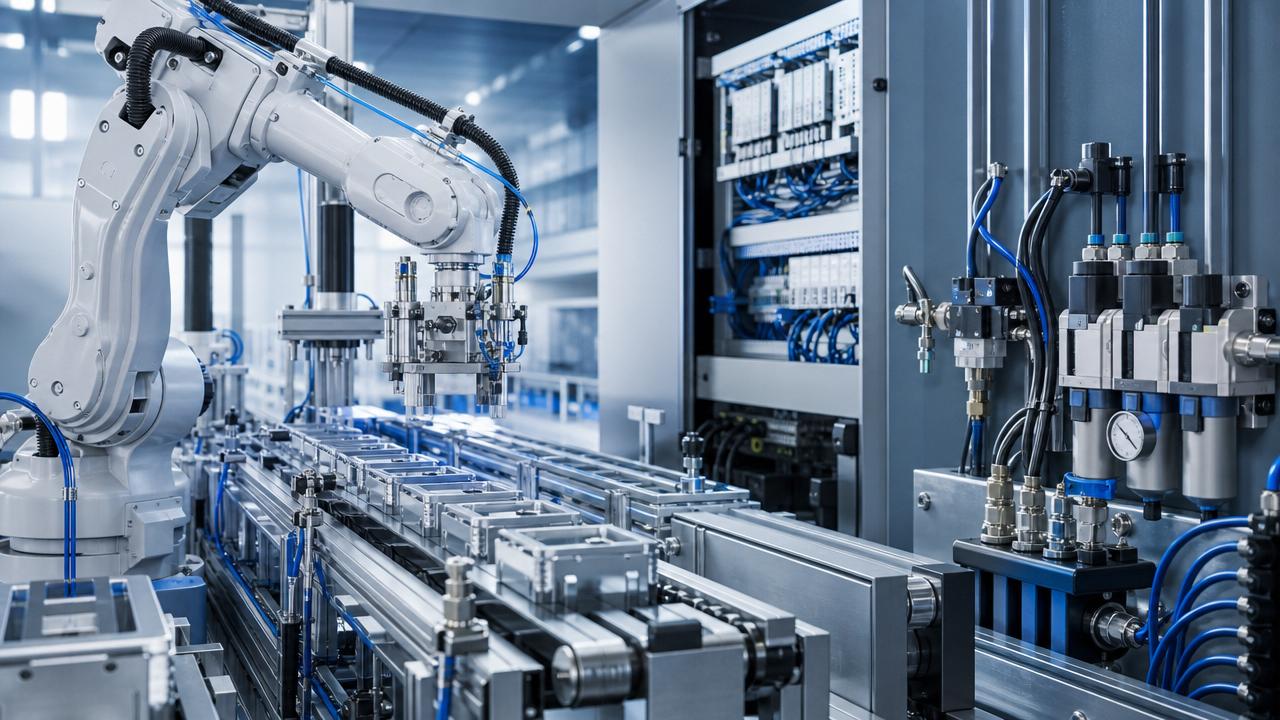
In practice, automation ROI rarely depends on one machine, one software layer, or one installation milestone. It is shaped by the quality of underlying industrial components, the fit between control logic and production flow, and the discipline of implementation across procurement, engineering, maintenance, and compliance teams. For companies sourcing across mechanical tools, electrical systems, mold production, and automated assembly, even a small mismatch in these layers can extend payback from 12 months to 24 months or more.
This is where industrial intelligence at the component level becomes critical. For decision-makers evaluating industrial automation solutions, the fastest gains often come from identifying hidden friction points before rollout: unstable pneumatic performance, under-specified fasteners, inconsistent wiring standards, tooling wear, or poor data visibility between equipment and operators. The following analysis breaks down the most common reasons ROI slows and how to reduce those delays with more precise planning.
Why ROI Slows Even When the Automation Concept Is Sound
Many companies assume that once budget is approved and equipment is ordered, the return curve will follow automatically. In reality, industrial automation solutions can lose momentum in the first 3 to 9 months if the project was designed around expected output, but not around actual line constraints. This gap is especially common in mixed-production environments, legacy factories, and multi-supplier installations.
Integration friction across old and new systems
A common obstacle is the integration of new automation cells with legacy PLCs, older sensor networks, or manual transfer points. If one section of the line still depends on human inspection every 20 seconds, a new robotic station upstream may only shift the bottleneck rather than remove it. In such cases, throughput may improve by only 8% to 12% instead of the expected 25% to 35%.
The issue is not only software compatibility. Electrical cabinets, communication protocols, air supply stability, mounting accuracy, and tool-change timing all affect line synchronization. In high-cycle environments, a 0.5-second delay per operation can become several lost production hours over a 2-shift schedule.
Signals that integration risk is underestimated
- More than 3 control platforms must exchange data in real time.
- Existing equipment is over 8 to 10 years old and lacks standard communication interfaces.
- Cycle balancing was modeled in theory, but not validated on the shop floor.
- Mechanical, electrical, and tooling suppliers are managed separately without one coordination lead.
Poor component selection at the “small parts” level
Decision-makers often focus on robots, conveyors, vision systems, and software dashboards. However, industrial automation solutions depend just as heavily on lower-layer components such as fasteners, pneumatic fittings, relays, cable assemblies, linear guides, and mold tooling interfaces. If these parts are selected by price alone, maintenance events rise and line stability falls.
For example, fasteners exposed to vibration, humidity, or thermal cycling need material and torque specifications matched to the environment. Pneumatic components in automated lines must support repeatable pressure control and acceptable leakage rates. Tooling wear in precision molding or die-casting can gradually reduce dimensional consistency, triggering more rejects and unplanned stops. Each of these issues may look minor, but together they can reduce actual equipment effectiveness by 5% to 15%.
The table below shows how common component-level decisions can influence the speed at which industrial automation solutions begin to pay back.
The key takeaway is simple: industrial automation solutions do not fail only at the system level. They often slow at the connection points between system-level ambition and component-level reality. For companies with global sourcing or multiple contract manufacturers, this detail becomes even more important.
Compliance and regional standard mismatches
Another hidden barrier is compliance readiness. Equipment that looks complete in a supplier proposal may still require changes for electrical safety, labeling, enclosure protection, documentation, or local inspection rules. These revisions can add 2 to 8 weeks before startup, especially when installations cross borders or involve multiple OEM partners.
For business leaders, the cost is not only administrative. Delayed approvals slow revenue generation, postpone labor savings, and can leave capital tied up in partially installed assets. When industrial automation solutions are deployed in sectors handling metal parts, electrical assemblies, molded components, or export-oriented production, standard alignment should be part of the initial commercial review, not a late engineering correction.
How Procurement and Execution Decisions Delay Payback
Even when the technical architecture is workable, ROI may still slow because of procurement choices and rollout discipline. In many organizations, capital approval focuses on purchase price, while total implementation cost remains fragmented across departments. The result is an automation project that appears competitive on paper but underperforms once installation, operator training, spare parts, and service response are included.
Lowest-price sourcing vs. lifecycle value
A low bid can be expensive if it creates inconsistent quality, long lead times, or weak after-sales support. For industrial automation solutions, ROI depends on stable operation over 24 to 60 months, not just on the initial invoice. If a lower-cost supplier extends replacement part lead time from 5 days to 4 weeks, one critical failure can erase the savings from a cheaper purchase.
This is especially true in categories such as electrical hubs, pneumatic subassemblies, precision molds, and wear tooling. A part that is 12% cheaper but causes 3 extra maintenance interventions per quarter is rarely the more economical option. Decision-makers should compare lifetime serviceability, interchangeability, documentation quality, and field support, not just unit price.
Four procurement checks that shorten ROI timelines
- Verify standard compliance and documentation before purchase order release.
- Define critical spare parts coverage for the first 6 to 12 months of operation.
- Review tooling wear intervals, maintenance cycles, and replacement lead times.
- Confirm whether one supplier can coordinate mechanical, electrical, and control interfaces.
Weak commissioning and change management
Commissioning is one of the most underestimated phases in industrial automation solutions. A line may be mechanically complete, yet still require 2 to 4 weeks of tuning for sensor thresholds, recipe control, pneumatic timing, operator routines, and tool alignment. If the organization expects instant productivity on day one, the project will be judged as underperforming before it has stabilized.
Human adaptation matters as much as machine readiness. Operators, maintenance technicians, quality personnel, and planners all need role-specific training. Without this, the factory may continue to use manual workarounds that cancel out automation gains. In some plants, this alone keeps utilization below 70% during the first quarter after launch.
The following table outlines practical execution factors that influence how quickly industrial automation solutions move from installation to measurable business return.
The lesson is that payback should be tracked as a staged ramp, not a single date. A realistic ROI model for industrial automation solutions should include installation, tuning, operator adoption, spare parts readiness, and line balancing. When these phases are budgeted openly, project expectations become more accurate and easier to manage.
How to Speed Up ROI With Better Automation Strategy
The most effective way to accelerate returns is not always bigger automation. Often, it is better automation discipline. That means selecting industrial automation solutions based on process fit, infrastructure readiness, and component reliability, then linking those choices to measurable business outcomes such as cycle time, scrap rate, changeover time, and labor redeployment.
Start with a bottleneck map, not a technology wishlist
Before comparing suppliers, map the top 3 to 5 production bottlenecks. Identify where output is lost: manual loading, unstable tooling, inspection delays, electrical faults, or changeover complexity. Then define target improvements with practical ranges, such as reducing changeover from 45 minutes to 20 minutes, cutting reject rate from 4% to below 2%, or increasing uptime from 82% to 90%.
This approach prevents over-automation. In some cases, a partial upgrade in fixturing, pneumatic control, or sensor architecture delivers better ROI than a full line replacement. For precision manufacturing environments, a tooling correction at the micron level may unlock more value than adding another robotic arm.
Build decisions around component intelligence
For companies operating across hardware, electrical, and mold ecosystems, reliable sourcing intelligence is a competitive advantage. Industrial automation solutions work best when component decisions are informed by performance under actual operating conditions: vibration, dust, temperature variation, duty cycle, tolerance range, and maintenance accessibility.
This is why many decision-makers now look beyond equipment brochures and focus more on the granular core of the system. A stronger understanding of fastener endurance, cutting efficiency, electrical compliance pathways, and mold iteration logic helps procurement and engineering teams avoid expensive redesigns later. It also supports better vendor conversations, shorter qualification cycles, and more resilient global supply planning.
Practical criteria for evaluating industrial automation solutions
- Can the solution meet target cycle time with a 10% to 15% operating buffer?
- Are critical mechanical and electrical parts easy to source within 7 to 21 days?
- Is the design compatible with regional compliance and factory safety requirements?
- Can wear parts, molds, and tooling be serviced without extended line shutdown?
- Will the supplier support data integration, training, and spare parts planning after startup?
Treat ROI as a cross-functional KPI
When ROI is owned only by one department, blind spots increase. Finance may emphasize capex, production may prioritize speed, maintenance may worry about uptime, and procurement may focus on price. The strongest industrial automation solutions are evaluated through a shared framework that includes at least 4 dimensions: cost, output, risk, and serviceability.
For example, a solution with a 16-month payback and high spare part availability may be more attractive than one with a theoretical 12-month payback but high commissioning risk. Clear cross-functional review reduces late changes and helps decision-makers approve projects with greater confidence.
Common Questions Decision-Makers Ask Before Investing
How long should automation payback normally take?
In many industrial settings, a practical payback window falls between 12 and 36 months, depending on labor intensity, output volume, scrap reduction potential, and complexity of integration. Shorter payback is possible in repetitive, high-volume lines. Longer payback is common when precision tooling, regulatory validation, or multi-site standardization is involved.
What is the most overlooked cost in industrial automation solutions?
A frequent blind spot is post-installation stabilization. Companies budget for equipment, but underestimate tuning, training, spare parts, compliance adjustments, and line-side process changes. These hidden costs do not always appear in the original quote, but they strongly influence how fast returns materialize.
Can better components really improve ROI that much?
Yes, especially in lines where uptime and repeatability determine margin. More durable fasteners, well-matched pneumatic controls, compliant electrical assemblies, and stable tooling interfaces can reduce breakdowns, scrap, and maintenance hours. The value is cumulative: a few percentage points of improvement in several areas often create the difference between delayed and on-schedule payback.
Industrial automation solutions generate value when strategy, components, compliance, and execution move together. For business decision-makers, the fastest route to stronger ROI is to look beyond the headline machine and evaluate the full operating system behind it, from fasteners and electrical architecture to tooling precision and commissioning discipline.
GHTN supports this decision process by connecting technical trend analysis with the industrial details that shape real-world performance. If you are assessing automation investments, planning global sourcing, or trying to shorten the gap between installation and return, now is the time to review the component-level risks hiding inside your project assumptions.
Contact us today to explore more industrial automation solutions, discuss sourcing and compliance considerations, or get a tailored perspective on the hardware, electrical, tooling, and mold factors that can accelerate long-term manufacturing value.
Related News