
What mechanical efficiency tells you about system losses

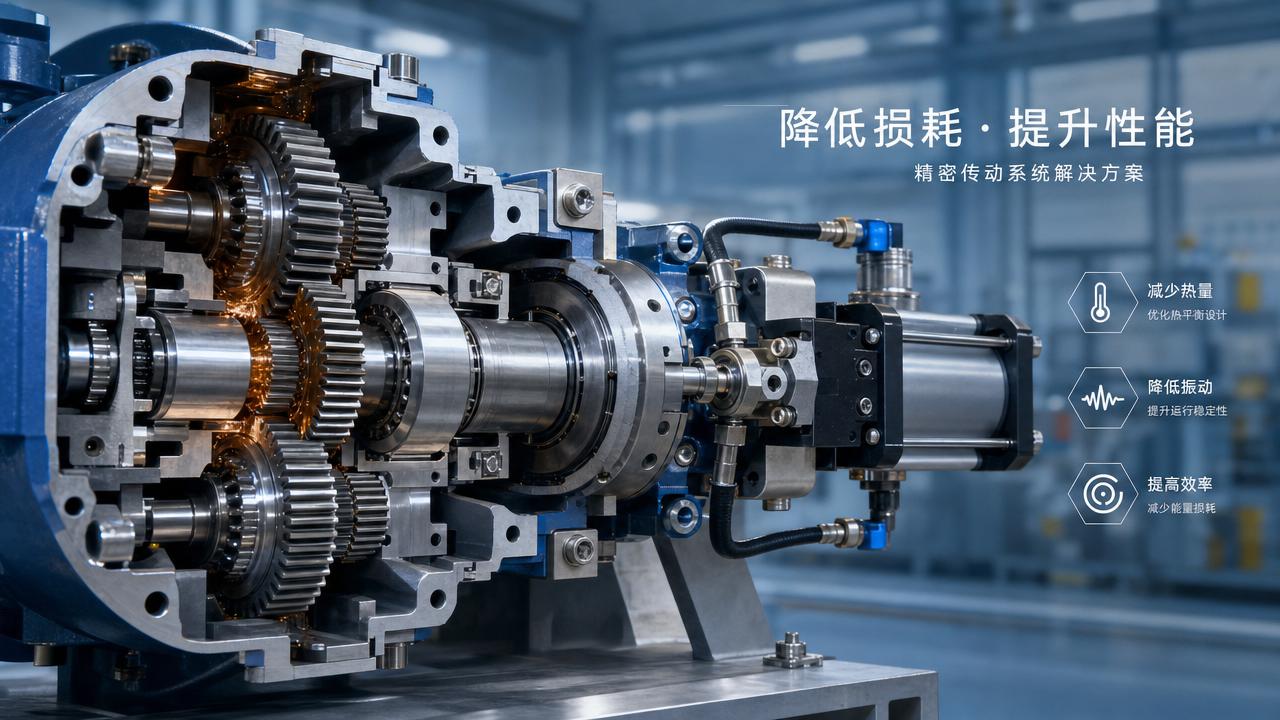
Mechanical efficiency shows how much input power becomes useful output power in a real machine or transmission path.
It also exposes where losses appear, including friction, heat generation, vibration, leakage, deformation, and poor alignment.
In industrial systems, mechanical efficiency is more than a formula.
It is a practical indicator for comparing equipment behavior, tracing hidden losses, and improving stability across tools, components, and production assets.
For a platform such as GHTN, this topic connects directly with fasteners, pneumatic parts, tooling systems, electrical-mechanical interfaces, and precision mold operations.
Understanding mechanical efficiency helps turn raw operating data into decisions about design quality, maintenance timing, and process improvement.
Mechanical efficiency as a measure of real system loss
Mechanical efficiency is usually expressed as useful output divided by total input, often shown as a percentage.
A system with 90% mechanical efficiency converts most incoming energy into productive work.
The remaining 10% is lost somewhere inside the system.
Those losses may look small on paper, yet they can grow into higher temperatures, unstable motion, shorter bearing life, and elevated operating cost.
In rotating equipment, losses often come from bearing drag, seal resistance, gear mesh friction, and imbalance.
In linear systems, losses may come from guide friction, poor lubrication, preload errors, or contamination.
In pneumatic and hydraulic assemblies, internal leakage and pressure drop strongly affect mechanical efficiency.
This is why mechanical efficiency should never be treated as an isolated lab number.
It reflects the combined condition of materials, geometry, surface finish, assembly accuracy, and working environment.
Core loss paths behind the number
- Sliding or rolling friction between moving parts
- Heat caused by inadequate lubrication or overload
- Vibration from imbalance, looseness, or resonance
- Misalignment across shafts, couplings, guides, or fixtures
- Elastic deformation in tools, housings, or fastened joints
- Pressure losses or leakage in fluid power systems
Why mechanical efficiency matters across industrial sectors
Across the broader industrial landscape, mechanical efficiency supports both technical evaluation and business performance.
It links component behavior to uptime, energy use, maintenance frequency, and product consistency.
When systems become more automated and more precise, small efficiency losses become more visible.
A few extra watts of friction or a slight alignment error can affect cycle time, tolerance control, or thermal drift.
This is especially important in environments served by GHTN, where industrial parts are the foundation of larger machines.
Fasteners influence joint stiffness and vibration behavior.
Tooling affects force transfer and dimensional stability.
Electrical-mechanical interfaces shape motion control quality.
Molds depend on efficient clamping, guiding, cooling, and ejection performance.
Current industry signals tied to system losses
What mechanical efficiency reveals in daily operation
Mechanical efficiency helps translate scattered symptoms into a structured diagnosis.
A rise in current draw, temperature, noise, or vibration may all point to the same underlying loss path.
Instead of treating each symptom separately, efficiency analysis connects them.
That creates a clearer picture of machine health and process capability.
Practical business value
- Lower energy consumption through reduced mechanical drag
- Longer service life for bearings, seals, gears, and guides
- More stable output in molding, cutting, forming, and assembly
- Faster root-cause analysis when performance changes
- Stronger comparison of alternative components or tool designs
- Better overall equipment effectiveness through fewer hidden losses
Mechanical efficiency also improves communication across engineering, sourcing, quality, and service functions.
It gives a common metric for discussing whether a problem comes from design, material choice, assembly practice, or operating conditions.
Typical applications where mechanical efficiency is decisive
Not every system loses power in the same way.
The meaning of mechanical efficiency depends on the motion type, load pattern, speed range, and environment.
In each case, mechanical efficiency is not just about saving power.
It directly affects precision, throughput, equipment life, and process confidence.
How to evaluate and improve mechanical efficiency
A useful evaluation starts with consistent measurement.
Compare input power, useful output, temperature trend, vibration signature, and operating load under repeatable conditions.
One isolated reading rarely tells the full story.
Trend data is far more valuable when assessing mechanical efficiency over time.
Recommended practice steps
- Define the system boundary clearly before calculating efficiency.
- Separate mechanical losses from electrical or thermal conversion losses.
- Check alignment, balance, preload, and fastening condition first.
- Review lubricant type, cleanliness, viscosity, and replenishment interval.
- Inspect sealing quality and leakage points in fluid power equipment.
- Compare actual operating load with the design load window.
- Use component-level testing when the whole system result looks abnormal.
Material and surface engineering also matter.
Surface roughness, coating quality, hardness, and tolerance stack-up can all change mechanical efficiency.
That is why precision parts intelligence remains essential in modern manufacturing networks.
A practical framework for next-step decisions
Mechanical efficiency becomes most valuable when it leads to action.
Use it to rank loss sources, verify component choices, and improve maintenance plans.
In many systems, the best gains come from basics.
Correct alignment, controlled lubrication, cleaner assembly, and better-fit parts often outperform expensive redesign.
For more complex assets, pair efficiency tracking with vibration analysis, thermal inspection, and process capability data.
This creates a stronger evidence chain for upgrades or supplier comparison.
GHTN supports this industrial logic by connecting precision components, tooling insight, and technical trend analysis.
When mechanical efficiency is understood correctly, system losses stop being invisible.
They become measurable, comparable, and improvable across the full manufacturing value chain.
That is the practical path from hidden friction to better performance, stronger reliability, and more informed industrial decisions.
Related News