
What the tooling industry must fix to stay competitive

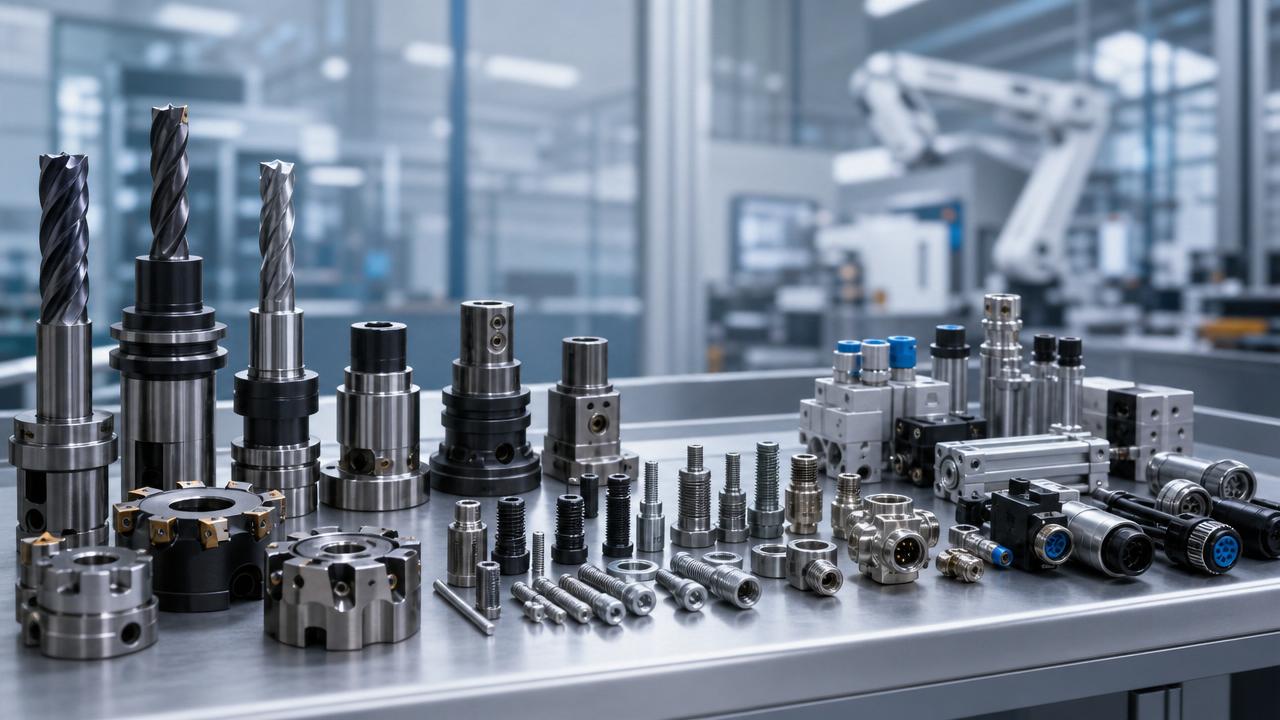
The tooling industry stands at a turning point: rising input costs, stricter compliance, faster automation, and shifting buyer expectations are reshaping competition. For distributors, agents, and channel partners, staying competitive now depends on fixing gaps in quality consistency, supply chain visibility, technical support, and market responsiveness. This article explores what the tooling industry must address to protect margins, strengthen trust, and capture new growth in global industrial markets.
For companies serving OEMs, contract manufacturers, and industrial buyers, the challenge is no longer limited to offering a broad catalog. In many regions, customers expect shorter lead times, documented performance, compliance clarity, and support that goes beyond product delivery. A supplier that cannot answer application questions within 24–48 hours or confirm realistic replenishment cycles of 2–6 weeks risks losing business to faster, better-prepared competitors.
This matters across the full industrial matrix covered by GHTN, from mechanical tools and fasteners to electrical components, pneumatic systems, and mold-related tooling. In each category, channel performance is increasingly shaped by precision, standardization, and the ability to translate technical detail into commercial confidence. The tooling industry must fix structural weak points now if it wants to remain relevant in global supply chains.
Where the tooling industry is losing competitiveness
The most serious weakness in the tooling industry is not always price. In many B2B transactions, buyers will accept a 3%–8% higher quote if it reduces defect risk, improves delivery predictability, or cuts installation downtime by even 1–2 shifts. The deeper issue is inconsistency: one batch performs well, the next raises tolerance concerns, and support quality varies by market.
Quality variation still erodes trust
Distributors often face a familiar problem: nominally identical cutting tools, mold components, fasteners, or electrical accessories behave differently across batches. Small deviations in hardness, coating adhesion, dimensional tolerance, or thread precision can create outsized downstream costs. In precision manufacturing, a tolerance drift of even ±0.02 mm to ±0.05 mm may trigger rework, slow setup, or inspection disputes.
For agents and channel partners, this inconsistency hurts more than the original producer. The distributor carries the complaint, absorbs emergency replacement costs, and risks damaging a customer relationship built over 12–36 months. In a market where repeat orders often determine profitability, unstable quality is one of the fastest ways to lose account value.
What buyers now expect
- Clear tolerance ranges and inspection criteria before shipment
- Batch traceability for critical components and tooling sets
- Material and performance consistency across 3–5 repeat orders
- Documented testing for wear resistance, torque performance, or electrical safety where applicable
Poor supply chain visibility creates avoidable losses
A second weakness in the tooling industry is limited supply chain transparency. Many distributors still work with fragmented updates, manual stock checks, and estimated lead times that change after the purchase order is confirmed. That model is increasingly unsustainable when buyers want firm planning windows, especially for production-critical items with reorder cycles of 15, 30, or 60 days.
The problem becomes more serious in cross-border trade. Freight volatility, customs inspections, export controls, and raw material fluctuations can add 7–21 days to standard delivery. Without early warning systems, channel partners are left explaining delays they did not create. Competitive suppliers are reducing this friction through rolling forecasts, safety stock logic, and milestone-based shipment updates.
The table below shows the most common operational gaps that weaken distributor performance in the tooling industry and what channel buyers now expect as a baseline.
The pattern is clear: the tooling industry loses competitiveness when execution falls behind buyer expectations. Price pressure remains real, but most channel conflicts come from uncertainty, not from quotation alone. Distributors that solve these gaps can defend margins more effectively than those relying only on discounting.
Technical support is now a sales requirement
In industrial distribution, technical support used to be viewed as an optional value-add. That is no longer the case. Whether the product is a precision mold insert, pneumatic component, fastening system, or cutting tool, buyers expect guidance on service life, compatibility, installation logic, and failure modes. A sales team that cannot discuss torque range, wear interval, or operating environment will struggle to win specification-driven business.
This is especially true when the application includes automated lines, high-cycle molds, or extreme environments. End users may ask how a component behaves at temperatures from -20°C to 80°C, under repeated vibration, or during 8–16 hour production shifts. The tooling industry must close the gap between catalog selling and engineering-based selling.
What the tooling industry must fix first
Not every issue can be solved at once. For most manufacturers and channel partners, the priority should be to fix the four areas that most directly influence conversion, retention, and claim costs: quality systems, supply planning, compliance readiness, and technical enablement. These are the foundations that determine whether growth is scalable or fragile.
1. Build repeatable quality control, not one-time inspection
Many suppliers still depend too heavily on final inspection. In the tooling industry, that is not enough. Competitive performance comes from process control across incoming material, in-process checks, and final verification. For precision categories, a 3-stage control model is usually more reliable than a single end-of-line review, especially when volumes rise or subcontracting increases.
Distributors should push suppliers to define at least 4 control points: raw material verification, dimensional check during production, functional or fit test before packing, and batch documentation at release. This is practical across mechanical tools, mold components, and electrical hardware. Better process discipline lowers the frequency of hidden defects that only appear after installation.
2. Improve forecasting and stock strategy by product tier
Not every SKU deserves the same inventory policy. A useful approach is to classify products into A, B, and C tiers based on turnover, technical criticality, and replacement urgency. High-rotation standard tooling may justify 30–45 days of safety stock, while specialized low-volume items may be handled through planned ordering and customer forecast alignment.
This matters because distributors often tie up cash in slow-moving stock while still facing shortages on fast-moving essentials. In the tooling industry, smarter inventory logic can improve fill rate without inflating carrying cost. Even a 10%–15% reduction in emergency procurement can significantly protect margin over a full year.
Practical stock planning steps
- Segment SKUs by sales frequency and technical criticality.
- Set reorder points based on actual lead time ranges, not ideal assumptions.
- Review customer demand every 30 days for volatile accounts and every 60–90 days for stable accounts.
- Link safety stock to risk exposure, especially for imported or compliance-sensitive items.
3. Treat compliance as a commercial tool, not paperwork
As regulations become stricter across industrial markets, compliance failures are turning into sales barriers. Buyers increasingly ask for material declarations, electrical conformity evidence, safety references, and traceable documentation before approving vendors. Delays of even 5–10 business days in document response can postpone onboarding or cancel a sourcing opportunity.
The tooling industry must respond by organizing documentation in advance, not after the request arrives. For distributors and agents, this means choosing suppliers that can maintain current files, explain regional differences, and update records when a specification changes. In practical terms, faster documentation often shortens the sales cycle more effectively than a small price concession.
The following table outlines a practical framework for channel partners evaluating whether a tooling supplier is ready for international distribution and long-term cooperation.
For the tooling industry, readiness is measurable. A supplier that performs well across these four dimensions is easier to scale through distribution networks. One that fails in two or more areas will create ongoing friction, no matter how attractive the initial pricing looks.
4. Equip channel partners with application-level knowledge
A distributor cannot sell complex tooling effectively with a PDF catalog alone. Training should cover practical selection criteria, failure scenarios, replacement timing, and operating limits. For example, teams should know when a standard fastener is unsuitable for high-vibration use, when a pneumatic valve requires cycle-life discussion, or when a mold component needs wear-resistance analysis.
A simple quarterly enablement model can make a meaningful difference: one session on product updates, one on application cases, one on quality claims, and one on standards or documentation changes. Over 4 quarters, even non-engineering sales teams become more credible in front of procurement managers and plant-level decision makers.
How distributors and agents can turn industry weaknesses into growth
The tooling industry is under pressure, but channel partners are not powerless. Distributors and agents that position themselves as problem-solvers can gain share even in slower markets. The key is to move from transactional selling to structured account support, especially in sectors where downtime, precision failure, or compliance gaps create high customer risk.
Focus on accounts where failure cost is high
Not all customers value the same things. Some buy mainly on unit price, but many industrial buyers care more about production continuity. A distributor should identify accounts where tooling failure can stop a line for 2–8 hours, delay mold changeovers, or trigger urgent maintenance. In those cases, service speed and technical reliability often outweigh small price gaps.
This is where GHTN’s industrial focus becomes especially useful. From fastener performance in harsh environments to electrical and pneumatic component logic in automated systems, value comes from connecting component-level detail to business impact. The better a distributor can explain that connection, the stronger the conversion potential.
Use a consultative sales structure
A practical way to improve close rates is to standardize account conversations around 5 checkpoints: application environment, operating load, replacement frequency, compliance requirement, and delivery expectation. This creates more accurate quotations and reduces the risk of offering a technically acceptable but commercially weak solution.
In the tooling industry, better questioning often reveals hidden revenue. A buyer requesting only a toolholder may also need related inserts, balancing accessories, maintenance kits, or replacement schedule planning. An inquiry for electrical hubs may open a wider discussion around line reliability, standard compatibility, or expansion capacity for the next 12 months.
Common mistakes channel partners should avoid
- Quoting without confirming application temperature, cycle count, or load condition
- Competing only on unit price instead of total operating impact
- Promising lead times before checking material and production status
- Ignoring documentation readiness until the buyer asks for it
- Offering broad ranges without narrowing the most suitable configuration
Strengthen after-sales response to protect long-term margin
In many industrial categories, profit is not lost on the first order. It is lost later through repeated claims, emergency replacements, and unmanaged service requests. A competitive tooling industry needs faster root-cause handling, clearer issue classification, and a structured feedback loop from the field back to production and sourcing teams.
An effective claim process can be built in 4 steps: issue capture within 24 hours, batch and application review within 48 hours, corrective recommendation within 3–5 business days, and preventive action tracking on the next order. This discipline improves credibility and prevents the same failure from circulating through multiple accounts.
Why digital intelligence matters more now
The tooling industry is becoming harder to navigate because technical change, trade movement, and buyer expectations are accelerating at the same time. Channel partners need better intelligence on standards trends, product development, niche manufacturing capability, and market-entry timing. Without that visibility, they react too slowly to shifts in demand.
That is where a specialized platform like GHTN creates practical value. By linking precision manufacturing insight with trade-facing interpretation, it helps distributors, OEM-facing suppliers, and industrial agents understand not only what products matter, but why they matter in real operating conditions. In a fragmented market, insight is becoming a commercial asset, not just an editorial function.
The competitive path forward for the tooling industry
The tooling industry will remain essential because every automated line, mold system, assembly process, and maintenance cycle still depends on reliable industrial components. But essential does not mean protected. The market is rewarding suppliers and channel partners that combine precision, transparency, compliance readiness, and application support in a consistent operating model.
For distributors, agents, and industrial resellers, the opportunity is clear: choose partners that can control quality across repeated batches, communicate realistic lead times, support technical decisions, and respond to compliance demands without delay. Those capabilities are more durable than short-term discounting, and they help build stronger positions in global industrial markets.
GHTN is committed to helping the market move in that direction by connecting hidden manufacturing strengths with high-end demand, practical technical analysis, and trade insight across hardware, electrical, and mold-related sectors. If you are evaluating sourcing options, supplier positioning, or channel strategy in the tooling industry, now is the time to act. Contact us to explore tailored solutions, discuss product and market details, or learn more about the next competitive moves for your industrial business.
Related News