
When mechanical efficiency gains are smaller than expected

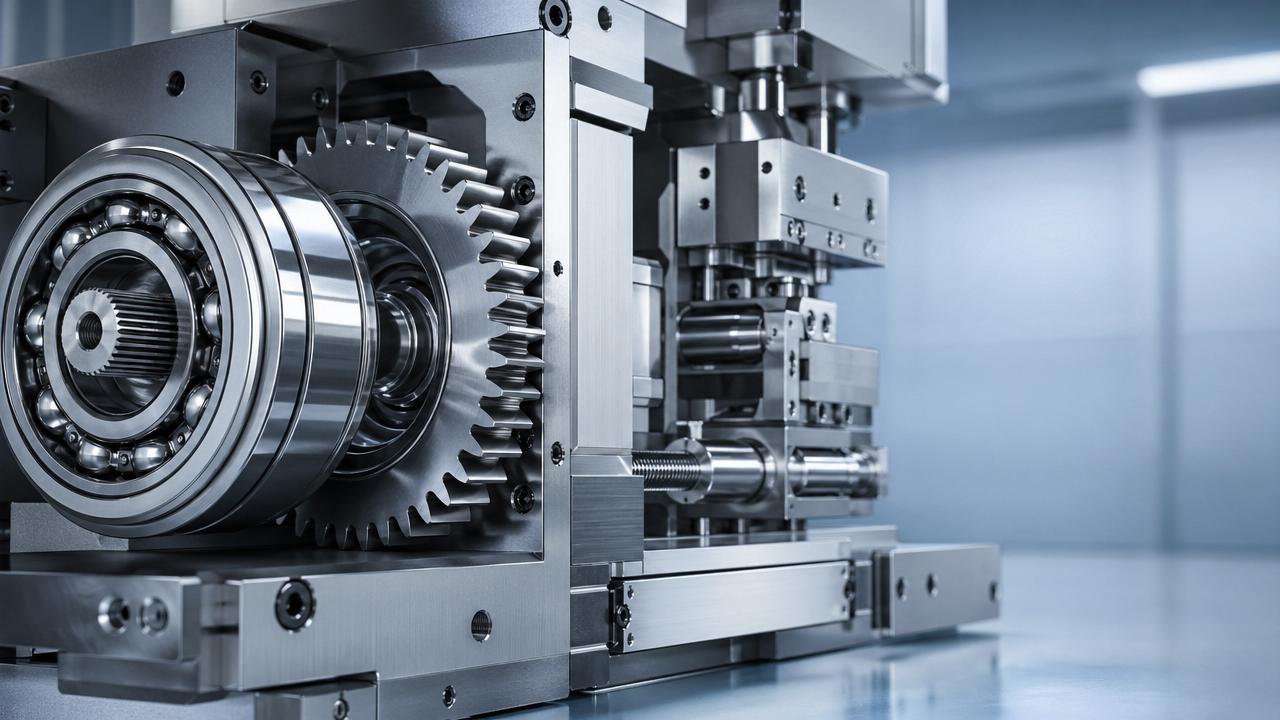
When mechanical efficiency gains are smaller than expected, the issue often lies beyond headline specifications. From component tolerances and material behavior to tooling choices and system integration, small losses can compound across industrial processes. This article explores why mechanical efficiency may underperform in real-world applications and what engineers, buyers, and researchers should examine to uncover practical opportunities for improvement.
Understanding mechanical efficiency in practical industrial terms
Mechanical efficiency is commonly understood as the ratio between useful output and total input in a machine, subassembly, or production process. In theory, that sounds straightforward. In practice, however, mechanical efficiency is affected by friction, alignment, vibration, thermal expansion, surface finish, lubrication quality, sealing losses, load variation, and the interaction between components made by different suppliers. That is why efficiency gains that appear convincing in lab conditions may look modest once the same hardware enters a real manufacturing line.
For information researchers in the broad industrial sector, it is important to view mechanical efficiency not as a fixed product attribute but as a system-level result. A high-performance bearing, cutting tool, pneumatic actuator, mold insert, or fastener may improve one local parameter, yet overall efficiency may remain almost flat if upstream and downstream conditions are unstable. This distinction matters across hardware, electrical, and mold-related industries, where small mechanical losses often translate into higher energy consumption, slower cycle times, reduced part consistency, and more frequent maintenance events.
This is where portals such as GHTN add value. In sectors built on hidden but essential industrial parts, the most useful insight rarely comes from isolated product claims alone. It comes from understanding how physical attributes, process controls, and manufacturing realities combine. A fastener that holds preload more consistently under thermal cycling, a mold surface that releases more smoothly, or a tool geometry that reduces cutting resistance can all influence mechanical efficiency. Yet the gain only becomes meaningful when the whole operating context is considered.
Why the industry pays close attention to smaller-than-expected gains
Industrial companies do not study mechanical efficiency merely for academic reasons. They study it because efficiency links directly to production economics, equipment life, compliance, and market competitiveness. In automated lines, small performance gaps can multiply across shifts and factories. If a motion system loses more energy to friction than predicted, motors may run hotter, cycle times may need to be reduced, and quality windows may narrow. If a mold cooling system performs below target, energy demand rises while dimensional repeatability can suffer.
The current industry focus is also shaped by three wider trends. First, manufacturers are under pressure to improve sustainability, so every avoidable mechanical loss has financial and environmental implications. Second, global OEMs increasingly expect suppliers to support performance validation with data, not just brochures. Third, production systems are becoming more integrated, meaning a mechanical inefficiency may trigger electrical, thermal, and software-related compensation elsewhere in the line. As a result, even modest underperformance deserves investigation.
In the hardware and tooling ecosystem, this attention extends from base components to precision tools. Fasteners, guides, seals, couplings, spindles, pneumatic components, and molds all contribute to the final mechanical efficiency profile of a system. Researchers and technical buyers need a framework that helps them connect part-level details with plant-level outcomes.
An industry overview of where efficiency expectations often diverge from reality
Across comprehensive industrial applications, the gap between expected and actual mechanical efficiency usually appears in repeatable patterns. The table below summarizes common areas where this mismatch occurs and what they typically signal.
The most common reasons mechanical efficiency does not scale as predicted
One of the most overlooked reasons is tolerance stacking. A single component may meet specification, but when several acceptable variations accumulate in one assembly, contact pressure, alignment, or motion smoothness can degrade. This is especially relevant in precision tooling, guide systems, mold slides, and rotating equipment. Mechanical efficiency depends not only on the nominal design but also on how actual manufactured parts interact under load.
Material behavior is another major factor. Engineers may expect stable friction or wear based on catalog data, yet real operating conditions introduce temperature shifts, contaminants, shock loads, humidity, corrosion, and mixed lubrication regimes. A coating that performs well in one duty cycle may fail to maintain the same mechanical efficiency in another. In tooling and mold applications, micro-level surface changes can alter release force, heat transfer, and wear progression over time.
System integration also changes the result. A more efficient component can be neutralized by poor mounting, oversized safety factors, unsuitable control settings, or incompatible adjacent parts. For example, a low-friction linear element may still produce disappointing results if the drive system introduces oscillation or if the frame lacks stiffness. In pneumatic assemblies, reducing internal resistance may not deliver visible gains if the air preparation unit, valve timing, or line routing remains suboptimal.
Finally, measurement method matters. Some efficiency claims are derived from idealized test conditions that do not reflect start-stop cycles, partial loads, thermal drift, maintenance intervals, or product mix changes. If the baseline and the improved condition are not measured consistently, the final conclusion on mechanical efficiency may be misleading.
Where the topic has the most value for researchers, engineers, and buyers
For researchers, the value lies in building a more accurate interpretation of performance data. Mechanical efficiency should be read together with durability, repeatability, process capability, and operating context. A narrow focus on one number may hide trade-offs that are more important to total lifecycle value.
For engineers, the topic supports better design decisions. When efficiency gains are smaller than expected, the correct response is rarely to reject a component category outright. Instead, engineers should identify whether the limiting factor comes from geometry, contact mechanics, thermal behavior, control logic, or maintenance practice. This diagnosis often reveals that the lost efficiency sits outside the part originally blamed.
For buyers and sourcing teams, understanding mechanical efficiency helps reduce risk. Procurement decisions in industrial components should account for application fit, validation depth, and supplier process consistency. Lower upfront cost may be offset by energy waste, shorter tool life, increased downtime, or more frequent recalibration. In this sense, mechanical efficiency is not just a technical metric; it is also a commercial filter for long-term value.
Typical application contexts where hidden losses appear
The following categories show where hidden losses commonly reduce the expected improvement in mechanical efficiency and why a broader view is necessary.
How to evaluate mechanical efficiency more effectively
A practical evaluation starts by defining the right boundary. Are you measuring the efficiency of a component, a subassembly, or the entire process cell? Many misunderstandings arise because one party reports a part-level gain while another expects a line-level outcome. Clear boundaries improve both technical analysis and supplier communication.
Next, compare like with like. Use the same load range, duty cycle, ambient conditions, maintenance state, and measurement interval when reviewing before-and-after performance. In complex industries, mechanical efficiency can shift materially between cold start and stable operation, between clean and contaminated conditions, and between low-volume and continuous production runs.
It is also useful to combine quantitative and qualitative indicators. Energy input, torque loss, pressure drop, cycle time, and wear rate provide hard evidence, but operator feedback and maintenance history often reveal where theoretical gains are being lost. If technicians repeatedly compensate for sticking, overheating, or adjustment drift, then actual mechanical efficiency is likely lower than the specification suggests.
For buyers and researchers, supplier credibility should be assessed through data transparency. Ask how the efficiency figure was derived, what standards or test methods were used, and whether the result includes durability effects over time. In sectors covered by GHTN, this kind of detail is essential because industrial value is often created or destroyed by granular performance differences rather than by dramatic headline changes.
Practical improvement paths that usually matter more than expected
Improving mechanical efficiency often starts with basics that are less visible than a new component launch. Better alignment control, cleaner lubrication practice, tighter clamping consistency, improved seal selection, and more accurate thermal management can yield more reliable gains than a single premium part substitution. In many plants, the most cost-effective improvement comes from reducing avoidable variability rather than chasing an idealized maximum efficiency number.
Another strong path is design-for-maintainability. If a tool, mold, guide, or actuator is difficult to inspect and service, its mechanical efficiency will drift sooner in real use. Making wear surfaces accessible, simplifying replacement of critical elements, and standardizing maintenance checkpoints can preserve efficiency over a longer operating window.
Cross-functional review is equally important. Mechanical, electrical, and process teams should evaluate whether losses come from the component itself or from how the broader system is driven and controlled. Since industrial systems are increasingly interconnected, preserving mechanical efficiency may require updates in control logic, sensor placement, or process sequencing, not only changes in hardware.
Conclusion and next-step perspective
When mechanical efficiency gains are smaller than expected, the most productive response is disciplined analysis rather than quick judgment. In comprehensive industrial environments, underperformance usually reflects a chain of small losses across materials, tolerances, tooling, assembly, controls, and maintenance. That is why the topic matters across hardware, electrical, and mold sectors alike.
For information researchers, the key takeaway is simple: mechanical efficiency should be treated as a practical systems indicator, not just a catalog claim. The best insights come from linking component-level detail with production reality. By examining hidden friction sources, integration quality, and lifecycle behavior, companies can identify improvements that are measurable, durable, and commercially meaningful.
Organizations that want stronger decisions should prioritize evidence-based comparison, supplier transparency, and application-specific validation. In that process, industry intelligence platforms such as GHTN help bridge the gap between precision component knowledge and broader manufacturing performance, linking precision and tooling the future through more informed technical judgment.
Related News