
Where OEM manufacturing costs rise without warning
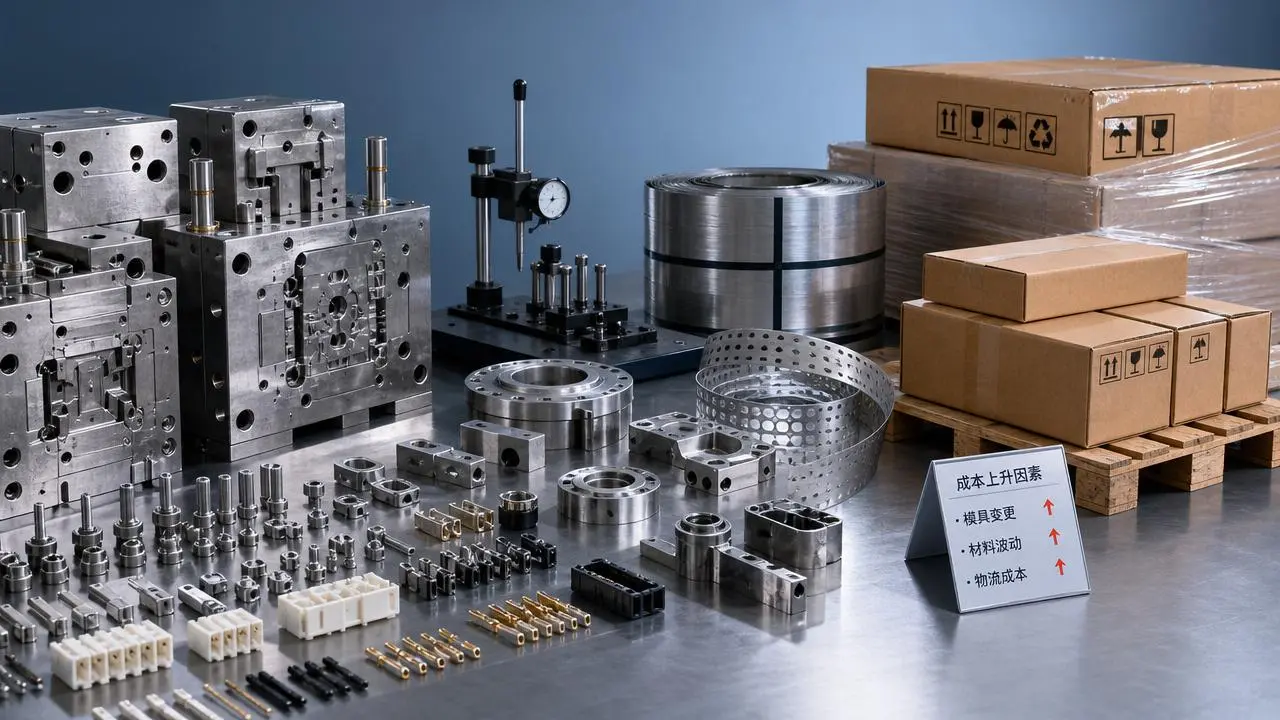
Where OEM manufacturing costs rise without warning
In OEM manufacturing, cost pressure rarely arrives as one dramatic event. It usually starts in small technical changes, supplier revisions, and unnoticed process losses.
A mold tweak, a resin substitution, or a new testing rule can raise total landed cost before anyone flags a budget issue.
That is why structured cost review matters. It helps identify hidden inflation points early, protect margins, and improve sourcing decisions across complex industrial supply chains.
For sectors covered by GHTN, from fasteners and tooling to electrical parts and molds, the same principle applies: precision cost control begins with precision visibility.
Why a structured review is necessary in OEM manufacturing
Unexpected cost growth in OEM manufacturing often hides between departments. Engineering, sourcing, quality, and logistics may each see only one part of the picture.
A structured review creates one decision path. It turns scattered cost signals into a usable framework for quoting, forecasting, and supplier comparison.
This matters even more in mixed industrial categories. Hardware, electrical assemblies, machined parts, and molded components all carry different cost triggers.
Without a consistent checklist, OEM manufacturing teams may react too late, especially when increases begin as technical exceptions rather than visible price hikes.
Core points to review before OEM manufacturing costs escalate
- Confirm whether tooling drawings changed after quotation, because even minor cavity, tolerance, or gate revisions can raise machining hours, validation cycles, and maintenance frequency.
- Check material assumptions against current market conditions, since resin grades, alloy composition, coatings, and heat treatment inputs often move faster than annual procurement plans.
- Review process yield data instead of unit price alone, because scrap, setup loss, rework, and unstable cycle time quietly increase real OEM manufacturing cost.
- Verify if compliance requirements expanded, as new safety, electrical, environmental, or export standards may add testing, documentation, and certification expense.
- Measure packaging and transport assumptions carefully, because product protection upgrades, route changes, and fuel-driven freight volatility can alter landed cost unexpectedly.
- Examine order volume consistency, since fluctuating releases reduce line efficiency, weaken supplier planning, and increase per-unit overhead allocation.
- Assess secondary operations in detail, because plating, polishing, labeling, assembly, or inspection steps are often underquoted during early OEM manufacturing evaluation.
- Track engineering change frequency, because repeated revisions create hidden costs through sample rebuilds, document updates, and interrupted production schedules.
- Review maintenance and tool life assumptions, since worn punches, molds, cutters, and fixtures can reduce consistency and increase downtime-related costs.
- Audit supplier communication speed and data quality, because unclear specifications often generate misproduction, delayed approvals, and avoidable emergency corrections.
Where hidden cost inflation usually begins
Tooling revisions and validation loops
Tooling is a common starting point for unplanned cost growth in OEM manufacturing. Initial quotes often assume stable geometry, standard tolerances, and predictable sampling.
Once revisions start, costs multiply. Extra electrodes, insert changes, mold flow adjustments, and repeated first article approvals all add time and technical risk.
Material volatility and specification drift
A quoted material may no longer match production reality. Availability issues can force alternate grades, substitute suppliers, or altered finish requirements.
In OEM manufacturing, cost inflation often appears when the design remains unchanged but the material path becomes more complex or less stable.
Process inefficiency hidden by acceptable output
A line can still ship on time while losing money. High scrap, long changeovers, excessive inspection, or manual intervention may stay invisible in standard reports.
That makes process-level review essential in OEM manufacturing, especially for precision hardware, electrical subassemblies, and molded industrial components.
How the review changes by industrial application
Fasteners and mechanical hardware
For fasteners, hidden cost increases often come from coating thickness, corrosion testing, thread consistency, and steel price movement.
Also review cold-form tooling wear and sorting requirements. These factors can shift OEM manufacturing economics even when dimensions stay the same.
Electrical and connection components
Electrical parts face strong compliance sensitivity. Flame ratings, insulation performance, terminal plating, and regional approval rules can all add cost unexpectedly.
In this area of OEM manufacturing, documentation quality matters almost as much as production cost, because missing records can delay shipments and trigger retesting.
Molds, precision tools, and formed parts
Molded and formed parts are highly sensitive to tolerance stack-up, cooling balance, steel grade, and cavity life assumptions.
Here, OEM manufacturing cost can rise through low-yield sampling, unstable dimensional control, or excessive post-processing after molding or stamping.
Often overlooked risks that push OEM manufacturing cost higher
Incomplete change control
When revision history is fragmented, suppliers may quote one version and produce another. That mismatch causes rework, delay, and invoice disputes.
Underestimated quality cost
Inspection, gauge calibration, traceability labels, and final testing are often treated as minor add-ons. In reality, they can reshape total OEM manufacturing cost.
Unclear ownership of indirect expense
Freight recovery, export documents, sample courier fees, and engineering support may sit outside the initial quote but still hit the final program budget.
Volume assumptions that never materialize
Quoted pricing may depend on annual demand, stable call-offs, or long production runs. If real demand differs, the cost base changes quickly.
Practical actions to control OEM manufacturing cost early
- Create a pre-production cost map covering tooling, materials, process yield, compliance, logistics, and revision ownership.
- Require quote breakdowns that separate piece price from secondary operations, certification, packaging, and engineering support.
- Use revision gates before sample approval so technical changes are visible before they become permanent OEM manufacturing cost increases.
- Track actual yield and cycle performance during pilot runs rather than relying only on supplier estimates.
- Review compliance exposure by destination market, especially for electrical, safety, and environmental requirements.
- Compare total landed cost regularly, not only ex-works pricing, to capture transport and packaging shifts.
A simple review table for faster decisions
FAQ on hidden OEM manufacturing cost increases
Why does OEM manufacturing cost rise when unit price looks unchanged?
Because total cost includes scrap, tooling wear, testing, packaging, engineering time, and freight. These often rise before unit price changes.
Which area should be reviewed first?
Start with engineering changes and process yield. They are common sources of hidden OEM manufacturing inflation across many industrial product categories.
How often should cost assumptions be updated?
Update them at each major revision, pilot run, compliance change, and logistics shift. Static assumptions age quickly in OEM manufacturing.
Conclusion and next steps
Unexpected increases in OEM manufacturing rarely come from one visible source. They build through revisions, volatility, and weak cost visibility across the production chain.
A disciplined review framework makes those signals easier to catch early. That leads to better forecasting, cleaner supplier discussions, and stronger margin protection.
For industrial sectors shaped by precision components, tooling, electrical systems, and molds, detailed insight is a competitive advantage. GHTN supports that advantage by linking technical depth with practical market intelligence.
The next step is simple: review current OEM manufacturing programs against the checklist above and flag the first hidden cost driver before it becomes a permanent burden.
Related News