
Industrial Innovation Is Changing Supplier Selection Rules

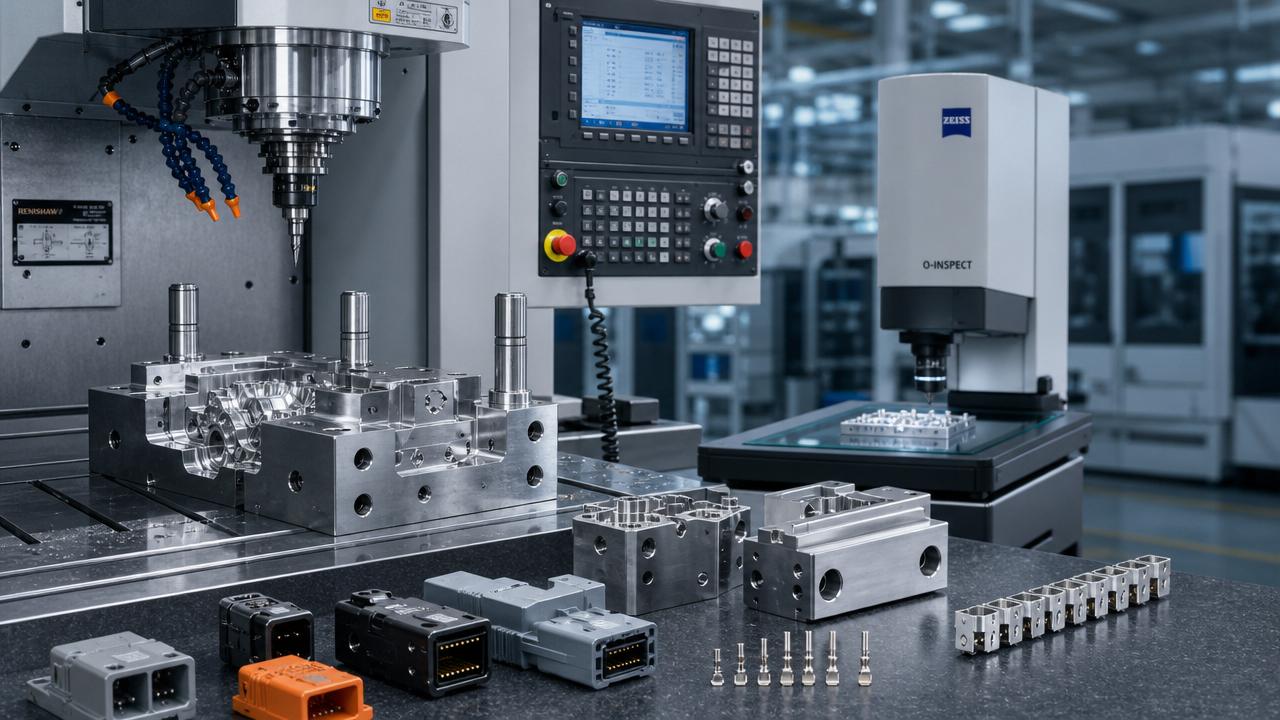
Industrial innovation is rewriting how procurement teams evaluate suppliers, shifting the focus from price alone to resilience, precision, compliance, and long-term value. For buyers in hardware, electrical, and mold-related sectors, understanding these new selection rules is essential to reducing risk and securing competitive advantage in increasingly complex global supply chains.
Why is industrial innovation changing supplier selection rules now?
The short answer is that manufacturing risk has become more expensive than unit price. In the past, many purchasing teams could compare suppliers mainly on quotation, lead time, and basic quality records. Today, that approach is no longer enough. Industrial innovation has accelerated the use of automation, data-driven production, advanced materials, tighter tolerances, and stricter compliance systems. As a result, supplier capability is no longer just about whether a factory can make a part. It is about whether that supplier can protect continuity, traceability, and performance under pressure.
This shift is especially important in hardware, electrical, and mold-related sectors, where one overlooked weakness in a fastener, connector, tooling insert, or pneumatic component can trigger downtime, scrap, warranty claims, or even safety incidents. Industrial innovation is also pushing customers to expect more customization and faster development cycles. That means buyers need suppliers who can support engineering changes, material validation, and process stability instead of simply shipping standard items.
For procurement professionals, the new rule is clear: the best supplier is not always the cheapest source, but the one that can reliably deliver technical fit, manufacturing discipline, and strategic resilience over time.
What does industrial innovation actually mean for procurement teams?
For buyers, industrial innovation should not be treated as a vague trend word. It has direct procurement implications. It changes what should be asked during RFQ review, supplier audit, sample approval, and contract negotiation. In practical terms, it means supplier selection has become more multidimensional.
A supplier may offer a competitive price, but if it lacks process monitoring, digital inspection records, material traceability, or the ability to hold micron-level tolerances, it may not support the performance expectations of modern industrial systems. In contrast, a supplier that invests in intelligent machining, electrical compliance expertise, mold-flow optimization, or automated testing can often reduce hidden cost across the full product lifecycle.
Industrial innovation also changes the way procurement collaborates internally. Purchasing can no longer work in isolation from engineering, quality, compliance, and operations. Supplier evaluation increasingly requires cross-functional judgment. For example, an electrical component source may need to be reviewed not just for commercial terms, but also for certification readiness, regional regulatory fit, and future adaptation to evolving standards. A mold supplier may need to demonstrate not only tooling cost control, but also maintainability, cycle-time improvement potential, and design-for-manufacture feedback.
Which supplier capabilities matter most under industrial innovation?
The answer depends on category, but several capabilities now matter across most industrial sourcing decisions. Procurement teams should evaluate whether a supplier can perform consistently in the following areas rather than relying on sales claims alone.
In hardware and tooling, these capabilities are often easier to validate through sample reports, process walkthroughs, and issue-response history than through brochures. Buyers should request proof, not promises. GHTN’s perspective across mechanical tools, electrical systems, and mold manufacturing shows that technical depth at the component level often predicts commercial stability at the supplier level.
How should buyers compare innovative suppliers versus low-cost traditional suppliers?
This is where many sourcing decisions go wrong. A low-cost supplier may still be the right choice for non-critical, stable, low-complexity items. However, where failure risk, tolerance sensitivity, compliance exposure, or demand variability is high, industrial innovation changes the economics. The total cost of ownership often favors the supplier with stronger systems, even when the quoted price is higher.
Buyers should compare suppliers across four layers. First, compare direct cost: unit price, tooling, packaging, logistics, and payment terms. Second, compare operational cost: defect rates, rework, line stoppage risk, and lead time reliability. Third, compare strategic cost: switching difficulty, engineering support value, and market responsiveness. Fourth, compare compliance and reputation cost: certification gaps, recall exposure, and customer trust risk.
Industrial innovation tends to widen the gap between these layers. A supplier with automated inspection, better tooling design, or stronger electrical standard expertise may reduce downstream losses that are invisible during quotation review. For procurement personnel, this means supplier scorecards should be weighted by business impact, not just by purchase price variance.
A useful comparison question
Instead of asking, “Who is cheapest today?” ask, “Which supplier is most likely to deliver stable value over the next 12 to 36 months?” That single change in framing reflects the real effect of industrial innovation on purchasing logic.
What warning signs suggest a supplier is not keeping up with industrial innovation?
Several red flags appear repeatedly in industrial sourcing. None of them automatically disqualifies a supplier, but together they indicate rising risk. One common sign is weak technical communication. If a supplier cannot explain process controls, material choices, tolerance strategy, or failure analysis in a clear way, procurement should question how problems will be handled after mass production starts.
Another warning sign is inconsistent documentation. Missing inspection reports, vague certificates, outdated compliance files, and unclear revision control all suggest fragile systems. In sectors linked to electrical standards or precision molds, such gaps can delay approvals and complicate traceability.
A third sign is overdependence on manual experience without process discipline. Skilled operators matter, but industrial innovation favors repeatable systems, not hero-based production. If quality depends on a few individuals rather than documented workflows, the supplier may struggle with scale, turnover, or urgent demand spikes.
- Quotations that are fast, but technical answers are slow or incomplete
- No clear preventive maintenance approach for key machinery or tooling
- Limited willingness to share process data or capability evidence
- Frequent changes in sub-tier material sources without structured control
- Little understanding of destination market standards or customer-specific requirements
For purchasing teams, these signs matter because industrial innovation raises the penalty for poor visibility. When supply chains are more interconnected, hidden weaknesses surface faster and cost more.
How can procurement teams build a smarter supplier evaluation process?
A smarter process starts with segmenting what matters by category. Not every bolt, switch, die-cast mold, or pneumatic fitting needs the same supplier model. Procurement should classify sourced items by criticality, compliance burden, customization level, and supply risk. Industrial innovation has made this segmentation more important because the cost of under-evaluating a critical component is much higher than the cost of over-evaluating a simple one.
Next, buyers should upgrade supplier onboarding from document collection to evidence-based assessment. That means combining commercial review with plant capability checks, sample validation, technical interviews, and performance monitoring. It is also wise to create a scorecard that includes measurable innovation-linked criteria such as engineering change responsiveness, traceability maturity, and defect containment speed.
Procurement teams should also use pilot orders more strategically. A small first order can reveal more than a polished presentation. Did the supplier communicate deviations early? Were records complete? Did packaging protect part integrity? Were dimensional reports aligned with specifications? Industrial innovation rewards buyers who turn early transactions into structured learning opportunities.
Suggested evaluation priorities for industrial buyers
What are the biggest misconceptions buyers still have about industrial innovation?
One misconception is that industrial innovation only matters to large multinational manufacturers. In reality, SMEs often feel the impact even more because they have less room for failure, fewer inventory buffers, and tighter customer commitments. A small buyer selecting the wrong mold partner or electrical component source can suffer outsized disruption.
Another misconception is that innovation always means expensive automation. It can also mean better process discipline, stronger testing logic, improved material selection, faster design collaboration, or smarter use of production data. Procurement should look for relevant innovation, not fashionable language.
A third misconception is that once a supplier is approved, the job is finished. Industrial innovation is ongoing. Standards evolve, customer expectations rise, and manufacturing processes change. Supplier selection is no longer a one-time gate but a continuous review of capability, risk, and fit.
What should buyers confirm before moving forward with a supplier conversation?
Before requesting final pricing or committing to a sourcing decision, procurement teams should confirm several practical points. First, define the true application requirement: environment, load, tolerance, compliance market, lifecycle expectation, and failure consequences. Second, identify what type of support is needed from the supplier: prototype speed, design feedback, documentation, tooling maintenance, or regulatory assistance. Third, clarify volume pattern and forecast stability, because capacity planning and cost structure depend on it.
It is also useful to ask direct questions that reveal how seriously a supplier approaches industrial innovation. What process data can they share? How do they manage engineering changes? What is their method for nonconformance containment? How do they qualify incoming materials? What standards expertise do they have for target markets? How quickly can they support root-cause analysis if field issues appear?
For buyers using intelligence platforms such as GHTN, the advantage is not just access to supplier names. It is the ability to interpret technical depth, market direction, and manufacturing logic at a granular level. That perspective helps procurement move beyond transactional sourcing and toward better long-term supplier architecture.
Final takeaway: how should procurement respond to industrial innovation?
Industrial innovation is not changing supplier selection in a cosmetic way. It is changing the rules of risk, value, and competitive advantage. Buyers in hardware, electrical, and mold sectors need supplier evaluation methods that reflect real production complexity, not outdated price-first habits. The most effective procurement teams now balance cost with capability, precision with resilience, and speed with compliance confidence.
If you need to move from broad market scanning to a specific sourcing decision, begin by clarifying five discussion points with potential suppliers: application requirements, quality evidence, compliance scope, engineering support expectations, and continuity planning. Those questions will quickly reveal whether a supplier is merely participating in the market or is truly prepared for the demands created by industrial innovation.
Related News
- Quality Standards for Electronics Explained: IPC, ISO, CE, RoHS, and When They ApplyTime : Jul 10, 2026
- Micron-Level Precision Standards Explained: Tolerances, Inspection Methods, and Common PitfallsTime : Jul 07, 2026
- Hardware Sector Europe: Key Supply Chain Shifts Affecting Sourcing DecisionsTime : Jul 03, 2026