
CBP Makes Dual Breaker Standards Mandatory at Entry

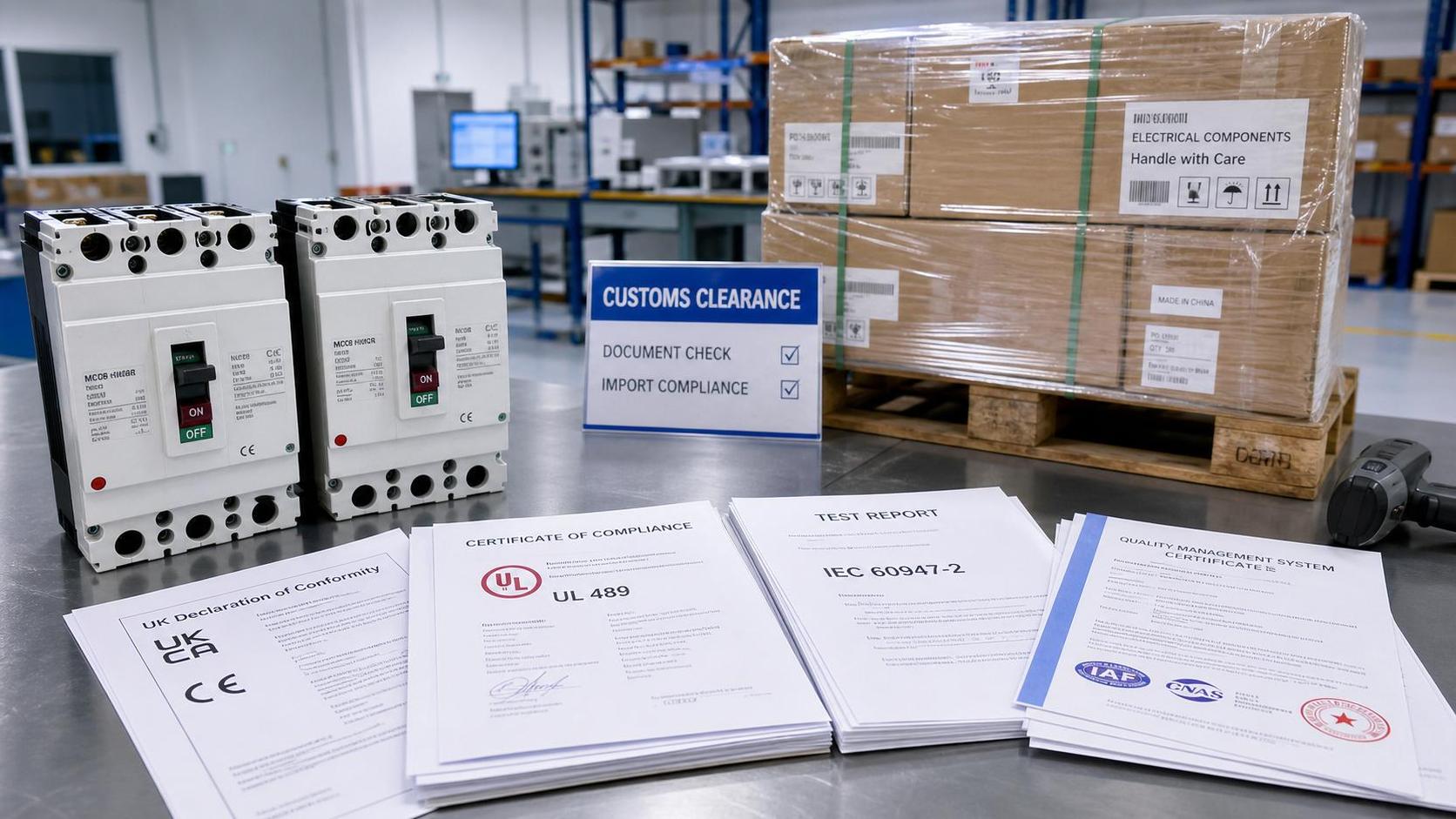
On July 7, 2026, U.S. Customs and Border Protection put a new entry requirement into effect for imported circuit breakers, linking customs clearance directly to proof of conformity with both UL 489 and IEC 60947-2. For exporters, distributors, OEM supply chains, and compliance teams, the significance lies less in the announcement itself and more in the fact that standard conformance is now positioned as a pre-entry trade condition, with immediate consequences for shipments that cannot demonstrate it.
What the new directive changes at the border
According to the information provided, CBP issued Directive No. 3510-032A with effect from July 7, 2026. The directive requires all imported circuit breakers to demonstrate conformance to UL 489, identified as the North American standard, and IEC 60947-2, identified as the global standard, before entry into the United States.
The same information states that shipments that do not meet this requirement may be subject to automatic hold, retesting, or refusal. The stated impact falls directly on exporters of circuit breakers from China, Vietnam, and Mexico supplying U.S. distributors and OEMs.
Where pressure is likely to appear across the supply chain
Export shipments now face a tighter compliance gate
From an industry perspective, exporters are likely to feel the first operational impact because the rule is tied to entry rather than a later market stage. What deserves closer attention is whether product files, test documentation, and standard references are organized in a way that can support customs-facing compliance review before shipment arrival.
U.S. distributors and OEM buyers may need stricter supplier screening
For distributors and OEM-facing procurement teams, the practical issue is continuity of supply. If imported circuit breakers are held, retested, or refused, the disruption will not remain at the border; it can move into purchasing schedules, inbound inventory planning, and supplier qualification decisions. Analysis shows that buyers will need to pay closer attention to whether supplier documentation clearly addresses both UL 489 and IEC 60947-2 rather than only one side of the standards framework.
Testing, certification, and document control functions become more central
Certification-related service providers and internal compliance teams may also see greater importance in the transaction flow. The rule, as described, turns standards evidence into an entry prerequisite, which means test reports, technical files, and conformity records may become more consequential in trade execution. Observably, document readiness and consistency may matter as much as the underlying product status when shipments are reviewed.
Logistics and delivery commitments may become more exposed
Supply chain service providers and after-sales planning teams may need to watch delivery risk more closely. The stated possibility of automatic hold, retesting, or refusal creates uncertainty around timing, especially for shipments already tied to distributor replenishment or OEM production demand. Analysis shows that delivery promises linked to imported breaker supply could become more sensitive to compliance verification at the customs stage.
What companies should examine now
Check whether compliance evidence covers both standards
The immediate practical point is that the requirement refers to both UL 489 and IEC 60947-2. Companies involved in exporting, buying, or importing circuit breakers should review whether their current compliance materials actually address both standards in a way that supports entry requirements, rather than assuming one standard alone will be sufficient.
Review trade documents and technical files before shipment
Analysis shows that firms should pay closer attention to the alignment between shipment documents and technical compliance materials. Where execution details have not been provided in the input, it is more appropriate to treat this as a documentation control issue that requires monitoring, especially for product descriptions, supporting reports, and other records that may be used to demonstrate conformity.
Reassess procurement and delivery planning for U.S.-bound orders
For companies supplying U.S. distributors and OEMs, current planning assumptions may need review. What deserves closer attention is whether procurement timing, production release, and delivery commitments leave enough room for possible customs holds or retesting where compliance evidence is incomplete or challenged.
Follow later clarifications on enforcement practice
The information provided confirms the directive and its immediate consequences for non-compliant shipments, but it does not provide detailed enforcement procedures. Observably, companies should continue tracking how this requirement is interpreted in practice, including any later clarification on review standards, submission expectations, or supporting materials accepted at entry.
Why this reads as an execution signal, not just a standards reminder
Analysis shows that this development is better understood as an enforcement signal at the trade entry stage rather than a general restatement of product standards. The notable shift is that conformity to UL 489 and IEC 60947-2 is presented as a condition that must be demonstrated before imported circuit breakers can enter, and that changes the risk profile for exporters and buyers handling U.S.-bound shipments.
At the same time, it would be premature to treat the full market effect as settled. Observably, the industry still needs to watch how consistently the directive is applied, how supporting documentation is assessed, and whether procurement specifications or commercial requirements change in response.
How the market should read the current change
At this stage, the event is most reasonably read as a landed rule change with direct border enforcement implications for imported circuit breakers. Its practical importance lies in the connection between compliance proof and shipment entry, especially for exporters in China, Vietnam, and Mexico serving U.S. distribution and OEM channels.
From an industry perspective, the measured conclusion is that this is neither a routine standards reference nor a basis for broad market predictions. It is more appropriate to understand it as a concrete compliance and trade execution development that warrants close monitoring of documentation practice, delivery exposure, and later enforcement detail.
Basis of this article and what still needs verification
This article is based on the user-provided news title, event date, and event summary. For events of this kind, relevant source categories commonly include official notices, releases from regulatory authorities, customs or trade administration information, industry association materials, standards organization documents, and reporting by authoritative media.
No specific official source link was provided in the input, so the underlying official publication path still requires ongoing verification. Analysis also suggests continued attention to any later policy detail, certification enforcement interpretation, tender or specification changes, industry feedback, and how affected companies implement the requirement in practice.